


On July 13, 2026, a coordinated international enforcement operation involving the United States, the European Union, and the United Kingdom announced a comprehensive suite of sanctions targeting an expansive network of nation-state hackers, cybercriminals, and the critical infrastructure providers that facilitate their operations. This trilateral action marks one of the most significant milestones in the global fight against digital extortion, specifically aiming to dismantle the leadership and the support systems of the Trickbot and Conti ransomware syndicates. The targeted entities and individuals are allegedly responsible for billions of dollars in cumulative damages, impacting healthcare systems, financial institutions, and government infrastructure across the globe.
The July 2026 designations represent a strategic pivot in Western cyber policy, shifting focus from merely identifying frontline threat actors to aggressively pursuing the "cyber-enablers"—the developers, hosting providers, and VPN services that form the backbone of the modern cybercrime economy. By cutting off these essential services from the global financial system, authorities aim to increase the operational costs and technical difficulties for ransomware groups that have operated with relative impunity for years.
The Exposure of Stern: The $300 Million Ransomware Architect
Central to the new sanctions is the identification of Vitaly Nikolayevich Kovalev, a Russian national operating under the prominent alias “Stern.” While Kovalev had been previously designated by the U.S. Department of the Treasury’s Office of Foreign Assets Control (OFAC) and the U.K.’s Office of Financial Sanctions Implementation (OFSI) in February 2023, the July 2026 EU designation is the first to officially link the “Stern” moniker to his legal identity in a public sanctioning framework.
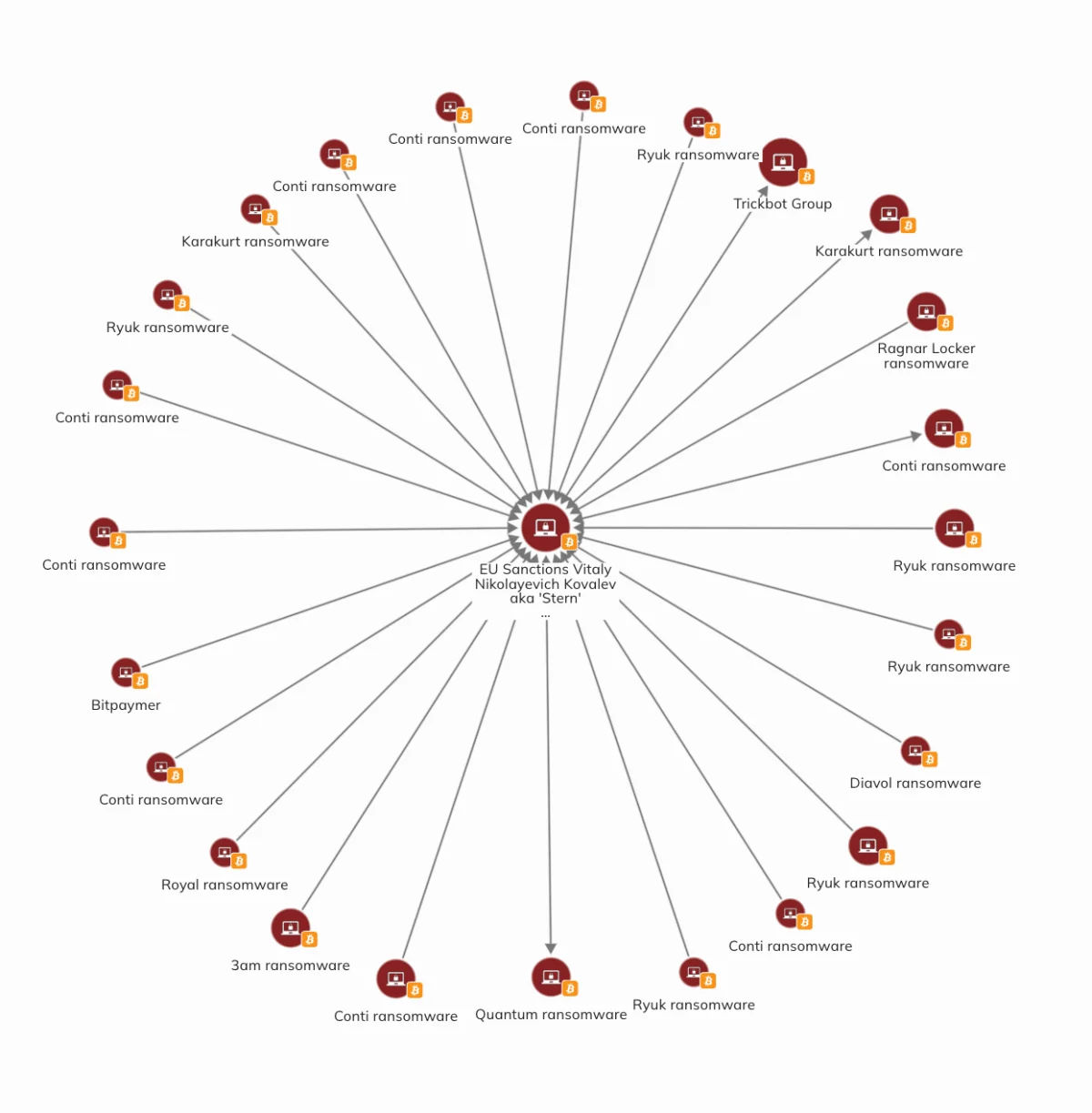
Investigations by blockchain analytics firms and international law enforcement indicate that Kovalev was far more than a mere developer; he functioned as a "CEO-like" figure within the Trickbot Group. Internal communications exposed during the "Conti Leaks" revealed that Stern maintained discretion over the syndicate’s multi-million-dollar budgets, oversaw the procurement of technical infrastructure, managed hiring and recruitment, and participated in high-level attack planning.
Financial data underscores the staggering scale of Stern’s personal involvement. Cryptocurrency wallets directly linked to Kovalev have reportedly received more than $300 million in ransom payments. Experts clarify that this figure likely represents Kovalev’s personal share or administrative cut of the proceeds, suggesting that the total volume of illicit funds processed by the Trickbot and Conti networks is substantially higher, likely numbering in the billions. Stern’s financial footprint shows direct transactions with a "who’s who" of notorious ransomware strains, including Ryuk, Conti, Diavol, Karakurt, Royal, 3am, Quantum, and Bitpaymer.
Dismantling the Infrastructure: 1VPNS and Bullet-Proof Hosting
A major component of the July 2026 action is the targeting of infrastructure providers that allow cybercriminals to maintain anonymity and evade law enforcement. OFAC has officially designated First VPN Service, commonly known as 1VPNS, along with its administrator, Dmytro Rashevskyi. 1VPNS is identified as a Virtual Private Network provider whose primary clientele consists of ransomware actors seeking to mask their physical locations during the deployment of malware and the exfiltration of sensitive data.

This designation follows a successful multi-agency operation in May 2026, which saw the physical takedown of 1VPNS’s servers and website by European authorities with the assistance of the FBI’s Boston Field Office. By identifying cryptocurrency addresses linked to Rashevskyi across multiple blockchains—including Bitcoin, Ethereum, Litecoin, Zcash, Dash, TRON, Dogecoin, and Solana—authorities are making it increasingly difficult for infrastructure providers to launder the fees they receive from criminal enterprises.
In addition to 1VPNS, the European Union has targeted Media Land LLC, a Russian-based "bullet-proof hosting" provider. Operating since at least 2016, Media Land LLC has been a preferred vendor for high-profile groups such as LockBit, EvilCorp, and BlackBasta. Bullet-proof hosting services are characterized by their refusal to comply with legal takedown requests and their willingness to host malicious content, including command-and-control (C2) servers and data leak sites. By sanctioning Media Land, the EU aims to disrupt the physical storage and distribution nodes that these groups rely on to extort their victims.
A Chronology of Enforcement: 2023 to 2026
The July 2026 sanctions are the latest chapter in a multi-year campaign to erode the Trickbot and Conti ecosystems. The timeline of these efforts illustrates the persistence of international law enforcement:
- February 2023: The US and UK conduct their first joint designation of seven Trickbot members, marking the first time these countries collaborated on such a specific cybercrime-related sanction.
- September 2023: An additional 11 members of the Trickbot group are sanctioned by US and UK authorities, further mapping out the group’s internal hierarchy.
- May 2026: A coordinated international "takedown" operation led by the FBI and European partners seizes the infrastructure of 1VPNS, providing a treasure trove of data regarding the service’s users.
- July 13, 2026: The US, EU, and UK announce the current sweeping sanctions, bringing the total number of sanctioned Trickbot-affiliated members to 19 and expanding the scope to include infrastructure enablers like Yevgeniy Vladimirovich Silayev, a provider of "cryptors"—software used to obfuscate malware to bypass antivirus detection.
This progression shows a shift from targeting the "foot soldiers" of cybercrime to the "generals" and the "arms dealers" who supply the necessary tools for digital warfare.
The Role of Malware-as-a-Service and Infostealers
The EU’s expanded list of designations also highlights the growing threat of "Infostealers" and Malware-as-a-Service (MaaS) platforms. Among the newly sanctioned entities is the developer of LummaC2, a highly effective malware strain designed to harvest sensitive data from infected systems. LummaC2 is capable of stealing browser credentials, session cookies, cryptocurrency wallet information, and detailed system telemetry.
The rise of LummaC2 reflects the professionalization of the cybercrime market. Instead of launching attacks themselves, MaaS developers sell access to their malware to "affiliates," who then carry out the infections. This model allows even low-skilled actors to participate in high-level cyber espionage and financial theft. By sanctioning the developers of these tools, international bodies are attempting to break the supply chain that fuels the broader ransomware economy.
Official Responses and Strategic Implications
Official statements from the participating governments emphasize that the era of treating cybercrime as a secondary law enforcement priority has ended. A spokesperson for the U.S. Treasury Department noted that these actions are designed to "deny these criminals the fruits of their illicit labor and to protect the integrity of the global financial system."

The UK Foreign Office echoed these sentiments, stating that the "unprecedented level of cooperation between the UK, US, and EU demonstrates a united front against those who seek to undermine our national security and economic stability through the use of ransomware."
Industry analysts suggest that the July 13 action carries several long-term implications:
- Increased Compliance Pressure: Cryptocurrency exchanges and financial institutions are now under immense pressure to update their AML (Anti-Money Laundering) and KYC (Know Your Customer) protocols to flag any transactions involving the hundreds of newly listed wallet addresses.
- Degradation of Trust in the Underground: By identifying high-ranking figures like Kovalev and exposing their aliases, law enforcement is sowing seeds of distrust within criminal forums. The realization that "bullet-proof" services are not truly invincible may deter some affiliates from participating in these networks.
- Global Policy Shift: The focus on "infrastructure enablers" suggests that future sanctions may target even more peripheral services, such as domain registrars or payment processors that turn a blind eye to criminal activity.
Impact on Global Cybersecurity Standards
The joint action serves as a stark reminder of the borderless nature of cyber threats and the necessity of international legal frameworks. Cybercriminals often reside in jurisdictions that do not extradite to the West, making sanctions one of the few effective tools available to democratic nations to impose consequences.
For businesses and critical infrastructure operators, these sanctions provide a roadmap of the specific threats they must defend against. Security teams are being urged to monitor their networks for indicators of compromise (IOCs) associated with LummaC2, Trickbot, and the various ransomware strains linked to Stern’s network. Furthermore, the disruption of 1VPNS and Media Land LLC may cause a temporary lull in activity as groups scramble to find new hosting and obfuscation solutions, providing a brief window for organizations to bolster their defenses.
In conclusion, the July 13, 2026, sanctions represent a watershed moment in the international response to the ransomware crisis. By targeting the intersection of criminal leadership, financial laundering, and technical infrastructure, the US, EU, and UK are attempting to dismantle the very foundations of the Trickbot and Conti syndicates. While the fight against cybercrime is far from over, this coordinated effort signals a more aggressive, unified, and data-driven approach to securing the digital world.














