


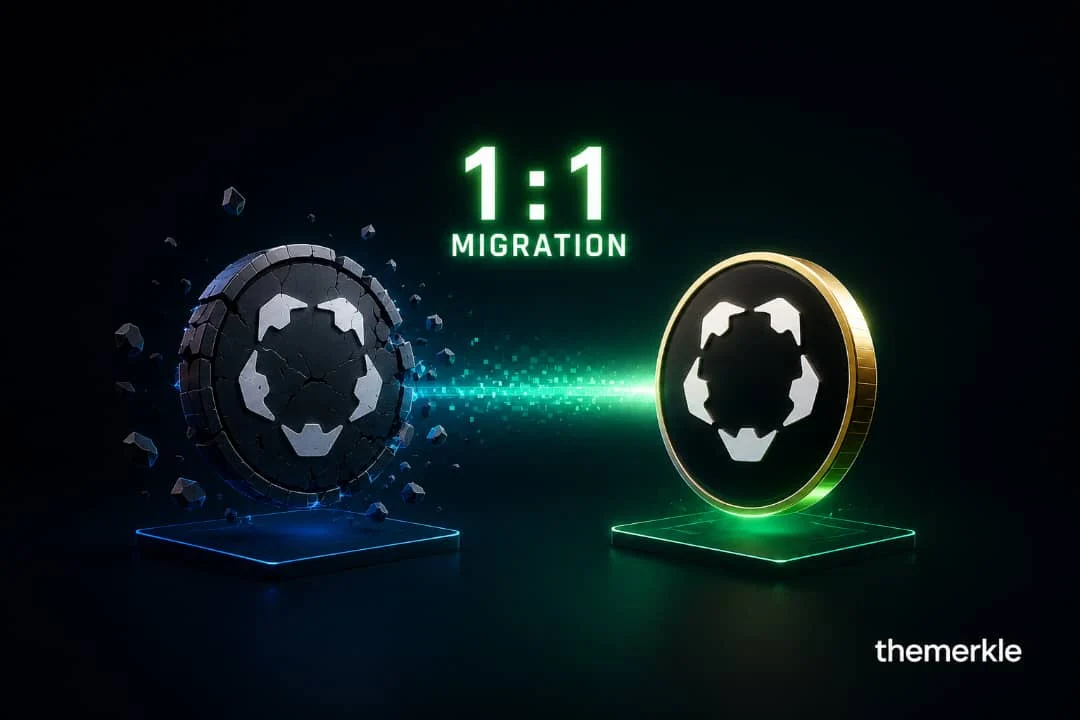
Humanity Protocol, a project focused on decentralized identity and proof-of-humanity solutions, has confirmed a comprehensive plan to scrap its existing H token and replace it with an entirely new Ethereum-based version. This drastic measure comes in the wake of a significant security breach that profoundly impacted the project’s ecosystem, necessitating a complete overhaul of its tokenomics and underlying smart contract infrastructure. The decision, officially announced in a Tuesday statement, outlines a meticulously structured migration process designed to safeguard legitimate holders while drawing a clear line against opportunistic post-exploit activity.
The core of the recovery strategy involves a snapshot-based airdrop, a mainnet relaunch for the new token, and the establishment of a dedicated compensation fund to address complex or "edge" cases. Crucially, the protocol has made an unequivocal statement regarding eligibility: only tokens held before the security incident’s designated snapshot time will qualify for replacement. This means that individuals who acquired H tokens after the attack, including those who engaged in "buying the dip" hoping for a speculative recovery, will not receive the new tokens. This move marks one of the most substantial and logistically intricate post-exploit recovery operations in the decentralized finance (DeFi) space in recent memory, with its intricate details holding immense significance for current and former holders attempting to ascertain their standing.
Understanding the Genesis of the Breach and the Protocol’s Response
While specific technical details of the security breach have not been fully disclosed, the severity of the incident was profound enough to compel the Humanity Protocol team to abandon its existing token. Industry experts often categorize such compromises into several types: smart contract vulnerabilities, private key compromises, or sophisticated flash loan attacks. Given the decision to replace the entire token, it is highly probable that the breach exposed a fundamental flaw in the original H token’s contract logic or its associated infrastructure, rendering it irredeemable through simple patches. A "patch-and-continue" approach, while sometimes feasible for minor vulnerabilities, often leaves residual risks and erodes user trust. By opting for a "clean break" with a new, audited ERC-20 contract, Humanity Protocol aims to re-establish a secure foundation and rebuild confidence in its ecosystem.
The security incident likely began with unusual on-chain activity, potentially involving large, unauthorized transfers or significant price manipulation of the H token. Upon detection, the protocol team would have initiated an immediate internal investigation, likely halting critical functionalities or alerting exchanges to pause trading of the affected asset. The confirmation of a systemic breach then led to the strategic decision to retire the compromised token entirely, a move that, while disruptive, is often seen as a necessary evil to ensure long-term viability and security. This approach underscores a commitment to robust security, even if it entails short-term pain for the community.
Chronology of a Crisis: From Exploit to Recovery Plan
The sequence of events leading to this comprehensive token replacement highlights the rapid response required in the volatile crypto landscape. The security breach, the precise nature of which remains under wraps, prompted an immediate crisis management effort by the Humanity Protocol team.
- Exploit Detection: The incident began on or before June 8, 2026, when the breach was either detected or had already begun to significantly impact the H token. This would typically involve abnormal on-chain transactions, unusual liquidity movements, or sudden, unexplained price drops.
- Internal Investigation and Confirmation: Upon detecting anomalies, the Humanity Protocol team would have initiated a rapid, intensive investigation to pinpoint the source and scope of the compromise. This phase is critical for understanding the extent of the damage and formulating an appropriate response.
- Strategic Decision for Token Replacement: Following the confirmation of a severe breach, the team made the pivotal decision to retire the existing H token. This signifies that the vulnerability was likely deemed unpatchable or too risky to continue operating the original contract.
- Snapshot Execution: To define eligibility for the new token, a precise snapshot of all H token holdings was taken. This occurred at ETH block 25,274,179, BSC block 103,071,069, and Humanity Mainnet block 24,247,803, all correlating to June 8, 2026, at 17:25:35 UTC. This timestamp serves as the definitive cut-off for eligibility.
- Migration Plan Announcement: The team subsequently communicated the full migration plan to the community, outlining the steps for the token replacement, distribution, and compensation for edge cases. This announcement included the new token’s contract address and details regarding its launch on Ethereum.
- Coordination with Partners: Ongoing coordination with centralized exchanges (CEXs) and decentralized finance (DeFi) protocols commenced to ensure a smooth transition for users holding H tokens across various platforms.
- Mainnet Relaunch and Airdrop: The final stages involve the deployment of the new ERC-20 token on the Ethereum mainnet and the subsequent airdrop to eligible holders, along with the activation of the claims portal for complex scenarios.
This timeline underscores the urgency and complexity inherent in managing a major security incident within a live blockchain ecosystem.
Defining Eligibility: The Snapshot and Its Implications
The concept of a "snapshot" is central to Humanity Protocol’s recovery plan. By capturing all H token balances at a precise moment—June 8, 2026, at 17:25:35 UTC, across Ethereum, BNB Chain, and Humanity Mainnet—the project has drawn a hard line in the sand. This timestamp acts as the ultimate arbiter of who is eligible to receive the new, replacement H tokens. Balances recorded at this exact point determine the allocation, ensuring that only those who held the token before the exploit’s full impact or public knowledge are compensated.
The decision to exclude anyone who purchased H after this snapshot is a deliberate, albeit stringent, measure. This policy directly impacts those who "bought the dip" in the hours or days following the attack, often driven by speculative impulses or a belief that the project would implement a fully inclusive recovery. From the project’s perspective, rewarding post-exploit purchases could inadvertently incentivize malicious actors or speculative traders who exploit the distress of a compromised asset. It also simplifies the recovery process by isolating the "clean" state of the ledger before the chaos ensued. While harsh for those who genuinely believed they were supporting the project by buying a distressed asset, it is a common practice in post-exploit recoveries to mitigate further exploitation and streamline the path to recovery for the original, unaffected holders.
This exclusionary approach aims to prevent further market manipulation and ensure that the recovery efforts are focused on restoring the original community’s holdings. The sellers on the other side of these post-snapshot trades effectively exited at the expense of buyers who were betting on a more inclusive recovery, highlighting the inherent risks of trading distressed assets in the volatile crypto market.
Technical Specifications of the New H Token
The replacement asset will retain the familiar $H ticker, signifying continuity in brand identity despite the underlying technical overhaul. It will launch on the Ethereum blockchain as an ERC-20 token, leveraging Ethereum’s robust security, widespread adoption, and extensive tooling. The official smart contract address for the new H token is 0xE76c5b78f93909d34404E9eb4C1f19e7582a5dE1. This new contract has presumably undergone rigorous independent security audits to ensure its integrity and prevent a recurrence of the previous vulnerabilities, a critical step for rebuilding trust.
A key detail for eligible holders is the swap ratio, which is set at a straightforward 1:1. This means that every old H token held before the snapshot will translate directly into one new H token, with no haircut or reduction applied to eligible balances. This 1:1 ratio is crucial for maintaining the value proposition for original holders and demonstrating the project’s commitment to full compensation for those genuinely affected.
Eligible holders span three distinct blockchain networks: Ethereum, BNB Chain, and Humanity Mainnet. For users holding H in standard, self-custody wallets (e.g., MetaMask, Ledger), the new tokens will be directly distributed through an automated airdrop mechanism. This simplifies the process for a large segment of the community, requiring no active steps from their side to receive the replacement tokens.
Navigating Complexities: DeFi Protocols and Centralized Exchanges
The distribution process becomes significantly more intricate for tokens held within decentralized finance (DeFi) protocols and on centralized exchanges (CEXs). Balances locked in liquidity pools, lending protocols, or staking platforms present unique challenges due to their specific smart contract interactions and custody arrangements. Humanity Protocol has acknowledged this complexity, stating that tokens held within DeFi protocols and liquidity pools are being handled separately through a dedicated distribution process managed directly by the team. This distinction is necessary because such balances are often represented differently on-chain (e.g., as LP tokens or wrapped assets) and require specific logic to accurately identify and attribute ownership.
For users holding H on centralized exchanges, the process will be coordinated directly with the respective platforms. Exchange-based H holders are explicitly directed to monitor announcements from their specific exchanges for guidance on how the transition will be handled. This typically involves the exchange taking its own internal snapshot, delisting the old token, and then crediting users with the new token once it’s made available by the project. This collaborative approach with exchanges is vital for ensuring that a significant portion of the user base, particularly those less familiar with self-custody or on-chain interactions, can smoothly transition their holdings.
Crucially, the team has also identified and explicitly excluded addresses connected to the exploit from receiving any new tokens. This measure is fundamental for preventing the perpetrators from profiting from their malicious actions and underscores the project’s commitment to justice and security.
Addressing Edge Cases: The Compensation Fund and Claims Portal
Recognizing that not every unique situation can be neatly addressed by a broad snapshot-based airdrop, Humanity Protocol has proactively established both a compensation fund and a dedicated claims portal. This foresight is critical, as snapshot-based recoveries almost invariably produce a category of holders whose balances were in transit, locked in pending transactions, or involved in unusual custody arrangements at the precise moment the snapshot was taken. Without a formal claims process, such individuals would be left without recourse, severely undermining trust and equity.
The claims portal is designed to accommodate eligible post-snapshot token purchasers who fall outside the standard distribution parameters, as well as to address other complex scenarios. For instance, users whose tokens were in the process of being bridged between chains, or those who had liquidity locked in a protocol that wasn’t directly accounted for in the primary airdrop, would typically fall into this "edge case" category. The existence of a formal, transparent claims process provides these holders with a structured path to resolution, ensuring that their legitimate holdings are recognized and replaced. This mechanism is a strong indicator of the project’s commitment to fairness and comprehensive recovery, moving beyond a purely automated solution to address human and technical nuances.
Protecting Users: Security Warnings and Phishing Prevention
Alongside the detailed migration plan, Humanity Protocol has issued a pointed security warning, a critical component of any post-exploit recovery. The team explicitly stated that official announcements and instructions will come exclusively from verified channels. This warning is paramount because post-exploit phishing attempts, social engineering scams, and fraudulent "claim" links are distressingly common. Malicious actors frequently prey on the anxiety and confusion of affected communities, attempting to trick users into revealing private keys or sending funds to scam addresses.
Users are advised to treat any unsolicited messages, emails, or links—especially those purporting to offer an easier or faster way to claim new tokens—with extreme caution. Verifying the source of information through official project websites, verified social media accounts (e.g., X/Twitter with official checkmarks), and reputable news outlets is a fundamental security best practice. By proactively issuing this warning, Humanity Protocol is attempting to get ahead of potential phishing vectors, thereby protecting its community from further losses.
Market Reaction and Broader Implications for Humanity Protocol
The market’s immediate response to both the security breach and the subsequent migration news was predictable: significant downward pressure on the H token. CoinMarketCap data indicated an approximate 17% decline on the day of the announcement. This drop reflects a confluence of factors: the direct impact of the exploit, the inherent uncertainty that always surrounds a forced token migration (regardless of how well-structured the recovery plan appears), and the market’s pricing-in of the exclusion of post-snapshot buyers.
The 17% decline also serves as a stark confirmation for those who purchased H after the snapshot: their investment in the old token now has no path to replacement. This segment of the market, which had bet on an inclusive recovery, faced a complete loss on those specific trades. This situation highlights the perils of speculative buying in the immediate aftermath of a security incident, where information asymmetry and the project’s eventual recovery strategy can significantly alter outcomes.
For Humanity Protocol, the long-term implications are substantial.
- Reputational Damage: While the decisive action to replace the token can mitigate some damage, a security breach inevitably impacts trust. Rebuilding this trust requires not only technical security but also consistent, transparent communication and flawless execution of the recovery plan.
- Financial Cost: The project will incur significant costs associated with new smart contract audits, development of the migration infrastructure, managing the claims portal, and potentially funding the compensation pool.
- Operational Challenges: The migration itself is a complex logistical undertaking, requiring extensive support for users, coordination with exchanges, and ongoing monitoring.
- Future Security Posture: This incident will undoubtedly lead to a heightened focus on security, potentially involving more frequent audits, bug bounty programs, and internal security protocol enhancements.
Industry Context: Precedents in Post-Exploit Recovery
Humanity Protocol’s situation is not unique within the volatile cryptocurrency landscape. Numerous projects have faced devastating security breaches, leading to varied recovery strategies. Notable examples include:
- The DAO Hack (2016): One of the most famous incidents, which led to a contentious hard fork of the Ethereum blockchain to "reverse" the hack, creating Ethereum Classic. This set a precedent for community-driven recovery, albeit with significant philosophical debate.
- Poly Network (2021): Suffered a $600 million exploit, one of the largest in DeFi history. The project remarkably managed to recover nearly all funds after negotiating with the hacker, demonstrating the potential for white-hat or negotiated recoveries.
- Ronin Bridge (Axie Infinity, 2022): Lost over $600 million due to a private key compromise. The team raised funds, including from Binance, to reimburse affected users and relaunch the bridge, showcasing a capital-intensive recovery model.
Humanity Protocol’s approach, involving a full token replacement and a clear snapshot-based eligibility, aligns with some aspects of these precedents while charting its own course. It emphasizes a clean technical slate and a clear delineation of eligible holders, aiming for a swift and definitive recovery for its core community. The success of this recovery will hinge on the flawless execution of the migration plan, effective communication, and the project’s ability to demonstrate a renewed commitment to security and user trust in the long run.
Disclosure: This article is for informational purposes only and does not constitute trading or investment advice. Always conduct thorough research before engaging in any cryptocurrency transactions or investments.














