


The political and economic landscape of Central Europe underwent a seismic shift following the landmark April 12, 2026, general elections in Hungary, marking the end of a sixteen-year era defined by nationalistic sovereignty and frequent friction with Brussels. In a move that signals a comprehensive realignment with the European Union’s core objectives, the newly appointed Finance Minister, András Kármán, has formally committed the Hungarian government to achieving all necessary criteria for euro adoption by the year 2030. This ambitious timeline represents a radical departure from the previous administration’s stance, which often characterized the common currency as a secondary concern or a potential threat to national economic autonomy.
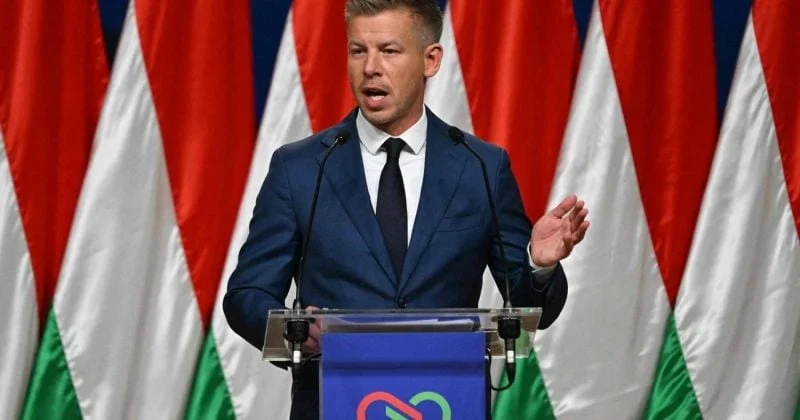
The pledge from the Ministry of Finance follows the landslide victory of the Tisza party, led by Péter Magyar. The election results effectively dismantled the long-standing administration of Viktor Orbán, whose Fidesz party had governed since 2010. While the previous government spent much of its tenure keeping the European Union at arm’s length—frequently blocking collective EU initiatives and maintaining a "contrarian" stance on fiscal and judicial integration—the Magyar administration has signaled its intent to sprint toward the center of European policymaking.
A New Fiscal Era: The 2030 Roadmap
Finance Minister Kármán’s announcement is not merely a symbolic gesture of goodwill toward the European Commission; it is a structured economic roadmap designed to repair Hungary’s strained relationship with international markets and its European partners. The 2030 target requires Hungary to undergo a rapid and disciplined fiscal transformation. For over a decade, Hungary remained one of the few major economies in the region without a clear date for joining the Eurozone, a status that many economists believe contributed to the volatility of the Hungarian Forint (HUF) and higher borrowing costs compared to its neighbors.
The commitment involves a multi-stage process of economic convergence. To join the Eurozone, a member state must demonstrate "sustainable" economic alignment with the existing bloc. Kármán has emphasized that the primary focus of the first term of the Tisza government will be the stabilization of the national budget and the reduction of public debt, which had ballooned during the previous years due to various state-led interventions and energy subsidies.
Navigating the Maastricht Criteria
The path to the euro is governed by the Maastricht Treaty, which outlines five distinct economic benchmarks that a country must satisfy before it can abandon its national currency. Minister Kármán has identified the budget deficit as the most immediate hurdle. Under the EU’s Stability and Growth Pact, member states are required to maintain a budget deficit below 3% of their Gross Domestic Product (GDP).
Hungary’s fiscal deficit has historically fluctuated, often exceeding these limits during periods of aggressive state spending. Kármán’s plan involves a rigorous "spending discipline" strategy intended to bring the deficit firmly below the 3% ceiling within the next four fiscal years. This will require the government to balance the need for economic recovery with the necessity of fiscal restraint—a delicate task for any new administration.
In addition to the deficit ceiling, Hungary must meet the following criteria:
- Price Stability: The inflation rate cannot exceed the average of the three best-performing EU member states by more than 1.5 percentage points.
- Government Debt: Total public debt must not exceed 60% of GDP, or must be diminishing at a satisfactory pace.
- Exchange Rate Stability: The country must participate in the Exchange Rate Mechanism (ERM II) for at least two years without severe tensions or devaluing against the euro.
- Long-term Interest Rates: Nominal long-term interest rates should not be more than 2 percentage points above the rates of the three best-performing member states in terms of price stability.
Central Bank Realism and Economic Cycles
While the executive branch is pushing for a rapid transition, the Hungarian National Bank (Magyar Nemzeti Bank – MNB) has injected a dose of institutional realism into the conversation. In late April 2026, the central bank issued a report cautioning that while euro adoption is a strategic necessity, the timing must align perfectly with the country’s economic cycle to avoid "asymmetric shocks."
The MNB’s analysts pointed out that losing independent monetary policy—specifically the ability to set interest rates and manage the exchange rate—requires a highly flexible labor market and a robust fiscal buffer. The bank’s caution reflects a desire to avoid the pitfalls seen in other Southern European nations during the 2008 financial crisis, where the inability to devalue their currency exacerbated economic downturns. Nevertheless, the central bank and the Ministry of Finance have agreed to form a joint task force to monitor convergence indicators quarterly, ensuring that the 2030 goal remains a data-driven objective rather than a purely political one.
Unlocking the Frozen EU Funds
A critical component of the Magyar government’s strategy is the immediate resolution of the rule-of-law disputes that led the European Commission to freeze billions of euros in Cohesion Funds and Recovery and Resilience Facility (RRF) grants. Under the Orbán administration, these funds remained inaccessible as Brussels demanded specific reforms regarding judicial independence, public procurement transparency, and anti-corruption measures.
The new government has pledged to meet all "super milestones" set by the European Commission within its first 100 days in office. By unlocking these funds—estimated to be worth over €30 billion—Hungary aims to finance its transition toward the euro without relying solely on domestic tax increases. The influx of EU capital is expected to stimulate the economic growth necessary to lower the debt-to-GDP ratio, effectively using Brussels’ own funds to meet the criteria for deeper integration.
Implications for the Digital Asset and Crypto Markets
The shift toward the Eurozone has significant implications for the financial technology sector and crypto-asset investors. For years, Hungary’s regulatory stance on digital assets was described by industry analysts as "lukewarm" or "passive." While the country did not explicitly ban digital assets, the lack of a proactive regulatory framework under the previous government created a "gray area" that deterred institutional investment.
With the move toward the euro, Hungary is now expected to become a leading advocate for the full implementation of the EU’s Markets in Crypto-Assets (MiCA) regulation. MiCA provides a unified legal framework for crypto-assets across the EU, offering clarity on licensing for service providers and consumer protection. A government that is actively seeking Eurozone membership has every incentive to prove it is a "top-tier" regulator, aligning its domestic financial oversight with the European Securities and Markets Authority (ESMA) and the European Banking Authority (EBA).
Market projections suggest that Europe’s crypto market could reach a valuation of $18.5 billion by 2030, with a compound annual growth rate (CAGR) of approximately 16%. By positioning itself as a compliant, euro-aspirant member state, Hungary could transform from a peripheral market into a regional hub for digital asset custody and fintech innovation. Institutional investors, who typically avoid markets with high currency risk and regulatory uncertainty, may find a "euro-bound" Hungary a much more attractive destination for capital.
Geopolitical Realignment and Market Sentiment
The decision to adopt the euro is as much a geopolitical statement as it is an economic one. For over a decade, Hungary’s foreign policy was characterized by its "Eastern Opening" strategy, which sought closer economic ties with Moscow and Beijing. This often placed Budapest at odds with the collective security and economic policies of the EU and NATO.
The 2030 euro pledge signals an end to this balancing act. By committing to the common currency, the Magyar government is effectively anchoring Hungary’s future to the core of the European project. International ratings agencies have already begun to take notice. Following Minister Kármán’s announcement, several major agencies revised Hungary’s economic outlook from "stable" to "positive," citing reduced political risk and the anticipated improvement in fiscal governance.
Execution Risks and the Path Ahead
Despite the optimism surrounding the new government’s pivot, significant execution risks remain. Pledging to meet the Maastricht criteria is a political act; actually achieving them is a rigorous technical challenge. The primary risk lies in the potential for "fiscal drag." To reduce the deficit to below 3%, the government may be forced to cut public spending or increase taxes at a time when the population is expecting a "democracy dividend" in the form of improved public services and higher wages.
Furthermore, maintaining exchange rate stability within the ERM II framework can be difficult if the global economy faces new shocks. If the Hungarian Forint faces speculative pressure during the transition period, the central bank may be forced to burn through foreign exchange reserves or raise interest rates to levels that could stifle domestic growth.
If the fiscal math does not align, or if the global inflationary environment remains volatile, the 2030 timeline could slip. A delay in euro adoption would not only be a political setback for the Tisza party but could also slow the regulatory harmonization that the crypto and fintech sectors are currently anticipating.
Conclusion
Hungary’s decisive pivot toward Brussels and the 2030 euro adoption goal mark the beginning of a new chapter in the nation’s post-communist history. By trading the "contrarian" politics of the past for a seat at the Eurozone table, the new administration is betting that the benefits of stability, lower transaction costs, and increased institutional confidence will outweigh the loss of monetary sovereignty. As the government moves to unlock frozen funds and align with EU frameworks like MiCA, the eyes of the financial world will be on Budapest to see if this ambitious sprint toward the heart of Europe can be sustained.














