


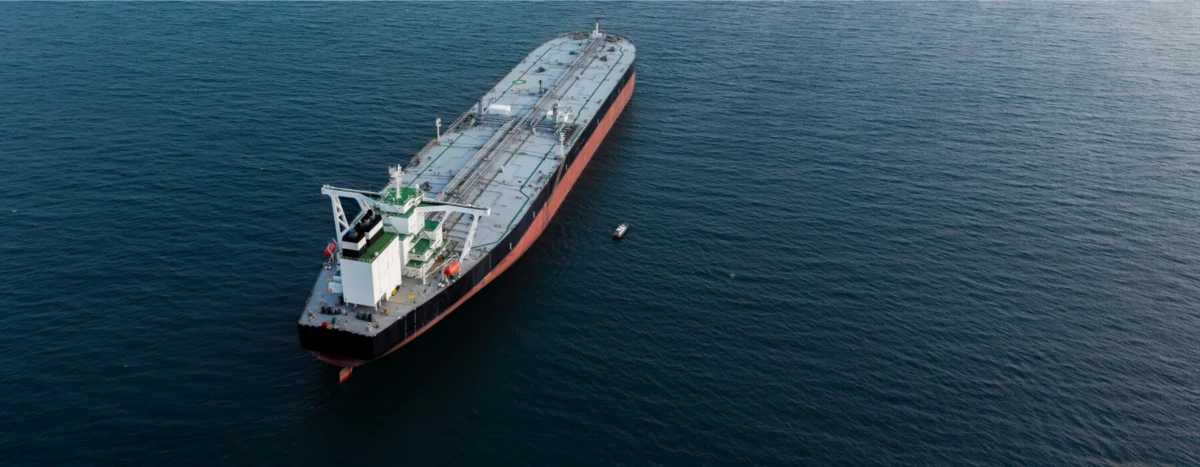
The global maritime industry is facing an unprecedented challenge to the traditional norms of international trade as the Islamic Republic of Iran begins enforcing a mandatory cryptocurrency toll for vessels traversing the Strait of Hormuz. According to investigative reports and statements from Iranian industry officials, the Islamic Revolutionary Guard Corps (IRGC) has established a formalized "tollbooth" system, requiring ship operators to pay transit fees in digital currencies or Chinese yuan to ensure safe passage through one of the world’s most vital maritime chokepoints. This move represents the first documented instance of a nation-state leveraging decentralized digital assets to monetize control over international waterways, signaling a shift in how sanctioned regimes may project power and circumvent global financial restrictions in the coming years.
The Emergence of the Iranian Tollbooth
The logistics of this new mandate first came to light on April 1, 2026, when reports surfaced detailing a sophisticated extortion and transit management system managed by the IRGC. Under this framework, vessels seeking passage through the Strait of Hormuz are required to coordinate with an IRGC-linked intermediary. The process is rigorous and data-intensive: operators must submit comprehensive manifests including vessel ownership, flag of registration, cargo specifications, final destinations, and detailed crew lists. Once this information is vetted, the intermediary initiates a negotiation process for a "safe passage permit."
Industry participants have noted that the baseline fee for this permit typically begins at $1 per barrel of oil, though rates can fluctuate based on the cargo’s value and the vessel’s origin. To facilitate these payments while avoiding the traditional banking system—which remains heavily restricted by international sanctions—the IRGC has mandated the use of the Chinese yuan or specific digital assets. Upon successful confirmation of payment, the vessel is issued a unique permit code and assigned an escorted route through the strait, effectively turning a strategic international passage into a private revenue stream for the Iranian state.
Chronology of the 2026 Maritime Crisis
The development of the crypto-toll system followed a rapid sequence of events in early April 2026, which heightened anxieties across global energy markets and shipping lanes.
- April 1, 2026: Bloomberg reports the first confirmed instances of ship operators being intercepted by IRGC naval assets and directed to pay "transit fees" via digital intermediaries. The report highlights that the IRGC had begun using these fees to fund regional operations and bolster its domestic budget amidst a deepening economic crisis.
- April 4, 2026: Reports from maritime security firms indicate a surge in "shadow banking" activity linked to Iranian port authorities. Several tankers under European and Asian flags are observed loitering outside the strait, reportedly awaiting confirmation of cryptocurrency transfers.
- April 8, 2026: The Financial Times publishes an interview with Hamid Hosseini, a spokesperson for Iran’s Oil, Gas, and Petrochemical Products Exporters’ Union. Hosseini confirms the state’s intent to formalize these payments, explicitly mentioning the use of digital currencies. He emphasizes the speed of the transaction, stating that vessels would be given "a few seconds" to finalize payments in assets like Bitcoin to prevent tracing or confiscation by foreign regulatory bodies.
- April 9, 2026: News of a tenuous ceasefire between regional actors and Iran is overshadowed by the realization that the toll system is intended to remain a permanent fixture of Iranian maritime policy, regardless of the security situation.
The Strategic Shift to Stablecoins
While official statements from Iranian representatives have frequently cited Bitcoin as the primary medium for these transactions, financial analysts and blockchain experts suggest a different reality on-chain. While Bitcoin offers total decentralization, its inherent price volatility makes it a risky asset for high-volume state commerce. In contrast, stablecoins—specifically those pegged to the U.S. dollar like USDT (Tether)—have become the preferred instrument for the Iranian regime’s broader economic activities.
Historically, the IRGC and associated shell companies have favored stablecoins because they provide the liquidity necessary for large-scale procurement and trade. As the Iranian rial continues its multi-year decline, the regime has sought "hard" digital assets that can preserve value over time. Furthermore, the Iranian crypto ecosystem has matured significantly. By the end of 2025, the IRGC’s on-chain activity was estimated to represent approximately 50% of Iran’s total $7.8 billion cryptocurrency ecosystem.
The volume of funds received by IRGC-associated wallets spiked from $2 billion in 2024 to over $3 billion in 2025. These figures are considered conservative, as they only account for addresses directly linked to OFAC-designated entities. The actual scale, including the "shadow" network of front companies and third-party financiers, is likely significantly higher. The move to monetize the Strait of Hormuz is a logical extension of this existing digital financial empire.
Economic Impact and Global Oil Supply
The Strait of Hormuz is arguably the most critical maritime chokepoint in the world. Approximately 20% of the global supply of petroleum and liquefied natural gas (LNG) passes through its narrow waters daily. Data suggests that roughly 175 million barrels of crude and refined products are loaded onto tankers in the Persian Gulf at any given time.
If the IRGC successfully enforces a $1-per-barrel toll on even a fraction of this volume, the revenue generated could reach hundreds of millions of dollars per month. For a regime under heavy economic pressure, this represents a vital lifeline. However, for the global economy, it represents a "tax" on energy that could drive up consumer prices and introduce a permanent layer of instability into the energy supply chain.
Sanctions Risks and Compliance Challenges
For international shipping conglomerates and insurance providers, the "Iranian tollbooth" presents a legal minefield. Iran remains under comprehensive U.S. and international sanctions. Under existing OFAC (Office of Foreign Assets Control) regulations, any transaction involving the Iranian government or its instrumentalities is strictly prohibited for U.S. persons and entities.
Making a cryptocurrency payment to an IRGC-linked wallet, even under the duress of ensuring vessel safety, could be interpreted as providing "material support" to a designated terrorist organization. The consequences for shipping companies are severe:
- Direct Enforcement: Fines and legal action from the U.S. Treasury and Department of Justice.
- Loss of Insurance: Protection and Indemnity (P&I) clubs may void coverage for vessels that engage in prohibited transactions, leaving shipowners liable for billions in potential damages.
- Reputational Damage: Publicly traded companies face significant backlash from investors and ESG-focused funds for facilitating the funding of the IRGC.
The transparency of the blockchain, while often touted as a tool for anonymity, actually works against those attempting to hide these payments. Regulators now employ advanced blockchain analytics to trace the flow of funds in near-real time. A payment made in stablecoins can be followed from a shipping company’s exchange account to an Iranian intermediary and eventually to an IRGC-controlled wallet, creating a permanent, immutable record of the violation.
International Reactions and Potential Countermeasures
The international community has reacted with a mixture of condemnation and strategic maneuvering. While some nations have called for increased naval escorts to protect merchant shipping, others are exploring diplomatic avenues to prevent the permanent "normalization" of these tolls.
Maritime industry bodies, including the International Maritime Organization (IMO), have expressed "grave concern" over the precedent being set. Analysts suggest that if Iran is successful, other sanctioned or "pariah" states controlling strategic chokepoints may attempt to replicate the model. This could lead to a fragmented global trade system where "digital tribute" becomes a standard cost of doing business in certain regions.
To disrupt this system, several strategies are being deployed:
- Enhanced Wallet Designation: Public and private sector actors are working to identify and tag new IRGC wallets as soon as they appear on the blockchain, effectively "blacklisting" them from major exchanges.
- Liquidity Squeezing: By targeting the off-ramps where the IRGC converts crypto into fiat currency, regulators aim to make the digital tolls useless for purchasing physical goods or paying domestic salaries.
- Diplomatic Pressure on Intermediaries: Pressure is being applied to the "third-party" jurisdictions where these IRGC-linked intermediaries are often based, urging them to shut down the front companies facilitating the toll collection.
The Future of Maritime Sovereignty
The transition of the Strait of Hormuz into a crypto-denominated toll zone marks a turning point in the intersection of geopolitics and decentralized finance. It highlights the dual-use nature of blockchain technology: as a tool for financial freedom and as a mechanism for state-sponsored extortion and sanctions evasion.
As the global community watches the situation in the Persian Gulf unfold, the focus remains on whether the international rules-based order can adapt to the "digital frontier." For now, the "Iranian tollbooth" stands as a stark reminder that the control of physical territory can now be seamlessly integrated with the control of digital assets, creating a new and complex landscape for 21st-century international trade. The long-term implications for maritime law, energy security, and the efficacy of global sanctions will depend on how effectively the world responds to this unprecedented gambit by the Iranian regime.














