


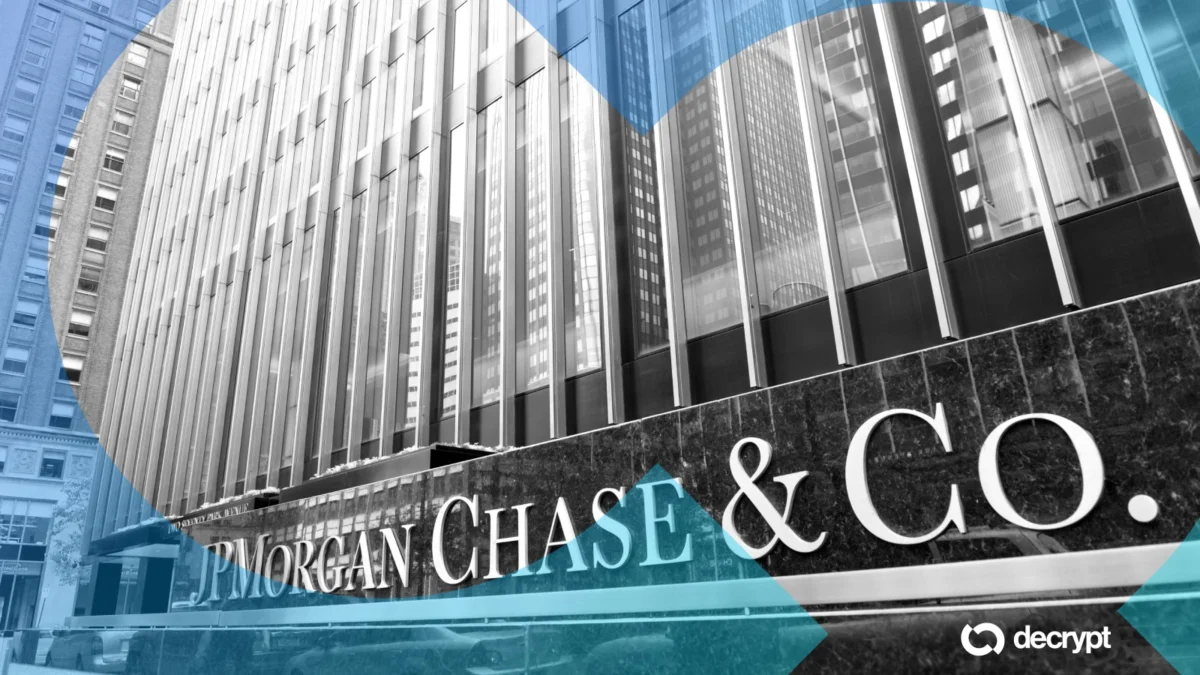
Global banking behemoth JPMorgan has announced a groundbreaking initiative with the establishment of a new blockchain product: the JPMorgan OnChain Liquidity-Token Money Market Fund. This innovative offering represents a significant stride in the convergence of traditional finance and distributed ledger technology, specifically leveraging the robust infrastructure of the Ethereum blockchain. The fund is designed as an on-chain money market fund, primarily investing in highly liquid and secure U.S. treasury instruments, thereby bridging institutional capital with the efficiencies promised by blockchain technology.
The Genesis of an On-Chain Money Market Fund
The newly established fund, formally known as the JPMorgan OnChain Liquidity-Token Money Market Fund, is structured to provide institutional investors with exposure to U.S. treasury bills, bonds, and notes. This investment focus on sovereign debt underscores a commitment to stability and liquidity, characteristic of traditional money market funds. However, the pivotal difference lies in its operational framework: the fund will exist and operate on a blockchain, specifically connected to the Ethereum network. This move, disclosed through a filing with the U.S. Securities and Exchange Commission (SEC), signals JPMorgan’s escalating commitment to integrating digital assets into its core financial services.
Powering this ambitious venture is JPMorgan’s Kinexys Digital Assets (KDA) unit. KDA is envisioned as the technological backbone, responsible for developing and maintaining the infrastructure that enables the fund’s on-chain functionality. The SEC filing explicitly states that the KDA technology will create a "permissioned system" operating atop public blockchains. While Ethereum is currently the sole public blockchain available for use by investors in this context, the filing indicates a strategic intent to expand to other networks in the future, suggesting a multi-chain vision for JPMorgan’s digital asset ecosystem. This permissioned layer is critical for institutional adoption, allowing for necessary controls regarding Know Your Customer (KYC) and Anti-Money Laundering (AML) compliance, which are paramount in regulated financial environments.
Ethereum: The Chosen Foundation (For Now)
The selection of Ethereum as the initial blockchain for the JPMorgan OnChain Liquidity-Token Money Market Fund is noteworthy. Ethereum, as the leading smart contract platform, boasts the largest ecosystem of decentralized applications (dApps), a vast developer community, and a proven track record of security and resilience, albeit with its own set of challenges. Its public, decentralized nature provides a high degree of transparency and immutability for transactions, which, when coupled with JPMorgan’s permissioned layer, creates a hybrid model suitable for institutional use. This approach aims to harness the benefits of public blockchain innovation while adhering to the stringent regulatory and operational requirements of global finance.
While Ethereum offers significant advantages, including network effects and liquidity, the stated intention to expand to other blockchains highlights the banking giant’s recognition of the evolving multi-chain landscape. Potential future integrations could include enterprise-grade solutions like Hyperledger Fabric, permissioned versions of popular public chains, or other emerging Layer 1 protocols that offer enhanced scalability, lower transaction costs, or specialized features suitable for financial applications. This strategic flexibility positions JPMorgan to adapt to future technological advancements and market demands in the digital asset space.
Acknowledging and Mitigating Blockchain Technology Risks
A critical aspect of the SEC filing, and one that underscores a prudent approach to innovation, is the explicit acknowledgement of "blockchain technology risk" as a significant factor for investors. The fund’s prospectus candidly labels blockchain technology as "a relatively new and untested technology." This transparency is crucial for investor protection and reflects a responsible stance from a regulated financial institution venturing into nascent technological domains.
The identified risks are multifaceted and encompass several key areas. Foremost among them is the potential for the blockchain not to function as intended, which could lead to operational disruptions, settlement failures, or loss of access to fund assets. Regulatory concerns also feature prominently, given the evolving and often fragmented legal frameworks surrounding blockchain and digital assets globally. JPMorgan highlights the uncertainty regarding how existing and future regulations might impact the fund’s operations, its underlying technology, or the broader digital asset market. Furthermore, the filing points to the inherent possibility of undiscovered technical flaws, vulnerabilities, or security exploits within the blockchain infrastructure or the smart contracts governing the fund. Such flaws could lead to system failures, unauthorized access, or the compromise of assets.
These disclosures are not unique to JPMorgan; they reflect a broader industry awareness of the complexities and nascent nature of blockchain implementation in regulated finance. By articulating these risks upfront, JPMorgan aims to ensure investors are fully informed, while also signaling its commitment to robust risk management frameworks and continuous monitoring as the technology matures. This proactive risk identification contributes to building trust and confidence in tokenized financial products.
JPMorgan’s Expanding Footprint in Digital Assets: A Chronology
The launch of the JPMorgan OnChain Liquidity-Token Money Market Fund is not an isolated event but rather the latest significant milestone in a systematic and evolving strategy by the banking giant to embrace blockchain and digital assets. JPMorgan’s journey in this space has been characterized by a measured but increasingly assertive approach, transitioning from initial skepticism to becoming a leading innovator.
Early Skepticism (Mid-2010s): Jamie Dimon, JPMorgan’s CEO, famously expressed skepticism about Bitcoin in its early days, even calling it a "fraud." However, this public stance often contrasted with internal exploration efforts.
Project Ubin (2017): JPMorgan was an early participant in the Monetary Authority of Singapore’s (MAS) Project Ubin, a collaborative industry project exploring the use of DLT for interbank payments and settlements. This marked an early foray into real-world applications of blockchain in a regulated environment.
Onyx (2020): A pivotal moment came with the establishment of Onyx, JPMorgan’s dedicated blockchain and digital assets division. Onyx was created to house the firm’s various blockchain initiatives, signaling a strategic commitment to the technology. Its primary focus areas include wholesale payments, tokenized assets, and digital identity solutions.
JPM Coin (2020): Under the Onyx umbrella, JPMorgan launched JPM Coin, a permissioned, blockchain-based digital currency designed for wholesale payments and interbank settlements. JPM Coin facilitates instant transfers of U.S. dollars between institutional clients, significantly reducing settlement times and operational costs. Its deployment marked one of the first real-world applications of a blockchain-based stablecoin by a major global bank. By late 2022, JPM Coin was processing approximately $1 billion in transactions daily, demonstrating its practical utility.
Project Guardian (2022 onwards): JPMorgan has been a key participant in MAS’s Project Guardian, an industry-wide initiative exploring the tokenization of financial assets and the development of open, interoperable networks. In November 2022, JPMorgan successfully executed its first live transaction under Project Guardian, involving the tokenization of a Singapore government bond, further solidifying its expertise in RWA tokenization. This project also explored decentralized finance (DeFi) applications in wholesale funding markets, albeit in a permissioned context.
Recent Collaborations (Late 2023 – Early 2024): In a demonstration of its multi-chain and collaborative strategy, JPMorgan’s Kinexys platform recently partnered with tokenization firm Ondo Finance, Ripple, and Mastercard. This collaboration facilitated the settlement of tokenized treasuries on the XRP Ledger, the native blockchain of the Ripple-linked XRP token. This initiative showcased JPMorgan’s willingness to engage with diverse blockchain ecosystems and integrate with various industry players to advance the tokenization agenda. This particular collaboration highlighted the potential for cross-chain settlement and enhanced efficiency in asset transfers.
This comprehensive timeline illustrates JPMorgan’s systematic evolution from cautious observer to active participant and innovator in the digital asset space, culminating in the launch of its own tokenized money market fund.
The Broader Landscape: Tokenization of Real-World Assets (RWAs)
JPMorgan’s latest offering is emblematic of a rapidly accelerating trend within traditional finance: the tokenization of real-world assets (RWAs). This phenomenon involves representing ownership of tangible and intangible assets—such as real estate, commodities, private equity, and, in this case, government bonds—as digital tokens on a blockchain. The primary drivers behind this trend are manifold:
- Enhanced Liquidity: Tokenization can fractionalize ownership of illiquid assets, making them more accessible to a wider pool of investors and potentially increasing their liquidity.
- Operational Efficiency: Blockchain technology can streamline processes like issuance, transfer, and settlement, reducing manual intervention, reconciliation efforts, and associated costs.
- Increased Transparency: Immutability and transparency inherent in blockchain can provide a clear audit trail of ownership and transactions.
- Reduced Intermediaries: Tokenization can potentially disintermediate traditional financial processes, leading to faster and cheaper transactions.
- Programmability: Smart contracts enable automated execution of agreements, such as dividend payments or redemption processes, directly linked to the token.
The global market for tokenized assets is projected to grow substantially, with some estimates suggesting it could reach trillions of dollars in the coming decade. Major institutions are increasingly recognizing that blockchain is not merely a technology for speculative cryptocurrencies but a foundational layer for the future of capital markets.
Competitive Landscape: Franklin Templeton’s BENJI and Beyond
While JPMorgan’s move is significant, it enters a burgeoning field where other traditional finance players are also making their mark. A notable competitor in the tokenized money market space is Franklin Templeton, a well-established asset manager. Franklin Templeton’s BENJI fund offers a similar tokenized money market product, providing investors with exposure to U.S. government securities.
A key differentiator for BENJI, at least in its current iteration, is its broader accessibility across multiple blockchains. The fund is available on a range of networks, including BNB Chain, Canton, and Avalanche. This multi-chain strategy provides investors with greater flexibility and potentially wider reach, catering to different preferences within the digital asset ecosystem. In contrast, JPMorgan’s fund, while anticipating future expansion, is initially focused solely on Ethereum. This difference highlights varying strategic approaches to blockchain interoperability and market penetration among major financial institutions.
Beyond Franklin Templeton, other institutional giants like BlackRock, Fidelity, and BNY Mellon are actively exploring or have already launched various tokenization initiatives, digital asset custody solutions, and blockchain-based platforms. This competitive landscape underscores the growing consensus that digital assets and blockchain technology are not fringe phenomena but integral components of the future financial infrastructure. The race to develop robust, compliant, and scalable tokenization platforms is intensifying, with each institution bringing its unique strengths and strategic focus to the table.
Implications and Future Outlook
The launch of JPMorgan’s OnChain Liquidity-Token Money Market Fund carries profound implications for both the banking giant and the broader financial industry.
For JPMorgan: This initiative solidifies JPMorgan’s position as a leader in bridging traditional finance with blockchain innovation. It demonstrates a practical application of its Onyx division’s capabilities and validates years of internal research and development. The fund could serve as a blueprint for further tokenized products across various asset classes, potentially expanding to private equity, real estate, and other traditionally illiquid investments. It also enhances JPMorgan’s ability to cater to institutional clients seeking exposure to digital asset efficiencies within a regulated framework.
For Traditional Finance: This move by one of the world’s largest banks sends a powerful signal to the rest of the financial industry. It suggests that tokenization is moving beyond experimental phases and into mainstream product offerings. It could accelerate the adoption of blockchain technology for core financial functions, pushing other banks and asset managers to develop similar capabilities to remain competitive. The emphasis on U.S. treasuries, a bedrock of global finance, suggests that even the most conservative asset classes are ripe for blockchain-driven transformation.
For the Digital Asset Ecosystem: The fund’s connection to Ethereum, even if permissioned, lends significant institutional credibility to the public blockchain. It validates Ethereum’s underlying technology and its potential as an infrastructure layer for regulated financial products. The explicit mention of blockchain risk in an SEC filing also contributes to regulatory clarity and sets a precedent for how such risks are disclosed and managed within traditional financial products.
Regulatory Evolution: The active engagement of institutions like JPMorgan, particularly through SEC filings, inevitably contributes to the evolution of the regulatory landscape. As more tokenized products come to market, regulators will gain a clearer understanding of their operational nuances, risks, and benefits, potentially leading to more tailored and comprehensive regulatory frameworks.
In conclusion, JPMorgan’s new on-chain money market fund is more than just another product; it is a tangible manifestation of a future where traditional financial assets are seamlessly integrated with blockchain technology. By tokenizing U.S. treasuries on Ethereum and explicitly addressing the associated risks, JPMorgan is not only innovating but also helping to lay the groundwork for a more efficient, transparent, and digitally native global financial system. The financial markets reacted positively to the news, with shares in JPMorgan (JPM) jumping 1.63% on the day, closing at $304.88, reflecting investor confidence in the bank’s strategic pivot towards digital asset innovation. This development marks a significant step towards the mainstream adoption of tokenized real-world assets, heralding a new era for capital markets.














