


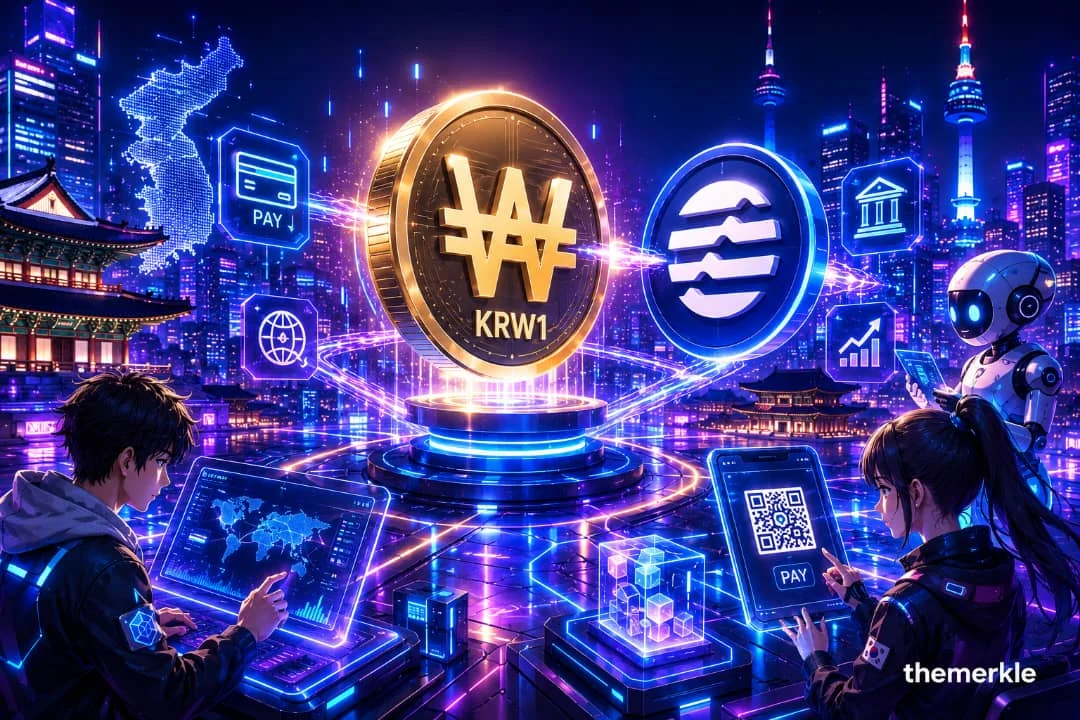
The formal debut of KRW1 on the Aptos network represents a major milestone, not just for the Korean market but also for the global stablecoin ecosystem. Historically, stablecoins have predominantly operated within EVM-compatible networks, benefiting from a well-established developer community and widely accepted DeFi interoperability standards. BDACS’s decision to launch KRW1 on Aptos, a non-EVM chain, underscores a growing trend among stablecoin issuers to diversify their infrastructure away from Ethereum-scaled ecosystems. This move is driven by the imperative for higher throughput, lower latency, and more scalable infrastructure capable of powering real-world commerce and institutional-grade applications. Aptos, with its unique architecture and focus on these very attributes, positions itself as a natural home for such an ambitious undertaking.
A New Horizon for Stablecoins: KRW1 on Aptos
The announcement, following an extensive exploration and collaboration between BDACS and the Aptos Foundation, has been widely touted by both parties as a significant leap forward for Korea’s burgeoning digital asset economy. This development further solidifies Aptos’s reputation as a high-throughput Layer 1 blockchain increasingly aligned with the demands of institutional finance, AI-powered systems, and sophisticated payments infrastructure. According to an official statement from Aptos, KRW1 is expected to operate on rails designed for "markets and machines," reflecting a broader industry trend where blockchain settlements become integral to economies built around advanced payment systems and basket-style stablecoins. The vision extends to a future where near-future payments are increasingly made by AI giants and autonomous machines integrated into a robust financial stack.
The journey of KRW1 onto Aptos was not an overnight endeavor. The groundwork for this integration was laid well in advance, with the launch completed in testnet at the end of 2023. This preparatory phase allowed for rigorous testing and optimization, ensuring that the infrastructure could support the demands of a fully operational stablecoin designed for national and international use. The successful testnet deployment paved the way for the formal launch, cementing Aptos’s role as a key player in digital finance across Asia and establishing a precedent for future KRW-pegged stablecoin initiatives. This strategic move highlights Aptos’s commitment to delivering world-first solutions that cater to the specific needs of diverse regional economies.
Aptos: Designed for Performance and Future Finance
Aptos’s unique selling proposition centers around its exceptional throughput, ultra-low latency, and an infrastructure meticulously optimized for institutional-grade applications. Unlike many traditional blockchain networks, Aptos was built from the ground up with a focus on scalability and reliability, drawing on the foundational research and development initially undertaken for Meta’s Diem (formerly Libra) project. Its innovative use of the Move programming language and a parallel execution engine allows it to process transactions with unprecedented speed and efficiency, a critical requirement for real-time financial operations. This architectural superiority enables Aptos to align itself seamlessly with both traditional financial service functionalities and the rapidly evolving domain of AI-driven autonomous systems that demand machine-speed operations.
BDACS explicitly described this collaboration as a monumental opportunity to expand KRW1’s use cases beyond conventional blockchain applications into a wider spectrum of financial purposes. This integration is poised to power on-chain commerce, facilitate real-time payments, and lay the groundwork for potential future tokenized asset frameworks deeply connected to the dynamic Korean market. The emphasis here is not merely on creating another digital asset but on forging a foundational layer that can seamlessly integrate with and enhance existing financial ecosystems, offering tangible benefits to businesses and consumers alike.
South Korea: A Fertile Ground for Digital Assets
Industry analysts widely consider Asia to be the prime long-term target market for stablecoin adoption, particularly in countries like South Korea, where habitual reliance on digital payments has become deeply ingrained in daily life. South Korea boasts a highly sophisticated digital economy, characterized by high internet penetration, widespread mobile payment adoption, and a robust, engaged base of crypto-active users. This makes it an optimal region for launching a localized stablecoin, as the infrastructure and user base are already primed for digital financial innovations.
Despite occasional regulatory headwinds and market volatility, South Korea consistently ranks as one of the largest crypto markets globally. Retail investment continues to thrive across various sectors, including trading, blockchain gaming, payments, and decentralized finance (DeFi). The nation has historically outperformed many Western markets in terms of retail adoption, and institutional interest is steadily growing under an increasingly clearer regulatory environment. The launch of KRW1 on Aptos directly caters to this active market, providing local actors with a digital asset denominated in a currency fundamentally interwoven into their daily economic activities, thereby reducing reliance on dollar-denominated stablecoins.
KRW1 is designed to serve two primary user segments: KRW holders who require on-chain liquidity for various purposes, and DeFi users seeking a stable base currency to collateralize positions across decentralized protocols. The expansion of KRW1’s reach is also indicative of a broader evolution within the stablecoin sector, transforming these digital instruments from simple trading tools into comprehensive settlement layers. This expanded functionality encompasses payments, treasury management, cross-border remittances, and the foundational support for tokenized financial products, signaling a maturation of the stablecoin paradigm.
Infrastructure for Payments and Commerce: The Core Vision
The KRW1-Aptos integration is fundamentally geared towards practical finance rather than speculative trading. Both BDACS and Aptos Foundation have consistently highlighted the stablecoin’s crucial role in supporting robust payment networks, streamlining cross-border remittances, and enabling the seamless settlement of tokenized real-world assets directly on-chain. This focus on utility marks a significant departure from the early days of crypto, where speculative trading often overshadowed practical applications.
Stablecoins pegged to exotic local fiat currencies are progressively gaining recognition as vital components for widespread blockchain acceptance. While USD-pegged stablecoins like USDT and USDC dominate global markets, localized stablecoins offer unparalleled seamlessness in integrating the blockchain ecosystem with national payment infrastructures. They eliminate currency conversion complexities and reduce foreign exchange risks for local users and businesses, fostering greater adoption and utility. KRW1’s presence on Aptos thus immortalizes the blockchain as one of the first chains to boast a substantive use case unequivocally focused on real financial transactions, rather than just speculative endeavors.
This merger perfectly aligns with Aptos’s strategic vision of optimizing blockchain technology for both human users and increasingly autonomous agents. As AI agents rapidly expand their capabilities to autonomously negotiate deals, self-execute payments, and communicate directly with decentralized applications without human intervention, the demand for robust, high-speed stablecoin protocols becomes paramount for the entire industry. The integration of KRW1 on Aptos provides a critical piece of this infrastructure, enabling the frictionless flow of value within these advanced, AI-driven financial ecosystems.
Moreover, the implementation of KRW1 could serve as a powerful springboard for future projects utilizing tokenized real-world assets within South Korea’s financial ecosystem. The launch of this localized stablecoin on Aptos is a strong indicator that the blockchain aspires to become an important execution layer for these next-generation financial systems, attracting innovative projects and investments into the Korean market.
Escalating the Crypto Market in Korea: Regulatory Context and Growth
South Korea’s enthusiastic engagement with cryptocurrency is well-documented. Despite periods of regulatory uncertainty, the country has maintained a robust and active blockchain user market. The government has recently signaled a clearer and more supportive stance towards digital assets, with ongoing legislative efforts aimed at providing a comprehensive framework for the crypto industry. This evolving regulatory environment is fostering greater institutional interest and creating a more secure ecosystem for both retail and enterprise users.
The collaboration between BDACS and Aptos aims to make blockchain-based payments and commerce increasingly accessible to everyday Korean users and enterprises. By embedding native KRW stablecoin rails directly on Aptos, the initiative eliminates the need for local actors to depend on dollar-denominated stablecoins, allowing them to settle transactions with digital assets denominated in their national currency. This localized approach significantly lowers barriers to entry and enhances the user experience, promoting wider adoption.
BDACS, through its custody and compliance architecture, specifically targets regulated digital asset services for enterprise and institutional customers. This focus adds another crucial institutional dimension to the ecosystem, ensuring that the KRW1 stablecoin operates within a framework that meets stringent regulatory standards. In parallel, the Aptos Foundation is actively scaling its blockchain infrastructure across payments, DeFi, and AI-powered applications. The combination of regulated custody with scalable blockchain performance will become increasingly vital as stablecoins deepen their integration into mainstream financial systems globally.
Turning Up the Heat on Real-World Blockchain Application
The deployment of KRW1 on Aptos signifies a fundamental shift in the competition among blockchain networks. The era where mainnets primarily competed based on speculative potential is giving way to a new paradigm where real, practical usage across networks dictates success. Stablecoins have, over time, become the foundational backbone of numerous parts of the crypto ecosystem, serving as critical liquidity providers for decentralized finance, facilitators of global payments, enablers of tokenized assets, and now, a timely enabler for the burgeoning AI economy.
As governments, institutions, and enterprises progressively increase their consistency in blockchain integration, the demand for infrastructure that can support rapid, scalable stablecoin activity becomes paramount. Aptos, over the last year, has strategically immersed itself in this narrative, taking aim at providing robust infrastructure for AI, autonomous agents, institutional settlement, and advanced payment systems. The addition of KRW1 further solidifies this strategic positioning, providing South Korea with a native stablecoin underpinned by a high-performance blockchain capable of meeting future demands.
This partnership emphatically highlights the increasing importance of localized stablecoins for the broader crypto industry. Instead of an exclusive dependence on dollar-based liquidity, blockchain networks are now actively integrating with regional currencies and local capital flows more directly. This trend not only democratizes access to digital finance but also paves the way for a truly global, yet locally relevant, digital economy where value can flow efficiently and securely across borders and between diverse financial systems. The KRW1-Aptos launch is a testament to this evolving landscape, setting a new benchmark for stablecoin utility and blockchain integration.














