Shares of La-Z-Boy Incorporated (LZB) experienced a dramatic surge during premarket trading, climbing an impressive 20% following the release of its fourth-quarter financial results that significantly surpassed Wall Street expectations. The iconic furniture manufacturer reported adjusted earnings per share (EPS) of $0.98, marking a substantial 37% increase compared to $0.71 in the same period last year. This figure comfortably exceeded the consensus analyst estimate of $0.77 per share, signaling a strong operational performance. Simultaneously, the company’s revenue reached $504.6 million, also topping analyst projections of $491.5 million, bolstered by a notable 11% uptick in retail sales performance within its branded stores.
This robust financial showing underscores a potential rebound in the discretionary consumer spending sector, particularly for home furnishings, after a period of post-pandemic normalization. La-Z-Boy’s improved financial health was further evidenced by its adjusted operating margin, which rose to 9.9%. This improvement was attributed by the company to enhanced supply chain management and more efficient distribution networks, indicating successful cost-control measures and operational optimization. Management also provided an optimistic outlook for the first quarter of the new fiscal year, with revenue projections that exceeded Wall Street’s expectations, further fueling investor confidence. In a move designed to enhance shareholder value, La-Z-Boy unveiled plans for a substantial $300 million stock buyback initiative, signaling management’s belief in the company’s undervaluation and commitment to returning capital to shareholders.
La-Z-Boy’s Financial Resilience and Strategic Initiatives
La-Z-Boy, a household name in recliners and upholstered furniture since its founding in 1927, has navigated a challenging economic landscape marked by fluctuating consumer demand and supply chain disruptions over the past few years. The company’s fourth-quarter results, ending April 27, 2024, indicate a successful adaptation to these conditions. Beyond the headline figures, the detailed breakdown reveals strategic strengths. The 11% increase in retail sales is particularly noteworthy, suggesting that La-Z-Boy’s direct-to-consumer strategy and store experience are resonating with customers, possibly offsetting softer trends in wholesale channels that might be more exposed to broader housing market fluctuations.
The improvement in the adjusted operating margin to 9.9% from previous quarters is a critical indicator of efficiency. This figure reflects not just increased sales volume but also better management of input costs, manufacturing processes, and logistical operations. For context, the company’s operating margin has fluctuated, often facing pressure from raw material costs and freight expenses in recent years. Achieving nearly 10% demonstrates strong execution in a highly competitive industry. This operational excellence likely contributed significantly to the outperformance in adjusted EPS, which analysts typically scrutinize as a measure of a company’s core profitability.
The announcement of a $300 million stock buyback program further reinforces the positive sentiment. Stock buybacks reduce the number of outstanding shares, thereby increasing earnings per share and often signaling to the market that the company believes its stock is undervalued. For La-Z-Boy, with a market capitalization prior to the surge hovering around $1.5 billion, a $300 million buyback represents a significant commitment, potentially impacting roughly 20% of its market value over time, depending on execution. This move, combined with a history of consistent dividend payments, positions La-Z-Boy as a company focused on robust shareholder returns. Industry analysts are likely to view these results as a strong indicator for the broader home furnishings sector, suggesting that companies with strong brands and efficient operations can still thrive even in a cautious consumer environment.
SpaceX’s Soaring Valuation and Michael Burry’s Cautionary Stance
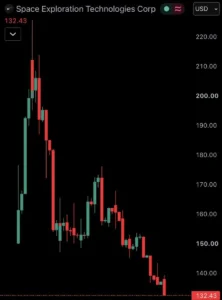
In parallel market activity, shares of the private aerospace giant SpaceX experienced a 4% uptick in premarket trading on secondary markets. This movement occurred as notable investor Michael Burry, famously depicted in "The Big Short" for his prescient bet against the housing market, addressed the company’s valuation metrics. Burry clarified that despite his analysis, he maintains no short position on SpaceX, specifically noting that protective put options on the private company carry "prohibitively high premiums." This statement implies that while Burry might perceive a high valuation, the cost of hedging against a potential decline is currently deemed too expensive, reflecting strong market confidence or perhaps a lack of readily available, liquid options for sophisticated bearish bets on private entities.
SpaceX, founded by Elon Musk, recently surpassed Amazon in worldwide market capitalization rankings, a significant milestone for a private company operating in the capital-intensive space exploration and satellite internet sectors. While Amazon’s market cap is in the trillions, SpaceX’s valuation on secondary markets has been estimated to be in the hundreds of billions, with some reports suggesting it has crossed the $200 billion mark. The comparison highlights the extraordinary growth and investor appetite for companies at the forefront of technological innovation and space commercialization.
The company’s inaugural options trading session was characterized by market participants as highly volatile, with significant trading volume observed in near-term call options. This indicates strong bullish sentiment and speculative interest, with investors betting on further appreciation in the stock’s value. SpaceX’s private status means its shares are not publicly traded on major exchanges but are instead bought and sold through secondary markets, often by institutional investors, employees, and accredited individuals. The emergence of options trading, even if limited, adds a new layer of complexity and speculation to its valuation. The company’s diverse revenue streams, including its Starlink satellite internet service, Falcon rocket launches, and the ambitious Starship development program, contribute to its high valuation, attracting a mix of growth-oriented and long-term strategic investors.
Diverse Market Movers: Significant Gains and Declines
Beyond the headline stories of La-Z-Boy and SpaceX, several other companies demonstrated significant premarket movements, reflecting sector-specific trends and individual corporate developments. ACM Research (ACMR), a supplier of semiconductor manufacturing equipment, demonstrated strength with a notable 9.6% premarket advance. This performance aligns with the broader positive sentiment surrounding the semiconductor industry, driven by demand for AI-related hardware and ongoing technological advancements. Following closely, Mercury Systems (MRCY), a technology company specializing in commercial processing power for aerospace and defense, recorded an 8.9% gain, potentially signaling strong contract wins or an optimistic outlook for defense spending.

Additional strong performers included Copart (CPRT), an online vehicle auction company, Zillow Group (Z), the online real estate marketplace, and Broadridge Financial Solutions (BR), a provider of investor communications and technology-driven solutions. Each of these companies recorded increases of 6% or more, suggesting positive investor reactions to company-specific news, sector tailwinds, or potentially broader economic indicators favoring their respective industries. Copart’s rise could reflect a resilient used car market or increased activity in insurance salvage auctions, while Zillow’s gains might point to renewed optimism in the housing market or improved outlooks for online real estate platforms. Broadridge’s performance often reflects the health of the financial services industry, indicating robust activity among its client base.
Conversely, some notable companies experienced declines during early market hours. Paccar (PCAR), a prominent manufacturer of heavy-duty trucks under brands like Kenworth and Peterbilt, saw its shares retreat by 8.4%. This decline could be attributed to concerns over industrial demand, freight volumes, or specific company announcements. Similarly, Blackstone (BX), a global leader in alternative asset management, experienced an 8.3% decline. As a bellwether for private equity and real estate markets, Blackstone’s dip might reflect broader anxieties among investors regarding interest rates, property valuations, or shifts in institutional investment strategies. These contrasting movements highlight the nuanced nature of market performance, where specific company fundamentals and sector dynamics can lead to divergent outcomes even within a generally trending market.
Corporate Headwinds: Lionsgate and SOPHiA Genetics Face Challenges
While some companies celebrated gains, others grappled with significant headwinds. Lionsgate Studios (LION) shares retreated 5% in premarket trading following a report from TheWrap, an entertainment news publication, indicating that Netflix (NFLX) holds no interest in acquiring the entertainment studio. This revelation directly contradicted previous media reports and market speculation that had fueled merger rumors and driven Lionsgate’s share prices significantly higher in recent weeks.
The initial rumors of Netflix’s potential interest had created a "takeover premium" embedded in Lionsgate’s stock price, with investors betting on a lucrative acquisition offer. Lionsgate, known for its valuable portfolio of film and television intellectual property including franchises like John Wick and The Hunger Games, along with its Starz premium cable and streaming service, has long been considered a potential acquisition target in a consolidating media landscape. However, an individual with knowledge of the situation reportedly informed TheWrap that Netflix is not considering an acquisition offer, prompting market participants to swiftly eliminate the speculative premium, leading to the stock’s decline. This event underscores the sensitivity of stock prices to unconfirmed rumors and the rapid correction that can occur when such speculation is debunked. For Lionsgate, the focus will now shift back to its standalone operational performance and strategic initiatives to enhance shareholder value in a highly competitive entertainment industry.
In the biotechnology sector, SOPHiA Genetics (SOPH), a global leader in AI-driven healthcare and genomics, experienced a 4% decline after announcing the pricing of a public stock offering. The offering comprises 10.53 million shares at $4.75 each, a price point that was notably below the stock’s recent trading levels. This capital raise is projected to generate approximately $50 million before expenses, intended to fund ongoing research and development, expand its commercial footprint, and for general corporate purposes. The underwriting syndicate for the offering also received a 30-day option to purchase an additional 1.58 million shares.
The offering is slated to finalize on June 18. The below-market pricing of the shares negatively impacted investor confidence, as it suggests the company had to offer a discount to attract sufficient capital, potentially signaling urgency or difficulty in securing funding at higher valuations. Apprehensions regarding equity dilution further fueled the selloff. When a company issues new shares, it increases the total number of shares outstanding, which can dilute the value of existing shares and reduce earnings per share. While capital raises are often necessary for growth-oriented biotechnology companies to fund their extensive R&D pipelines and commercialization efforts, the terms of the offering and market perception of its necessity played a significant role in the immediate negative stock reaction.
Broader Market Overview and Cryptocurrency Update
As the trading session approached, S&P 500 futures indicated a modest 0.12% gain, while Dow Jones Industrial Average futures showed slight weakness, declining 0.02%. This mixed sentiment reflected investor caution ahead of a highly anticipated event: the Federal Reserve’s interest rate announcement scheduled for later in the trading session. Market participants were keenly awaiting signals from the Fed regarding the future trajectory of monetary policy, particularly concerning potential rate cuts later in the year. Any deviation from expectations could trigger significant market volatility.
Economists and analysts had widely predicted that the Federal Open Market Committee (FOMC) would maintain the federal funds rate at its current range of 5.25%-5.50%. However, the accompanying statement and the updated "dot plot" – which illustrates FOMC members’ projections for future interest rates – were expected to be closely scrutinized for clues on the timing and magnitude of potential rate reductions in 2024. Inflation data, particularly the Consumer Price Index (CPI) report released earlier in the week, often plays a crucial role in shaping the Fed’s decisions. A higher-than-expected inflation reading could lead the Fed to adopt a more hawkish stance, potentially delaying rate cuts and creating downward pressure on equity markets. Conversely, signs of moderating inflation could pave the way for more accommodative policy.
In the cryptocurrency market, Bitcoin (BTC) traded 1.54% lower, settling at $64,595. This decline followed a period of consolidation for the leading digital asset, with investors monitoring macroeconomic developments and inflows into spot Bitcoin exchange-traded funds (ETFs). The benchmark 10-year Treasury yield, a key indicator for borrowing costs and economic outlook, declined to 4.441%. A decrease in bond yields typically reflects increased demand for safe-haven assets or expectations of slower economic growth and potential rate cuts.
Commodity markets presented a mixed picture: Gold futures edged down 0.11%, trading just below recent highs. Gold often acts as a safe-haven asset, and its slight decline could indicate a marginal shift in investor risk appetite or anticipation of central bank actions. Brent crude oil futures, on the other hand, advanced 0.67%. Oil prices are influenced by global demand forecasts, geopolitical tensions, and supply decisions by major producers, with the uptick potentially reflecting optimism about future economic activity or supply constraints.
Overseas markets posted gains during overnight trading, signaling a relatively positive global sentiment. Japan’s Nikkei 225 index rose 0.72%, reflecting strength in export-oriented sectors and a favorable yen exchange rate. China’s Shanghai Composite index climbed 0.40%, indicating a degree of stability in the world’s second-largest economy despite ongoing concerns about its property sector and consumer demand. These international movements often provide an early indication of the day’s global economic mood, contributing to the overall context for U.S. market open. The cumulative impact of these diverse economic signals and corporate earnings reports created a complex and dynamic premarket environment, setting the stage for an eventful trading day.