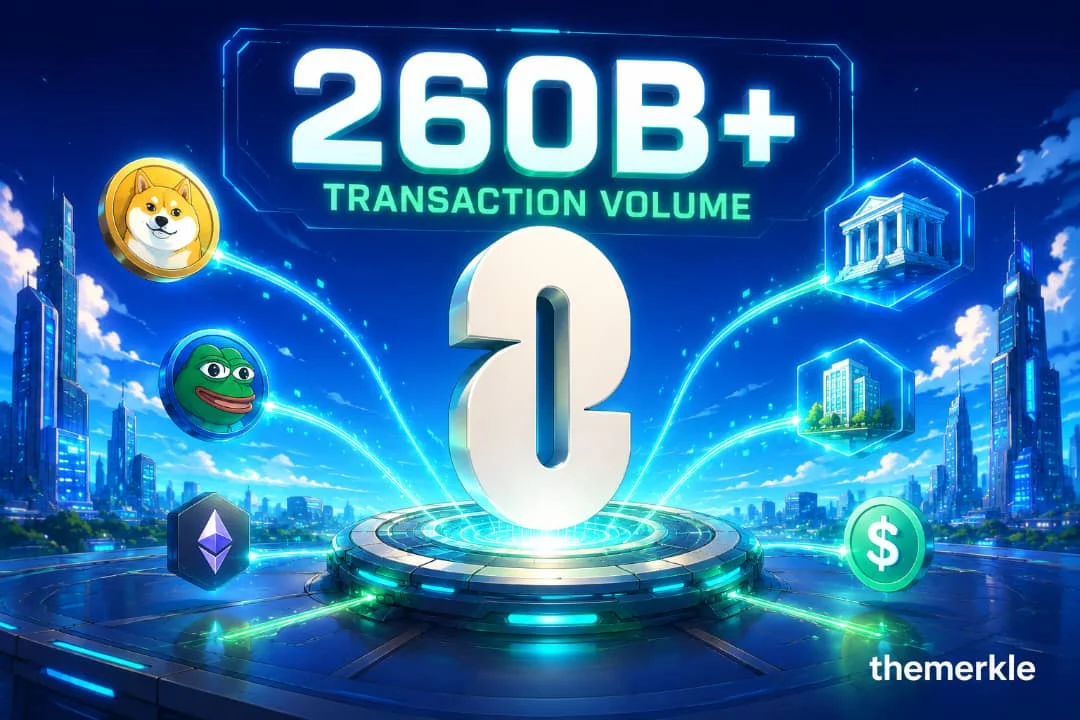
This substantial volume underscores LayerZero’s quiet emergence as a critical infrastructural layer, bridging the chasm between an increasingly fragmented blockchain landscape. From the ephemeral velocity of speculative memecoins to the stringent demands of institutional-grade tokenized treasuries and the foundational stability of government-issued digital currencies, the protocol’s architecture has proven adaptable enough to serve a diverse spectrum of use cases, each with its unique requirements for security, speed, and regulatory compliance.
The Evolving Landscape of Blockchain Interoperability
The journey towards seamless blockchain interaction has been fraught with technical challenges and security vulnerabilities. Historically, the blockchain ecosystem developed in silos, with each chain optimized for specific functionalities, leading to isolated pools of liquidity, users, and data. Early attempts at interoperability often relied on centralized or semi-centralized "bridges," which, while effective in moving assets between chains, frequently presented single points of failure, becoming prime targets for exploits. The Web3 space has witnessed numerous high-profile bridge hacks, resulting in billions of dollars in losses and eroding trust in cross-chain solutions. This context highlights the critical need for robust, secure, and flexible interoperability protocols that can withstand sophisticated attacks while meeting diverse operational demands.
LayerZero emerged against this backdrop, distinguishing itself not merely as another bridge, but as a foundational messaging protocol designed for ultimate configurability. Launched in 2021, the protocol quickly gained traction by offering a novel approach to cross-chain communication, moving beyond the traditional "lock-and-mint" bridge model. Its core innovation lies in separating the validation process from the message passing itself, allowing builders to define their own security assumptions and validation mechanisms rather than being confined to a monolithic, one-size-fits-all solution. This architectural flexibility is precisely what has enabled LayerZero to cater to such a broad array of applications, from high-throughput, low-security-tolerance memecoins to highly regulated financial instruments.
A Deeper Dive into LayerZero’s Unique Architecture
At its heart, LayerZero operates as a highly generalizable messaging protocol. Unlike traditional blockchain bridges that typically rely on a set of trusted intermediaries to validate cross-chain transactions, LayerZero employs an "Ultra Light Node" (ULN) architecture. This innovative design separates the roles of the Oracle and the Relayer. When a message is sent from one chain to another, the Oracle (a third-party service like Chainlink) transmits the block header from the source chain to the destination chain. Simultaneously, a Relayer (also a third-party service, or even the application itself) takes the transaction proof and submits it to the destination chain.
Crucially, these two entities—the Oracle and the Relayer—are independent and cannot collude to compromise a transaction. For a message to be successfully validated on the destination chain, both the block header from the Oracle and the transaction proof from the Relayer must match. This separation of concerns significantly enhances security, as it requires a compromise of both independent parties to forge a transaction, making it exponentially more difficult than compromising a single entity.
Furthermore, LayerZero empowers developers to configure their own security parameters. Builders can select their preferred Oracle and Relayer, and even run their own Decentralized Verifier Networks (DVNs). This deep configurability means that a team launching a speculative token can prioritize speed and cost-efficiency, potentially opting for less stringent (but still robust) security configurations, while an institutional entity tokenizing real-world assets can implement highly conservative, multi-party validation schemes, ensuring maximum security and compliance. This adaptable security model is a fundamental departure from prior interoperability solutions and a key driver of its widespread adoption.
Statements from the Ecosystem: Diverse Needs, Unified Protocol
The $260 billion in transaction volume and the proliferation of OFTs across 170+ chains are not merely statistical achievements; they reflect profound market agreement with LayerZero’s underlying philosophy. The protocol’s builders are not a homogenous group, a fact that the LayerZero core team frequently emphasizes.
"This milestone isn’t just about raw numbers; it’s a testament to the power of choice and configurability we offer," stated a representative from LayerZero Labs, speaking on condition of anonymity to discuss future strategic directions. "We’ve seen everything from grassroots community projects to major financial institutions leverage our protocol. What unites them is the need for secure, flexible cross-chain communication, but what differentiates them are their specific security, speed, and compliance requirements. LayerZero is built to accommodate that spectrum."
Developers building on the protocol echo this sentiment. "When we launched our memecoin, speed and broad market access were paramount," explained ‘Crypto_Nomad,’ a pseudonymous developer behind a popular OFT. "LayerZero allowed us to instantly deploy our token across multiple EVM and non-EVM chains, tapping into diverse liquidity pools and communities almost simultaneously. We didn’t have to build complex bridging infrastructure; LayerZero handled the mechanics, letting us focus on community engagement."
On the institutional side, the narrative shifts to security and compliance. "Tokenizing a multi-million dollar real estate fund requires an uncompromising security posture," commented Dr. Eleanor Vance, Head of Digital Assets at a global investment firm. "LayerZero’s ability to let us define and enforce our own trust assumptions, including custom DVN setups and multi-signature thresholds, directly within the token’s cross-chain logic, is revolutionary. It means our security model travels with the asset, providing a level of assurance previously unavailable in cross-chain environments."
Case Study 1: Empowering Memecoin Builders for Rapid Market Capture
For the fast-paced world of memecoins, success often hinges on speed, viral momentum, and broad market distribution. A token’s ability to quickly reach diverse user bases and liquidity pools across multiple blockchains can make or break its trajectory. Traditional single-chain deployment severely limits this potential, confining a token to one ecosystem and forcing users from other chains to navigate cumbersome, often risky, bridge solutions.
LayerZero directly addresses this bottleneck with its Omnichain Fungible Token (OFT) standard. By deploying an OFT, a memecoin project can achieve true native multi-chain presence. The token’s supply remains unified across all chains it touches, eliminating the fractionalized liquidity issues common with wrapped tokens or traditional bridges. This means users on Ethereum can interact with the token as natively as users on Polygon, Avalanche, or BNB Chain, without needing to trust third-party wrappers or undergo complex bridging processes.
The advantage is clear: speed to market. When a token begins to gain traction, the window to capitalize on that momentum is narrow. LayerZero removes the technical friction of multi-chain expansion, allowing teams to focus on community building, marketing, and fostering the cultural elements that drive memecoin success. This distribution efficiency significantly lowers the barrier to entry for new projects and enables them to tap into a much larger, more diverse user base almost instantaneously, a critical factor in the highly competitive and time-sensitive memecoin market.
Case Study 2: Securing Real-World Assets with Traveling Trust Infrastructure
The tokenization of real-world assets (RWAs) represents a rapidly growing sector with immense potential to bridge traditional finance with decentralized ecosystems. However, RWAs, ranging from treasury bills and real estate to fine art and commodities, carry significant legal, regulatory, and financial weight that demands an entirely different security paradigm compared to speculative digital assets. A security failure in this domain is not merely a technical glitch but can lead to catastrophic financial and reputational damage.
LayerZero provides RWA issuers with an unparalleled ability to define and embed their own trust assumptions directly into the token’s configuration. This means that an RWA issuer can mandate specific validation logic that must be met for any cross-chain message or transfer involving their token. For instance, they can:
- Run their own Decentralized Verifier Networks (DVNs): Allowing trusted parties (e.g., custodians, auditors, legal firms) to participate in the validation of cross-chain messages.
- Set custom signing thresholds: Requiring multiple, pre-approved entities to sign off on a cross-chain transfer.
- Specify validation logic: Dictating the exact parameters and conditions that must be met for a message to be considered valid on the destination chain.
Crucially, these security parameters are not static or confined to the originating chain; they travel with the token wherever it goes. This ensures that the robust security model established by the issuer remains consistent and enforceable across every blockchain the asset might traverse. For institutional investors and asset managers, this feature is transformative, providing the assurance that the rules governing their valuable tokenized assets are immutable and consistently applied across the entire omnichain landscape. It addresses a fundamental concern for institutional adoption: maintaining control and compliance over assets in a distributed, multi-chain environment.
Case Study 3: Financial Institutions and Compliance Plumbing Across Chains
For regulated financial institutions—banks, asset managers, and other licensed entities—the move into digital assets introduces a complex web of regulatory obligations. Cross-chain interoperability, while offering efficiency and market access, also presents significant compliance challenges. Requirements such as Know Your Customer (KYC), Anti-Money Laundering (AML), sanctions screening, and jurisdictional restrictions are not easily portable across disparate blockchain environments, which were not originally designed with these traditional finance mandates in mind.
LayerZero offers a paradigm-shifting approach by enabling institutions to embed compliance logic directly at the messaging layer. This means that every cross-chain transfer, every message associated with an institutional digital asset, can be configured to pass through a predefined set of policy checks. Before a transaction is finalized on a destination chain, LayerZero can ensure that:
- Sender/Receiver are whitelisted: Based on pre-approved KYC/AML verification.
- Transaction amounts adhere to limits: Enforcing internal or regulatory thresholds.
- Geographical restrictions are observed: Preventing transfers to sanctioned jurisdictions.
- Specific compliance modules are invoked: Integrating with existing compliance infrastructure.
This capability is a significant "unlock" for regulated entities. It allows them to leverage the efficiency and global reach of blockchain technology without compromising their stringent regulatory obligations. Instead of treating compliance as an afterthought or a cumbersome bolt-on, LayerZero facilitates its integration as a fundamental component of the cross-chain interaction itself. As the trend towards tokenized treasuries, institutional stablecoins, and digital securities continues to accelerate, the ability to seamlessly carry robust compliance infrastructure across an ever-expanding array of blockchains will cease to be merely a differentiator; it will become a baseline requirement for participation in the future of finance.
Broader Impact and Future Implications
LayerZero’s rapid adoption and the sheer volume it has processed signify more than just protocol growth; they point to a maturation of the entire blockchain ecosystem. The protocol’s flexible, secure, and developer-centric approach is fostering an environment where innovation is no longer constrained by single-chain limitations.
The implications are far-reaching:
- Enhanced Liquidity and Capital Efficiency: By enabling seamless asset movement, LayerZero helps break down liquidity silos, leading to more efficient capital allocation and deeper markets across the entire Web3 space.
- Accelerated Institutional Adoption: The protocol’s focus on configurable security and embedded compliance directly addresses critical concerns for traditional financial institutions, paving the way for broader participation in tokenized markets.
- Decentralized Application (dApp) Expansion: Developers can now build truly omnichain dApps that leverage the unique strengths of multiple blockchains, creating more powerful, resilient, and user-friendly applications. Imagine a DeFi protocol that can tap into liquidity on one chain, leverage computation on another, and manage identity on a third, all seamlessly.
- Reduced Fragmentation and Improved User Experience: For end-users, LayerZero contributes to a more cohesive blockchain experience, reducing the need for complex bridging processes and mitigating associated risks.
- Setting New Standards for Interoperability: By emphasizing configurability and a robust, trust-minimized security model, LayerZero is influencing the design principles for future interoperability solutions.
While the path to a fully interconnected omnichain future still holds challenges, including ongoing regulatory clarity and the need for continuous security innovation, LayerZero’s current trajectory suggests it is playing a pivotal role in shaping this reality. The $260 billion in transaction volume is not just a number; it’s a clear signal from the market that the era of isolated blockchains is rapidly drawing to a close, replaced by a vision of seamless, secure, and configurable cross-chain interaction.
Disclosure: This is not trading or investment advice. Always do your research before buying any cryptocurrency or investing in any services.