


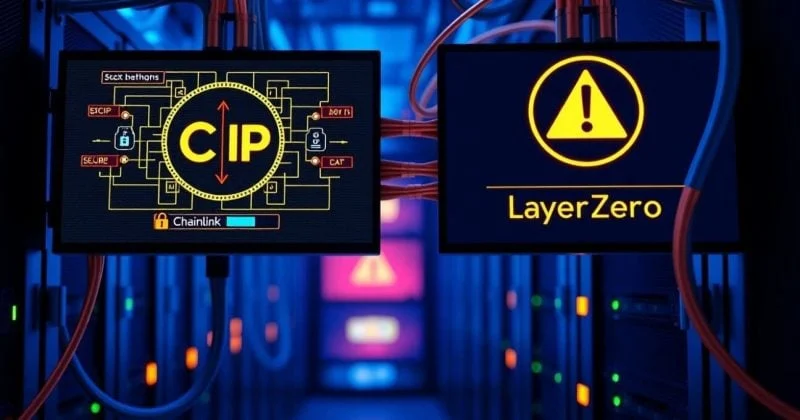
In a significant shift within the decentralized finance (DeFi) landscape, Lombard Finance, a prominent Bitcoin-native liquid staking platform, is undertaking a substantial migration of over $1 billion in Bitcoin-backed assets. This move will see these assets transition from LayerZero’s bridge infrastructure to Chainlink’s Cross-Chain Interoperability Protocol (CCIP). The protocol has signaled its intent to fully phase out LayerZero from its cross-chain operations, a decision that underscores escalating anxieties surrounding the security of cross-chain communication protocols in the wake of recent high-profile exploits. This strategic pivot, representing a substantial portion of the DeFi ecosystem’s trust in cross-chain solutions, has ignited a broader conversation about the future of interoperability and the robustness of underlying security frameworks.
The catalyst for this significant migration appears to be a costly exploit that occurred in April 2026. During this incident, approximately $292 million was drained from KelpDAO’s rsETH product. Critically, KelpDAO’s infrastructure relied heavily on bridge technology powered by LayerZero. This breach not only resulted in substantial financial losses but also served as a stark warning to other platforms about the potential vulnerabilities inherent in existing cross-chain communication mechanisms. The subsequent internal security review conducted by Lombard Finance reportedly concluded that Chainlink CCIP’s architecture, characterized by its reliance on decentralized oracle networks and multiple independent validation layers, offered demonstrably superior security guarantees compared to their existing LayerZero integration.
A $4 Billion Vote of No Confidence: The Migration Wave
The move by Lombard Finance is not an isolated event but rather part of a larger exodus from LayerZero-based bridges. Across the broader DeFi ecosystem, an estimated $4 billion in assets are either in the process of migrating or have already completed their transition from LayerZero-dependent bridges to Chainlink CCIP. This aggregated figure represents a significant reallocation of capital and, more importantly, a palpable erosion of confidence in LayerZero’s current cross-chain security model by a substantial segment of the DeFi market.
Lombard Finance’s internal security assessment is a key piece of evidence supporting this trend. The protocol’s review reportedly identified that CCIP’s multi-layered validation approach provides a more resilient defense against exploits. Unlike systems that might rely on a more consolidated set of validators, CCIP’s design disseminates trust across a broader, more decentralized network of oracles and validation processes. This architectural difference is perceived as a critical advantage in mitigating the risk of single points of failure or compromise, which are often exploited by malicious actors.
For the end-users of Lombard Finance, the protocol emphasizes that the transition is engineered to be as seamless as possible. The aim is to maintain uninterrupted cross-chain functionality throughout the migration period. The most significant change will occur behind the scenes, involving a technical swap from one validation model to another. The overarching objective is to enhance the security of the bridge layer, making it substantially more challenging for attackers to exploit. This user-centric approach to migration aims to minimize disruption while maximizing security benefits.
Chainlink CCIP: Emerging as the Dominant Force in Cross-Chain Interoperability
The current migration wave appears to be significantly benefiting Chainlink CCIP, positioning it as a leading solution for cross-chain communication. A crucial development bolstering Chainlink’s standing is its recent achievement of a SOC 2 Type 2 examination for CCIP. This compliance certification is typically reserved for established enterprise cloud providers and critical financial infrastructure companies, signifying a high standard of security and operational integrity. As of the latest reporting, Chainlink stands as the sole major oracle and interoperability provider to attain this level of certification for its cross-chain protocol.
The SOC 2 Type 2 examination is a rigorous process. It involves an independent auditor spending an extended period, often months, meticulously verifying that the security controls implemented by Chainlink are not merely documented on paper but are demonstrably effective and consistently applied over time. This sustained period of scrutiny provides a much higher degree of assurance compared to snapshot audits, which might only assess controls at a single point in time. This independent validation lends considerable weight to Chainlink’s security claims and has likely been a significant factor in the growing trust it is garnering from DeFi protocols.
The combination of this robust compliance certification and the post-exploit migration trend has propelled the total value locked (TVL) in Chainlink-related services, particularly CCIP, to exceed $4 billion. This figure represents not only the assets secured by Chainlink’s infrastructure but also the market’s growing confidence in its ability to facilitate secure and reliable cross-chain transactions.
Implications for Bitcoin DeFi: A New Era of Secure Interoperability?
Lombard Finance’s migration carries particular weight due to its prominent position within the Bitcoin DeFi ecosystem. The protocol’s focus on Bitcoin-backed assets, specifically its LBTC liquid staking token, means that the assets transiting through these bridges are denominated in Bitcoin, the world’s largest and most valuable cryptocurrency. By choosing to migrate to CCIP, Lombard is making a clear statement about its priorities: security and the integrity of its Bitcoin-denominated assets.
This decision is essentially a bet on Chainlink’s multi-layered validation approach. In CCIP, transactions are subjected to verification by independent oracle networks before they are finalized on the destination chain. This process is designed to significantly reduce the attack surface that was exploited in the KelpDAO incident, where a vulnerability in the bridge infrastructure allowed for unauthorized access and asset draining. Lombard’s move suggests a belief that this more distributed and validated approach offers a superior defense against sophisticated exploits.
The ongoing migration of approximately $4 billion from LayerZero to CCIP is actively reshaping the competitive dynamics of cross-chain infrastructure. This shift is not merely about individual protocol decisions but reflects a broader market recalibration in response to security events. However, this growing reliance on a single dominant player like CCIP also introduces new considerations. The potential for concentration risk is a critical factor to monitor. If CCIP becomes the de facto standard for cross-chain bridging in DeFi, it could inadvertently create a new systemic risk: a single point of reliance for billions of dollars in cross-chain assets. While currently seen as a positive development for security, the long-term implications of such concentration will require ongoing scrutiny and potentially the development of further decentralized alternatives to ensure the resilience of the entire DeFi ecosystem.
Background and Chronology of Events
The story of Lombard Finance’s migration is interwoven with the broader evolution and challenges of cross-chain interoperability in DeFi. As the DeFi ecosystem has grown and diversified across multiple blockchain networks, the need for seamless and secure asset and data transfer between these chains has become paramount. This demand has spurred the development of various bridging solutions.
Early Stages of Interoperability: Initially, bridges were often simpler, relying on more centralized or less robust validation mechanisms. While functional, these early solutions presented inherent risks that were not always fully appreciated until significant incidents occurred.
The Rise of LayerZero: LayerZero emerged as a prominent player, offering an "omnichain" interoperability protocol that aimed to provide a more efficient and flexible way for applications to communicate across blockchains. Its architecture, which leverages "endpoints" and a novel "Ultra Light Node" concept, gained significant traction and was integrated by numerous DeFi protocols, including those handling large volumes of assets.
The KelpDAO Exploit (April 2026): This event marked a turning point. The $292 million loss from KelpDAO, which utilized LayerZero’s infrastructure, sent shockwaves through the DeFi community. Investigations into the exploit pointed towards vulnerabilities within the bridging mechanism itself, highlighting that even advanced interoperability protocols could be susceptible to sophisticated attacks. This incident immediately raised questions about the security assurances provided by LayerZero and prompted many protocols to re-evaluate their reliance on it.
Lombard Finance’s Internal Review and Decision: Following the KelpDAO exploit, protocols that had significant value locked in LayerZero-based bridges initiated their own security assessments. Lombard Finance, managing over $1 billion in Bitcoin-backed assets, conducted a thorough internal review. Their conclusion, as reported, was that Chainlink CCIP offered a more robust security architecture, characterized by its decentralized oracle networks and multi-layered validation.
The Broader Migration Trend: Lombard’s decision is emblematic of a larger trend. Reports indicate that across the DeFi space, approximately $4 billion in assets are either migrating or have already migrated from LayerZero to Chainlink CCIP. This collective movement signifies a market-driven vote of confidence in CCIP’s security model and a corresponding divestment of trust from LayerZero.
Chainlink CCIP’s Compliance and Growth: In parallel with this migration, Chainlink has actively pursued and achieved significant compliance milestones, most notably the SOC 2 Type 2 examination for CCIP. This certification, a hallmark of enterprise-grade security and reliability, has further solidified CCIP’s position as a trusted solution. This has contributed to a substantial increase in Chainlink’s total value locked, surpassing $4 billion.
Analysis of Implications and Future Outlook
The migration of over $1 billion in Bitcoin-backed assets by Lombard Finance to Chainlink CCIP is more than just a technical upgrade; it is a strategic repositioning with far-reaching implications for the DeFi ecosystem, particularly within Bitcoin DeFi.
Enhanced Security for Bitcoin Assets: For Lombard Finance and its users, the primary implication is a significant enhancement in the security of their Bitcoin-backed assets. By moving to CCIP, they are adopting a protocol that has undergone rigorous independent auditing and is built upon a foundation of decentralized validation. This is particularly critical for Bitcoin DeFi, where the value and immutability of Bitcoin make its derivatives and wrapped versions highly attractive targets for attackers. The multi-layered validation of CCIP aims to prevent the types of exploits that have plagued simpler bridge designs.
Validation of Decentralized Oracle Networks: The move also serves as a strong endorsement for the role of decentralized oracle networks in securing cross-chain communication. Chainlink’s established reputation in the oracle space, coupled with its expansion into interoperability through CCIP, positions it as a leader in providing secure infrastructure. The success of CCIP could pave the way for more protocols to leverage decentralized oracles for a wider range of cross-chain functions, moving beyond simple asset transfers to more complex data and smart contract interactions.
Shifting Competitive Landscape: The substantial migration from LayerZero to CCIP is actively redrawing the map of cross-chain infrastructure providers. While LayerZero remains a significant player, the recent security concerns and the subsequent capital flight are undeniably impacting its market position. Conversely, Chainlink CCIP is emerging as a dominant force, attracting a significant portion of the market’s trust and capital. This dynamic could lead to a more concentrated market, with CCIP becoming a central hub for cross-chain activity.
The Specter of Concentration Risk: As CCIP gains prominence, the issue of concentration risk becomes increasingly relevant. If a single protocol or technology becomes the primary conduit for billions of dollars in cross-chain assets, it creates a potential single point of failure. A successful attack or outage on CCIP could have cascading effects across the entire DeFi ecosystem. This necessitates a forward-looking approach where diversification of interoperability solutions, even while embracing leading secure protocols, remains a critical consideration for long-term ecosystem resilience. Future developments may see a greater emphasis on diverse bridging mechanisms and advanced security protocols to mitigate this risk.
Impact on Bitcoin DeFi Innovation: The increased security and reliability offered by robust cross-chain solutions like CCIP can foster further innovation within Bitcoin DeFi. With greater confidence in the underlying infrastructure, developers may be more inclined to build complex applications that require seamless interaction with other blockchains, expanding the utility and adoption of Bitcoin-based financial instruments.
In conclusion, Lombard Finance’s migration is a watershed moment, signaling a clear trend towards more secure and robust cross-chain solutions within DeFi. While Chainlink CCIP is currently benefiting from this shift, the long-term health of the DeFi ecosystem will depend on managing the inherent risks associated with the concentration of critical infrastructure. The industry will likely see continued evolution in security protocols and a sustained dialogue around best practices for decentralized interoperability.














