


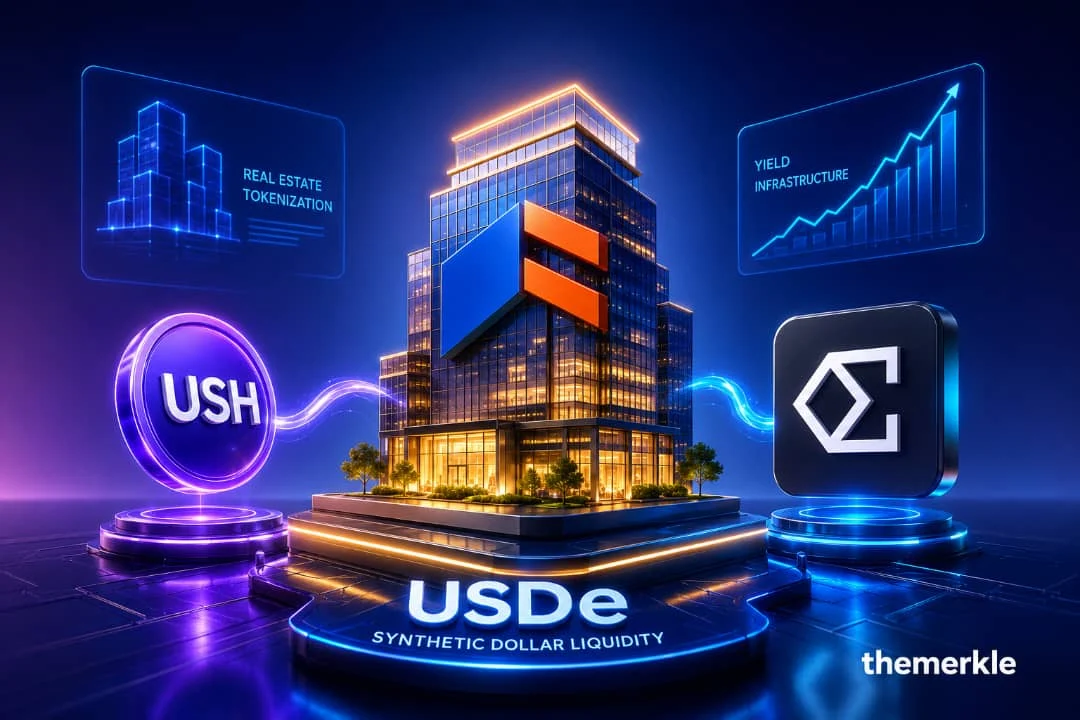
Manifest Finance has officially aligned with Ethena, the burgeoning financial infrastructure provider, to underpin USH, Manifest’s innovative real estate-backed token. This strategic partnership marks a significant milestone in the ongoing convergence of tokenized physical assets and decentralized finance (DeFi) yield mechanisms, positioning Ethena’s assets as the foundational liquidity layer for USH. The collaboration is poised to enhance capital efficiency and liquidity during Manifest Finance’s crucial early expansion phase, as the protocol systematically builds out the real estate portfolio that collateralizes the USH token.
Manifest Finance and Ethena Forge Strategic Alliance for USH Token
The announcement, which has garnered considerable attention within the blockchain community, specifies that Manifest Finance has strategically selected Ethena’s battle-tested assets to serve as the core liquidity layer for its USH token. This decision is particularly pertinent as Manifest embarks on the complex process of acquiring and structuring the real estate assets that will ultimately underwrite USH. By integrating Ethena’s infrastructure, Manifest aims to leverage a robust and capital-efficient solution, ensuring ample liquidity and stability for USH from its nascent stages. This move places Ethena firmly at the center of Manifest Finance’s liquidity and capital efficiency strategy, facilitating the project’s early growth and expansion.
This partnership also extends Ethena’s burgeoning ecosystem of whitelabel partners. Manifest Finance now joins a growing roster of projects, including prominent names like Jupiter, MegaETH, and Sui Network, all of whom are integrating Ethena’s infrastructure into their distinct financial products and ecosystems. This expanding network underscores Ethena’s strategic pivot from a standalone synthetic dollar protocol to a comprehensive financial infrastructure layer, offering a versatile backend for third-party protocols. The trend highlights a broader industry movement where tokenized real-world asset (RWA) protocols are increasingly integrating with crypto-native yield infrastructure. This integration is vital for increasing capital efficiency and incentivizing liquidity generation, especially during the scaling stages of RWA projects which often face unique challenges in asset acquisition and onboarding.
Unpacking USH: Bridging Real Estate and Decentralized Finance
Manifest Finance’s USH token represents a pioneering effort to bridge the traditional, often illiquid, realm of physical real estate with the dynamic, programmable financial systems of decentralized finance. The core proposition of USH is to offer users exposure to real estate value while simultaneously integrating with crypto-native yield mechanisms. Historically, real estate investment has been characterized by high entry barriers, significant transaction costs, and a lack of liquidity. Tokenization, however, promises to revolutionize this by enabling fractional ownership, enhanced liquidity through continuous trading, automated settlement, and seamless composability with broader DeFi protocols.
The challenge for many real estate-backed token projects lies in the inherent time lag between launching a token and fully acquiring and integrating the underlying physical assets. Real estate acquisition is a capital-intensive and time-consuming process, fraught with operational, regulatory, and legal complexities. Manifest Finance directly addresses this "cold start" problem with USH. The protocol’s design ensures that holders of sUSH (staked USH) will receive rewards even before the underlying real estate portfolio is fully built out. This innovative approach is crucial for maintaining strong user engagement and generating liquidity during the critical ramp-up period, prior to the substantial issuance of the underlying real-world asset. By combining long-term real estate exposure with interim crypto-native yield, Manifest provides a compelling model that drives capital activity and rewards users throughout the portfolio build-out phase, mitigating the typical waiting period associated with traditional asset acquisition.
Ethena’s Strategic Evolution: From Synthetic Dollar to Core Infrastructure
Ethena’s journey reflects a significant strategic evolution within the DeFi landscape. Initially conceived as a protocol for a standalone synthetic dollar asset, USDe, Ethena has rapidly transformed into a full-fledged financial infrastructure layer. This evolution positions Ethena as a critical backend liquidity and yield engine, empowering a diverse array of protocols that are building tokenized products, ecosystem-native stablecoins, and sophisticated structured DeFi instruments.
The partnership with Manifest Finance serves as a strong validation of Ethena’s refocused strategy and the burgeoning faith in its capital efficiency mechanisms and yield-generation framework. Ethena’s USDe, designed as a censorship-resistant, scalable synthetic dollar, leverages delta-hedging strategies on staked Ethereum (stETH) and other collateral to maintain its peg and generate yield. This sophisticated approach allows Ethena to offer a highly capital-efficient solution, which is precisely what Manifest Finance requires to bootstrap liquidity for USH. As Ethena representatives have noted, the platform is moving beyond being a single-product ecosystem to becoming a shared financial backend. This enables other protocols to build on top of its battle-tested assets and infrastructure, running at scale and powering numerous applications simultaneously. This strategic shift underscores Ethena’s ambition to become a foundational pillar in the decentralized financial system, providing essential components for the next generation of DeFi innovation.
The Nexus of Capital Efficiency and Real-World Assets
The integration between Manifest Finance and Ethena represents a powerful synergy at the nexus of capital efficiency and real-world assets. For Manifest, the collaboration not only allows it to harness USDe’s inherent capital efficiency but also provides a dynamic mechanism to increase the overall portfolio of real estate backing USH. This creates a robust hybrid model that strategically leverages crypto-native yield markets to drive liquidity and generate rewards. This interim yield generation is critical until the real-world assets reach their full operational scale and begin generating their own returns.
This approach is increasingly becoming a preferred strategy in tokenized real-world asset markets. The process of assembling large, institutional-grade real estate portfolios is notoriously time-consuming and resource-intensive. Real estate assets, by their very nature, are complex. Their acquisition, structuring, and subsequent incorporation into blockchain-native systems involve navigating a labyrinth of operational hurdles, diverse regulatory frameworks across jurisdictions, and intricate legal challenges. By partnering with Ethena, Manifest can continue to generate incentives and foster capital activity, providing a compelling value proposition to its users even while the long-term real estate exposure, fundamental to USH, is meticulously built out through Ethena’s yield-bearing infrastructure. This pragmatic model ensures that the project remains attractive and liquid during the often-protracted development phase of its physical asset base.
Real-World Asset Tokenization Gains Unprecedented Momentum
The launch of this partnership also underscores the relentless growth of real estate tokenization within the broader DeFi infrastructure. The concept of bridging illiquid physical assets with programmable financial systems has been a significant focus, particularly as blockchain-based real estate products attract increasing scrutiny and investor interest. According to a report by Boston Consulting Group (BCG) and ADDX, the tokenization of illiquid assets, including real estate, is projected to reach $16 trillion by 2030. This staggering figure highlights the immense potential and growing institutional recognition of RWAs on-chain.
Projects in this burgeoning sector typically aim to democratize access to real estate value. Beyond mere access, they often introduce features rarely seen in traditional property markets, such as fractional ownership, which lowers investment thresholds; perpetual liquidity, enabling continuous price discovery and ease of entry/exit; automated settlement, streamlining transaction processes; and composable DeFi integrations, allowing tokenized assets to be used across various decentralized applications. USH positions itself squarely within this emerging category, fusing tangible real estate exposure with the dynamic mechanics of crypto-native finance. The innovation lies in its ability to offer an engaging and rewarding experience from day one, solving a critical challenge for tokenized real-world assets: sustaining robust user engagement and liquidity during the crucial ramp-up period before significant underlying assets are fully integrated. This partnership, therefore, establishes a temporary but highly effective infrastructure model where synthetic yield systems actively contribute to ecosystem formation until the underlying real-world asset portfolio has developed sufficiently. This integration of tokenized RWAs with DeFi-native yield infrastructure is rapidly becoming one of the most important path dependencies defining contemporary decentralized finance ecosystems.
Converging Ecosystems: DeFi’s Embrace of Tangible Value
The Manifest-Ethena integration is a microcosm of a larger, transformative trend: the increasing convergence of complementary DeFi protocols with tokenized real-world asset systems across global markets. For years, DeFi predominantly revolved around crypto-native collateral, speculative digital assets, and financial products entirely contained within the blockchain ecosystem. However, recent years have witnessed a significant shift, with a flurry of protocols actively targeting the tokenization of traditional financial instruments and assets. This includes tokenized Treasury instruments, credit systems, private debt markets, various commodities, and, notably, real estate exposure.
The rationale behind this convergence is multifaceted and compelling. Real-world assets introduce a crucial element of stability and uncorrelated yield/collateral sources into the often-volatile blockchain ecosystem. Unlike purely digital assets, RWAs derive their value from tangible, off-chain entities, potentially offering a more predictable risk-return profile. Conversely, DeFi infrastructure injects unparalleled programmability, liquidity efficiency, and composability into markets that have historically been characterized by static, illiquid structures. This symbiotic relationship creates a more robust, diversified, and resilient financial landscape. The ability to programmatically manage, trade, and fractionalize real-world assets on-chain, while simultaneously leveraging DeFi’s liquidity pools and yield-generating protocols, unlocks unprecedented opportunities for both traditional and digital asset investors. This convergence represents a maturation of the DeFi space, moving beyond speculative trading to integrate with and potentially revolutionize global financial markets.
The Rise of Whitelabel DeFi Infrastructure: A Paradigm Shift
Furthermore, this partnership shines a spotlight on the rapidly increasing visibility and adoption of whitelabel DeFi infrastructure across the sector. Rather than each project independently expending significant resources to build its own sophisticated yield engines, stablecoin frameworks, and liquidity systems from scratch, a growing number of protocols are opting to embed existing, proven infrastructure providers directly into their ecosystems. This modular approach is where Ethena is strategically expanding its footprint.
Ethena is transcending its initial identity as a single-product ecosystem to become a provider of a shared financial backend. This allows other protocols to build upon its battle-tested assets and scalable infrastructure, powering multiple applications simultaneously. This strategy offers several distinct advantages to emerging and established projects alike. Firstly, it significantly accelerates deployment timelines, allowing projects like Manifest Finance to bring their products to market much faster. Secondly, it substantially lowers the inherent risks associated with developing and maintaining complex financial infrastructure, as protocols can rely on Ethena’s audited and proven solutions. Thirdly, it grants immediate access to Ethena’s existing liquidity networks, a critical component for any new financial product. As more projects adopt this model, Ethena integrates deeper into the broader DeFi ecosystem, thereby naturally increasing the demand and use cases for its core products. This paradigm shift mirrors broader trends observed in blockchain infrastructure, where modularity and interoperability are increasingly replacing the siloed development of single applications. Instead of isolated ecosystems competing across different layers of the stack, protocols specialize in a particular infrastructure layer and seamlessly integrate complementary systems further up or down their stack.
Industry Reactions and Future Outlook
The integration of Ethena’s infrastructure by Manifest Finance is more than just a mere partnership announcement; it signifies a pivotal moment in the maturation of decentralized finance. It exemplifies the evolution towards a fully interconnected ecosystem composed of reusable financial infrastructure layers capable of simultaneously supporting real-world assets, sophisticated synthetic yield-generating systems, and blockchain-native products at scale.
Representatives from Manifest Finance would likely emphasize the partnership’s immediate impact on liquidity and user incentivization, stating that it "provides the critical capital efficiency needed to bridge the gap between our vision for real estate tokenization and the operational realities of asset acquisition." They would underscore their commitment to offering long-term real estate exposure while ensuring a dynamic and rewarding experience for users from the outset. On the Ethena side, spokespersons would undoubtedly highlight how this collaboration validates their strategic pivot towards becoming a foundational infrastructure layer. They might comment that "Manifest Finance choosing Ethena underscores the growing recognition of our robust, battle-tested assets as the go-to solution for capital efficiency and yield generation in the RWA space, further solidifying our position as a leading whitelabel provider."
Industry analysts are likely to view this development as a clear indicator of the accelerating professionalization of DeFi. It suggests a future where institutional-grade decentralized finance infrastructure becomes the norm, particularly as tokenized assets gain wider traction in crypto markets. While the path to full mainstream adoption of tokenized RWAs still faces hurdles, particularly concerning regulatory clarity across diverse jurisdictions and the scalability of real-world asset acquisition processes, partnerships like this demonstrate a clear roadmap for overcoming these challenges. The ability to leverage established DeFi yield primitives to bootstrap liquidity for inherently illiquid assets is a powerful innovation that will undoubtedly inspire similar collaborations.
Conclusion: A New Era for Decentralized Finance
In conclusion, the strategic alliance between Manifest Finance and Ethena represents a significant stride forward in the evolution of decentralized finance. It embodies the powerful synergy created when innovative real-world asset tokenization projects leverage robust, capital-efficient DeFi infrastructure. By enabling Manifest Finance to provide immediate yield incentives for its USH token while meticulously building out its real estate portfolio, the partnership addresses a critical challenge in the RWA space. This collaboration not only reinforces the growing trend of DeFi-RWA convergence but also champions the paradigm of modular, whitelabel infrastructure, paving the way for a more integrated, efficient, and institution-ready decentralized financial ecosystem. Such partnerships are set to become a regularity, defining the next generation of financial infrastructure where tangible assets seamlessly merge with the boundless possibilities of blockchain technology.














