


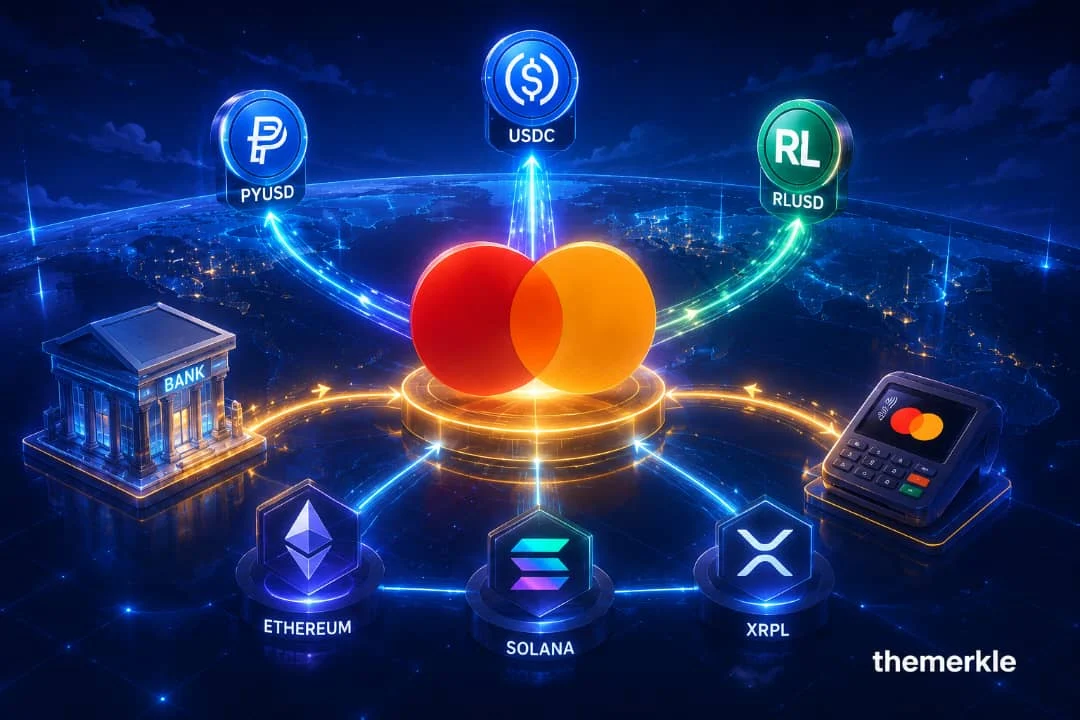
Revolutionizing Settlement Mechanics: A Paradigm Shift
For decades, the mechanics of card settlement have remained largely unchanged. While consumer transactions are authorized instantaneously at the point of sale, the actual transfer of funds between the issuing bank and the acquiring bank typically occurs in batches. These batches are processed during conventional banking hours, creating inherent delays, especially over weekends, public holidays, and outside standard business operations. This archaic system has long been a source of liquidity challenges and operational friction for merchants and treasury teams managing cash flows.
Mastercard’s new framework directly addresses these inefficiencies. By integrating stablecoin rails, the network now supports intraday, weekend, and holiday settlement alongside its existing fiat processes. This parallel "faster lane" allows for the near-instantaneous clearing of funds, drastically reducing the gap between transaction authorization and actual fund settlement. For a merchant, particularly those handling high volumes or cross-border trade, this translates into immediate access to funds, improved cash flow management, and reduced working capital requirements. The option to choose between traditional and stablecoin settlement ensures that partners can adopt the new capabilities at their own pace, making the transition practical rather than disruptive. This flexible approach is key to driving broad adoption across Mastercard’s extensive ecosystem of banks, fintechs, and businesses.
A Curated Ecosystem of Regulated Assets
The selection of stablecoins for this initiative is deliberate and underscores Mastercard’s commitment to regulatory compliance and institutional trust. The list includes Circle’s USDC, Paxos-issued PYUSD, USDG, and USDP, Ripple’s RLUSD, and SoFi’s SoFiUSD. Each of these assets operates under established legal and compliance frameworks, a critical factor for garnering confidence from regulated financial institutions.
- USDC (USD Coin): Issued by Circle and Coinbase, USDC is one of the largest and most widely adopted regulated stablecoins, backed 1:1 by U.S. dollar reserves. Its transparency and regulatory compliance have made it a cornerstone of institutional crypto adoption.
- PYUSD (PayPal USD): Issued by Paxos Trust Company on behalf of PayPal, PYUSD is a relatively newer entrant but carries the significant backing and regulatory oversight of both PayPal and Paxos, a regulated financial institution.
- USDG and USDP (Pax Dollar): Also issued by Paxos, USDG (Paxos Gold) is a stablecoin backed by physical gold, while USDP is a USD-backed stablecoin. Paxos’s status as a regulated trust company in New York ensures strict adherence to financial regulations.
- RLUSD (Ripple USD): Ripple’s foray into stablecoins, RLUSD is designed to leverage Ripple’s enterprise-grade blockchain solutions, promising efficiency and compliance. Its inclusion signals a deepening collaboration between Ripple and major payment networks.
- SoFiUSD: Issued by SoFi, a prominent fintech company, SoFiUSD further diversifies the portfolio with a regulated stablecoin from a well-known consumer finance brand.
The emphasis on "regulated stablecoins" is not merely a technical detail; it is a strategic imperative. Institutional risk teams demand assets that conform to Anti-Money Laundering (AML), Know Your Customer (KYC), and other financial compliance standards. By selecting stablecoins that meet these criteria, Mastercard is ensuring that its new settlement infrastructure is suitable for deployment within existing, stringent financial operations, rather than being relegated to experimental use cases.
Multi-Chain Strategy: A Broadened Horizon
Mastercard’s commitment to interoperability and broad ecosystem support is evident in the extensive list of supported blockchains: Ethereum, Solana, Polygon, Base, Arbitrum, XRPL, Canton, and Tempo. This comprehensive approach, encompassing eight major networks, signals that Mastercard is not betting on a single blockchain winner but rather building infrastructure compatible with the diverse and evolving landscape of regulated stablecoin operations.
- Ethereum: The foundational smart contract platform, hosting a significant portion of stablecoin activity.
- Solana: Known for its high throughput and low transaction costs, making it attractive for high-volume payments.
- Polygon, Base, Arbitrum: These Layer 2 scaling solutions for Ethereum address its scalability challenges, offering faster and cheaper transactions.
- XRPL (XRP Ledger): Ripple’s native blockchain, optimized for fast and low-cost cross-border payments.
- Canton and Tempo: These emerging networks or enterprise-grade DLT solutions further expand the reach, potentially catering to specific institutional or regional requirements.
This multi-chain strategy ensures flexibility and future-proofing, allowing Mastercard and its partners to leverage the benefits of different blockchain architectures based on specific use cases, cost considerations, and regulatory environments. Jack McDonald, Senior Vice President of Stablecoins at Ripple, articulated the significance of this multi-faceted integration, calling it "a landmark validation that blockchain technology is ready for the world’s most critical payment infrastructure." Such high-level endorsements underscore the profound implications of this development for the broader financial industry.
Mastercard’s Evolving Digital Asset Journey: A Chronological Context
This bold expansion into stablecoin settlement is not an isolated event but the culmination of Mastercard’s deliberate and long-term strategy in the digital asset space. For several years, the payments giant has been incrementally engaging with blockchain technology and cryptocurrencies, often through strategic partnerships and pilot programs.
- 2020: Mastercard began exploring central bank digital currencies (CBDCs), launching a proprietary virtual testing platform for central banks to evaluate CBDC use cases.
- 2021: The company announced it would enable merchants to accept select cryptocurrencies directly on its network, though primarily focusing on stablecoins for their price stability. It also launched various crypto-linked card programs globally, allowing users to spend their crypto holdings as fiat.
- 2022: Mastercard expanded its consulting services to help banks and merchants navigate the crypto landscape, offering insights on NFTs, digital assets, and blockchain technology. It also filed numerous patents related to crypto and blockchain.
- 2023: Further deepening its engagement, Mastercard initiated stablecoin settlement pilots in specific markets, including early on-chain settlement flows with USDC in some regions. These pilots served as crucial testing grounds, validating the operational model and demonstrating the feasibility of integrating digital assets into its core infrastructure.
- Early 2024: Mastercard continued to build out its digital asset team and capabilities, signaling an accelerating commitment to the space. The announcement today is a direct result of these successful pilot programs proving out the model and readiness for a full network expansion.
Paxos, a key partner, has also been instrumental in building the regulatory-compliant infrastructure necessary for such a move. They framed their involvement clearly, stating that their regulated infrastructure provides partners like Mastercard with "a trusted path to on-chain settlement using PYUSD, USDG, and USDP that works seamlessly alongside existing systems." This language highlights the foresight in designing solutions with institutional adoption in mind from the very outset. Mastercard itself has consistently described its digital asset strategy as building responsibly across acceptance, settlement, and programmable payment flows—a term hinting at future, more sophisticated applications beyond basic settlement.
Industry Reactions and Early Adopters
The announcement has naturally elicited strong positive reactions from stablecoin issuers, early adopter financial institutions, and industry analysts. Ripple’s Jack McDonald’s statement on blockchain’s readiness for critical payment infrastructure underscores the industry’s validation. Paxos’s emphasis on providing a "trusted path" highlights the importance of regulated entities in bridging traditional finance and blockchain. Circle, as the issuer of USDC, a prominent stablecoin in this initiative, is also expected to laud the move as a significant step towards mainstream adoption and increased utility for their asset.
Several financial institutions are poised to be among the first to leverage Mastercard’s new stablecoin settlement capabilities. ARQ (formerly DolarApp), CBW Bank, Cross River, Lead Bank, and Nuvei are expected to go live in the United States and Latin America, with further expansion planned throughout 2026. This initial focus on the Americas, particularly Latin America, is strategic. The region has historically faced significant challenges in cross-border payments, including slow settlement windows, high correspondent banking fees, and complex currency exposure issues. Stablecoin settlement on round-the-clock blockchain rails offers a direct solution to all three pain points. ARQ, with its heavy operations in the LatAm corridor, is a prime candidate for early adoption, showcasing immediate, tangible benefits. While the initial rollout is Americas-focused, Mastercard has signaled that broader geographic expansion will follow, contingent on local regulatory conditions, demonstrating a pragmatic and credible rollout plan rather than overpromising on timelines.
Addressing Critical Pain Points: Merchants, Treasury, and Cross-Border
The direct beneficiaries of this initiative are merchants, treasury teams, and anyone involved in cross-border payments. For merchants, particularly small and medium-sized enterprises (SMEs) processing numerous transactions over a holiday weekend, the ability to receive funds in real-time versus waiting days for traditional settlement can be transformative. This shift directly alleviates cash flow constraints, reduces the need for expensive short-term financing, and improves overall liquidity management.
For treasury teams at large multinational corporations, the new capabilities offer unprecedented efficiency. Managing cash across multiple jurisdictions and currencies has always been complex, fraught with delays and opaque processes. Real-time, transparent settlement through stablecoins can dramatically streamline treasury operations, enhance visibility into cash positions, and reduce foreign exchange exposure risks by minimizing the time funds are in transit. The new capabilities are explicitly built for cross-border payments, treasury management, and payout services—areas where settlement speed and transparency have been perennial bottlenecks. This move represents Mastercard delivering a solution at network scale that treasury teams have been advocating for years.
Furthermore, the regulated nature of the chosen stablecoins is paramount. USDC, PYUSD, RLUSD, and the others on this list come with established compliance frameworks that institutional risk teams can scrutinize and approve internally. This distinction is critical; it separates a theoretical "crypto feature" from a practical, deployable solution within real-world financial operations. This focus on regulatory rigor ensures that the benefits of speed and efficiency do not come at the cost of increased compliance risk.
Market Context: The Rise of Stablecoins
Mastercard’s move aligns with the broader macroeconomic trend of stablecoin growth and adoption. The stablecoin market has expanded exponentially in recent years, with a total market capitalization consistently exceeding $100 billion, often approaching or surpassing $150 billion. Daily transaction volumes for major stablecoins frequently run into billions of dollars, surpassing traditional payment rails in certain metrics and geographies. This growth is driven by their utility as a digital dollar alternative for faster, cheaper, and more transparent transactions, especially in cross-border contexts, emerging markets, and decentralized finance (DeFi).
The increasing regulatory clarity surrounding stablecoins, particularly in jurisdictions like the United States with ongoing legislative efforts (e.g., Stablecoin TRUST Act proposals), further de-risks their adoption by mainstream financial institutions. Mastercard’s initiative capitalizes on this maturing market, positioning itself as a leader in bridging traditional finance with the efficiencies of digital assets.
Strategic Implications for the Global Payments Landscape
This announcement carries profound strategic implications for the global payments landscape.
- For Mastercard: It solidifies its position as an innovator and a proactive player in the evolving digital economy. By embracing stablecoins, Mastercard can fend off competition from nascent blockchain-native payment solutions and retain relevance in a world increasingly moving towards tokenized assets. It also opens new revenue streams and strengthens relationships with fintechs and crypto-native businesses.
- For Traditional Banks: The integration offers a clear pathway for traditional financial institutions to engage with blockchain technology and stablecoins in a compliant and secure manner. It reduces the operational hurdles and perceived risks, potentially accelerating their own digital transformation efforts and offering new services to their clients.
- For the Stablecoin Ecosystem: Mastercard’s endorsement provides immense credibility and utility to regulated stablecoins. It significantly expands their real-world use cases beyond speculative trading or DeFi, bringing them into the realm of enterprise-grade payment infrastructure.
- For Cross-Border Payments: The initiative could set a new benchmark for speed and cost-efficiency in international transactions, potentially disrupting the long-standing dominance of traditional correspondent banking networks. This is particularly impactful for corridors with high remittance volumes and underserved populations.
- Future of Finance: This move is a significant step towards a more interconnected, real-time, and programmable financial system. It demonstrates how established financial giants can integrate cutting-edge technology to enhance existing services and pave the way for entirely new ones, moving beyond basic settlement into more sophisticated payment logic.
Looking Ahead: Future Expansion and Programmable Payments
Mastercard’s language about "programmable payment flows" is particularly insightful. It hints at a future where payments are not just fast and efficient but also intelligent and automated. Imagine smart contracts that trigger payments automatically upon fulfillment of specific conditions, or supply chain financing that releases funds instantaneously as goods move through different stages. This level of automation and embedded logic could unlock unprecedented efficiencies and innovations across various industries.
While the initial rollout focuses on the Americas, the blueprint for broader geographic expansion is already in place. As regulatory environments mature and harmonize globally, Mastercard is poised to extend these capabilities worldwide, tailoring its approach to local market needs and legal frameworks. This measured, yet ambitious, strategy positions Mastercard not just as a payment network but as a foundational layer for the next generation of digital commerce and finance. The journey towards a truly real-time, interconnected, and intelligent global payment system has just taken a monumental leap forward.
Disclosure: This is not trading or investment advice. Always do your research before buying any cryptocurrency or investing in any services.
Follow us on Twitter @themerklehash to stay updated with the latest Crypto, NFT, AI, Cybersecurity, and Metaverse news!














