


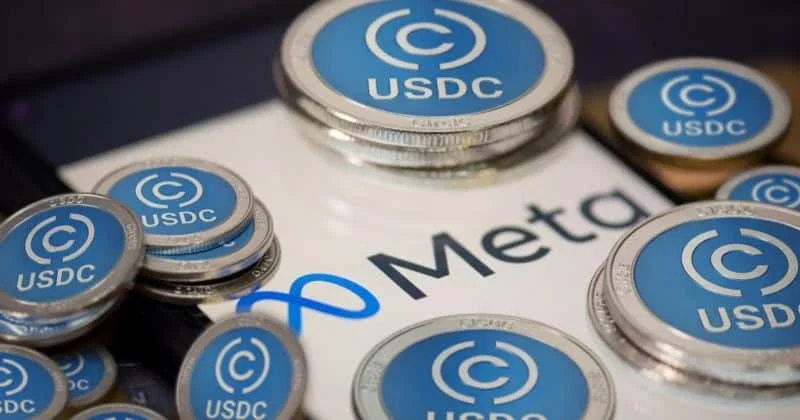
After a hiatus of approximately four years, Meta, the global technology conglomerate formerly known as Facebook, has strategically re-entered the burgeoning stablecoin market. The social media giant has commenced a phased rollout of digital currency payouts to a select group of creators in Colombia and the Philippines. This initiative leverages the stablecoin USDC (USD Coin), utilizing its presence on both the Solana and Polygon blockchain networks, as detailed on Meta’s official business support webpage.
The re-entry marks a significant pivot for Meta, signaling a renewed interest in digital currencies and blockchain technology after the high-profile abandonment of its ambitious Libra project, which later evolved into Diem. This latest move suggests a more cautious, yet persistent, approach to integrating cryptocurrencies into its vast digital ecosystem, capitalizing on evolving regulatory landscapes and the increasing adoption of stablecoins for practical applications.
The Mechanics of Meta’s Creator Payouts
For creators to participate in this new payout system, a clear set of requirements has been established. Creators must first possess a compatible cryptocurrency wallet. Prominent examples of supported wallets include MetaMask, Kraken, Phantom, and Binance. Crucially, this wallet must be linked to their existing Facebook payout account. The fundamental technical prerequisite is that the connected wallet must support USDC on either the Solana or Polygon blockchain. This dual-network support provides flexibility for creators and potentially allows Meta to optimize transaction costs and speeds.
Once a creator has successfully linked their compatible wallet, they will be eligible to receive payouts in USDC. This represents a departure from traditional fiat currency payouts, offering creators a direct gateway into the digital asset economy. The choice of USDC is notable, as it is a widely recognized and regulated stablecoin, often pegged 1:1 to the U.S. dollar. This stability is a key factor for creators who rely on predictable income streams, mitigating the volatility often associated with other cryptocurrencies.
Navigating the Off-Ramp: A Third-Party Ecosystem
A critical aspect of Meta’s current payout structure is the absence of a direct "off-ramp" service. This means that while creators can receive payments in USDC, Meta itself does not facilitate the conversion of this digital currency back into local fiat currencies. Consequently, creators who wish to access their earnings in traditional banking systems must undertake an additional step. They are required to transfer their USDC holdings to a third-party cryptocurrency exchange.
On these exchanges, creators will then need to trade their USDC for their local currency. Following this conversion, they can initiate a withdrawal to their traditional bank account. This process, while straightforward for those familiar with the cryptocurrency space, introduces an extra layer of complexity and potential costs. Exchange fees, which vary depending on the platform and transaction volume, will apply. This reliance on third-party exchanges highlights the current limitations and the developing nature of integrated digital currency payout systems within large social media platforms. It also underscores the importance of user education and awareness regarding the broader cryptocurrency ecosystem.
The Role of Stripe in Financial Operations
Meta’s foray into digital currency payouts is further bolstered by its ongoing collaboration with Stripe, a leading financial technology company specializing in programmable financial services. Stripe plays a dual role in this new payout system. For crypto-specific tax reporting, Stripe is responsible for providing the necessary documentation to creators. This is in addition to Meta’s standard tax forms, ensuring compliance with relevant financial regulations.
The partnership with Stripe is not new. The two companies have a history of working together on various commerce and payment solutions across Meta’s platforms. Notably, just last month, Stripe introduced a one-click checkout system on Facebook, enhancing the purchasing experience for users of advertisers such as Fanatics and Quince. This established relationship and existing infrastructure likely facilitated the smooth integration of the USDC payout system, leveraging Stripe’s expertise in financial services and compliance.
A History of Ambition and Setbacks: The Libra/Diem Legacy
Meta’s current stablecoin integration is inextricably linked to its past endeavors in the digital currency space, most notably the Libra project, which was later rebranded as Diem. Launched in 2019, Libra aimed to create a global, stable digital currency that could be used for payments across the internet and in the physical world. The project garnered significant attention and investment from a consortium of major companies.
However, Libra faced immediate and intense scrutiny from regulators worldwide. Concerns ranged from potential disruption to global financial stability and monetary policy to issues surrounding data privacy and money laundering. The regulatory headwinds proved to be insurmountable, leading to the withdrawal of several founding members and ultimately forcing Meta to scale back and eventually shutter the Diem project in January 2022. The failure of Diem represented a significant setback for Meta’s digital currency ambitions, illustrating the profound challenges of navigating complex international regulatory frameworks for novel financial technologies.
Renewed Exploration Amidst Shifting Regulatory Tides
Despite the failure of Diem, Meta has not entirely abandoned its interest in digital currencies. The company has continued to explore stablecoins, particularly as the global regulatory environment for cryptocurrencies has begun to mature. This renewed exploration is likely fueled by several factors:
- Evolving Regulatory Landscape: As governments and financial institutions worldwide develop clearer frameworks and guidelines for digital assets, the path for companies like Meta to engage with this technology becomes more defined and potentially less fraught with uncertainty.
- Growth of the Stablecoin Market: Stablecoins have demonstrated their utility in various applications, from facilitating faster and cheaper cross-border transactions to serving as a bridge between traditional finance and decentralized finance (DeFi). The market capitalization and trading volumes of stablecoins have grown substantially.
- Creator Economy Expansion: The creator economy has exploded in recent years, with individuals and small businesses leveraging social media platforms to build audiences and generate income. Providing creators with more flexible and potentially faster payment options is a strategic imperative for platforms like Meta to attract and retain top talent.
- Internal Strategic Re-evaluation: Following the Diem debacle, Meta likely conducted a thorough internal review of its digital currency strategy. The current approach, focusing on specific use cases like creator payouts and leveraging established stablecoins on existing blockchain networks, suggests a more pragmatic and incremental strategy compared to the ambitious, world-altering vision of Libra.
The current implementation, utilizing USDC on Solana and Polygon, indicates a strategic choice to work with existing, well-established blockchain infrastructures and a widely adopted, regulated stablecoin. Solana is known for its high transaction speeds and low costs, while Polygon offers a scalable solution for Ethereum-compatible applications. These choices suggest Meta is prioritizing efficiency and cost-effectiveness in its payout mechanism.
Supporting Data and Market Context
The global creator economy is a multi-billion dollar industry, and social media platforms are its primary conduits. As of 2023, the creator economy was estimated to be worth over $250 billion, with projections indicating continued robust growth. Creators are increasingly seeking diverse and efficient ways to monetize their content and receive payments from their global fan bases.
Stablecoins, in particular, have seen significant adoption. The total market capitalization of stablecoins has grown from under $30 billion at the beginning of 2021 to over $120 billion by early 2024, according to data from CoinMarketCap and other industry trackers. USDC, one of the leading stablecoins, boasts a substantial market share and is backed by Circle and Coinbase, further enhancing its credibility and adoption.
The choice of Colombia and the Philippines for this initial rollout is also noteworthy. These regions represent growing markets with increasing digital penetration and a significant number of content creators. They also offer a diverse economic landscape where efficient cross-border payments and access to digital financial services can be particularly impactful.
Broader Implications and Future Outlook
Meta’s re-entry into the stablecoin market, albeit in a more targeted fashion, carries several broader implications:
- Mainstreaming of Stablecoins: The involvement of a tech giant like Meta can significantly contribute to the mainstream acceptance and understanding of stablecoins. It provides a tangible use case for a wider audience, moving beyond speculative trading to practical financial applications.
- Innovation in Creator Payments: This initiative sets a precedent for how social media platforms can integrate digital currencies to empower creators. It could spur further innovation in payment systems, offering more options for artists, influencers, and small businesses operating online.
- Regulatory Engagement: Meta’s current approach, working with regulated stablecoins and established financial partners like Stripe, suggests a more collaborative stance with regulators. This could pave the way for other large companies to explore similar initiatives.
- Competitive Landscape: This move intensifies competition in the digital payments space. Platforms that can offer efficient, global, and potentially lower-cost payment solutions for creators are likely to gain a competitive edge.
However, challenges remain. The reliance on third-party exchanges for off-ramping means Meta is not fully controlling the user experience of converting digital currency to fiat. Regulatory scrutiny, while potentially easing, will undoubtedly continue to be a factor in the digital currency space. Furthermore, user education on managing cryptocurrency wallets and understanding transaction fees will be crucial for the success and widespread adoption of this program.
Meta’s current strategy appears to be one of cautious experimentation and iterative development. By focusing on creator payouts on established blockchain networks with a regulated stablecoin, the company is testing the waters of digital currency integration without the systemic risks associated with its previous ambitious Libra project. The success of this initiative in Colombia and the Philippines will likely inform Meta’s future strategies, potentially leading to wider rollouts and more sophisticated applications of blockchain technology across its vast digital empire. The journey from Libra’s grand vision to the current focused implementation of USDC payouts on Solana and Polygon represents a significant evolution in Meta’s approach to the complex and rapidly changing world of digital finance.
Disclosure: This article was edited by Vivian Nguyen. For more information on how we create and review content, see our Editorial Policy.














