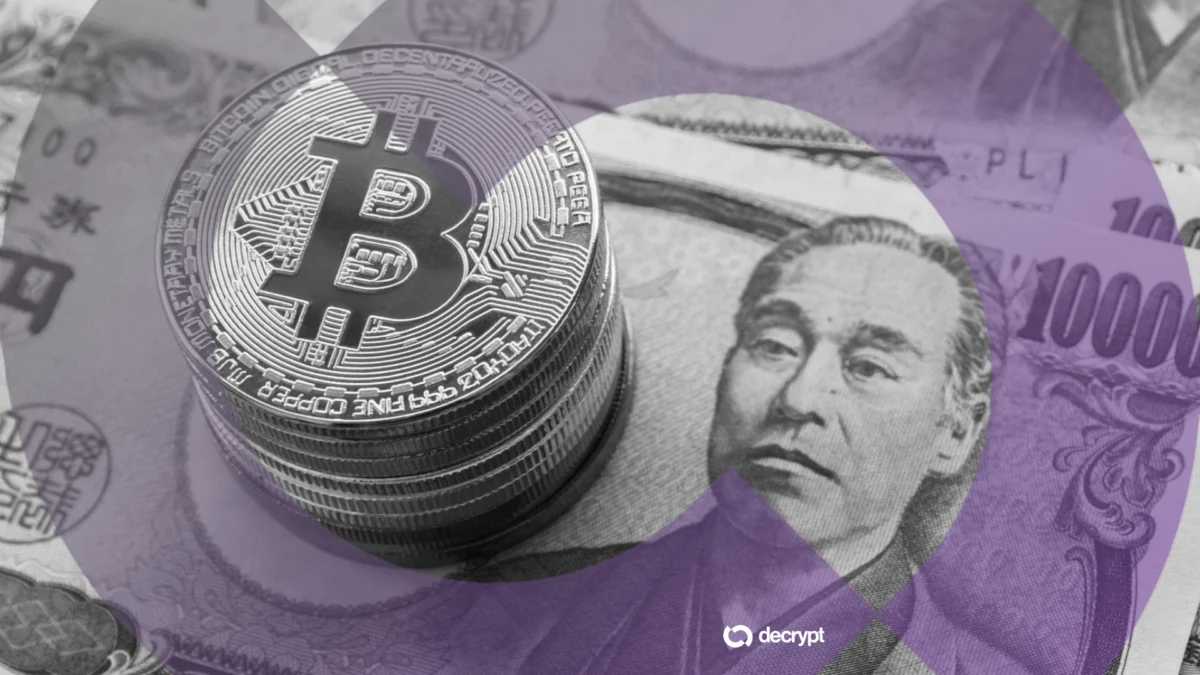
TOKYO, Japan – Metaplanet, the Tokyo-listed treasury company, executed a significant and strategically motivated "round trip" transaction in the third quarter of 2026, selling 10,000 Bitcoin (BTC) and subsequently repurchasing 11,000 BTC. This maneuver, which resulted in a net increase of 1,000 BTC, bringing the company’s total holdings to 44,000 BTC as of September 30, was explicitly designed to address concerns from credit rating agencies regarding the liquidity and willingness of a Bitcoin-centric company to convert its digital assets into fiat currency when obligations arise.
The unusual trading activity was disclosed by Metaplanet, with Chief Executive Simon Gerovich publicly articulating the company’s intent. "Rating agencies and credit investors ask one question of a Bitcoin company: can that Bitcoin be turned into cash to meet obligations, and will it be?" Gerovich stated in a widely circulated social media post on October 5, 2026. "We answered by doing it." This bold demonstration underscores a critical challenge faced by companies heavily invested in Bitcoin: proving to traditional financial institutions that while Bitcoin is a liquid asset, the issuer is both capable and committed to realizing that liquidity under duress.
The Strategic Rationale: Proving Liquidity and Intent
At the heart of Metaplanet’s Q3 strategy lies a proactive approach to potential credit assessments. While Bitcoin’s market liquidity is generally robust, facilitating large-volume trades with relative ease, the perception within conservative financial circles, particularly among credit rating agencies and bond investors, extends beyond mere tradability. These entities are equally concerned with an issuer’s willingness to liquidate a primary treasury asset, especially one as volatile as Bitcoin, to meet debt obligations. Metaplanet’s filing highlighted that simply asserting Bitcoin’s liquidity is often insufficient; a tangible demonstration was deemed necessary to build confidence.
The transaction involved selling an amount of Bitcoin that exceeded the entire outstanding principal of Metaplanet’s bonds, borrowings, and other interest-bearing liabilities. The proceeds from this sale, totaling approximately ¥124.7 billion, were held in cash, effectively creating a temporary cash buffer that demonstrably covered its ¥122.4 billion in net liabilities (after accounting for cash and dollar stablecoins) at the quarter’s end. Crucially, the company’s existing debts were not repaid during this process, remaining outstanding on their original terms. This detail emphasizes that the exercise was purely a proof-of-concept, a dry run to showcase operational capability rather than an actual debt management action.
CEO’s Vision: Beyond Simple Accumulation
Simon Gerovich has consistently emphasized that Metaplanet’s strategy is far more nuanced than mere Bitcoin accumulation. "From the beginning, our strategy was never simply to accumulate Bitcoin," Gerovich reiterated. "Our objective has been to build the leading Bitcoin financial platform." This vision positions Metaplanet not just as a corporate Bitcoin holder, but as an emerging financial institution leveraging Bitcoin as its foundational asset.
The company’s strategic pivot aligns with a broader trend of institutional adoption, where Bitcoin is increasingly viewed as a robust treasury reserve asset, albeit one that requires careful management and clear communication with stakeholders. Gerovich proudly noted that Metaplanet’s current holdings of 44,000 BTC firmly establish it as the second-largest listed Bitcoin treasury company globally, signaling its growing prominence in the digital asset space.
Contextual Precedent: Lessons from MicroStrategy
Metaplanet’s strategic move draws parallels with, and also distinguishes itself from, the experiences of other pioneering Bitcoin treasury companies, most notably MicroStrategy. Metaplanet’s filing implicitly referenced "a previously published issuer credit rating of an overseas peer company," suggesting that an issuer’s reluctance or refusal to sell Bitcoin could significantly diminish the asset’s weight in credit assessments.
This reference almost certainly points to MicroStrategy, which received a B- issuer credit rating from S&P Global in October 2025 – a landmark as the first such rating for a Bitcoin treasury company. S&P’s assessment cited "low dollar liquidity" among its concerns and cautioned that a market downturn could compel MicroStrategy to sell Bitcoin at depressed prices, thereby impacting its financial stability.
MicroStrategy, under the leadership of its Chair, Michael Saylor, has also evolved its stance on Bitcoin liquidity management. While Saylor famously championed a "never sell" philosophy for many years, the company has since adapted its approach. In June (likely 2026), MicroStrategy approved a Digital Credit Capital Framework, permitting sales of up to $1.25 billion of Bitcoin to fund cash reserves, dividends, and buybacks. By August, MicroStrategy had sold 6,948 BTC for approximately $432.5 million. Saylor subsequently clarified his position, stating he would "never be a net seller" of Bitcoin, rather than never selling any Bitcoin at all. The firm has since resumed Bitcoin purchases, surpassing its previous record holdings in late September.

The key difference in intent is crucial: MicroStrategy’s sales were aimed at meeting funding needs and managing its balance sheet, whereas Metaplanet’s Q3 transaction was a deliberate, staged demonstration to prove capability and willingness, followed by a net repurchase.
Financial Implications of the Demonstration
While successful in its strategic objective, the "round trip" transaction was not without financial cost. Metaplanet reported selling its 10,000 BTC at an average price of ¥12.47 million per Bitcoin and subsequently buying back 11,000 BTC at an average of ¥13.63 million per Bitcoin. This represented a roughly 9% higher repurchase price compared to the sale price. The net effect of adding 1,000 BTC to its treasury came at an estimated cost of ¥25.2 billion, given the higher repurchase price for the additional 1,000 BTC and the overall higher cost basis for the repurchased 10,000 BTC.
Furthermore, because the Bitcoin sold had been acquired at a price above the Q3 sale price, the disposal resulted in a capital loss for U.S. tax purposes. The company estimates this could lead to a deferred tax asset of approximately $97 million at subsidiaries of its U.S. holding company. However, Metaplanet noted that this figure is preliminary, unaudited, and its recognition is not guaranteed. As Metaplanet carries Bitcoin at fair value on its balance sheet, this specific disposal did not create a new accounting loss on its income statement.
Metaplanet’s Expanding Bitcoin-Centric Ecosystem
Looking ahead, Metaplanet has announced its intention to actively pursue a formal credit rating, building on the confidence gained from its Q3 liquidity demonstration. The company’s "Bitcoin Income Generation business" has also shown consistent performance, booking revenue for eight consecutive quarters, indicating a sustainable operational model built around its Bitcoin holdings.
Gerovich also unveiled a new "Net Interest Income Strategy," designed to "create recurring income streams and lower our effective cost of capital." This initiative is part of a broader, unified push towards establishing a comprehensive Bitcoin-based financial institution. This strategic direction includes a pending "Superplanet transaction" and the continued build-out of "Metaplanet Securities," which was established through the acquisition of a Japanese securities firm earlier (likely 2026) to launch Bitcoin yield products. These developments signal Metaplanet’s ambition to offer a full suite of Bitcoin-centric financial services, moving beyond a simple treasury holding model.
Evolution of Bitcoin Accumulation
The third quarter’s net addition of 1,000 BTC also reflects a continued moderation in Metaplanet’s Bitcoin accumulation pace. In the second quarter of 2026, the company added 2,823 BTC, which itself was a cooling from even more aggressive buying earlier in the year. The Q3 net addition represents roughly a third of the previous quarter’s pace, suggesting a more measured, strategic approach to growth as the company focuses on building out its financial platform and managing its balance sheet in anticipation of credit ratings.
This slowdown in accumulation, coupled with the strategic liquidity demonstration, indicates a maturation in Metaplanet’s corporate strategy. The company is transitioning from an initial phase of aggressive Bitcoin acquisition to a more diversified model focused on proving financial robustness, generating income from its holdings, and expanding its Bitcoin-centric financial services offerings. This evolution is critical for its long-term viability and its ambition to become a leading global player in the institutional adoption of Bitcoin.
Broader Industry Impact and Future Outlook
Metaplanet’s proactive approach to addressing credit rating agencies’ concerns sets a significant precedent for other public companies considering or holding substantial Bitcoin reserves. As institutional adoption of Bitcoin grows, the need for clear, transparent, and demonstrably liquid treasury management strategies will become paramount. This event highlights the ongoing dialogue between the nascent digital asset economy and traditional finance, where established frameworks for assessing creditworthiness are being adapted to accommodate new asset classes.
The financial industry will closely watch Metaplanet’s progress in securing a credit rating, as it could pave the way for more mainstream financial products and investment opportunities centered around Bitcoin. This strategic move by Metaplanet is not just about its own balance sheet; it’s a vital step in legitimizing Bitcoin as a viable, manageable, and liquid treasury asset in the eyes of the broader global financial system. The company’s commitment to building a "global financial platform rooted in Bitcoin" signifies a bold vision for the future, one where digital assets play a central role in corporate finance and investment.