


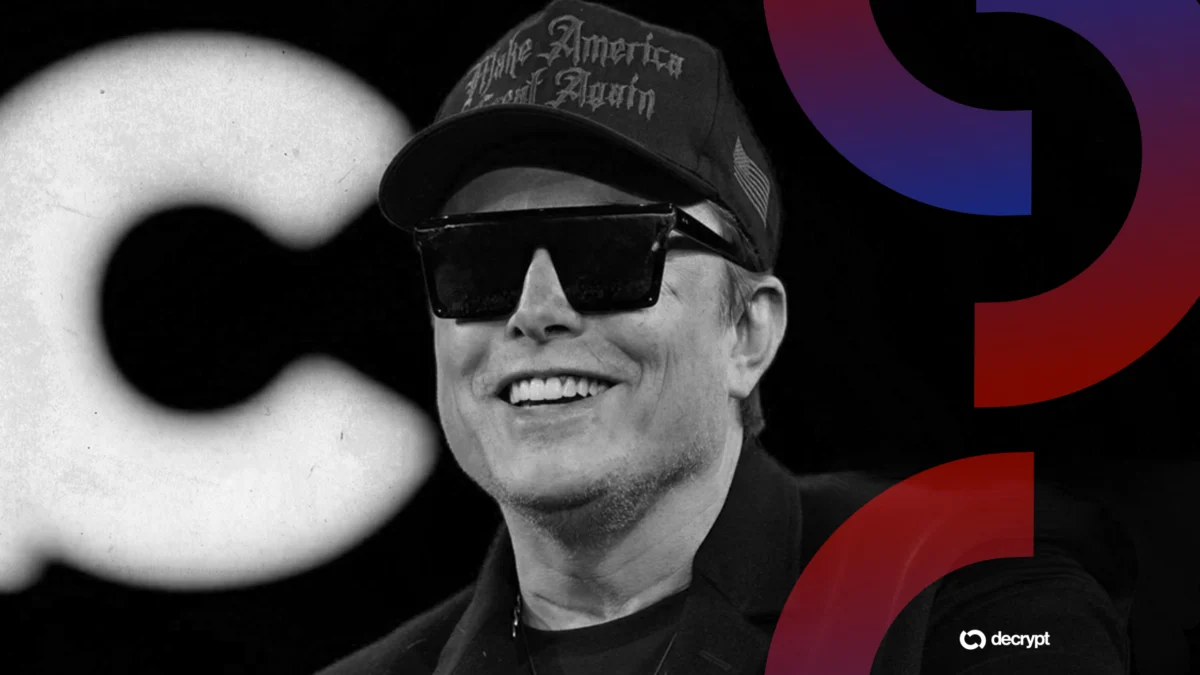
A landmark week in technology and finance saw SpaceX, the aerospace giant founded by Elon Musk, formally file its S-1 registration statement with the U.S. Securities and Exchange Commission (SEC) on Wednesday, signaling its intent for what could become the largest initial public offering (IPO) in history. The highly anticipated filing revealed a staggering target valuation of $1.75 trillion, with plans to raise $80 billion, a figure poised to eclipse the previous record set by Saudi Aramco’s $29.4 billion offering. The company’s roadshow is slated to commence on June 4, leading up to a Nasdaq listing on June 12 under the ticker symbol SPCX.
SpaceX’s Ambitious Trajectory and Significant Bitcoin Bet
Beyond the sheer scale of its public debut, the S-1 filing provided unprecedented transparency into SpaceX’s multifaceted operations and strategic financial decisions. A notable disclosure was the company’s substantial holding of 18,712 Bitcoin (BTC), valued at $1.45 billion at fair market value. Intriguingly, SpaceX acquired these Bitcoin for an aggregate cost of $661 million, indicating an unrealized gain exceeding 100% on its digital asset treasury. This revelation positions SpaceX alongside other prominent corporations, including Tesla, also led by Musk, in embracing Bitcoin as a treasury asset, underscoring a growing institutional acceptance of cryptocurrencies. The move highlights a broader trend among forward-thinking companies to diversify their balance sheets and potentially hedge against inflation, further validating Bitcoin’s role in corporate finance.
SpaceX’s business model, as outlined in the filing, reflects Musk’s ambitious vision to integrate various high-tech sectors under one corporate umbrella. The company’s operations span advanced launch systems, a rapidly expanding satellite internet service (Starlink), and strategic investments in artificial intelligence (AI). In 2025, SpaceX generated an impressive $18.5 billion in revenue. Starlink emerged as a significant growth driver, accounting for approximately 45% of this revenue and exhibiting a faster growth trajectory than its traditional launch business. The filing also brought to light a lucrative contract with Anthropic, a leading AI research company, committing to pay SpaceX $1.25 billion per month for compute services through 2029. This substantial agreement not only solidifies SpaceX’s position in the burgeoning AI infrastructure market but also promises a significant boost to its future revenue streams, potentially bolstering its already considerable Bitcoin holdings.
The decision to combine such diverse, capital-intensive ventures – from interplanetary travel and global internet connectivity to AI computing – speaks to a "super app" philosophy, aiming for synergistic growth across seemingly disparate industries. This integrated strategy, while complex, positions SpaceX at the forefront of several transformative technological revolutions, from space commercialization to the democratization of internet access and the foundational infrastructure for artificial intelligence. The impending IPO is expected to attract a broad spectrum of investors, eager to capitalize on SpaceX’s potential to redefine multiple industries and its strategic embrace of digital assets.
Nvidia’s Dominance in the AI Revolution
Concurrent with SpaceX’s market-shaking disclosures, Nvidia, the semiconductor titan, delivered another record-breaking financial quarter, emphatically validating the pervasive "AI infrastructure thesis" that has fueled the technology sector throughout the year. The company’s earnings report on Wednesday surpassed analyst expectations, showcasing robust growth driven by insatiable demand for its graphics processing units (GPUs), which are critical components for training and deploying artificial intelligence models.
Nvidia reported a staggering 262% year-over-year revenue increase to $26.04 billion for its fiscal first quarter, significantly exceeding its own guidance and analyst consensus. Data center revenue, the primary driver of this growth, surged by 427% to $22.6 billion, demonstrating the unparalleled demand for its Hopper and Blackwell architecture GPUs. Net income skyrocketed by 628% to $14.88 billion, underscoring the company’s exceptional profitability and market leadership. The company’s forecast for the current quarter’s revenue also exceeded estimates, signaling continued momentum in the AI chip market.
This stellar performance immediately reverberated across the broader AI compute ecosystem. Companies specializing in AI infrastructure and digital asset mining, such as Keel Infrastructure, IREN, and Hive Digital, saw their shares jump by 9%, 8%, and 9% respectively. Notably, IREN separately announced a strategic 5-gigawatt AI infrastructure partnership with Nvidia, a development that propelled its shares by an additional 21% on the news alone. This collaboration highlights the growing interdependency between chip manufacturers and data center operators in building the foundational layers of the AI economy.
Nvidia’s continued ascent underscores its pivotal role as the "picks and shovels" provider for the AI gold rush. Its strategic shift from a gaming-centric GPU manufacturer to the indispensable engine of artificial intelligence has propelled its market capitalization to unprecedented levels, placing it among the world’s most valuable companies. However, the broader market context presented a mixed picture, as Walmart’s cautious guidance issued on the same morning cast a shadow, causing stock futures and crypto majors to dip into negative territory. This juxtaposition highlights the ongoing tension between specific sector-driven booms and broader macroeconomic uncertainties, reminding investors that while the AI surge is powerful, the overall economic landscape remains complex.
Hyperliquid’s DeFi Super App Emergence
In the decentralized finance (DeFi) realm, Hyperliquid’s HYPE token demonstrated a remarkable decoupling from the broader cryptocurrency market, surging to $57.40 on Wednesday. This represents a more than 100% gain year-to-date, a striking contrast to Bitcoin’s 12% decline over the same period. This exceptional performance is not attributable to speculative meme coin dynamics or fleeting narrative trades but is firmly rooted in robust fundamental growth and an innovative business model.
Hyperliquid, a decentralized exchange (DEX) specializing in perpetual futures, has emerged as a significant player in the DeFi space. Year-to-date, the platform has generated an impressive $255 million in revenue, surpassing the combined revenue of its next two largest competitors. A key feature of its ecosystem is that 97% of this revenue is directly accrued to HYPE token holders through automated open-market buybacks, creating a powerful incentive for participation and investment. The platform now commands a substantial 43% share of all onchain fees, processing approximately $11 million weekly, which translates to an annualized revenue run rate approaching $850 million. This efficient revenue distribution mechanism and dominant fee capture underscore Hyperliquid’s strong product-market fit and operational efficiency within the competitive DeFi landscape.
A pivotal driver of Hyperliquid’s explosive growth has been the implementation of its HIP-3 release. Initially, Hyperliquid focused exclusively on crypto perpetuals. However, HIP-3 dramatically expanded its offerings to include perpetual contracts for traditional assets such as crude oil, gold, silver, and other commodities. These new offerings are all settled onchain, providing 24/7 trading access and generating fees that flow directly into the HYPE buyback mechanism. Following this, Hyperliquid further diversified its product suite by adding stock indices and individual stock perpetuals. The platform’s strategic timing was evident during recent geopolitical events, such as the Iran conflict, which sent oil prices soaring towards $120 per barrel. Traders seeking around-the-clock commodity exposure found Hyperliquid to be an invaluable venue, capitalizing on its continuous operation and global accessibility.
The innovation didn’t stop there. Hyperliquid subsequently introduced Pre-IPO contracts, allowing traders to speculate on the future valuations of highly anticipated private companies. Notable additions include OpenAI, Anthropic, Stripe, and most recently, SpaceX (SPCX). The SpaceX Pre-IPO contract went live on Hyperliquid’s Trade.xyz platform on May 17, implying an initial valuation of $1.78 trillion, days before the official S-1 filing confirmed a similar target. This foresight and agility in offering exposure to cutting-edge assets underscores Hyperliquid’s ambition to bridge traditional finance with the decentralized world.
Matt Hougan, Chief Investment Officer at Bitwise, succinctly captured the platform’s transformative potential, stating, "Hyperliquid is not a crypto app. It’s a super app. It’s not targeting the $3 trillion crypto economy. It’s targeting the $600 trillion global asset market." This perspective highlights Hyperliquid’s strategic vision to transcend the confines of the cryptocurrency market and compete directly with traditional financial institutions by offering a more efficient, accessible, and transparent trading environment for a vast array of global assets. The increasing recognition from institutional figures like Hougan suggests a broader shift in how decentralized platforms are perceived, moving from niche crypto tools to potential disruptors of established financial markets.
Ethereum’s Forward March Towards Native Privacy
Amidst these significant market developments, Vitalik Buterin, co-founder of Ethereum, unveiled a detailed roadmap for integrating enhanced privacy features directly into the Ethereum network. His outline came in response to a user query on social media platform X, questioning why ETH’s price remained around $2,000 despite a plethora of bullish network developments. Buterin’s response underscored Ethereum’s commitment to making privacy a native, rather than an add-on, characteristic of the blockchain.
Buterin specified three key near-term initiatives aimed at bolstering privacy: Account Abstraction combined with FOCIL (Fully On-chain Identity Layer), Keyed Nonces (EIP-8250), and Kohaku. These upgrades are primarily slated for inclusion in the upcoming Hegotá hard fork, which is anticipated in the second half of 2026. Account Abstraction, a concept that allows smart contracts to manage user accounts, is central to this privacy push. When combined with FOCIL, it aims to provide users with more robust and flexible privacy controls over their on-chain activities. Keyed Nonces (EIP-8250) are designed to improve transaction anonymity by introducing a more sophisticated method for preventing transaction linking, while Kohaku is expected to contribute further to the network’s privacy architecture through yet-to-be-fully-detailed mechanisms.
The push for native privacy features marks a significant evolution for Ethereum. Historically, the transparency of public blockchains, while offering auditability, has raised concerns about user privacy, leading to reliance on third-party privacy tools, which often introduce trade-offs in terms of security or regulatory compliance. By integrating privacy at the protocol level, Ethereum aims to provide a more secure, seamless, and user-friendly experience for individuals and enterprises alike, potentially unlocking new use cases that require confidentiality.
Significantly, this privacy initiative directly overlaps with Ethereum’s ongoing efforts to achieve quantum resistance. Account abstraction, a foundational element of the privacy roadmap, is also critical for implementing quantum-resistant cryptographic algorithms. This means the Hegotá hard fork has the potential to address two of Ethereum’s most significant long-term challenges – privacy and future-proofing against quantum computing threats – within a single upgrade window. This synergistic approach highlights the strategic depth of Ethereum’s development roadmap.
However, the execution environment for these ambitious upgrades is not without its complexities. The Ethereum Foundation, the non-profit organization stewarding the network’s development, is reportedly undergoing a period of internal transition marked by a wave of high-profile departures. These changes are understood to be tied to a new organizational mandate, which, while potentially streamlining future operations, could also introduce turbulence in the short term. Despite these internal shifts, the public and clear roadmap for privacy and quantum resistance demonstrates Ethereum’s unwavering commitment to evolving its core protocol to meet future demands for security, scalability, and user empowerment.
Broader Market Context and Implications
The week’s developments unfolded against a backdrop of fluctuating global markets. While Nvidia’s earnings provided a powerful uplift to the technology sector, particularly in AI, broader market sentiment was tempered by macroeconomic concerns. Walmart’s cautious guidance on consumer spending signaled potential headwinds for the retail sector and the wider economy, leading to a dip in stock futures and a corresponding decline in major cryptocurrencies. This illustrates the delicate balance between sector-specific booms and overarching economic health.
In the crypto sphere, corporate treasuries continued to show varied adoption of digital assets. SpaceX’s substantial Bitcoin holding reinforces a trend initiated by companies like MicroStrategy, which has aggressively accumulated BTC. The growing acceptance of spot Bitcoin ETFs in major financial markets has further legitimized Bitcoin as an institutional-grade asset, providing regulated avenues for exposure and potentially influencing more corporate treasury decisions.
Meanwhile, the meme coin tracker continues to highlight the speculative segment of the crypto market. While these tokens often experience extreme volatility driven by social media trends rather than fundamentals, their performance can sometimes reflect broader retail investor sentiment or shifts in market liquidity. However, their impact on the foundational developments seen in platforms like Hyperliquid or the strategic advancements in Ethereum remains largely separate, underscoring the increasing divergence within the crypto ecosystem between speculative assets and utility-driven protocols.
Overall, the week underscored a dynamic and evolving technological landscape, where ambitious private companies are preparing for monumental public debuts, established tech giants are solidifying their dominance in emerging sectors like AI, and decentralized platforms are pushing the boundaries of traditional finance, all while foundational blockchain networks continue to refine their core offerings to meet future demands for privacy and security. The intersection of these trends promises continued innovation and disruption across multiple industries.














