


The launch of OKX Wallet’s Trader Mode represents a significant milestone in the ongoing effort to reconcile the robust trading capabilities of centralized exchanges (CEXs) with the uncompromised security and autonomy of self-custodial wallets. For years, the promise of "self-custodial trading" has often been met with skepticism, frequently revealing hidden custodial elements that undermine the core principle of user control. However, a rigorous examination of OKX’s latest offering suggests a genuine breakthrough, leveraging advanced cryptographic and hardware-based security to deliver sophisticated automation without requiring users to relinquish control over their private keys.
This development addresses a fundamental schism in the cryptocurrency landscape: the trade-off between convenience and security. Centralized exchanges provide professional-grade tools—such as limit orders, stop-losses, and algorithmic strategies—alongside deep liquidity and fast execution. Yet, these benefits come at the cost of requiring users to deposit funds into the exchange’s custody, introducing counterparty risk, potential censorship, and vulnerability to hacks or insolvency. Self-custodial wallets, conversely, offer unparalleled security by keeping private keys solely in the user’s possession, eliminating third-party risk but historically lacking the advanced functionalities necessary for active, strategic trading beyond basic swaps and market orders.
The Paradigm Shift: Bridging CEX and DeFi Functionality
The journey towards truly self-custodial automated trading has been fraught with technical and security challenges. Previous attempts often involved off-chain solutions where private keys were temporarily entrusted to third-party services or stored in less secure environments, negating the very essence of self-custody. The critical innovation distinguishing OKX Wallet’s Trader Mode lies in its architectural foundation: the utilization of a Trusted Execution Environment (TEE) combined with the underlying principles of Account Abstraction (AA).
A Trusted Execution Environment is a secure, isolated area within a main processor that guarantees code and data loaded inside it are protected with respect to confidentiality and integrity. Even if the main operating system or other software on the device is compromised, the data and operations within the TEE remain secure. This hardware-level isolation is crucial for protecting sensitive information like private keys. OKX Wallet explicitly states that a user’s private key, once encrypted, resides within this TEE, where even OKX itself cannot view, copy, or extract it. This claim, initially met with the industry’s well-deserved skepticism, aligns with the fundamental security guarantees offered by TEE technology, such as those found in Intel SGX or ARM TrustZone.
Furthermore, Trader Mode operates on an existing seed phrase wallet, signifying it’s not a separate account type but an enabled state layered directly onto a user’s self-custody wallet. This integration is likely facilitated by the emerging standard of Account Abstraction (AA), a concept in blockchain that enables smart contract wallets to act as primary accounts, offering greater programmability and flexibility. AA allows for complex logic, such as delegated execution and gas sponsorship, which are critical for enabling automated trading strategies without requiring constant manual signing by the user. While not explicitly detailed as an AA wallet in the source, the description of delegated, automated actions with a private key secured in a TEE strongly implies an AA-like architecture.
Architectural Innovation: Trusted Execution Environments at the Core
The deployment of TEEs by OKX Wallet for Trader Mode is arguably the most critical technical detail. In essence, a TEE creates a "black box" within the device’s hardware. When a user activates Trader Mode, their private key is encrypted and securely moved into this isolated enclave. Crucially, operations like signing transactions for limit orders or stop-losses are then performed within the TEE. This means the private key never leaves the hardware enclave, and it is never exposed to the device’s potentially vulnerable operating system or any software applications, including OKX’s own front-end.
This approach directly addresses the primary security concern associated with automated trading on self-custody wallets: the risk of key exposure. In a traditional setup, automated trading often requires a hot wallet or a mechanism that temporarily exposes the private key for signing, creating a significant attack vector. By contrast, the TEE ensures that even if a malicious actor gains control of the device’s operating system, they cannot access the private key or manipulate the signing process within the TEE. This robust security model underpins the claim that users retain full control and custody, even while delegating complex trading logic to the wallet.
Unpacking Trader Mode’s Comprehensive Feature Set
Beyond its foundational security, Trader Mode offers a feature set designed to appeal to serious retail traders accustomed to CEX environments. The current lineup includes:
- Market Orders: Immediate execution at the best available price, standard for rapid entries or exits.
- Limit Orders: Two distinct types. One is triggered by a specific USD price, allowing traders to set desired entry or exit points. The other is triggered by a guaranteed swap rate, providing more precision for specific token pair exchanges. Both execute automatically once conditions are met.
- Auto-Sell Strategies: This integrated functionality allows users to set both take-profit and stop-loss thresholds concurrently with a market buy order. These thresholds are calculated in USD terms from the entry price, offering a comprehensive risk management tool from the outset.
- Copy Trading: A highly sought-after feature on CEXs, copy trading enables users to automatically mirror the trades of higher-performing or designated addresses. This allows less experienced traders to leverage the strategies of seasoned professionals while maintaining self-custody.
The roadmap for future features indicates OKX’s long-term commitment to evolving Trader Mode, with several advanced capabilities in the pipeline:
- Creator Sell-Off Detection: Automatically selling a token if its creator or team begins offloading their holdings, providing an early warning system against potential rug pulls or adverse price movements.
- Token Sniping: Executing trades immediately after a token migration event, allowing users to capitalize on new market opportunities or liquidity shifts.
- Dollar-Cost Averaging (DCA): Spreading trades out over time to mitigate volatility and reduce average entry/exit prices.
- Trailing Stops: Dynamically adjusting stop-loss orders as the market moves favorably, locking in profits while still protecting against reversals.
This robust and expanding feature set positions Trader Mode as a genuine competitor to centralized trading platforms, specifically for users who prioritize self-custody above all else. Data from firms like Chainalysis indicates a growing preference for self-custodial solutions among crypto users, driven by increasing awareness of security risks associated with CEXs and the broader ethos of decentralization. This demand underscores the timeliness and relevance of OKX’s innovation.
Setting Up Trader Mode: A Seamless Integration
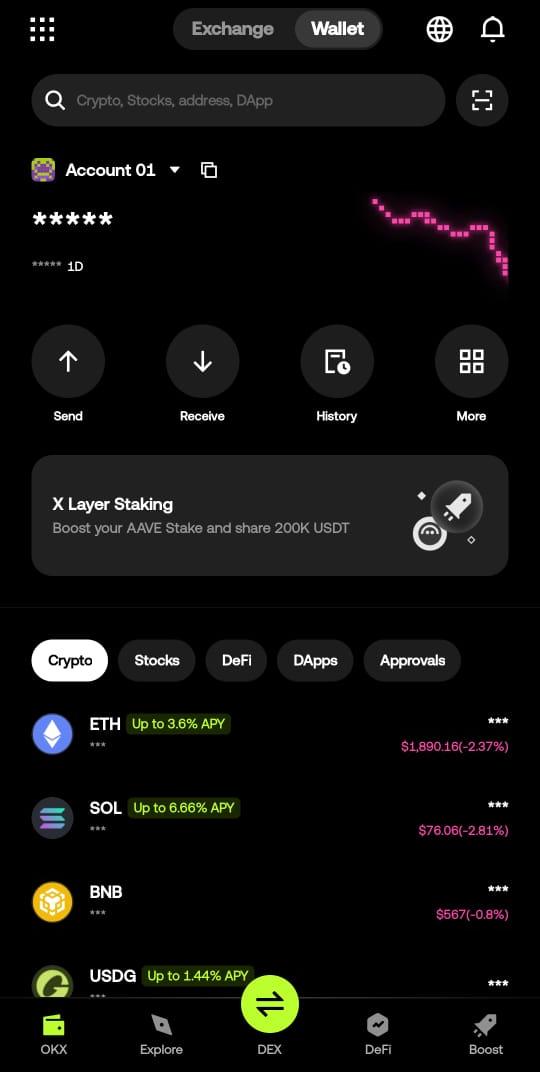
Activating Trader Mode is designed to be straightforward, integrating directly with a user’s existing OKX Wallet. The process involves:
- Standard Wallet Prerequisite: Users must first have a standard seed phrase wallet imported or created within OKX Wallet, as Trader Mode is an enhancement to an existing wallet, not a standalone account.
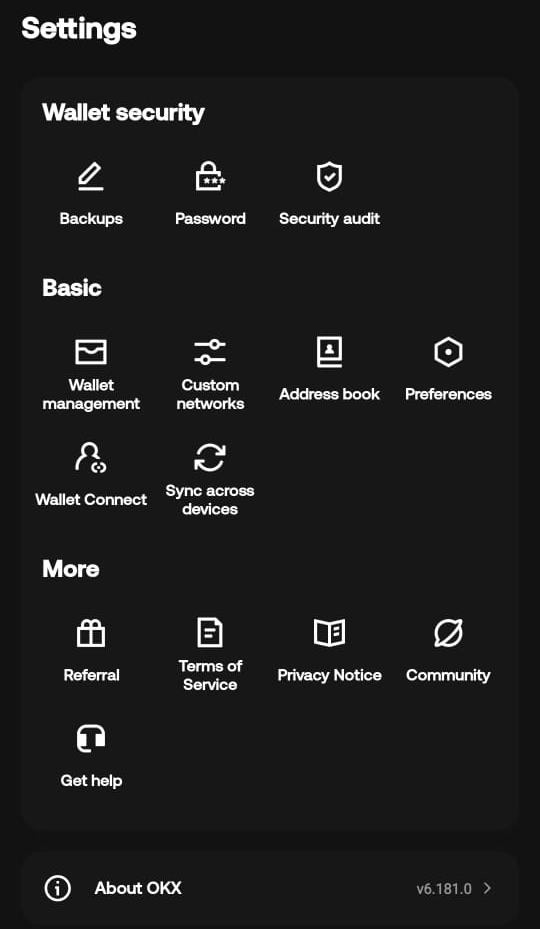
- Accessing Settings: From the wallet homepage, users navigate to the ‘Settings’ menu.
- Wallet Management: Within settings, the ‘Wallet Management’ section lists all imported wallets.
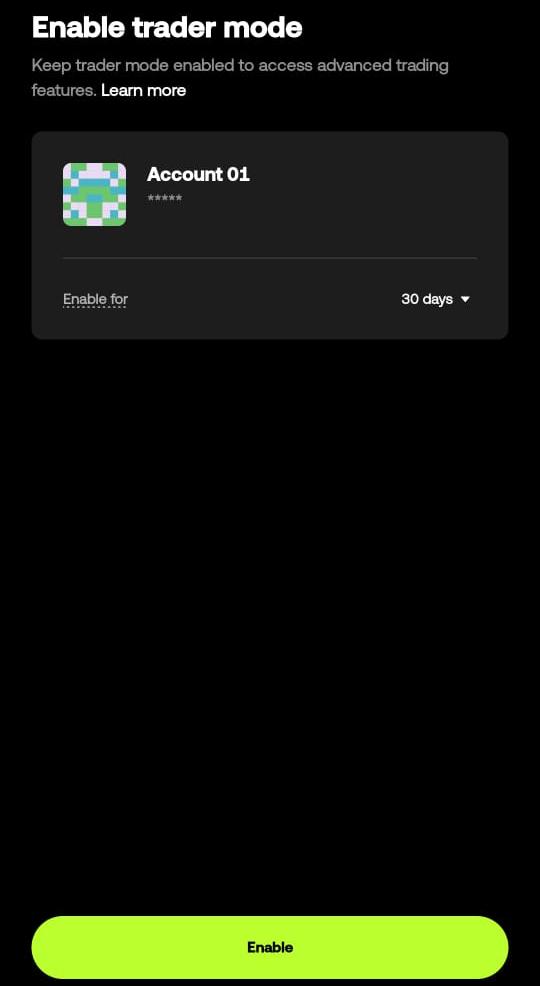
- Enabling Trader Mode: Users select the specific wallet they wish to enable Trader Mode for and toggle the feature ‘On’.
- Setting Enable Period: A crucial security feature, users are prompted to select an ‘Enable Period’ (in days) during which Trader Mode will remain active. This time-bound activation ensures that the private key, while secure in the TEE, is not indefinitely available for automated operations, adding an extra layer of protection.
This integration highlights the user-centric design, avoiding the complexities of setting up entirely new accounts or migrating funds. It emphasizes that Trader Mode is an extension of the user’s existing self-custodial setup, enhancing functionality without altering the fundamental security architecture.
Beyond Core Functionality: Security and User Experience Enhancements
OKX has implemented several thoughtful design choices that reinforce security and improve the user experience, often overlooked in other platforms:
- Authentication for Order Viewing: To view open orders, users are required to sign a verification message. This seemingly minor step is a critical anti-front-running mechanism. Without it, malicious actors could potentially observe pending stop-loss or take-profit levels, allowing them to front-run executions or even deliberately manipulate market prices towards trigger points. Requiring a signature closes this significant vulnerability, protecting users from exploitative trading practices.
- Auto-Pausing of Orders: If Trader Mode expires, requires an upgrade, or encounters an issue, all open strategy orders are automatically paused. This intelligent default prevents "broken" orders from silently failing on-chain, which would waste gas fees and lead to unexpected outcomes. Instead, orders are suspended until the user manually resumes or re-enables Trader Mode, ensuring that trades only execute when a valid signing authority is active.
- Time-Bound Enable Period: The requirement to set an activation duration for Trader Mode contributes to the overall security posture. It ensures that the private key, even within the TEE, is only delegated for automated tasks for a defined period. This minimizes the window of potential exposure, however small, and encourages users to consciously re-enable the feature when needed, reinforcing active security management.
These design decisions reflect a deep understanding of the intricacies of decentralized trading and the inherent risks involved. They demonstrate a commitment to not only providing advanced features but also embedding robust security and error-handling mechanisms from the ground up.
Industry Context and Broader Implications
The introduction of Trader Mode by OKX is not an isolated event but rather a response to, and a driver of, broader trends in the crypto ecosystem. The past few years have seen a surge in demand for self-custody, fueled by high-profile CEX collapses, regulatory uncertainties, and a philosophical alignment with decentralization. Reports from companies like MetaMask and Ledger consistently show increasing user engagement with self-custodial solutions. However, this shift often came with a compromise on trading efficiency and access to sophisticated tools.
OKX, a prominent player with a hybrid presence in both centralized exchange operations and Web3 wallet development, is uniquely positioned to bridge this gap. Their move into truly self-custodial automated trading signifies a strategic effort to capture a segment of traders who are increasingly wary of custodial solutions but unwilling to forgo advanced trading capabilities.
The implications for the Decentralized Finance (DeFi) ecosystem are substantial. By making CEX-grade tools accessible within a self-custodial framework, Trader Mode could attract a new wave of more sophisticated retail traders to DeFi protocols. This influx of activity could lead to increased liquidity, more efficient price discovery, and a more robust overall DeFi market. It also sets a new benchmark for other Web3 wallet providers, potentially spurring innovation across the industry as competitors seek to match or surpass OKX’s offering.
From an analyst’s perspective, this initiative could be viewed as a "game-changer" for the usability and adoption of decentralized trading. It addresses a significant pain point that has historically prevented many active traders from fully migrating to self-custody. The commitment to an independent audit and open-sourcing the code, once the review is complete, is a crucial step towards building trust and validating the security claims within the community, following a "harden first, transparency after" approach. This sequencing is prudent, ensuring the technology is robust before inviting public scrutiny.
Conclusion
OKX Wallet’s Trader Mode represents a credible and innovative attempt to deliver centralized-exchange-grade automation within a self-custodial framework. By leveraging Trusted Execution Environments and intelligent design choices for security and user experience, OKX appears to have effectively addressed the core challenge of delegating trading logic without compromising private key control. The key never leaves the user’s control in any meaningful sense, the time-bound enable period adds a layer of security, and the order authentication step closes a critical front-running vulnerability.
For individuals already comfortable managing a self-custody wallet who have longed for features like copy trading, limit orders, and automated stop-losses without the inherent risks of moving funds onto a custodial platform, Trader Mode offers a compelling solution worth exploring. While no automated trading system eliminates all risks, OKX’s approach marks a significant step forward in making sophisticated, secure, and truly self-custodial trading a reality in the decentralized landscape. This innovation could very well redefine expectations for Web3 wallets, pushing the boundaries of what is possible in the evolving world of decentralized finance.














