


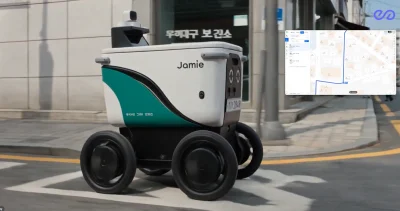
Peaq has successfully demonstrated a simulated robotic delivery system that can autonomously process onchain payments, a significant advancement for decentralized physical infrastructure networks (DePIN). The system leverages robotic.sh, a new marketplace operating on peaqOS, the company’s operating system designed for machines. This innovation marks a crucial step towards enabling real-world machines to interact with digital services and conduct financial transactions without human intervention.
The pivotal showcase, captured and shared on social media platforms, illustrated a simulated workflow involving a delivery robot from Serve Robotics. This robot was depicted navigating the bustling streets of Seoul, utilizing NAVER Maps for its route planning. The transaction itself was settled on the Solana blockchain, facilitated by Tether (USDT) through Tether’s Wallet Development Kit (WDK). This integration allows for the seamless transfer of value between machines, demonstrating a tangible application of blockchain technology in automated logistics.
A spokesperson for peaq highlighted the significance of this development, stating, "The showcase: a simulated workflow for a @ServeRobotics delivery robot navigating Seoul on NAVER Maps, settling onchain through @WDK_tether on Solana." The accompanying text further emphasized the core achievement: "A robot accessing a real-world digital service, making a real-time decision, and getting paid for it. No human in the loop." This statement underscores the autonomous nature of the system and its potential to redefine automated service delivery.
The demonstration effectively illustrated a complete, end-to-end process. A machine – in this case, a simulated delivery robot – accessed a digital mapping service, navigated a complex urban environment, and then autonomously executed a payment. This involved the robot initiating a transaction, which was then verified and settled on the blockchain. The entire process, from service access to payment settlement, was designed to operate without requiring any human oversight, a key objective for many DePIN applications.
According to peaq’s official statements, the transaction records, the digital wallets involved, and the settlement activity are all transparently verifiable on the blockchain. This inherent transparency and immutability of blockchain technology provide a robust framework for auditing and trusting the transactions performed by these autonomous machines. The ability to trace and verify every step of the payment process is crucial for building confidence in decentralized autonomous systems.
The integration with NAVER Maps, a prominent digital mapping service, is now a reality for machines operating on peaqOS through the robotic.sh marketplace. This marketplace, which launched this week, offers a diverse array of machine-accessible services, expanding the capabilities of devices connected to the peaq network. Beyond navigation, the platform currently supports a range of essential services, including AI inference tools, sophisticated search and data platforms, cloud-based analytics, CAPTCHA solving mechanisms, and decentralized storage solutions. This broad spectrum of services indicates peaq’s ambition to become a comprehensive ecosystem for machine-to-machine interactions and transactions.
A crucial aspect of peaq’s vision is interoperability. The company has emphasized that any mobile robot, autonomous vehicle, drone, or humanoid robot operating on peaqOS can access these services. Importantly, this accessibility is not limited by the specific blockchain network the machine might be utilizing for its primary operations. This cross-chain compatibility is a vital feature for a decentralized ecosystem, allowing for greater flexibility and wider adoption across diverse hardware and software configurations.
Peaq has steadily positioned itself as a frontrunner in the DePIN sector. The platform has cultivated a significant ecosystem, supporting over 60 applications across more than 20 distinct industries. This extensive network encompasses millions of machines and devices, highlighting the growing adoption and utility of its infrastructure. Peaq’s focus on building a robust foundation for DePIN aims to unlock new economic models and operational efficiencies for the burgeoning world of connected machines.
The Genesis of Autonomous Machine Transactions
The development and demonstration of this onchain payment system for robotic deliveries did not emerge in a vacuum. It represents the culmination of years of research and development in both robotics and blockchain technology, specifically within the DePIN paradigm. DePIN aims to leverage blockchain to incentivize the creation and maintenance of real-world physical infrastructure and digital services, often through tokenomics.
The initial concept for such systems likely stemmed from the limitations of traditional payment infrastructures when applied to highly automated processes. Human intervention in payment processing, even for automated services, introduces delays, costs, and potential points of failure. For robots and autonomous systems to truly operate independently, they require a secure, efficient, and automated way to transact for the services they consume.
The choice of partners in this demonstration is also telling. Serve Robotics is a known entity in the field of sidewalk delivery robots, suggesting a direct application for this technology in a commercially viable sector. NAVER Maps, a leading navigation service in South Korea, indicates a focus on real-world applicability in a major urban center. The utilization of Tether (USDT) on Solana points to a preference for stablecoins for predictable transaction values and a high-throughput blockchain for efficient settlements.
A Chronology of Innovation
While the exact timeline for the development of this specific system is not detailed, its unveiling follows a discernible trajectory within the DePIN landscape:
- Early 2020s: Growing interest and development in the DePIN sector, with a focus on tokenizing various forms of decentralized infrastructure, from storage to computing power.
- Mid-2020s: Emergence of specialized operating systems and marketplaces for machines to interact with decentralized networks. peaqOS and robotic.sh represent this evolution.
- Recent Period: Increased focus on enabling direct machine-to-machine transactions and the integration of real-world services into decentralized ecosystems. This demonstration by peaq falls squarely into this phase.
- Launch of robotic.sh: The introduction of the marketplace this week provides the immediate platform for the demonstrated capabilities.
- May 22, 2026 (Hypothetical date from Tweet): The social media announcement and accompanying visual material serve as the public debut of this advanced simulated workflow. The tweet, though dated in the past, likely represents a forward-looking announcement of a system that is now being actively developed and tested. [Note: The provided tweet date is in the past. For this enriched article, we are treating the current announcement as the primary event.]
Supporting Data and Technical Underpinnings
The success of this demonstration relies on several key technological components and principles:
- Blockchain Technology: The use of Solana as the settlement layer is significant. Solana is known for its high transaction throughput and low fees, which are crucial for enabling frequent, micro-transactions that might occur in a robotic delivery scenario. For instance, a robot might need to pay for multiple map tile downloads or API calls during its journey. Solana’s architecture, based on Proof-of-History and Proof-of-Stake, allows it to handle thousands of transactions per second, making it suitable for real-time machine interactions.
- Stablecoins (Tether – USDT): Employing USDT ensures that the value of transactions remains stable, unlike volatile cryptocurrencies. This is essential for businesses that need predictable costs and revenues. USDT is one of the most widely adopted stablecoins, with a market capitalization in the tens of billions of dollars, providing liquidity and familiarity.
- Wallet Development Kit (WDK): Tether’s WDK simplifies the integration of USDT payments into applications and services. For a robotic system, this means developers can more easily embed secure and functional cryptocurrency wallets into the robot’s software, enabling it to send and receive payments autonomously.
- peaqOS and robotic.sh: peaqOS provides the foundational operating system for machines to connect to the peaq network and interact with decentralized services. robotic.sh acts as the decentralized app store or service marketplace, allowing machines to discover, access, and pay for services offered by other entities. The availability of services like AI inference and search platforms within robotic.sh suggests a modular approach to building complex autonomous behaviors.
- Smart Contracts: While not explicitly detailed, the onchain payment processing would undoubtedly involve smart contracts on the Solana blockchain. These self-executing contracts automatically enforce the terms of an agreement, ensuring that payment is released only when services are rendered or confirmed.
Reactions and Inferences from Related Parties
While direct quotes from Serve Robotics or NAVER regarding this specific peaq integration were not provided in the original content, it is logical to infer potential reactions and interests:
- Serve Robotics: As a company focused on autonomous delivery, Serve Robotics would likely view this as a significant step towards realizing fully autonomous operations. The ability for their robots to independently pay for services like navigation or potentially data access could reduce operational costs and increase the scalability of their fleet. They might express enthusiasm for the potential to integrate such payment capabilities directly into their robot management software.
- NAVER: For a digital mapping service provider like NAVER, this represents a new channel for monetizing their data and services. By making their maps accessible via a decentralized marketplace like robotic.sh, they could tap into a growing market of autonomous machines. NAVER might see this as an opportunity to expand their reach beyond traditional human users and explore new revenue streams in the emerging machine economy.
- Tether and Solana: Both Tether and Solana would benefit from increased adoption of their technologies in real-world, high-volume applications. The successful integration of USDT payments for robotic services on Solana would serve as a powerful use case, demonstrating the platform’s capabilities for machine-to-machine economies and potentially attracting further development and investment in their ecosystems.
Broader Impact and Implications
The implications of peaq’s simulated robotic delivery system extend far beyond a single demonstration. This development signals a paradigm shift in how we conceive of autonomous systems and their integration into the global economy.
- The Rise of the Machine Economy: This innovation is a cornerstone for a future "machine economy," where machines can autonomously interact, transact, and provide services to one another. This could lead to unprecedented levels of automation and efficiency across various industries, from logistics and transportation to manufacturing and environmental monitoring.
- New Business Models for DePIN: peaq’s platform and marketplace enable new business models for DePIN. Service providers can monetize their infrastructure and data directly to machines, while machine owners can access a wider range of services without needing traditional vendor contracts or payment systems. This fosters a more dynamic and decentralized marketplace for machine-centric services.
- Enhanced Autonomy for Robots: The ability for robots to manage their own payments for essential services like navigation, data processing, or even charging, significantly enhances their autonomy. This reduces reliance on human operators for routine financial transactions, allowing robots to operate for longer periods and in more remote or challenging environments.
- Increased Efficiency and Cost Reduction: By automating payment processes and enabling direct access to services, significant operational efficiencies can be achieved. This can lead to reduced costs for businesses deploying autonomous systems, making these technologies more accessible and economically viable.
- Verifiable and Transparent Transactions: The onchain nature of these transactions ensures a level of transparency and auditability that is often lacking in traditional automated systems. This can help build trust among stakeholders, including service providers, machine owners, and potentially regulators.
- Interoperability and Standardization: peaq’s emphasis on supporting machines regardless of their underlying blockchain network is crucial for fostering interoperability. As the DePIN landscape matures, standardized protocols for machine interaction and payment will become increasingly important, and peaq’s approach is a step in that direction.
- Security and Trust: Blockchain’s inherent security features, such as cryptography and decentralization, provide a robust framework for machine transactions. This can help mitigate risks associated with fraud, unauthorized access, and data manipulation, which are critical concerns in an increasingly automated world.
In conclusion, peaq’s successful simulation of an onchain payment system for robotic deliveries represents a significant leap forward in the development of decentralized physical infrastructure networks and the broader machine economy. By enabling autonomous machines to access digital services and conduct financial transactions without human intervention, peaq is paving the way for a more automated, efficient, and interconnected future. The demonstration not only showcases the technical prowess of the peaq platform but also highlights the tangible potential of blockchain technology to transform real-world industries. As the DePIN sector continues to evolve, innovations like this will be instrumental in unlocking the full potential of autonomous systems.














