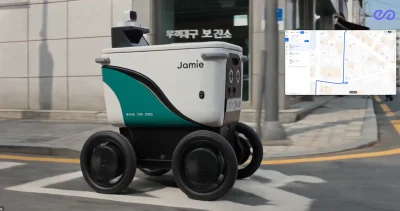
Peaq has unveiled a simulated robotic delivery system capable of processing onchain payments through robotic.sh, its marketplace operating on peaqOS. This innovative demonstration marks a significant step forward in the integration of decentralized technologies with real-world autonomous operations, showcasing a future where machines can autonomously access digital services and conduct financial transactions without human intervention.
The showcased workflow featured a simulated delivery robot, identified as being from Serve Robotics, navigating the bustling streets of Seoul. This virtual robot utilized the sophisticated mapping capabilities of NAVER Maps, a prominent digital mapping service in South Korea. Crucially, the transaction was settled on the Solana blockchain, leveraging Tether (USDT) and facilitated by Tether’s Wallet Development Kit (WDK). This intricate process highlights the potential for machines to engage in complex economic activities within a decentralized framework.
According to peaq, the demonstration effectively illustrated a seamless workflow. The delivery robot was depicted as accessing a real-world digital service – the mapping and navigation data provided by NAVER Maps. Following this, it was capable of making real-time decisions regarding its route and, most notably, processing blockchain-based payments. The entire operation was designed to occur without any direct human involvement, a key objective in the pursuit of fully autonomous machine economies. The company emphasized that all transaction records, digital wallets utilized, and settlement activities are fully verifiable on the blockchain, ensuring transparency and auditability.
This integration with NAVER Maps is now accessible to any machine operating on peaqOS through the robotic.sh marketplace. Launched this week, robotic.sh aims to be a central hub for machine-accessible services, and the addition of advanced mapping and navigation capabilities represents a substantial expansion of its offerings. Beyond mapping, the marketplace already supports a diverse range of services designed for machine consumption, including AI inference tools, robust search and data platforms, sophisticated cloud-based analytics, CAPTCHA solving mechanisms to verify human interaction in digital spaces, and decentralized storage solutions.
A pivotal aspect of peaq’s vision is its commitment to interoperability. The company asserts that any mobile robot, autonomous vehicle, drone, or even humanoid robot that is operating on the peaqOS ecosystem can seamlessly access these services. This accessibility is not limited by the specific blockchain network that the machine might be utilizing for its own internal operations. This open-architecture approach suggests a future where diverse autonomous systems can plug into a universal marketplace of services, fostering a more interconnected and efficient ecosystem.
Peaq has been steadily building its reputation as a leading layer 1 network specifically designed for Decentralized Physical Infrastructure Networks (DePIN). DePIN refers to a class of blockchain-based networks that incentivize participants to contribute and maintain real-world infrastructure, such as data storage, wireless networks, or, in this case, machine services. The platform has garnered significant traction, currently supporting over 60 applications that span more than 20 distinct industries. This broad adoption underscores the growing demand for infrastructure that can reliably support a vast array of machines and connected devices.
The Technological Underpinnings: peaqOS and Robotic.sh
The success of this simulated demonstration hinges on the robust infrastructure provided by peaqOS and the functionality of the robotic.sh marketplace. peaqOS is the operating system designed for machines and devices within the peaq ecosystem, enabling them to interact with the blockchain and access decentralized services. It provides the necessary framework for secure identity management, data handling, and transaction processing for these machines.
Robotic.sh, as the dedicated marketplace, acts as an intermediary, connecting service providers with machines that require those services. The platform is designed to facilitate machine-to-machine (M2M) interactions, where machines can discover, request, and pay for services autonomously. The inclusion of onchain payment capabilities is a cornerstone of this marketplace, allowing for secure and transparent financial settlements directly between machines or between a machine and a service provider.
The integration with NAVER Maps is particularly noteworthy. NAVER Maps is a sophisticated mapping and navigation platform, and its availability through robotic.sh means that autonomous systems can leverage its extensive data and algorithms for real-world navigation. This is a critical component for any delivery robot or autonomous vehicle that needs to operate effectively in complex urban environments. The fact that this integration allows for real-time decision-making and payment processing without human oversight is a testament to the advancements being made in the field of autonomous systems and blockchain technology.
Chronology of Development and Demonstration
While the precise timeline for the development of this specific simulated system is not detailed, the launch of robotic.sh this week signifies a culmination of peaq’s efforts in building a functional marketplace for machine services. The demonstration itself, as indicated by the accompanying tweet, likely occurred in the immediate lead-up to or coinciding with the public announcement.
The tweet from peaq, dated May 22, 2026, highlights the key elements of the demonstration: "@ServeRobotics delivery robot navigating Seoul on NAVER Maps, settling onchain through @WDK_tether on Solana." The tweet further emphasizes the revolutionary aspect: "A robot accessing a real-world digital service, making a real-time decision, and getting paid for it. No human in the loop." This concise summary encapsulates the core achievement and the vision being presented.
The partnership with Serve Robotics, a company known for its development of autonomous sidewalk robots for food and grocery delivery, lends credibility to the simulation. By using a real-world robotics company’s technology in the simulation, peaq underscores the practical applicability of its platform. Similarly, the use of Tether’s WDK on Solana demonstrates an integration with established players in the cryptocurrency and blockchain space, further validating the system’s potential for real-world deployment.
Supporting Data and Industry Context
The DePIN sector is experiencing exponential growth, with increasing investment and a growing number of projects aiming to leverage blockchain for infrastructure development. According to various market reports, the global DePIN market is projected to reach hundreds of billions of dollars in the coming decade, driven by the proliferation of IoT devices, autonomous systems, and the demand for decentralized data and computing resources.
Peaq’s position as a layer 1 network dedicated to DePIN places it at the forefront of this burgeoning industry. The platform’s ability to support over 60 applications and millions of machines and devices indicates a significant network effect is already underway. This broad ecosystem is crucial for the success of any decentralized infrastructure, as it fosters innovation and creates a vibrant marketplace of services and applications.
The integration of autonomous vehicles and delivery robots into the DePIN framework is a natural evolution. These machines are inherently data-generating and data-consuming entities, and they require access to a multitude of digital services, from navigation and communication to payment processing. By enabling these machines to operate within a decentralized, tokenized economy, peaq aims to unlock new revenue streams and operational efficiencies for autonomous systems.
Analysis of Implications and Future Potential
The implications of peaq’s simulated robotic delivery system are far-reaching. This demonstration moves beyond theoretical concepts and presents a tangible glimpse into the future of autonomous commerce.
Enhanced Efficiency and Cost Reduction: By eliminating the need for human oversight in payment processing and service access, the system can significantly reduce operational costs for businesses utilizing autonomous robots. Real-time, automated transactions can streamline logistics and minimize delays.
New Business Models for Autonomous Systems: The ability for robots to autonomously access and pay for services opens up entirely new business models. Robots could, for example, independently pay for charging at charging stations, access premium mapping data for complex routes, or even subscribe to predictive maintenance services.
Interoperability and Standardization: The peaqOS and robotic.sh approach promotes interoperability between different types of machines and different blockchain networks. This could lead to a more standardized and interconnected landscape for autonomous systems, reducing fragmentation and fostering collaboration.
Decentralized Service Economies: This demonstration is a strong indicator of the potential for decentralized service economies where machines are not just users but also active participants in the economic system. They can earn tokens for providing services, pay for services they consume, and even participate in governance.
Security and Transparency: The onchain nature of transactions provides a high degree of security and transparency. Every transaction is recorded on the blockchain, making it immutable and auditable. This can build trust among participants and create a more resilient system.
Challenges and Considerations: While the demonstration is impressive, it is important to acknowledge the challenges that lie ahead. Scaling blockchain networks to handle the sheer volume of transactions that millions of autonomous machines would generate is a significant hurdle. Regulatory frameworks for autonomous systems and their financial interactions are still evolving. Furthermore, ensuring the robust security of the machines themselves against cyber threats will be paramount.
Official Responses and Stakeholder Perspectives (Inferred)
While direct quotes from all involved parties are not available in the provided text, we can infer potential reactions and perspectives based on the context:
-
Serve Robotics: Likely views this integration as a validation of their commitment to advancing autonomous delivery. The ability for their robots to autonomously engage in financial transactions and access vital services like advanced mapping would be a significant technological leap, potentially enhancing their operational capabilities and market competitiveness. They would likely express enthusiasm for further collaboration and real-world testing.
-
Tether and Solana: The use of Tether (USDT) on Solana highlights the stability and scalability of these platforms for real-world applications. Tether’s WDK, specifically designed for developers to integrate USDT into their applications, demonstrates their commitment to facilitating broader adoption of stablecoins. Solana’s high transaction throughput and low fees are crucial for enabling cost-effective, real-time transactions required by autonomous systems. Their participation underscores their belief in the growing utility of their respective technologies in the burgeoning DePIN sector.
-
NAVER: While NAVER’s direct involvement in the payment processing is limited to providing the mapping service, their decision to integrate with peaqOS and robotic.sh suggests a forward-thinking approach to digital services. They may see this as an opportunity to expand the reach and utility of their mapping data into the emerging autonomous vehicle and robotics market, potentially creating new revenue streams and partnerships.
Conclusion
Peaq’s simulated robotic delivery system represents a significant advancement in the convergence of artificial intelligence, robotics, and blockchain technology. By demonstrating a simulated workflow where a delivery robot can autonomously navigate, access digital services, and process onchain payments without human intervention, peaq is painting a compelling picture of a future decentralized machine economy. The integration of NAVER Maps through the robotic.sh marketplace on peaqOS, utilizing Tether on Solana, showcases a practical application of DePIN principles that could revolutionize logistics, autonomous operations, and the broader digital service landscape. As the DePIN sector continues to mature, innovations like this are paving the way for a more automated, efficient, and interconnected future for machines.