Prediction markets, lauded as sophisticated mechanisms for distilling collective intelligence into quantifiable probabilities, are facing a significant challenge to their foundational principle of decentralized decision-making. At Polymarket, the world’s preeminent cryptocurrency-based prediction platform, a Wall Street Journal investigation has revealed that the "crowd" responsible for resolving contested market outcomes is, in reality, a tightly controlled group of just nine wallets. This concentration of power raises serious questions about the integrity and impartiality of the platform’s dispute resolution process, potentially compromising the very essence of what prediction markets aim to achieve: objective probabilistic forecasting.
The core of the issue lies in Polymarket’s reliance on UMA’s Optimistic Oracle, a system designed to resolve disagreements about market payouts through a token-holder voting mechanism. However, the analysis by the Wall Street Journal indicates that a disproportionate amount of voting power, exceeding 50% in most contested disputes, is held by the ten largest holders of UMA tokens. Crucially, a substantial portion of these active UMA voters, reportedly over 60% in the past year, are directly linked to Polymarket accounts. This means that the individuals tasked with impartially settling disputes are, in fact, active participants with direct financial stakes in the outcomes they are voting upon, creating a clear conflict of interest.
The "Oracle Problem" Persists: Concentrated Voting Power in Dispute Resolution
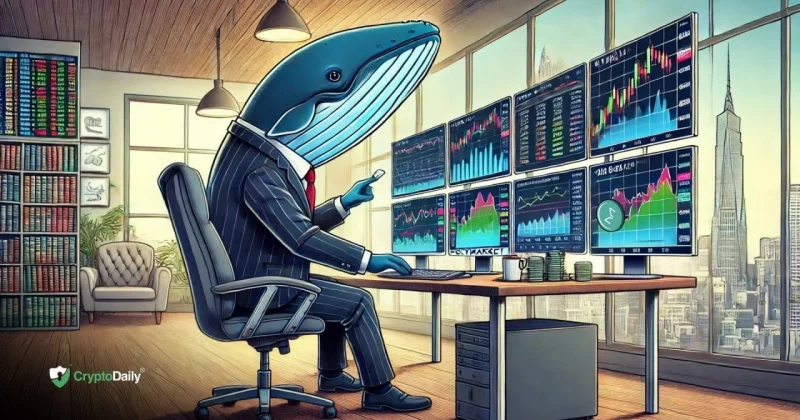
The UMA Optimistic Oracle functions by enabling token holders to vote on the resolution of market outcomes when disagreements arise. The expectation is that this decentralized voting process would aggregate diverse perspectives and arrive at an objective truth. However, the findings suggest that this ideal scenario is not materializing on Polymarket. Instead, a small cohort of "whales" – individuals or entities holding a substantial amount of UMA tokens – wield significant influence over these crucial decisions.
This concentration of power is not merely theoretical; it has already manifested in real-world scenarios. The report highlights past interventions by these influential whale voters in high-stakes geopolitical bets, specifically mentioning markets tied to events in Ukraine and related to the actions and pronouncements of Ukrainian President Zelenskyy. In such sensitive and politically charged markets, the ability of a few large token holders to sway dispute resolutions could have profound implications, potentially leading to outcomes that favor their own pre-existing positions rather than reflecting the broader consensus or factual reality.
A History of Reforms: Paper Promises and Stalled Implementation
Recognizing the inherent risks associated with concentrated voting power and the potential for manipulation, efforts have been made to reform the UMA oracle system. In August 2025, UMA passed a significant governance update known as UMIP-189, also referred to as MOOV2. This update aimed to refine the dispute resolution process by introducing a whitelist of approximately 37 addresses. The intention behind this whitelist was to restrict participation in proposing and voting on dispute resolutions to a more select group of seasoned and vetted participants, thereby reducing the "noise" from trivial disputes and enhancing the quality of decision-making.
However, the effectiveness of MOOV2 in fundamentally addressing the concentration of power is questionable. While whitelisting a specific number of addresses is a step towards filtering out less experienced or potentially malicious actors, it does not inherently solve the problem if the same dominant whales simply appear on this approved list. The report implies that the whitelisting mechanism, as implemented, may not have substantially altered the landscape of voting power, leaving the core issue of whale dominance largely intact.
In parallel to UMA’s governance reforms, Polymarket itself has been exploring a more fundamental structural shift to mitigate its dependence on external oracle systems. The platform has publicly floated the idea of launching its own native token, tentatively referred to as POLY. Such a move would aim to internalize the oracle functions directly within Polymarket’s ecosystem. This would grant the platform greater autonomy and control over its dispute resolution mechanisms, thereby reducing its reliance on the UMA voting apparatus. However, this ambitious proposal remains in the "considering" phase, indicating that its implementation is not imminent and its eventual realization is uncertain.
The Asymmetric Playing Field: Implications for Traders and the Broader Market
The current governance structure on Polymarket creates a distinctly asymmetric playing field for its users. Retail participants, who constitute the vast majority of traders on the platform, find themselves in a precarious position. When betting on contentious outcomes, their potential payouts are not solely determined by the accuracy of their predictions or the collective wisdom of the market, but rather by the voting decisions of a small, influential group of whale token holders. This dynamic can disincentivize participation and erode trust in the platform’s ability to provide fair and objective market resolutions.
The fact that Polymarket is actively exploring the creation of its own POLY token underscores a growing recognition within the platform that its current dependence on UMA’s architecture is more of a liability than an asset. By internalizing oracle functions, Polymarket could gain direct control over the design and execution of its dispute resolution processes. This would allow for greater flexibility in adapting to evolving market needs and potentially implementing more robust mechanisms to ensure fairness and decentralization.
However, the path to such a solution is fraught with challenges. The development and successful launch of a native token, along with the establishment of a truly decentralized and trustworthy oracle system within Polymarket, will require significant technical expertise, community buy-in, and rigorous governance design. The delay in implementing the MOOV2 reforms and the speculative nature of the POLY token initiative suggest that these challenges are substantial.
Broader Market Implications and the Future of Prediction Markets
The situation at Polymarket is not an isolated incident but rather a microcosm of the broader challenges facing the decentralized prediction market space. The "oracle problem" – ensuring that decentralized platforms can reliably and impartially obtain real-world data and resolve disputes – remains a critical hurdle for the widespread adoption and trustworthiness of these technologies.
For the broader cryptocurrency market, the Polymarket case highlights the ongoing tension between the ideals of decentralization and the practical realities of governance and power concentration. While blockchain technology promises to disintermediate traditional power structures, the emergence of "whales" and concentrated influence is a recurring theme across various decentralized applications.
The implications for the future of prediction markets are significant. If platforms like Polymarket cannot effectively address issues of governance concentration and ensure fair dispute resolution, they risk alienating retail users and failing to live up to their potential as valuable tools for forecasting and risk management. The development of robust, transparent, and truly decentralized oracle solutions will be paramount for the long-term success and credibility of the prediction market industry.
The current situation at Polymarket, where the "wisdom of the crowd" appears to be heavily influenced by a select few, serves as a critical case study. It underscores the need for continuous innovation in decentralized governance mechanisms, robust auditing processes, and a commitment to ensuring that the power of prediction markets is truly distributed among their participants, rather than concentrated in the hands of a privileged few. The platform’s exploration of a native token is a step in the right direction, but its success will depend on its ability to overcome the significant hurdles of implementation and genuine decentralization. Until then, the integrity of Polymarket’s contested outcomes will continue to be under scrutiny, casting a shadow over the promise of crowd-sourced prediction.