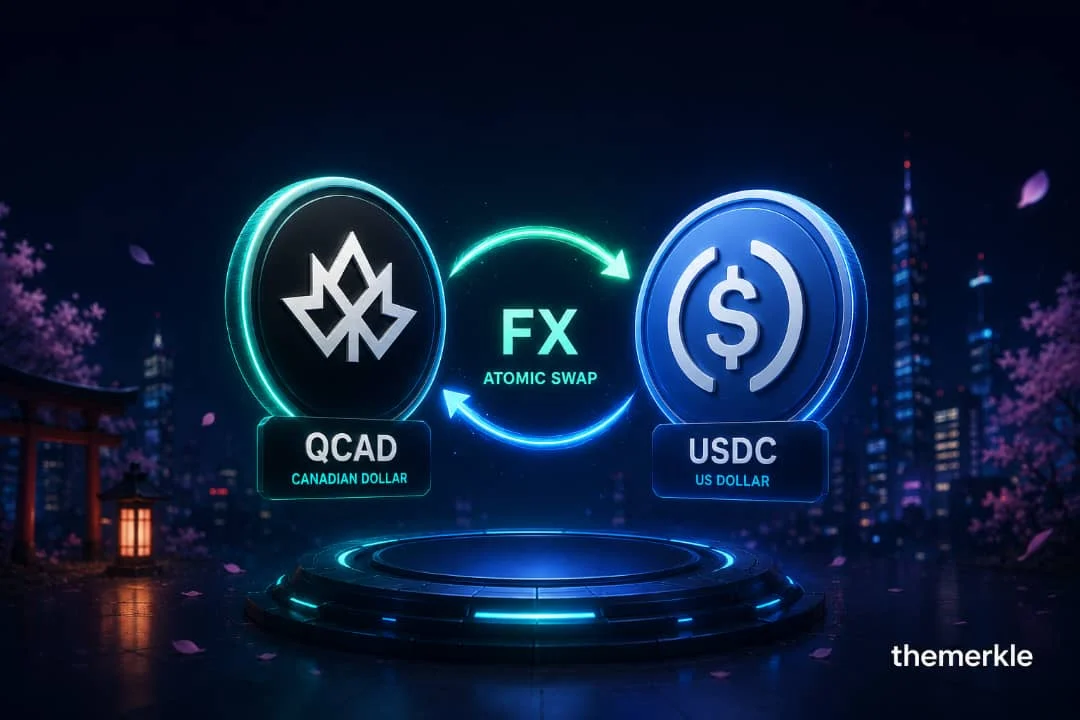
The financial technology landscape witnessed a significant evolution today with the official launch of QCAD, Stablecorp’s Canadian dollar stablecoin, to the Arc Testnet on StableFX. This development represents a major milestone in the ongoing effort to construct robust, institutional-grade foreign exchange (FX) infrastructure directly on-chain, promising to reshape how global financial institutions manage multi-currency operations in the digital realm. The integration is poised to introduce native CAD-denominated stablecoin capabilities within the Arc ecosystem, fostering seamless, programmable FX flows between the Canadian dollar and the U.S. dollar, particularly for established digital assets like USDC.
The Dawn of On-Chain Multi-Currency FX: QCAD’s Integration with Arc Testnet
This strategic integration, announced jointly by Stablecorp, Arc, and key ecosystem partners like Circle, signifies a crucial step towards dismantling the long-standing complexities and inefficiencies inherent in traditional cross-border foreign exchange. StableFX, the underlying infrastructure layer facilitating this launch, is designed to enable near real-time, atomic settlement between liquidity pools for CAD and USD. This capability is expected to dramatically lessen the friction and operational overhead typically associated with conventional cross-border FX mechanisms, which often involve multiple intermediaries, protracted settlement times, and significant costs. The rollout of QCAD on Arc is not merely a product launch; it is indicative of a broader, transformative trend in digital finance: the embedding of multi-currency settlement capabilities natively on the blockchain, moving away from increasingly fragmented networks of traditional banks, centralized exchanges, and legacy payment intermediaries.
Addressing the Fragmented Landscape of Global Finance
For decades, the global foreign exchange market, which sees trillions of dollars traded daily, has relied on a complex web of correspondent banking relationships, SWIFT messages, and interbank settlements. While this system has been foundational to international trade and finance, it is inherently slow, costly, and prone to operational risks. Transactions can take days to settle, involve multiple fees from various intermediaries, and lack the transparency and immutability that modern digital systems can offer. When dealing with currency exchanges within blockchain environments in the past, particularly between currencies like the Canadian and U.S. dollars, the process often required a convoluted series of unconnected steps. This typically involved routing funds through traditional bank rails, converting fiat currency via centralized exchanges (such as the now-defunct FTX, which exemplified the risks of centralized intermediaries), and only then moving to a blockchain settlement layer for finalization. This multi-step process was lengthy, opaque, and inefficient.
The advent of Arc, combined with StableFX and the integration of QCAD, seeks to fundamentally simplify this paradigm. By enabling CAD-denominated liquidity to engage directly with a USD-centric liquidity environment on-chain, the need to flow through numerous conventional intermediaries is significantly reduced. This architectural shift represents a subtle yet profound evolution in decentralized financial infrastructure, transitioning from treating stablecoins as mere tokenized representations of fiat currency to establishing a comprehensive settlement layer that facilitates native interaction and movement of multiple currencies within decentralized financial applications.
Stablecorp and QCAD: A Pioneer in Canadian Digital Currency
Stablecorp has established itself as a leading entity in the Canadian digital asset space, particularly through its pioneering work with QCAD. Launched in late 2019, QCAD was Canada’s first regulated stablecoin pegged 1:1 to the Canadian dollar, backed by Canadian dollar deposits held in trust with a regulated financial institution. This early move positioned Stablecorp at the forefront of bringing stability and regulatory compliance to the nascent stablecoin market in Canada.
"Our mission at Stablecorp has always been to bridge the gap between traditional finance and the burgeoning digital economy, offering institutional-grade solutions that are both innovative and compliant," stated Jean-François Cloutier, CEO of Stablecorp, reflecting on the significance of the Arc integration. "The launch of QCAD on Arc Testnet, leveraging StableFX, is a testament to this commitment. It unlocks unprecedented efficiency for Canadian dollar transactions within a global, programmable financial system, providing a robust on-ramp for institutions looking to harness the power of blockchain for treasury management, cross-border payments, and liquidity solutions without compromising on regulatory integrity." The QCAD stablecoin provides a trusted digital representation of the Canadian dollar, crucial for fostering adoption among Canadian businesses and financial institutions that require stability and predictability in their digital asset holdings.
Arc’s Vision: A Foundation for Programmable Multi-Currency Finance
Arc is positioning itself as the foundational layer for a new global financial infrastructure, meticulously engineered to support programmable multi-currency applications natively on-chain. This vision extends far beyond simply replicating existing financial services; it aims to create entirely new paradigms for value exchange and financial product creation.
The traditional challenges of currency exchange within blockchain environments, requiring multiple disconnected steps, are precisely what Arc seeks to overcome. By bringing QCAD and StableFX to run natively on its platform, Arc dramatically simplifies this intricate process. While CAD-denominated liquidity may still interact with a largely USD-centric liquidity environment, the crucial distinction is the directness of engagement, bypassing the multiple intermediaries that historically added cost, time, and risk.
"Arc is building the future of global finance – a future where currency is not a barrier but a programmable primitive," commented a spokesperson for Arc, underscoring the platform’s ambitious goals. "This integration with Stablecorp’s QCAD via StableFX is a critical step in realizing our vision. We are moving beyond the concept of stablecoins as mere tokenized fiat. Instead, we are creating a comprehensive settlement layer that enables multiple currencies to natively move across and interact within decentralized financial applications, unlocking a new era of efficiency and innovation for institutional use cases globally. This marks a profound shift from one-dimensional, currency-driven ecosystems to higher-level programmable financial systems capable of servicing complex institutional needs, including treasury management, payments, and international settlement flows." This evolution represents a strategic pivot for blockchain networks, embracing a multi-faceted approach to financial services that caters to the nuanced demands of a globalized economy.
StableFX: Powering Atomic and Real-Time On-Chain FX
At the technological core of this groundbreaking integration lies StableFX, an advanced infrastructure layer specifically designed to facilitate direct foreign exchange capabilities between QCAD and prominent USD-backed stablecoins, such as Circle’s USDC. The platform’s standout feature is its support for near real-time settlement coupled with atomic execution. Atomic execution guarantees that a transaction either completes entirely and successfully, or it fails completely, with no partial or intermediate states. This "all or nothing" principle is paramount for institutional environments, where settlement certainty and the elimination of counterparty risk are among the most critical factors influencing operational efficiency and trust.
A lead developer for StableFX emphasized the technical prowess, stating, "StableFX is engineered to provide the robust, predictable settlement guarantees that institutions demand. Our atomic execution mechanism eliminates the complexities and risks associated with partial settlements, ensuring a high degree of operational certainty. This, combined with near real-time processing, allows developers to build sophisticated applications that operate with multi-native fiat on-chain, vastly expanding the possibilities for decentralized finance solutions. Whether it’s for payment systems, treasury management platforms, liquidity solutions, or international settlement apps, our infrastructure reduces the full dependence on conventional banking for currency conversion, offering a truly digital alternative."
This milestone holds profound significance for the broader stablecoin infrastructure. Historically, the majority of stablecoin ecosystems have been heavily dominated by USD-denominated liquidity. By directly incorporating QCAD into Arc’s settlement architecture, an environment is fostered for the ecosystem to realistically develop a more globalized, multi-currency infrastructure. Circle, a key partner in the Arc ecosystem and issuer of USDC, also highlighted the importance of this interoperability. In a public statement, Circle noted, "With QCAD and StableFX, institutions can explore more efficient stablecoin-based FX flows, expanding on-chain FX infrastructure for institutional CAD/USD use cases." This collaboration reinforces the growing trend of interconnectedness between leading stablecoin issuers and advanced blockchain platforms.
Beyond USD Dominance: Globalizing Stablecoin Infrastructure
The current stablecoin market, with a total market capitalization exceeding $150 billion, remains overwhelmingly dominated by USD-pegged stablecoins like USDT and USDC, which collectively account for over 90% of the market. While this dominance reflects the U.S. dollar’s role as the world’s primary reserve currency, it also presents limitations for a truly global, decentralized financial system. The incorporation of QCAD directly into Arc’s settlement layer, from a settlements perspective, is a critical step towards diversifying this landscape and fostering a more equitable and globally representative currency infrastructure.
This integration also clearly signals a growing demand for blockchain systems that support real business processes, moving beyond the speculative crypto operations that have often characterized the industry’s early years. Institutions, increasingly willing to adopt stablecoins for their operational efficiencies, require infrastructure that offers the flexibility and reach of traditional foreign exchange systems but with the added benefits of faster settlement, lower costs, and reduced friction inherent in blockchain technology. The ability for multiple fiat-pegged stablecoins to function harmoniously and productively within a decentralized finance ecosystem is crucial for this maturation. Arc is actively building an architecture that allows a host of fiat-backed digital assets to function as constituents of a single, programmable financial system, thereby avoiding the siloed liquidity pools typically segmented by currency or geography.
Implications for Institutional Adoption and Treasury Management
For large financial entities, multi-currency operations are a common, daily practice. Treasury departments manage vast sums across various currencies, hedging risks and optimizing liquidity. International corporations rely on efficient cross-border payments for supply chains, payroll, and revenue repatriation. The underlying technology to assist these treasury operations, liquidity management, and cross-border settlement must be optimally efficient, secure, and cost-effective.
The QCAD and StableFX integration on Arc directly addresses these institutional needs. By testing how this blockchain-native FX infrastructure can displace certain parts of the conventional conversion pipeline, Arc demonstrates a path forward. Instead of routing value through the complex and often expensive infrastructure of external banking systems before it can reach blockchain rails, the settlement layer itself enables direct currency interoperability. This evolution holds immense potential to minimize operational complexity, reduce counterparty risk, and lower transaction costs for global financial applications operating with cross-region and multi-currency workflows.
A representative from a prominent global investment bank, speaking on condition of anonymity due to internal policy, observed, "The promise of atomic, near-real-time settlement for major currency pairs on-chain is incredibly compelling for institutional players. We constantly seek ways to improve capital efficiency and reduce operational overhead in our FX operations. Solutions like Arc and StableFX offer a clear pathway to achieve this, potentially transforming how we manage liquidity and execute cross-border transactions in the coming years." This sentiment highlights the tangible benefits that institutional players envision from such advancements.
The Expanding Role of Stablecoins in Enterprise Finance
The narrative surrounding stablecoins has undergone a significant transformation. Previously, their primary utility was largely confined to crypto trading pairs and serving as liquidity instruments within decentralized finance. However, the sector is rapidly expanding its purview, increasingly being recognized as a foundational component for treasury management, cross-border payments, sophisticated settlement systems, and programmable financial infrastructure.
Projects like Arc and StableFX are strategically positioning stablecoins as more than mere transaction or transfer solutions. They envision them as a growing floor of financial scaffolding capable of supporting real-world, institutional-grade workloads. The features of atomic settlement and near-real-time FX execution are prime examples of how blockchain systems can optimize aspects common in traditional financial processes, offering integration and speed advantages that legacy systems struggle to match. Given that foreign exchange markets remain one of the largest and most operationally intensive sectors in the world, they present a prime area for profound innovation through blockchain-based infrastructure.
As the adoption of stablecoins reaches for widespread international acceptance, robust multi-currency support becomes not just a feature, but a necessity. Financial players exploring the utility of digital asset infrastructure are not inherently confined to USD-denominated ecosystems; rather, they are driven by the need for efficiency across their entire global operations, fueling a demand for greater fiat interoperability.
Looking Ahead: The Future of Blockchain-Native FX
The launch of QCAD on Arc Testnet, facilitated by StableFX, transcends the simple rollout of a regional stablecoin. It heralds the arrival of blockchain environments specifically designed for programmable, multi-currency finance at an institutional scale. This evolution of stablecoin infrastructure is set to unlock capabilities in native FX settlement, direct currency interoperability, and seamless cross-border liquidity movement that will fundamentally differentiate advanced financial blockchains from earlier, more crypto-focused ecosystems.
This development positions Arc and its partners at the vanguard of a new era of global finance, where the friction of international transactions is dramatically reduced, and the potential for innovative, programmable financial products is virtually limitless. The integration of QCAD marks a significant step towards a future where digital assets and blockchain technology serve as the bedrock for a more efficient, inclusive, and interconnected global financial system.
Disclosure: This article is for informational purposes only and does not constitute trading or investment advice. Always conduct thorough research before engaging with any cryptocurrency or financial service.