


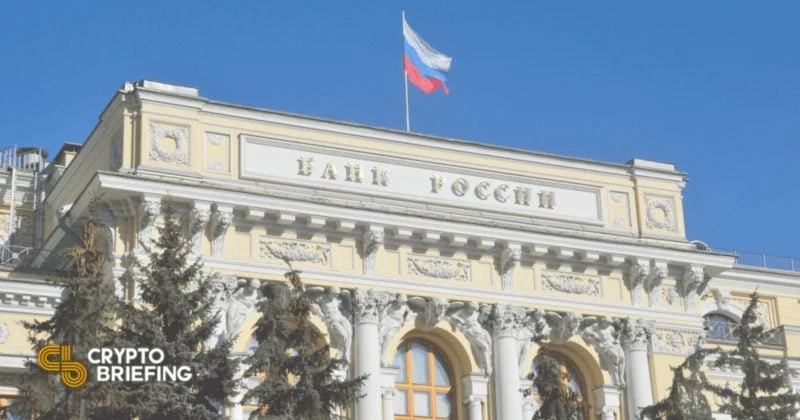
The Central Bank of the Russian Federation (CBR) has formally rejected proposals to broaden the range of digital currencies available to non-qualified investors, maintaining a restrictive stance that limits retail access to only three major assets: Bitcoin (BTC), Ethereum (ETH), and the Tether stablecoin (USDT). Deputy Governor Vladimir Chistyukhin confirmed the regulator’s position in a comprehensive interview with Radio RBC, signaling that the upcoming regulatory framework will prioritize capital protection and market stability over the diversification of digital asset portfolios for the general public.
This decision comes as Russia prepares to implement a landmark set of regulations governing the domestic digital currency market. The legislation, which has been the subject of intense debate between various government branches for years, is expected to take effect as early as next month. The bill cleared a significant hurdle in April when the State Duma passed it in its first reading with an overwhelming majority, reflecting a unified legislative push to bring the "grey" crypto market into a controlled legal environment.
The Logic of Limitation: Volatility and Systemic Risk
The central bank’s refusal to permit a wider array of altcoins or experimental tokens is rooted in its long-standing skepticism toward the decentralized finance (DeFi) ecosystem. Deputy Governor Chistyukhin emphasized that the inherent volatility of the cryptocurrency market remains the primary concern for the regulator. By restricting non-qualified investors—individuals who do not meet specific wealth or professional experience criteria—to Bitcoin, Ethereum, and USDT, the CBR aims to confine retail participation to the most liquid and established segments of the market.
Chistyukhin specifically highlighted the risks associated with stablecoins, noting that while USDT is permitted due to its role as a de facto bridge for international settlements, it is not without peril. The regulator pointed to the potential for "freezes" or restrictions imposed by centralized issuers at the behest of foreign regulators, a scenario that could lead to significant losses for Russian holders. Despite these risks, the inclusion of USDT is seen as a pragmatic concession to the reality of the Russian economy’s current reliance on stablecoins for bypassing traditional banking hurdles.
Financial Thresholds and the 300,000-Ruble Investment Cap
A cornerstone of the proposed regulatory regime is the imposition of strict investment limits. The Central Bank intends to maintain a 300,000-ruble (approximately $3,300 USD) annual investment cap for non-qualified investors. This figure was not chosen arbitrarily; the regulator noted that this amount already exceeds the average balance found on traditional Russian brokerage accounts, suggesting that the cap provides ample room for the average citizen to explore digital assets without risking total financial ruin.
Critics of the cap argue that it may drive high-net-worth individuals who do not meet "qualified" status to seek out offshore exchanges or unregulated peer-to-peer (P2P) platforms, thereby undermining the goal of bringing the market into the light. However, the CBR maintains that the cap is a necessary "firewall" to prevent the contagion of crypto-market crashes from spilling over into the broader domestic economy.
A Rigorous Path to Market Entry: Mandatory Testing and Licensing
Access to the "Big Three" digital currencies will not be automatic. Under the new rules, both qualified and non-qualified investors will be required to undergo a mandatory knowledge test. This assessment is designed to ensure that participants understand the technical and financial complexities of blockchain technology, the mechanics of private key management, and the legal status of digital assets within the Russian Federation.
Furthermore, the legislation introduces a staged approach to the professional services sector of the crypto market. While individual trading is being codified, the regulator is taking a hard line on crypto-related financial services. Unlicensed crypto lending—a sector that has seen significant growth globally through various yield-bearing protocols—will be strictly prohibited in Russia starting in 2027. This grace period is intended to allow existing entities to either wind down their operations or transition into a fully licensed and supervised regulatory framework.
Chronology of Russia’s Crypto Legislation
The journey toward this regulatory framework has been marked by a decade of internal conflict between the Central Bank, which originally favored a total ban on cryptocurrency, and the Ministry of Finance, which advocated for regulation and taxation.
- January 2022: The Central Bank of Russia releases a report proposing a total ban on the use and mining of cryptocurrencies within the country, citing threats to financial stability.
- February 2022: The Russian government approves a "concept" for regulating digital currencies, siding with the Ministry of Finance’s view that the industry should be regulated rather than banned.
- April 2024: The State Duma passes the first reading of the crypto regulation bill, which includes provisions for cross-border payments and retail investment limits.
- June 2024: Deputy Governor Chistyukhin confirms the restricted asset list (BTC, ETH, USDT) and the 300,000-ruble cap.
- Late 2024 (Projected): The bill is expected to pass its second and third readings, receive approval from the Federation Council, and be signed into law by President Vladimir Putin.
The Sanctions Factor and Cross-Border Payments
The shift from the Central Bank’s 2022 "total ban" stance to the current "regulated limited access" model is largely attributed to the geopolitical shifts following February 2022. As Russia was largely disconnected from the SWIFT international payment system and faced a barrage of Western sanctions, the utility of cryptocurrency as a tool for international trade became undeniable.
The new legislation is expected to create a legal pathway for Russian companies to use digital assets for B2B (business-to-business) settlements. By allowing Bitcoin, Ethereum, and USDT, the government provides its exporters and importers with tools that have global liquidity. However, the CBR is careful to decouple this "state necessity" from retail speculation. The message is clear: crypto is a tool for the state and professional entities to manage economic pressures, not a playground for retail investors to seek high-risk gains in the altcoin market.
Analysis of Market Implications
The decision to limit retail access to just three assets will likely have several immediate effects on the Russian digital asset landscape. First, it will consolidate the domestic exchange market. Local platforms that hope to receive licenses will likely delist a vast majority of their tokens, focusing exclusively on the permitted trio. This could lead to a decrease in domestic trading volume for mid-cap and small-cap tokens.
Second, the move may inadvertently strengthen the P2P (peer-to-peer) market. If investors are determined to purchase assets like Solana, Cardano, or various "meme coins," they will likely turn to decentralized exchanges (DEXs) or informal P2P networks that operate outside the purview of the Russian Central Bank. The regulator has already expressed concern over P2P volumes, and this restrictive policy may make those shadow markets even more resilient.
Third, the inclusion of USDT—a dollar-pegged stablecoin—highlights a paradox in Russian policy. While the Kremlin has aggressively pursued a policy of "de-dollarization," the Central Bank recognizes that the global crypto market runs on dollar-equivalent liquidity. By permitting USDT, the CBR is essentially allowing a digital version of the US dollar to circulate within a regulated Russian framework, albeit under the guise of a "digital currency."
Official Responses and Stakeholder Reactions
While the Central Bank’s stance is firm, other branches of the Russian government have expressed a desire for more flexibility. The Ministry of Finance has previously suggested that a more diverse range of assets could help foster a more robust domestic fintech sector. Industry representatives, including the Russian Association of Crypto-Industry and Blockchain (RACIB), have warned that overly strict limits could lead to a "brain drain" of developers and investors to jurisdictions like the UAE or Kazakhstan, which offer more expansive regulatory frameworks.
Anatoly Aksakov, Chairman of the State Duma Committee on Financial Markets and a key figure in the bill’s progression, has noted that while the initial rules are strict, they are "not set in stone." He suggested that as the infrastructure for monitoring transactions matures, the list of permitted assets and the investment caps could be revisited.
Looking Ahead: The Digital Ruble and the 2027 Horizon
The Central Bank’s cautious approach to private cryptocurrencies is also designed to pave the way for the Digital Ruble—Russia’s Central Bank Digital Currency (CBDC). The CBR is currently in the pilot phase of the Digital Ruble, which it envisions as the primary digital instrument for both domestic payments and government transfers. By restricting the private crypto market, the regulator ensures that the Digital Ruble does not face unnecessary competition from private stablecoins or speculative assets.
As the bill moves toward its second reading, the financial community remains focused on the technicalities of the "knowledge tests" and the specific licensing requirements for exchanges. The 2027 deadline for the ban on unlicensed lending suggests that the Russian government is playing a long game, aiming for a total institutionalization of the crypto sector over the next three years.
In conclusion, Russia’s move to limit crypto access to Bitcoin, Ethereum, and USDT represents a "middle path" policy. It acknowledges the inescapable reality of digital assets in a sanctioned economy while maintaining the conservative paternalism that defines the Russian Central Bank’s approach to retail finance. For the Russian investor, the message is one of controlled entry: the doors to the digital economy are opening, but only through a very narrow and heavily monitored corridor.














