


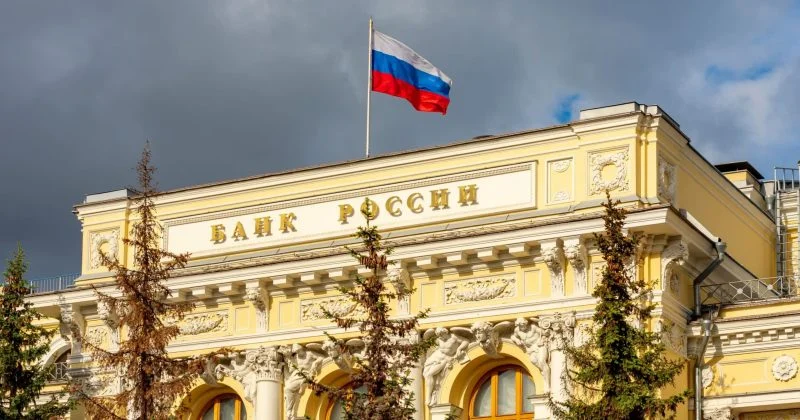
The Russian Federation is poised to transition its financial ecosystem into a new digital era, as the Bank of Russia formally establishes a definitive timeline for the mainstream integration of the digital ruble. Bank of Russia Governor Elvira Nabiullina has confirmed that the nation’s largest financial institutions and primary retail chains are required to be fully equipped to process digital ruble transactions by September 1, 2026. This announcement marks the culmination of a strategic initiative launched in October 2020, positioning Russia as one of the first major global economies to move a Central Bank Digital Currency (CBDC) from the experimental phase into mandatory domestic use.
While Western central banks continue to deliberate over the privacy implications and technical architectures of CBDCs, Moscow is moving forward with a sense of urgency dictated by geopolitical necessity. The digital ruble represents a third form of the national currency, existing alongside physical cash and traditional electronic bank deposits. Unlike commercial bank money, which is a liability of a private institution, the digital ruble is a direct liability of the Bank of Russia, stored on a centralized ledger managed by the state. This architecture grants the central bank unprecedented visibility into the flow of capital, a feature that has sparked both domestic indifference and international scrutiny.
The Mandate for Systemic Financial Institutions
The September 2026 deadline is not a voluntary target but a regulatory requirement for the backbone of Russia’s financial sector. Under the directive, twelve "systemically important" banks—a list that includes giants such as Sberbank, VTB, and Alfa-Bank—must complete their infrastructure upgrades to support digital ruble wallets and transactions. These institutions are responsible for the vast majority of consumer and corporate banking in Russia, ensuring that once the deadline passes, the digital ruble will be accessible to nearly every citizen with a bank account.
The rollout is divided into two primary fronts: banking integration and retail acceptance. By the 2026 deadline, major retailers with annual turnovers exceeding specific thresholds will also be mandated to accept the digital ruble. This ensures that the currency is not merely a tool for interbank settlements or government transfers but a functional medium of exchange for everyday consumer goods. The Bank of Russia’s vision is a seamless ecosystem where a citizen can receive a salary in digital rubles and immediately spend those funds at a grocery store or for utility payments via a unified QR-code system.
A Chronology of Development: From Concept to Reality
Russia’s journey toward a CBDC has been methodical, characterized by a series of legislative and technical milestones designed to "sanction-proof" the economy.
- October 2020: The Bank of Russia releases its first consultation paper on the digital ruble, outlining the potential benefits for reducing transaction costs and increasing financial inclusion.
- January 2022: The first technical trials begin with a small group of banks, focusing on the creation of digital wallets and person-to-person (P2P) transfers.
- April 2023: The pilot phase expands to include real clients and real transactions, though on a limited scale. This phase tests consumer-to-business (C2B) payments.
- July 24, 2023: President Vladimir Putin signs Federal Law No. 340-FZ, establishing the legal framework for the digital ruble. The law defines the Bank of Russia as the sole operator of the platform and sets the rules for data protection and user rights.
- August 2024: Legislation is introduced to allow the use of digital assets and cryptocurrencies in international trade trials, further signaling Russia’s intent to diversify its payment rails.
- September 1, 2026: The deadline for widespread mandatory adoption across systemic banks and major retail outlets.
Overcoming the Enthusiasm Gap: Financial Incentives and State Pressure
Despite the government’s aggressive timeline, the Russian public has shown a marked lack of enthusiasm for the digital ruble. Early surveys indicated that many citizens see little difference between the digital ruble and the existing, highly efficient electronic banking systems already in place. To combat this apathy, the Bank of Russia has resorted to a strategy of financial incentivization and "nudge" economics.
The central bank has implemented a reward structure for commercial banks to encourage the distribution of digital rubles. For every salary payment processed in the digital ruble, the central bank pays the facilitating bank 0.67 rubles (approximately $0.01). Additionally, a minimum payment of 10 rubles (about $0.13) is established for payroll distributions. While these figures appear nominal, they represent a significant policy shift: the state is effectively subsidizing the adoption of its own currency to ensure it reaches a critical mass.
For the consumer, the central bank promises zero transaction fees for P2P transfers, a move intended to undercut the small fees sometimes charged by private banks. However, analysts note that the "strategic necessity" of the digital ruble—namely surveillance and sanction evasion—is a government priority that may ultimately outweigh consumer preference. If organic demand remains low, the state may eventually mandate that government subsidies, pensions, and public sector salaries be paid exclusively in digital rubles.
The Sanctions Wall and the Quest for Financial Sovereignty
The primary driver behind the digital ruble’s accelerated development is the "sanctions wall" erected by Western powers following the 2022 invasion of Ukraine. The exclusion of major Russian banks from the SWIFT international payment system and the withdrawal of Visa and Mastercard from the Russian market created a domestic vacuum that the Kremlin is desperate to fill with sovereign technology.
The digital ruble is designed to be independent of the "plumbing" of global finance controlled by the West. By operating on a proprietary ledger, the Bank of Russia can facilitate domestic payments without the risk of external interference or asset freezes. However, the international community has anticipated this move. As part of its 20th sanctions package, the European Union preemptively banned transactions involving the digital ruble and ruble-linked tokens (such as RUBx) as of May 24, 2026.
This creates a significant obstacle for the currency’s utility in cross-border trade with Western nations. The digital ruble may be "sovereign" within Russia’s borders, but without international recognition or interoperability, it risks becoming a closed-loop system. To counter this, Russia is looking Eastward, exploring the creation of a "CBDC corridor" with China’s digital yuan (e-CNY) and other BRICS nations. A bilateral or multilateral digital currency bridge would allow Russia to trade with its partners using state-controlled digital assets, bypassing the U.S. dollar and the Euro entirely.
Implications for the Cryptocurrency Market and Stablecoins
The introduction of a state-mandated CBDC has profound implications for the private cryptocurrency market in Russia. Since 2022, Russians have increasingly turned to stablecoins, particularly Tether (USDT), to facilitate cross-border transactions and preserve capital against ruble volatility. The digital ruble is positioned to compete with these assets for domestic use cases.
Market analysts suggest that the digital ruble will likely bifurcate the Russian crypto landscape. For domestic retail payments, the digital ruble may displace some demand for crypto due to its legal status and integration with traditional banking apps. However, it cannot replace the role of Bitcoin or USDT in international trade or as a hedge against state surveillance. Because the digital ruble allows the central bank to track every transaction with granular detail, privacy-conscious users are expected to remain loyal to decentralized assets.
Furthermore, while the digital ruble is a "digital" asset, it lacks the censorship-resistant and deflationary properties of Bitcoin. In an economy hit by high inflation and currency devaluations, the digital ruble remains tied to the underlying monetary policy of the Bank of Russia. Consequently, it is unlikely to serve as a long-term store of value for those seeking to escape the ruble’s volatility.
Global Context: The CBDC Race
Russia’s move to mandate a CBDC by 2026 places it at the forefront of the global CBDC race, albeit for reasons of survival rather than pure innovation. In comparison:
- The United States: The Federal Reserve remains in a research phase, with significant political opposition from lawmakers who view a "Digital Dollar" as a threat to financial privacy and the private banking sector.
- The European Union: The European Central Bank (ECB) is in a "preparation phase" for the Digital Euro, with a potential launch not expected until late 2027 or 2028.
- China: The e-CNY has been in pilot mode for years and is used in several provinces, but it has yet to see a mandatory, nationwide "mainstream" deadline similar to Russia’s 2026 target.
Russia’s aggressive stance demonstrates how geopolitical pressure can accelerate technological adoption. By forcing the hand of its banking sector, Moscow is attempting to leapfrog the deliberative processes of its Western counterparts.
Analysis of Risks and Future Outlook
The success of the September 2026 launch hinges on several critical factors. First is the technical robustness of the Bank of Russia’s platform. Managing the transaction volume of a nation of 140 million people requires a level of throughput and security that few centralized ledgers have achieved. Any technical failure or high-profile hack during the initial rollout could permanently damage public trust in the system.
Second is the risk of "disintermediation." If consumers move too much of their liquidity from commercial bank deposits into digital ruble wallets, private banks may lose their ability to issue loans, potentially stalling economic growth. To mitigate this, the Bank of Russia has signaled it will likely place limits on the amount of digital rubles an individual can hold or transfer monthly.
Ultimately, the digital ruble is a tool of statecraft. Its primary purpose is to ensure the continuity of the Russian state’s financial operations under a regime of permanent sanctions. Whether the Russian public embraces it or simply tolerates it, the September 2026 deadline marks a point of no return. For global investors and policymakers, the Russian experiment will serve as a high-stakes case study in whether a state can successfully digitize its currency to escape the gravitational pull of the Western financial order.














