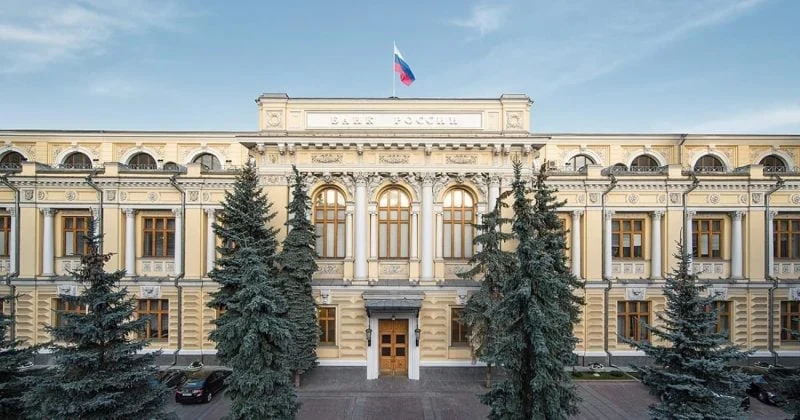
The Bank of Russia has formally introduced a robust package of draft regulations aimed at institutionalizing the country’s cryptocurrency landscape and establishing a sophisticated regulatory infrastructure for digital assets. This move marks a pivotal shift in the Russian Federation’s financial policy, moving away from a historically skeptical stance toward a structured, state-supervised integration of digital currencies into the national economy. According to an official announcement from the central bank, the proposed amendments to organized trading regulations are designed to bring cryptocurrencies and "digital rights" under a standardized exchange framework, ensuring that market participants operate within a transparent and legally enforceable environment.
Under the new draft guidelines, the Bank of Russia seeks to redefine the technical and operational standards for trading platforms. These platforms will now be tasked with the responsibility of calculating market and weighted-average prices for digital assets, ensuring that price discovery remains fair and resistant to manipulation. Furthermore, the regulations mandate a high level of transparency, requiring exchanges to disclose comprehensive trading information and provide real-time data streams to the central bank. To mitigate volatility and protect market integrity, the amendments also introduce formalized procedures for the suspension of trading during periods of extreme market stress or suspected illicit activity.
The Emergence of Digital Depositories
A cornerstone of the proposed regulatory overhaul is the creation of a new category of financial institution: the digital depository. These entities will serve as the primary custodians and record-keepers for cryptocurrency ownership and digital rights. The Bank of Russia envisions digital depositories as the bridge between the decentralized nature of public blockchains and the centralized oversight required for financial stability. By creating a regulated category for these institutions, the regulator aims to provide investors with a level of security comparable to that found in traditional securities markets.
The financial requirements for these digital depositories are stringent, reflecting the high stakes of digital asset custody. Depending on the complexity of their business activities—such as whether they interact directly with public blockchains or manage post-trade settlements—digital depositories will be required to maintain a minimum equity threshold ranging from 50 million to 250 million Russian rubles (approximately $540,000 to $2.7 million USD). The regulator has specified that this equity must be composed of liquid, high-credit-quality assets to ensure that these institutions can withstand liquidity shocks. Similar financial mandates will also apply to electronic platform operators responsible for the final settlement of digital financial asset transactions.
Technical Standards and Operational Oversight
Beyond the capital requirements, the Bank of Russia has outlined rigorous standards for the internal operations of digital asset service providers. The draft regulations propose specific protocols for recordkeeping, the protection of customer information, and the management of digital accounts. Access controls will be a priority, with the regulator requiring multi-layered authentication and audit trails to prevent unauthorized access to sensitive financial data.
The central bank has emphasized that these digital depositories will operate under principles that mirror those of conventional securities depositories. Oversight will be centralized through a national register maintained by the Bank of Russia, allowing the regulator to monitor the health of the digital asset ecosystem in real-time. This centralized supervision is intended to weed out bad actors and ensure that the infrastructure supporting the digital ruble and other crypto-assets remains resilient against cyber threats and systemic failures.
Chronology of Russia’s Crypto Policy Evolution
The path to these draft regulations has been marked by a significant evolution in Russian legislative thought. For years, the Bank of Russia, led by Governor Elvira Nabiullina, maintained a hardline stance against cryptocurrencies, often advocating for a total ban on the grounds of financial stability and anti-money laundering concerns. However, the geopolitical landscape changed dramatically following international sanctions, prompting a reassessment of digital assets as a tool for cross-border settlements.
- January 2022: The Bank of Russia proposes a total ban on the use and mining of cryptocurrencies.
- July 2022: President Vladimir Putin signs a law banning the use of digital assets for domestic payments of goods and services.
- Early 2024: Discussions intensify regarding the use of crypto for international trade to bypass the SWIFT exclusion.
- August 2024: The State Duma passes a major bill regulating the crypto market, introducing an "experimental legal regime" (ELR) for cross-border transactions.
- Late August 2024: The Bank of Russia releases the current package of draft regulations for public consultation.
This timeline illustrates a pragmatic shift. While the domestic ban on using crypto as a means of payment remains in force, the government has recognized that a regulated "crypto-corridor" is essential for the Russian economy to maintain international trade links.
Legislative Context: The New Federal Law
The draft regulations released by the central bank are designed to implement the broader crypto regulation law recently passed by the Russian parliament. This overarching legislation creates the legal definitions for digital asset trading and custody while introducing mandatory licensing for all crypto service providers. The law establishes the rules of engagement for exchanges, brokers, and custodians, effectively limiting crypto transactions to approved, licensed entities.
Crucially, the law allows cryptocurrencies to be used for cross-border commercial transactions—a move widely seen as a response to the difficulties Russian firms face in traditional banking due to sanctions. By allowing exporters and importers to settle debts in digital assets, Russia hopes to reduce its reliance on the US dollar and the Euro. However, the law remains firm on domestic policy: digital assets cannot be used to buy a cup of coffee or pay for local utilities. The ruble remains the only legal tender within the Russian Federation.
Implementation Timeline and Compliance
The transition to this new regulated environment will not happen overnight. The Bank of Russia has set a multi-year roadmap for implementation to allow market participants to adjust to the new requirements.
- September 1, 2026: Most provisions of the new regulatory framework will officially take effect. This includes the licensing requirements for brokers and the initial operational standards for digital depositories.
- July 2027: Full compliance is required across the board. All entities operating in the digital asset space must meet the minimum equity requirements and have their technical infrastructure audited by the central bank.
- Late 2027: Additional measures specifically related to fraud prevention and advanced cybersecurity protocols are scheduled to be phased in, completing the regulatory cycle.
This phased approach is intended to prevent market disruption while giving the central bank time to refine its supervisory tools based on the results of the initial experimental regimes.
Analysis of Economic and Geopolitical Implications
The decision to build a regulated crypto infrastructure is a strategic move with significant implications. From an economic perspective, the 250-million-ruble equity requirement acts as a barrier to entry, ensuring that only well-capitalized, professional institutions can dominate the infrastructure. This is likely to lead to a consolidation of the market, where major Russian banks and established financial groups become the primary "digital depositories."
Geopolitically, this framework is a direct challenge to the Western-dominated financial order. By creating a legal path for crypto-based international trade, Russia is attempting to insulate its economy from external pressure. If successful, this model could serve as a blueprint for other nations facing similar financial restrictions. However, the success of this initiative depends on the willingness of international partners—primarily in the BRICS bloc—to accept digital assets as a valid form of settlement.
Furthermore, the introduction of "digital rights" suggests that Russia is looking beyond just Bitcoin. The framework is designed to support the tokenization of real-world assets (RWAs), such as oil, gold, and grain. By tokenizing these commodities, Russia could potentially create new investment vehicles that are more easily traded and settled in a digital environment, bypassing traditional clearinghouses.
Reactions from Stakeholders
While official responses from the private sector have been measured, many in the Russian fintech industry have welcomed the clarity provided by the draft regulations. For years, the "gray zone" of crypto regulation led to uncertainty and capital flight. A clear, albeit strict, legal framework provides the "rules of the road" that institutional investors require before committing significant capital.
However, some critics argue that the high equity requirements may stifle innovation by preventing smaller startups from entering the market. There are also concerns regarding the privacy of users, as the mandate for disclosing all trading information to the Bank of Russia ensures that the state will have total visibility into the digital asset holdings of its citizens and corporations.
International observers and compliance experts are watching closely. The move signals that Russia is not merely looking for a "workaround" to sanctions but is actively building a parallel financial system. The Bank of Russia’s insistence on high-credit-quality liquid assets for depository reserves suggests they are prioritizing stability over rapid, unregulated growth.
Conclusion and Public Consultation
The Bank of Russia has now opened these draft regulations for public consultation as part of its regulatory impact assessment process. This period allows stakeholders to provide feedback on the feasibility of the requirements and the potential costs of compliance. Given the complexity of the digital asset market, the central bank is expected to hold several rounds of discussions with industry leaders before finalizing the rules.
As the global financial system continues to fragment, Russia’s move to create a state-supervised crypto infrastructure represents a significant milestone. By treating digital assets with the same level of regulatory rigor as traditional securities, the Bank of Russia is signaling that the era of the "wild west" in Russian crypto is coming to an end, replaced by a highly controlled, strategically aligned digital economy.