


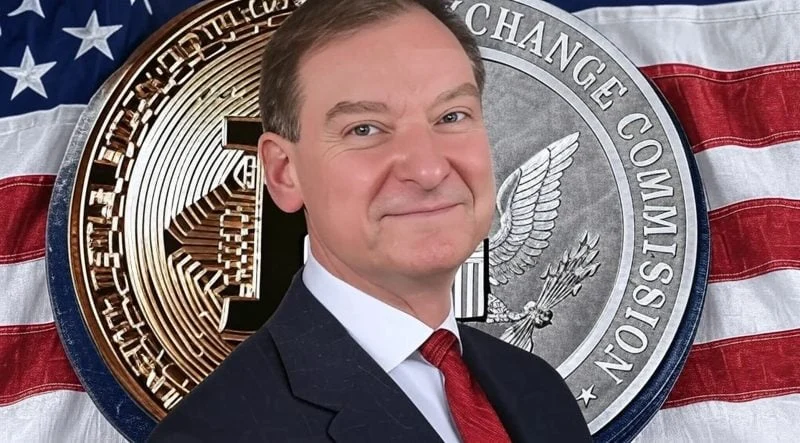
Securities and Exchange Commission (SEC) Chairman Paul Atkins has signaled a significant shift in the agency’s approach to digital asset oversight, indicating that the commission is prepared to initiate its own comprehensive rulemaking process should the legislative path for the CLARITY Act remain stalled in Congress. Speaking in an extensive interview with CNBC on July 27, 2026, Atkins emphasized that while a statutory framework remains the "gold standard" for regulatory certainty, the SEC possesses the existing authority to address market structure, stablecoin oversight, and asset classification through its internal administrative mechanisms.
The Chairman’s remarks come at a critical juncture for the digital asset industry, which has long lobbied for a definitive legislative framework to replace the "regulation by enforcement" era that characterized the previous administration. Atkins, who was appointed to lead the SEC with a mandate to foster innovation while maintaining market integrity, clarified that the agency is no longer content to wait indefinitely for a divided Congress to act. Instead, the SEC is positioning itself to fill the regulatory vacuum, ensuring that the United States remains a competitive hub for blockchain technology and digital finance.
The Push for Legislative Certainty via the CLARITY Act
The Creating Legal Accountability for Regulated Innovative Technologies (CLARITY) Act of 2026 is widely regarded as the most ambitious attempt to date to codify the rules governing the digital asset ecosystem. The bill seeks to provide a clear distinction between digital securities and digital commodities, a point of contention that has fueled years of litigation between the SEC, the Commodity Futures Trading Commission (CFTC), and various private entities.
Atkins underscored the importance of the bill, noting that a statute passed by Congress provides a level of permanence that agency rules cannot match. "Ultimately, statute is the way to future-proof something," Atkins told CNBC. "We are doing all we can to help [Congress] answer their questions and provide technical assistance. But we need the certainty of a statute that will help future-proof so that we have clear direction."
The Chairman argued that a legislative solution would provide a "North Star" for the commission, preventing the "regulatory whiplash" that often occurs when a new administration takes office. By enshrining definitions and jurisdictional boundaries into law, Congress would limit the ability of future SEC chairs to unilaterally redefine what constitutes a security, thereby providing the long-term stability required for institutional capital to fully enter the market.
The SEC Backup Plan: Rulemaking as a Secondary Path
Despite his preference for a legislative solution, Atkins was firm in stating that the SEC would not leave the market in a state of ambiguity. If the CLARITY Act fails to pass before the end of the current legislative session, the SEC is "ready, willing, and able" to deploy its own rulemaking authority. This would involve a formal process of proposing new rules, opening them for public comment, and eventually codifying them into the Federal Register.
This alternative path would likely focus on several key areas of the crypto market structure:
- Custody Requirements: Establishing rigorous standards for how exchanges and qualified custodians handle digital assets to prevent the commingling of funds seen in previous market collapses.
- Disclosure Standards: Creating a tailored disclosure regime for digital asset issuers that acknowledges the unique characteristics of decentralized protocols compared to traditional corporate entities.
- Exchange Registration: Providing a clear pathway for digital asset trading platforms to register with the SEC without being forced into a "one-size-fits-all" model designed for national securities exchanges like the NYSE.
- Stablecoin Oversight: Working in tandem with banking regulators to ensure that dollar-pegged assets are fully reserved and transparently managed.
While agency rulemaking is a powerful tool, it is also more vulnerable to legal challenges under the Administrative Procedure Act (APA). Atkins acknowledged this risk but suggested that well-reasoned, data-driven rules would likely withstand judicial scrutiny better than the ad-hoc enforcement actions of the past.
Legislative Gridlock and the Senate’s Shifting Priorities
The urgency of Atkins’ message is underscored by the current state of play in the U.S. Senate. Despite bipartisan support for some aspects of crypto reform, the legislative calendar has become increasingly compressed. Senate leadership has recently sidelined the CLARITY Act to prioritize a high-stakes Russia sanctions package and a backlog of presidential nominees.
With the August recess looming, the window for floor debate on crypto-specific legislation is closing rapidly. Historically, major financial legislation struggles to find traction in the lead-up to an election cycle or during periods of geopolitical crisis. The pivot toward international sanctions and executive branch staffing suggests that digital asset reform may not be viewed as a "must-pass" item for the current Senate majority.
Furthermore, a significant hurdle has emerged in the form of unresolved negotiations over government ethics provisions. These provisions are reportedly tied to President Donald Trump’s personal and family interests in the crypto sector, specifically regarding his involvement with decentralized finance (DeFi) projects. Critics in the Senate have demanded more stringent conflict-of-interest disclosures and restrictions, while proponents argue that the legislation should remain focused on market mechanics rather than individual political figures. This impasse has effectively stalled the CLARITY Act’s momentum, leaving industry participants in a state of "wait-and-see."
Chronology of the 2026 Regulatory Landscape
To understand the weight of Atkins’ comments, it is necessary to look at the timeline of events leading up to the current stalemate:
- January 2026: Paul Atkins is sworn in as SEC Chairman, promising a "new era" of clarity and cooperation with the crypto industry.
- March 2026: The CLARITY Act is introduced in the House of Representatives, gaining swift approval in the Financial Services Committee.
- May 2026: The GENIUS Act (Government Efficiency, National Infrastructure, and Underpinning Sovereignty) is introduced, focusing on streamlining federal oversight of emerging technologies, including blockchain.
- June 2026: Tensions rise in the Senate over ethics clauses related to the President’s crypto ventures. A counterproposal is drafted but fails to gain unanimous consent.
- July 15, 2026: Senate leadership announces that the Russia sanctions package will take precedence over the CLARITY Act.
- July 27, 2026: Chairman Atkins appears on CNBC, outlining the SEC’s intent to move forward with independent rulemaking if Congress fails to act.
The Role of the GENIUS Act and the CFTC
If the CLARITY Act remains stalled, the regulatory focus is expected to shift toward the implementation of the GENIUS Act. Unlike the CLARITY Act, which focuses on specific market definitions, the GENIUS Act is a broader piece of legislation aimed at improving government efficiency through the adoption of distributed ledger technology and the reduction of inter-agency friction.
In a scenario where the SEC initiates its own rulemaking, the role of the CFTC becomes even more critical. Chairman Rostin Behnam has previously expressed a desire for the CFTC to have primary jurisdiction over "digital commodities" like Bitcoin and Ethereum. Without the CLARITY Act to draw a hard line between the two agencies, a period of SEC rulemaking could lead to overlapping jurisdictions unless the two bodies can reach a formal Memorandum of Understanding (MOU).
Industry analysts suggest that the SEC and CFTC under the current administration are more likely to collaborate than compete. However, without a statute, this cooperation is based on the relationship between current leadership rather than a permanent legal mandate.
Fact-Based Analysis of Implications
The implications of the SEC moving forward with its own rules are twofold. For the industry, it represents a "half-victory." On one hand, clear rules—even if they are only agency-level regulations—are preferable to the uncertainty of litigation. It would allow companies to design products with a clear understanding of the SEC’s expectations regarding registration and compliance.
On the other hand, agency rules are subject to the "Major Questions Doctrine," a legal principle that the Supreme Court has used to strike down agency actions that have vast economic and political significance without clear congressional authorization. By moving forward without the CLARITY Act, the SEC risks a multi-year legal battle that could eventually reach the Supreme Court, potentially resulting in the rules being overturned.
For the broader economy, the delay of the CLARITY Act could result in continued capital flight to jurisdictions like the European Union (under MiCA) or Hong Kong, which have already established comprehensive statutory frameworks. According to data from the 2025 Global Crypto Adoption Report, the U.S. share of global blockchain development has already slipped by 8% over the last three years due to regulatory ambiguity.
Conclusion: A Turning Point for U.S. Policy
Chairman Paul Atkins’ interview serves as both a plea to Congress and a warning. By stating that the SEC is "ready, willing, and able" to act, he is signaling that the era of regulatory paralysis is over. The SEC under his leadership intends to provide the market with the rules it needs to mature, whether those rules come from the halls of the Capitol or the offices of the commission.
As the Senate turns its attention to international crises and administrative appointments, the crypto industry finds itself at a crossroads. The preference remains for a legislative "future-proof" solution in the form of the CLARITY Act. However, with the legislative clock ticking down toward the August recess and an unresolved ethics debate, the SEC’s rulemaking authority may soon become the primary driver of American digital asset policy for the remainder of 2026 and beyond.














