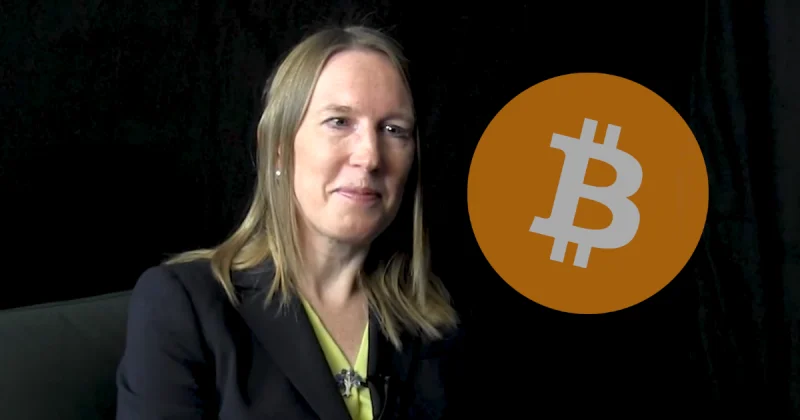
Securities and Exchange Commission (SEC) Commissioner Hester Peirce issued a formal statement on Wednesday addressing the regulatory status of decentralized finance (DeFi) mechanisms, specifically focusing on crypto vaults and on-chain lending strategies. In her address, Peirce emphasized that the mere act of moving financial products onto a blockchain or automating them via smart contracts does not provide an inherent exemption from federal securities laws. While Peirce, often referred to in the industry as "Crypto Mom" for her generally supportive stance on digital asset innovation, acknowledged that recent guidance has clarified that not all crypto activities fall under SEC jurisdiction, she stressed that many structured financial products in the digital asset space remain firmly within the agency’s regulatory ambit.
The statement serves as a critical reminder to the decentralized finance sector that the "wrapper" of a technology—whether it be a tokenized vault or an automated lending protocol—does not dictate its legal status. Instead, the SEC evaluates the economic reality and the underlying structure of the arrangement. Peirce encouraged firms to seek compliant paths and engage with the commission early in the development process, rather than attempting to design systems specifically to bypass existing legal frameworks.
The Regulatory Status of Crypto Vaults and Yield Strategies
Crypto vaults have become a cornerstone of the DeFi ecosystem, offering users a way to deposit assets into smart contracts that automatically execute various yield-generating strategies. These strategies often involve moving funds between different lending protocols, providing liquidity to decentralized exchanges, or participating in proof-of-stake validation.
According to Commissioner Peirce, the determination of whether these vaults constitute securities depends largely on the presence of managerial efforts and the expectation of profits derived from those efforts. If a vault is designed to generate yield through staking or lending and involves a centralized or semi-centralized team making decisions about asset allocation, it may be classified as a security or an investment company under the Investment Company Act of 1940.
The application of the "Howey Test"—a legal standard used to determine if a transaction qualifies as an investment contract—remains central to this analysis. The test looks for an investment of money in a common enterprise with a reasonable expectation of profits to be derived from the efforts of others. Peirce noted that when developers or "vault managers" exercise significant control over the strategy, the "efforts of others" prong is often met, potentially triggering registration requirements with the SEC.
On-chain Lending and the Reves Test
Beyond vaults, Peirce’s statement highlighted the complexities of on-chain lending arrangements. These protocols, which allow users to lend their digital assets to others in exchange for interest, have grown into a multi-billion-dollar sub-sector of the crypto market. Peirce warned that these arrangements could qualify as securities under certain circumstances, specifically as "notes" under the Reves test.
The Reves test, established by the Supreme Court, is used to determine if a note is a security based on four factors: the motivations of the buyer and seller, the plan of distribution, the reasonable expectations of the investing public, and the existence of another regulatory scheme that reduces the risk of the instrument. Peirce pointed out that if an on-chain lending product is marketed as an investment and lacks sufficient collateralization or transparency, it could raise significant issues regarding its status as a security or the status of the entity as an investment adviser.
Chronology of SEC Oversight in the DeFi Sector
The statement by Commissioner Peirce comes after several years of increasing scrutiny by the SEC toward the decentralized finance and broader crypto lending markets. To understand the context of her latest remarks, it is necessary to look at the timeline of the agency’s actions:
- September 2021: The SEC threatened to sue Coinbase over its proposed "Lend" product, leading the company to cancel the launch. This marked one of the first major signals that the SEC viewed interest-bearing crypto accounts as securities.
- February 2022: BlockFi reached a $100 million settlement with the SEC and state regulators for failing to register its high-yield lending product. This case set a precedent for how the SEC would treat centralized crypto lending platforms.
- January 2023: The SEC charged Genesis Global Capital and Gemini Trust Company for the unregistered offer and sale of securities through the Gemini Earn program.
- February 2023: Kraken reached a settlement with the SEC, agreeing to shut down its "staking-as-a-service" program for U.S. customers and pay $30 million in penalties. The SEC argued that the program constituted an unregistered security offering.
- 2024: The SEC has continued to pursue litigation against major exchanges like Binance and Coinbase, alleging that several tokens and services offered on their platforms are unregistered securities.
Peirce’s Wednesday statement acts as a synthesis of these prior enforcement actions, providing a conceptual framework for how the commission views the next generation of automated, on-chain versions of these services.
Supporting Data: The Growth and Risk of DeFi Vaults
The urgency of Peirce’s guidance is underscored by the rapid growth of the DeFi sector. According to data from DeFiLlama, the Total Value Locked (TVL) in decentralized finance protocols currently fluctuates between $80 billion and $100 billion, a significant recovery from the lows of the 2022 "crypto winter."
A substantial portion of this TVL is held in yield-aggregating vaults and lending protocols. For instance:
- Lending Protocols: Platforms like Aave and Compound represent tens of billions in active loans and deposits.
- Yield Aggregators: Protocols such as Yearn Finance and various "liquid restaking" platforms automate the movement of billions of dollars in capital to maximize returns.
- Staking Services: With the transition of Ethereum to Proof-of-Stake, liquid staking derivatives (LSDs) have become the largest category in DeFi, with protocols like Lido holding over $30 billion in TVL.
The SEC’s concern lies in the fact that while these protocols are "automated," the code is often maintained, updated, and governed by core developers or Decentralized Autonomous Organizations (DAOs) that function similarly to traditional corporate boards. The concentration of capital in these vaults creates systemic risks that the SEC believes fall under its mandate to protect investors and maintain orderly markets.
Protecting Innovation and Free Speech
A notable aspect of Commissioner Peirce’s statement was her emphasis on balancing regulation with the protection of developers’ rights. She specifically mentioned the need to safeguard "free speech rights," a nod to the ongoing legal debate over whether computer code is a form of protected speech under the First Amendment.
This is a particularly sensitive issue in the DeFi community, where developers argue that publishing open-source code—even code that facilitates financial transactions—should not be subject to the same licensing requirements as traditional financial institutions. Peirce suggested that any regulatory analysis must be "based on the specific facts of each case" and must respect the "limits of the SEC’s statutory authority."
This nuanced position distinguishes Peirce from some of her colleagues at the SEC. While she agrees that securities laws apply to certain crypto products, she has frequently criticized the agency for what she calls "regulation by enforcement," arguing instead for a clearer, more tailored regulatory framework that allows for technological experimentation.
Broader Impact and Industry Implications
The implications of Peirce’s statement are far-reaching for both developers and institutional investors. For DeFi developers, the message is clear: decentralization is not a "get out of jail free" card. If a protocol requires active management, features a common enterprise, and promises a return on investment, the SEC is likely to view it as a security.
For institutional investors, this guidance adds a layer of due diligence. Entities looking to deploy capital into on-chain vaults must now consider the regulatory risk of those protocols. If a protocol is deemed an unregistered investment company, it could face a forced shutdown or significant legal penalties, potentially leading to liquidity crises for its users.
Industry reactions have been mixed. Legal experts in the blockchain space have noted that while Peirce’s tone is more conciliatory than that of SEC Chair Gary Gensler, the underlying message remains firm. "Peirce is essentially saying that the SEC’s door is open, but the rules haven’t changed just because you’re using a blockchain," said one digital asset attorney. "The challenge for the industry is that the ‘compliant paths’ she mentions are often difficult, if not impossible, for truly decentralized protocols to follow under current law."
Conclusion and Future Outlook
Commissioner Peirce concluded her statement by reiterating that the SEC is open to considering regulatory updates that enable innovation. However, she maintained that the core mission of the agency—protecting investors, maintaining fair markets, and supporting capital formation—remains the priority.
As the DeFi sector continues to evolve, the tension between automated financial code and decades-old securities laws is likely to intensify. Peirce’s statement provides a roadmap for how the SEC intends to navigate this friction, focusing on the functional reality of crypto vaults and lending strategies rather than their technological labels. The industry now faces a choice: engage with regulators to carve out a compliant future or continue to operate in a legal gray area that is increasingly being illuminated by the SEC’s spotlight.
The coming months will likely see further enforcement actions or, potentially, the introduction of new SEC rules specifically tailored to the unique architecture of on-chain finance. For now, the "Crypto Mom" has delivered a stern reminder that even in the world of decentralized code, the law of the land still applies.