


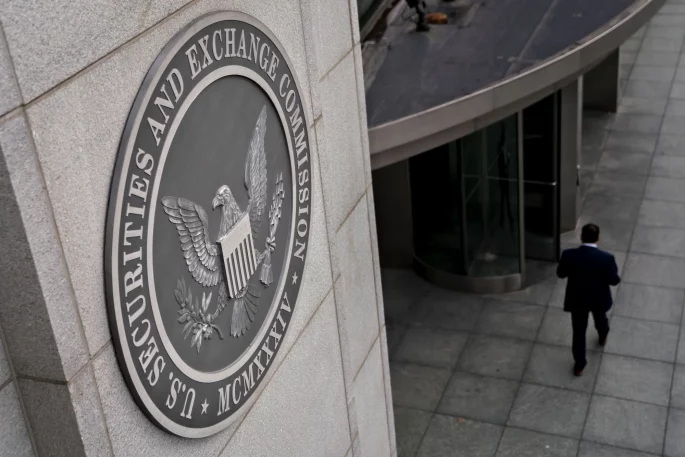
The Securities and Exchange Commission (SEC) has officially postponed a highly anticipated plan that would have provided broad regulatory exemptions for cryptocurrency firms seeking to facilitate the trading of tokenized assets tied to United States equities. This strategic delay comes at a critical juncture for the digital asset industry, which has been eagerly awaiting a formalized framework to bridge the gap between decentralized finance (DeFi) and traditional capital markets. According to reports from Bloomberg Law, SEC staff had been in the final stages of preparing what has been termed an "innovation exemption," a regulatory relief measure designed to permit the issuance and trading of blockchain-based versions of publicly traded securities.
Internal documents suggest that a draft of the exemption had already been finalized and reviewed by senior officials within the agency, with an initial release target set for as early as this week. However, the timeline was abruptly shifted as the agency began weighing significant feedback from established stock exchange operators and various market participants who expressed concerns over the potential disruption of existing market structures. The framework was intended to carve out a clearer legal path for crypto-native firms to offer tokenized representations of stocks like Apple, Tesla, or Nvidia under a "lighter" regulatory regime, potentially bypassing some of the more onerous requirements currently imposed on traditional national securities exchanges and broker-dealers.
The Framework for Innovation and the Atkins Vision
The proposed innovation exemption represents a significant shift in the SEC’s approach to digital assets, particularly under the leadership of Chair Paul Atkins. Atkins, known for a more market-friendly and pro-innovation stance than his predecessors, has championed the idea of a regulatory "sandbox" or safe harbor. Under this vision, both traditional financial institutions and crypto-native platforms would be granted the latitude to experiment with tokenized securities using novel technologies such as automated market makers (AMMs) and other on-chain settlement systems.
The proposed exemption was not intended to be a blanket deregulation. Instead, Atkins has advocated for a controlled environment that includes specific safeguards. These proposed measures include strict volume limits on trading to prevent systemic shocks, temporary relief from certain reporting and registration rules, and a rigorous "whitelisting" process for both buyers and sellers to ensure compliance with Anti-Money Laundering (AML) and Know Your Customer (KYC) protocols. The ultimate goal of this temporary relief is to allow the SEC to observe these technologies in a live market environment, gathering the data necessary to develop permanent, long-term rules that reflect the realities of 21st-century finance.
A Chronology of the SEC’s Path Toward Tokenization
The current delay is the latest chapter in a multi-year effort by the SEC to grapple with the intersection of blockchain technology and securities law. The agency has been laying the legal groundwork for tokenized securities for several years, though the pace has accelerated recently.
In January, the SEC’s various divisions issued a joint statement clarifying that tokenized securities remain securities under federal law, regardless of the technology used for their issuance or transfer. The agency specified three primary categories of tokenized assets: those issued directly by a company on a blockchain, those represented through a third-party custody structure (where a traditional share is held in a vault and a digital twin is issued), and those offered as synthetic exposure through linked securities or security-based swaps.
In March, the SEC signaled its growing comfort with institutional involvement by approving Nasdaq’s plan for a tokenized securities platform. This was followed by a smaller but significant step in February, when the agency granted WisdomTree regulatory relief to allow for the intraday trading of tokenized shares in its Treasury Money Market Digital Fund. These incremental steps suggested a momentum toward broad adoption that has now been tempered by the recent delay of the innovation exemption.
The Mechanics of Tokenized Stocks and Synthetic Exposure
Tokenization involves creating a digital representation of a traditional asset on a distributed ledger. In the context of the US stock market, this can take several forms. The most direct method is the "wrapper" model, where a broker-dealer or custodian holds physical shares of a company and issues a corresponding number of digital tokens on a blockchain like Ethereum or Solana.
The more controversial model, which the SEC’s proposed exemption reportedly addressed, involves tokens that track the price of public companies without the explicit backing or consent of the companies themselves. These are often referred to as "synthetic" assets. They function similarly to security-based swaps, where the value of the token is derived from the underlying price movement of the stock. While this offers global accessibility and 24/7 trading—features the traditional US market lacks—it raises complex questions regarding shareholder rights, dividend distributions, and corporate governance. The SEC has previously warned that holders of these third-party tokenized products may not enjoy the same legal protections or voting rights as investors who hold the underlying shares through traditional brokerage accounts.
Opposition from Traditional Market Operators
The primary catalyst for the current delay appears to be a concerted effort by traditional exchange operators to protect the integrity of the existing market ecosystem. A coalition of global exchanges has urged the SEC to exercise caution, warning that granting crypto firms a "shortcut" around established market rules could undermine investor protections and create an unlevel playing field.
Traditional exchanges like the New York Stock Exchange (NYSE), CBOE, and Nasdaq operate under a highly regulated framework designed to ensure fair and orderly markets. These institutions argue that allowing crypto platforms to trade tokenized versions of the same stocks without the same level of oversight could lead to fragmented liquidity and increased market manipulation. Furthermore, they contend that the existing "Reg NMS" (National Market System) framework, which governs how stocks are traded and quoted across different venues, is ill-equipped to handle the decentralized and often opaque nature of on-chain trading.
Despite their opposition to regulatory "shortcuts" for crypto firms, traditional market operators are not ignoring the technology. In fact, they are positioning themselves to lead the transition. The Depository Trust & Clearing Corporation (DTCC), which handles the vast majority of securities settlement in the US, has announced plans for limited production trades of tokenized assets. Similarly, Intercontinental Exchange (ICE), the parent company of the NYSE, has pursued tokenized stock and crypto-linked products through its partnership with OKX.
Market Impact and the Case of Hyperliquid (HYPE)
The volatility surrounding the SEC’s announcement was immediately reflected in the digital asset markets. One of the most prominent examples was the price action of HYPE, the native token of the Hyperliquid platform. Hyperliquid has emerged as a leader in the "perps" (perpetual swaps) market, already supporting synthetic stock-linked markets on its decentralized platform.
When news first emerged earlier this week that the SEC was preparing a broad innovation exemption, HYPE experienced a significant rally as investors anticipated a surge in institutional and retail volume for tokenized stocks. However, as news of the delay broke on Friday, the momentum reversed sharply. HYPE fell more than 10%, dropping below the $50 mark before seeing a modest recovery to approximately $55. This price action underscores the sensitivity of the crypto market to regulatory developments and the high stakes involved in the SEC’s decision-making process.
Implications for Market Structure and Global Competition
The delay of the innovation exemption has broader implications for the global competitiveness of the US financial system. As the SEC weighs its next moves, other jurisdictions, including Singapore, the United Kingdom, and the European Union (through the MiCA framework), are moving forward with their own digital asset regulations. If the US remains in a state of regulatory uncertainty, there is a risk that the development of next-generation financial infrastructure could migrate offshore.
From a technical perspective, the transition to tokenized securities promises significant efficiencies. Current US stock settlement operates on a "T+1" basis (meaning trades settle one business day after the transaction). Blockchain technology enables "T+0" or atomic settlement, where the transfer of the asset and the payment happens simultaneously and instantaneously. This reduces counterparty risk and frees up billions of dollars in collateral that is currently tied up in the settlement cycle.
However, the SEC must balance these efficiencies against the need for market stability. The use of Automated Market Makers (AMMs)—software protocols that provide liquidity through algorithmic pricing—represents a radical departure from the traditional limit order book model used by the NYSE and Nasdaq. The SEC’s cautious approach reflects a concern that AMMs may not be able to handle the extreme volatility or high-frequency trading volumes typical of the US equity markets.
Conclusion and Future Outlook
The SEC’s decision to delay the innovation exemption for tokenized stocks signals that the agency is not yet ready to grant the crypto industry the broad relief it seeks. While the Atkins-led commission appears more open to experimentation than previous iterations, the pressure from traditional financial incumbents and the inherent complexities of merging two vastly different settlement systems remain significant hurdles.
In the coming months, the SEC is expected to continue its dialogue with stock exchange officials and DeFi developers to refine the proposed framework. The agency’s challenge will be to create a system that fosters technological advancement without compromising the investor protections that have made the US capital markets the most robust in the world. For now, the "on-chaining" of Wall Street remains a work in progress, characterized by incremental legal steps and a high degree of regulatory scrutiny. The eventual release of the innovation exemption, whenever it may occur, will likely serve as a defining moment for the future of digital finance.














