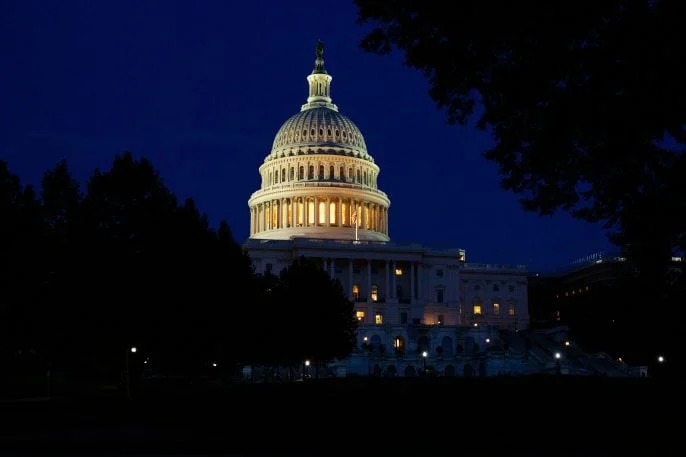
The United States Senate’s momentum toward establishing a comprehensive regulatory framework for digital assets has encountered a significant setback as bipartisan negotiations over the Clarity Act stalled this week. The impasse centers on controversial ethics provisions regarding the potential financial interests of high-ranking federal officials, most notably President Donald Trump, in the burgeoning cryptocurrency sector. While the White House and several key Republican senators have championed a specific set of ethics rules, Democrats have formally rejected the proposal, citing concerns over enforcement mechanisms and the concentration of oversight power within the Department of Justice.
The disagreement has effectively halted the progress of a bill that many in the industry viewed as a critical step toward providing legal certainty for stablecoins and digital asset service providers. With the August recess approaching, Senate Majority Leader John Thune has signaled that a final vote on the measure is unlikely in the immediate term, casting doubt on the legislative timeline for the remainder of the year.
The Core Conflict: Ethics, Enforcement, and the Presidency
At the heart of the current legislative friction is a set of ethics provisions released on Wednesday as part of an updated draft of the Clarity Act. These provisions were designed to mitigate concerns regarding potential conflicts of interest arising from President Trump’s public support for and personal involvement in various cryptocurrency ventures. The proposed language would prohibit senior federal officials, including the President and Vice President, from personally issuing or sponsoring digital assets while serving in office.
However, the point of contention is not the prohibition itself, but rather who has the power to enforce it. The White House-backed proposal grants the Department of Justice (DOJ) exclusive authority to investigate and prosecute violations of these ethics rules. Democrats, led by Senator Ruben Gallego, have dismissed this framework as fundamentally flawed. They argue that giving the DOJ—an executive branch agency—sole jurisdiction over the President’s ethical conduct creates a conflict of interest that could lead to lax oversight.
Democrats have insisted that state attorneys general must be granted concurrent enforcement authority. This would allow state-level officials to bring legal action against federal violators, providing a system of checks and balances that Democrats believe is necessary to ensure the law is applied rigorously, regardless of which party controls the executive branch.
Chronology of the Clarity Act Negotiations
The path to the current deadlock has been marked by months of delicate cross-party discussions. The Clarity Act was initially conceived as a bipartisan effort to define the roles of the Securities and Exchange Commission (SEC) and the Commodity Futures Trading Commission (CFTC) in the digital asset space, while also setting reserve requirements for stablecoin issuers.
- Early 2024: Bipartisan working groups, including Senators Cynthia Lummis and Kirsten Gillibrand, began drafting the foundational elements of the bill, focusing on market structure and consumer protection.
- Spring 2024: As President Trump’s campaign began to more aggressively court the crypto industry, the focus of the bill shifted to include more robust ethics and transparency requirements.
- June 2024: Negotiators from the White House joined discussions with Republican Senators Cynthia Lummis and Bernie Moreno to draft specific language addressing the President’s digital asset holdings and promotional activities.
- July 22, 2024: The updated Clarity Act, including the DOJ-exclusive enforcement language, was circulated among Senate leadership.
- July 23, 2024: Senator Ruben Gallego and other prominent Democrats officially rejected the proposal, describing the ethics language as a departure from previous bipartisan agreements.
- July 24, 2024: Senator Thom Tillis emerged as a mediator, acknowledging the need for revisions to reach the 60-vote threshold required for Senate passage.
The Role of the White House and Republican Leadership
The ethics language in question was the product of close collaboration between the White House and Republican Senators Cynthia Lummis and Bernie Moreno. Senator Lummis has been a vocal defender of the proposal, characterizing it as a historic step forward in presidential transparency. According to Lummis, the proposed rules represent a voluntary embrace of ethics standards by President Trump that exceed any existing legal requirements for the office.
"This proposal represents the toughest ethics rules ever applied to the presidency," Lummis stated, emphasizing that the ban on issuing or sponsoring assets would prevent any direct financial gain from official policy shifts. Supporters of the White House position argue that granting enforcement power to state attorneys general would "weaponize" the legal system, allowing partisan state officials to harass the federal executive with frivolous lawsuits.
However, the rejection by Democrats indicates that the "voluntary" nature of the standards is insufficient for those who view the President’s crypto ventures—such as his involvement with the World Liberty Financial project—as a unique and unprecedented ethical challenge.
A New Bipartisan Counterproposal Emerges
In the wake of the breakdown in talks between Gallego and the Lummis-Moreno group, a new faction of negotiators has formed. Senator Ruben Gallego confirmed that he is now working with Senator Thom Tillis and a group of unnamed Republican senators to draft a counterproposal.
Senator Tillis, while acknowledging the White House’s initial draft as a "positive starting point," has been pragmatic about the political realities of the Senate. With a razor-thin margin between the parties, any crypto legislation requires at least 60 votes to overcome a filibuster. Tillis has indicated that the final bill must incorporate Democratic concerns regarding state-level enforcement or find a middle-ground oversight mechanism—such as an independent ethics commission—to secure the necessary support.
"We have to be realistic about what can pass this chamber," Tillis remarked to reporters. "The goal is to provide a clear regulatory framework for the industry. If we get bogged down in a fight over enforcement jurisdictions that prevents the bill from moving, the entire industry loses."
Supporting Data: The High Stakes of Crypto Regulation
The urgency surrounding the Clarity Act is underscored by the rapid growth of the digital asset market and the increasing amount of capital flowing into the sector. According to market data from the first half of 2024:
- Stablecoin Market Cap: The total market capitalization of USD-pegged stablecoins has reached an all-time high of over $165 billion, making them a systemic component of the global financial plumbing.
- Lobbying Efforts: The cryptocurrency industry spent a record $24 million on federal lobbying in 2023, with 2024 figures expected to exceed $30 million as firms push for the Clarity Act’s passage.
- Institutional Adoption: Over 15% of American adults now report owning or having traded digital assets, a demographic shift that has made crypto regulation a "kitchen table" issue for many voters.
Without the Clarity Act, the US digital asset market remains under a "regulation by enforcement" regime, where the SEC and CFTC often disagree on jurisdiction, leading to costly and protracted legal battles for American tech firms.
Broader Impact and Implications for the Industry
The continued delay of the Clarity Act has significant implications for the United States’ standing in the global digital economy. While the US remains deadlocked, other jurisdictions have moved forward with their own frameworks. The European Union’s Markets in Crypto-Assets (MiCA) regulation is already being implemented, providing a clear "rulebook" that is attracting startups away from American shores.
Industry analysts warn that if the Senate cannot resolve the ethics debate, the resulting regulatory vacuum will continue to stifle innovation. "The Clarity Act is about more than just ethics; it’s about whether the US will lead the next generation of financial technology," said a senior policy analyst at a leading blockchain advocacy group. "The current impasse suggests that partisan politics regarding the presidency are once again taking precedence over sound economic policy."
Furthermore, the focus on President Trump’s personal financial interests highlights a growing trend in Washington: the intersection of private enterprise and public office. As more political figures engage with decentralized finance (DeFi) and Non-Fungible Tokens (NFTs), the need for modernized ethics laws becomes more apparent.
Outlook for the August Recess and Beyond
As of Thursday afternoon, Senate Majority Leader John Thune has tempered expectations for a breakthrough. While he expressed hope that debate on the bill could formally begin before the August adjournment, he admitted that a final vote is likely pushed to the fall session.
The success of the Clarity Act now hinges on the ability of the Gallego-Tillis group to produce a document that satisfies Democratic demands for oversight while remaining acceptable to the White House. If President Trump refuses to accept a version of the bill that allows state-level enforcement, the legislation may be dead on arrival, leaving the crypto industry in a state of legal limbo until after the next election cycle.
For now, the digital asset industry remains a spectator to a high-stakes game of political brinkmanship. The coming weeks will determine whether the Senate can separate the broader need for financial regulation from the specific political controversies surrounding the executive branch. If they fail, the Clarity Act may join a long list of ambitious but ultimately unsuccessful attempts to bring order to the "Wild West" of American finance.