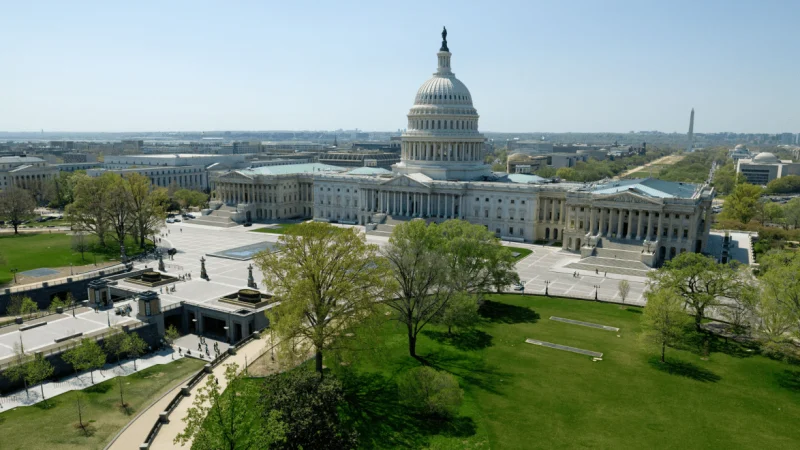
The United States Senate is entering a high-stakes legislative period as advocates for digital asset regulation prepare to unveil a consolidated version of the Clarity Act, a move that could define the legal landscape for the American cryptocurrency industry for decades. According to sources familiar with the negotiations, a new draft of the bill is expected to be released as early as next week, representing a critical merger of efforts from the Senate Banking and Agriculture committees. This unified text aims to reconcile two distinct legislative tracks that have, until now, operated in parallel, often creating a fragmented approach to how digital assets are categorized and overseen.
The upcoming draft is not merely a administrative consolidation; it is reported to include over 70 pages of new material, much of it focused on bolstering consumer protections and clarifying the jurisdictional boundaries between the Securities and Exchange Commission (SEC) and the Commodity Futures Trading Commission (CFTC). With the Senate floor action targeted for the week of July 20, the window for passage is narrow. Lawmakers are racing against a ticking clock, with the looming summer recess and the subsequent shift toward the 2026 midterm election cycle threatening to derail any legislative momentum.
The Push for a Unified Regulatory Framework
The Clarity Act represents the Senate’s most ambitious attempt to date to establish a comprehensive federal framework for digital asset markets. For years, the industry has operated in a state of "regulation by enforcement," where the SEC has utilized existing securities laws to police the space, while the CFTC has claimed oversight of digital commodities like Bitcoin. The lack of a statutory definition for many assets has led to protracted legal battles and a general sense of uncertainty that many industry leaders argue has pushed innovation offshore.
The new merged draft seeks to end this jurisdictional tug-of-war. By combining the Banking Committee’s focus on financial stability and investor protection with the Agriculture Committee’s expertise in commodity markets, the bill intends to provide a "bright-line" test for asset classification. This would effectively determine which tokens fall under the SEC’s disclosure-heavy regime and which are treated as commodities under the CFTC’s spot market oversight.
A Chronology of the Clarity Act and the Legislative Path
The journey of the Clarity Act has been marked by significant milestones and persistent roadblocks. Understanding the current urgency requires a look back at the timeline that brought the bill to this juncture:
- Mid-2025: The House of Representatives successfully passes its version of the crypto market structure bill with significant bipartisan support. This version serves as the template for much of the subsequent Senate debate.
- May 2026: The Senate Banking Committee releases its preliminary version of the bill. This version is specifically tailored to address the collapse of several high-profile crypto firms in previous years, placing a heavy emphasis on stablecoin yield and the risks associated with decentralized finance (DeFi).
- June 2026: Negotiations stall as Democratic and Republican leaders clash over ethics provisions and the extent of federal preemption over state laws. Law enforcement agencies express concerns regarding the potential for DeFi protocols to be used for illicit financing.
- Early July 2026: Senate Agriculture and Banking committee staffers begin intensive sessions to merge their respective drafts into a single "Clarity Act" text. Senator Ron Wyden signals support for developer protections, providing a rare moment of momentum.
- Mid-July 2026 (Projected): Release of the merged 70-page draft, followed by a potential floor vote before the end of the month.
Addressing the Democratic 60-Vote Hurdle
Despite the progress made in merging committee texts, the bill faces a formidable political obstacle: the 60-vote threshold required to overcome a filibuster in the Senate. Currently, the Republican-led effort requires a meaningful contingent of Democratic support to move the legislation to a final vote. As of early July, that support remains elusive.
The primary point of contention is a stringent ethics provision sought by senior Democratic lawmakers. This provision would impose significant restrictions on senior government officials, including the President and Cabinet members, prohibiting them from maintaining business ties or personal investments in the crypto sector. Proponents of the measure argue that it is essential to prevent conflicts of interest, given the transformative nature of the legislation. However, some critics view the demand as a "poison pill" designed to stall the bill’s progress. Several key Democrats have publicly stated that they will not provide their votes without a firm compromise on these ethical limits.
DeFi and the Blockchain Regulatory Certainty Act
A major component of the updated Clarity Act is the inclusion of language derived from the Blockchain Regulatory Certainty Act. This provision is of paramount importance to the decentralized finance (DeFi) sector. It seeks to protect software developers and non-custodial service providers—such as those running nodes or writing code—from being classified as "money transmitters."
Under current interpretations by some regulatory bodies, developers who have no control over customer funds could theoretically be held liable for anti-money laundering (AML) and "know your customer" (KYC) violations. The Clarity Act’s updated draft aims to codify that only entities with actual control over customer assets should be subject to such regulations. Senator Ron Wyden’s recent advocacy for this language has been viewed by industry lobbyists as a significant win, as it suggests a growing understanding among high-ranking lawmakers of the technical nuances of blockchain technology.
The Battle Over Federal Preemption and State Rights
Another critical issue being revisited in the merged draft is federal preemption. This determines the extent to which federal law overrides existing state-level regulations, such as New York’s BitLicense or various state money transmitter laws.
The industry generally favors strong federal preemption, as it would create a "single rulebook" for the entire country, reducing the compliance burden for firms operating across state lines. Conversely, state regulators and some consumer advocacy groups argue that states should retain the right to impose stricter protections if they deem federal standards insufficient. The latest 70-page draft is expected to propose a middle ground, though the specific details of this compromise remain one of the most closely guarded aspects of the negotiations.
Staffing Vacancies and Administrative Friction
The legislative process is being further complicated by a parallel struggle over the staffing of the SEC and CFTC. The White House has been in a prolonged standoff with Senate leadership over the appointment of minority-party seats at these commissions. Democratic senators have criticized both the administration and Republican leadership for the slow pace of filling these vacancies, arguing that the agencies cannot effectively implement new laws while operating with incomplete boards.
The White House has reportedly pressed Senate leaders to bundle these nominations with the Clarity Act, using the legislation as leverage to ensure a full complement of commissioners. This administrative friction adds another layer of complexity to a bill that already faces significant policy disagreements.
Analysis of Market Implications and Global Standing
If the Clarity Act passes, the implications for the global digital asset market would be profound. The United States has long been viewed as a laggard in crypto regulation compared to the European Union’s MiCA (Markets in Crypto-Assets) framework. A clear federal structure in the U.S. would likely trigger a wave of institutional investment, as pension funds and large-scale asset managers have cited regulatory ambiguity as the primary reason for staying on the sidelines.
Furthermore, the bill’s focus on stablecoin yield and DeFi could set a global standard. By bringing stablecoins under a formal regulatory umbrella—likely requiring them to be backed 1:1 by high-quality liquid assets—the U.S. could cement the dollar’s role as the primary reserve currency of the digital age. However, if the bill fails to pass in this window, analysts suggest that the U.S. may see a continued "brain drain," with crypto startups and capital migrating to more hospitable jurisdictions like Singapore, Dubai, or the UK.
Official Responses and Industry Sentiment
While official statements from the Senate Banking and Agriculture committees have been measured, industry trade groups are sounding the alarm on the tight timeline. The Blockchain Association and the Chamber of Digital Commerce have both issued memos urging lawmakers to find a compromise on the ethics provision to ensure the bill does not die in committee.
"We are at a crossroads," said one senior lobbyist who requested anonymity. "The 70 pages of new material show that the Senate is taking consumer protection seriously, but if we don’t get a floor vote by July 20, the political oxygen will be sucked out by the midterms. We cannot afford another two years of uncertainty."
The White House has notably remained distant from the latest round of merged talks. Reports indicate that the administration has not yet signed off on the combined text, raising questions about whether President Donald Trump would exercise his veto power or demand further changes if the bill reaches his desk. Given the President’s previous comments on the need for American dominance in the crypto space, many expect an eventual signature, but the path through the House—which would need to re-approve the Senate’s revised version—remains a final, daunting hurdle.
Conclusion: A Narrow Margin for Error
As the Senate prepares for the potential release of the Clarity Act’s new draft, the margin for error is nearly non-existent. The combination of technical complexity, partisan disagreement over ethics, and a looming election cycle creates a volatile environment for what is arguably the most significant piece of financial legislation in a decade.
The coming days will determine whether the United States can finally establish a cohesive strategy for the digital economy or if the crypto industry will remain in a state of legal limbo until well after the 2026 elections. With over 70 pages of new regulations and the future of DeFi and stablecoins at stake, the eyes of the global financial community are firmly fixed on the Senate floor.