


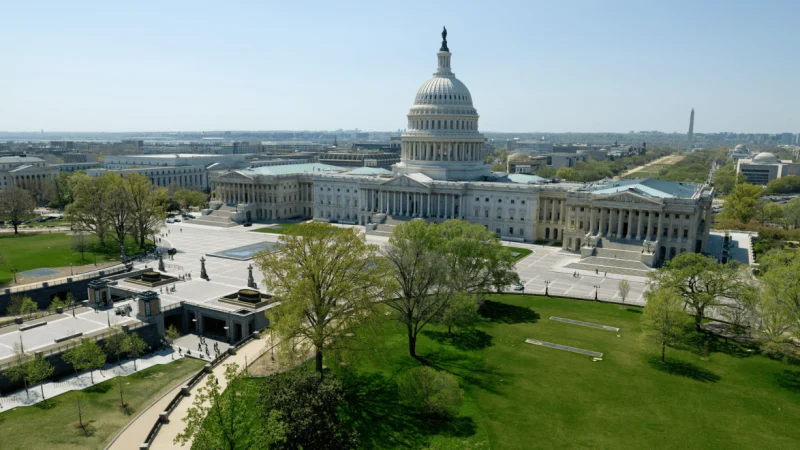
The United States Senate is entering a high-stakes period as lawmakers attempt to reconcile competing versions of the Clarity Act, a landmark piece of legislation intended to establish a comprehensive federal framework for digital asset markets. With the 2026 midterm election cycle looming and the summer recess fast approaching, advocates and legislative staffers are working against a ticking clock to produce a unified draft that can garner the 60 votes necessary to overcome a potential filibuster. Reports indicate that a new, merged version of the bill—combining the efforts of the Senate Banking Committee and the Senate Agriculture Committee—could be released as early as next week, setting the stage for a pivotal floor vote during the week of July 20.
The upcoming draft is not merely a technical reconciliation but is expected to include over 70 pages of fresh material, reflecting months of intense negotiations behind closed doors. This revised text seeks to bridge the gap between those calling for aggressive consumer protections and those advocating for a regulatory environment that fosters technological innovation. However, despite the momentum, the bill faces a gauntlet of political and procedural hurdles, ranging from contentious ethics provisions to disputes over the jurisdictional boundaries of federal agencies.
A Two-Track Legislative Process Converges
The current push for the Clarity Act represents the culmination of two distinct legislative tracks within the Senate. Historically, digital asset regulation has been bifurcated by the nature of the assets themselves: the Senate Banking Committee typically oversees matters related to securities and investor protection, while the Senate Agriculture Committee holds jurisdiction over the Commodity Futures Trading Commission (CFTC) and the trading of digital commodities.
In May 2026, the Senate Banking Committee released its initial version of the bill, focusing heavily on market structure, stablecoin yield, and the integration of decentralized finance (DeFi) into the traditional financial regulatory perimeter. Simultaneously, the Agriculture Committee has been refining its approach to how the CFTC should manage spot markets for assets like Bitcoin and Ethereum.
The merger of these two tracks is a critical step. By creating a unified "Clarity Act," the Senate hopes to provide the digital asset industry with the regulatory certainty it has demanded for years. The merged text is expected to clarify the "rules of the road," specifically regarding which digital assets fall under the purview of the Securities and Exchange Commission (SEC) and which are governed by the CFTC. This division of authority remains one of the most significant points of contention in Washington, as it dictates the compliance costs and operational requirements for thousands of crypto-native firms.
The 2025 House Precedent and the Senate Bottleneck
While the Senate struggles to finalize its draft, the House of Representatives has already laid the groundwork. In 2025, the House passed its own version of a crypto market structure bill with notable bipartisan support. That legislation was hailed as a breakthrough, providing a template for how the SEC and CFTC could coexist in the digital age.
However, the Senate has proven to be a more difficult environment for the legislation. Unlike the House, where a simple majority often suffices for passage, the Senate’s 60-vote requirement means that any successful bill must have significant buy-in from both parties. Currently, Republican backers of the bill are actively courting a "meaningful number" of Democrats to secure the necessary supermajority.
The political calculus is further complicated by the 2026 midterm elections. As the fall campaign season approaches, lawmakers are increasingly hesitant to take up complex or controversial legislation that could be used against them in campaign advertisements. This leaves the window between now and the August recess as the "last viable" opportunity to move the Clarity Act through the chamber before the legislative calendar is overtaken by election-year posturing.
The Ethics Provision: A Major Political Stumbling Block
Perhaps the most significant obstacle to securing Democratic support is a proposed ethics provision that has become a lightning rod for debate. Democratic leadership has insisted on language that would restrict senior government officials—including the President and high-ranking agency heads—from maintaining personal business ties or significant financial interests within the cryptocurrency sector.
Proponents of the provision argue that given the volatility and regulatory sensitivity of the crypto market, it is essential to prevent even the appearance of a conflict of interest. Several Democratic senators have stated unequivocally that they will not support the final package unless these limits are strictly defined and enforced.
Conversely, some critics of the provision argue that it is overly broad and could discourage qualified individuals from the private sector from entering public service. The standoff over this single issue has become one of the clearest political risks for the legislation, potentially derailing the entire package even if technical agreements are reached on market structure and consumer protections.
Decentralized Finance and the Blockchain Regulatory Certainty Act
As the Senate negotiates the broader Clarity Act, the fate of the "Blockchain Regulatory Certainty Act" has become a focal point for the DeFi industry. This provision is designed to protect developers and non-custodial service providers—such as those who write code for decentralized protocols—from being classified as "money transmitters."
Under current interpretations of some financial laws, there is a risk that developers who do not control customer assets could still be held liable for compliance standards meant for centralized banks or exchanges. Advocates for the provision, including Senator Ron Wyden, argue that treating developers as money transmitters would stifle innovation and drive the DeFi industry offshore.
Wyden’s recent public support for this language has provided a glimmer of hope for crypto advocates. However, the provision faces pushback from law enforcement agencies and some members of the Banking Committee who worry that it could create loopholes for money laundering or the financing of illicit activities. The final draft of the Clarity Act will need to strike a delicate balance: providing enough "certainty" to keep developers in the U.S. while ensuring that the regulatory framework remains robust enough to satisfy national security concerns.
Chronology of the Clarity Act and Digital Asset Regulation (2024–2026)
To understand the urgency of the current moment, it is helpful to review the timeline of events that led to the 2026 legislative push:
- Late 2024: Following the presidential election, the incoming administration signals a desire for a "pro-growth" digital asset framework, sparking renewed interest in stalled legislative efforts.
- Early 2025: The House of Representatives passes a comprehensive market structure bill with a bipartisan majority, shifting the focus to the Senate.
- May 2026: The Senate Banking Committee releases its version of the Clarity Act, addressing stablecoin yields and DeFi but leaving questions about CFTC jurisdiction unanswered.
- June 2026: The Senate Agriculture Committee voices concerns over the Banking Committee’s draft, leading to a month of intense inter-committee negotiations.
- July 2026 (Current): A merged draft is expected to drop, with a target floor date of July 20. This is seen as the final opportunity for passage before the 2026 midterms.
Unresolved Issues: Preemption, Staffing, and Stablecoins
Beyond the ethics dispute, several other "open issues" continue to haunt the negotiations. One of the most technically complex is the question of federal preemption. This involves determining to what extent federal rules will override existing state-level regulations, such as New York’s BitLicense or Wyoming’s crypto-friendly banking laws.
States with established regulatory regimes are often protective of their authority, while the industry generally prefers a single federal standard to avoid a "patchwork" of conflicting rules. The latest draft is expected to revisit this balance, though a final consensus remains elusive.
Additionally, the administrative capacity of the SEC and CFTC is under scrutiny. The White House has been in discussions with Senate leaders regarding Democratic nominees for minority seats at both commissions. Democratic senators have criticized the administration and Republican leadership for the slow pace of filling these vacancies, arguing that the agencies cannot effectively implement the Clarity Act if they are understaffed or lack a full quorum of commissioners.
Finally, the treatment of stablecoin yields remains a point of contention. Lawmakers are debating whether stablecoins that pay interest to holders should be regulated as securities, a move that would significantly change the business models of many issuers.
Implications for the Global Digital Asset Market
The passage—or failure—of the Clarity Act will have profound implications for the global digital asset ecosystem. Currently, the United States lags behind other jurisdictions, such as the European Union with its Markets in Crypto-Assets (MiCA) regulation, in providing a clear statutory framework.
If the Senate fails to act by the July deadline, the resulting regulatory vacuum could lead to several outcomes:
- Continued "Regulation by Enforcement": In the absence of clear laws, the SEC and CFTC would likely continue to use enforcement actions to define the boundaries of the market, a process that many industry participants find unpredictable and punitive.
- Capital Flight: Without a federal framework, more crypto startups may choose to incorporate in jurisdictions like Dubai, Singapore, or the EU, where rules are more clearly defined.
- Institutional Hesitation: Large institutional investors, such as pension funds and insurance companies, often require a clear legal basis before committing significant capital to digital assets. A delay in the Clarity Act could stall the "institutionalization" of the asset class.
Conversely, if the bill passes, it would mark the most significant shift in U.S. financial policy in decades, potentially cementing the United States as a global hub for blockchain innovation.
The Path to President Trump’s Desk
Even if the Senate manages to clear the 60-vote threshold and pass the merged version of the Clarity Act, the legislative journey is not over. Because the Senate draft will differ significantly from the version passed by the House in 2025, the House would need to vote again to approve the revised text.
The White House, under President Donald Trump, has not yet formally signed off on the merged text. While the administration has generally expressed support for the digital asset industry, it has not participated in the most recent round of Senate talks. The President’s eventual signature is the final requirement for the bill to become law, but his administration’s focus on other priorities—such as trade and tax policy—could influence how much political capital is spent on pushing the Clarity Act through the final stages.
With only a few weeks of legislative days remaining, the Clarity Act sits at a crossroads. The release of the merged draft next week will be the ultimate test of whether the Senate can overcome its internal divisions to provide the "clarity" that both the industry and consumers have long awaited.














