


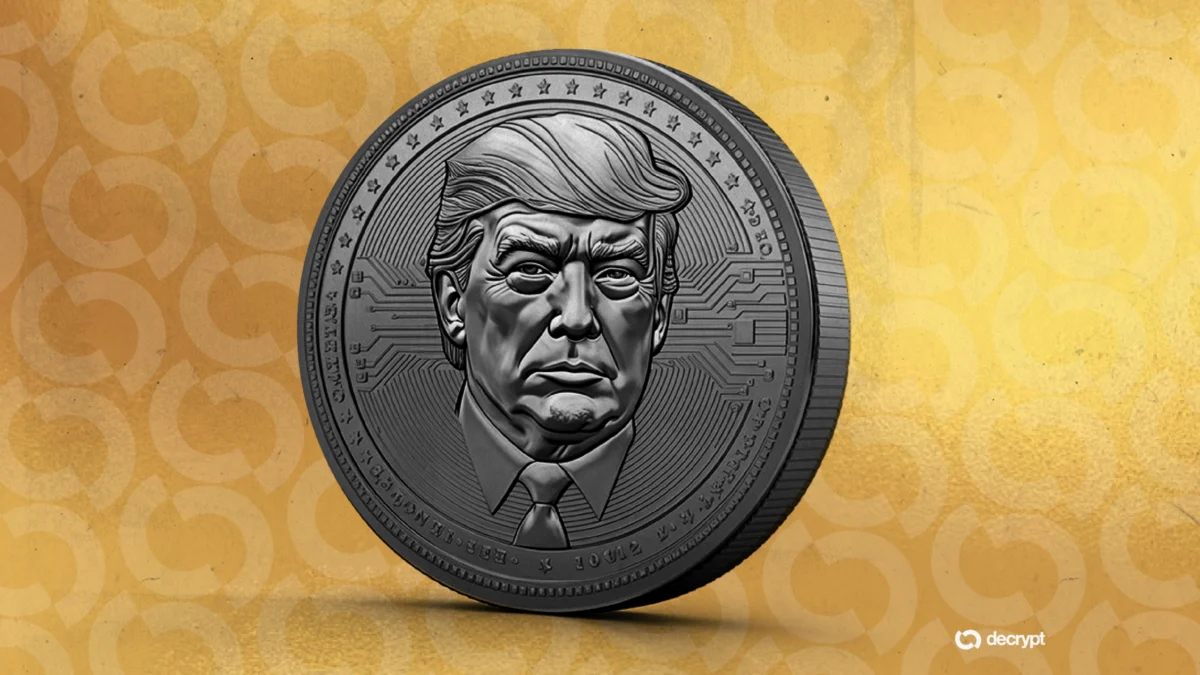
Following recent disclosures revealing that former President Donald Trump reportedly earned over $1.2 billion from various cryptocurrency endeavors in the past year, New York Senator Kirsten Gillibrand has intensified her advocacy for a stringent ban on the issuance and promotion of digital assets by politicians and their spouses. This renewed push underscores a broader legislative and ethical challenge as digital assets, particularly speculative meme coins, intersect with public service and financial accountability. The proposed ban aims to encompass a wide array of digital assets, including the increasingly popular meme coins, from which both former President Trump and former First Lady Melania Trump reportedly garnered significant profits.
The Catalyst: Donald Trump’s Reported Crypto Windfall
The impetus for Senator Gillibrand’s latest call stems directly from the financial disclosures that brought former President Trump’s substantial cryptocurrency earnings to light. Reports indicate that Trump alone earned over $635 million from a single Solana-based meme coin, a figure that has ignited debate across political and financial sectors. These disclosures highlight the growing participation of high-profile individuals in the volatile and often opaque world of digital assets, raising critical questions about potential conflicts of interest, market manipulation, and the integrity of public office. The revelation of such significant earnings from speculative digital assets, particularly those created or promoted by a former head of state, presents a unique and complex ethical dilemma for lawmakers attempting to regulate an evolving financial landscape.
The Phenomenon of Meme Coins and Political Engagement
Meme coins are a particularly salient aspect of this ethical debate. Unlike traditional cryptocurrencies that often aim to solve specific technological or financial problems, meme coins are typically highly speculative digital assets whose value is largely driven by social media trends, community sentiment, and celebrity endorsements rather than underlying utility. Their volatile nature and susceptibility to pump-and-dump schemes make them a contentious area for anyone, let alone public officials, to be involved with. When a prominent political figure, especially one with a significant public platform, issues or promotes such a coin, it raises concerns about undue influence, market manipulation, and the potential for unsophisticated investors to suffer substantial losses. The very act of a politician creating or benefiting from a meme coin can be perceived as leveraging public office or influence for personal financial gain, eroding public trust in the political system. The rapid rise and fall of many meme coins also mean that their value is highly dependent on continuous promotion and engagement, a role that becomes problematic when undertaken by individuals in or connected to government.
The Solana Ecosystem and Digital Asset Creation
The specific mention of a Solana-based meme coin for former President Trump adds another layer of technical context. Solana is a high-performance blockchain platform known for its speed and scalability, making it a popular choice for developers building decentralized applications (dApps), NFTs, and various tokens, including meme coins. The ease with which new tokens can be launched on platforms like Solana means that the barrier to entry for creating a digital asset is relatively low. This technological accessibility, while fostering innovation, also means that individuals can quickly and easily create and promote their own digital currencies, potentially without sufficient regulatory oversight or disclosure. The underlying technology itself is neutral, but its application by politically exposed persons (PEPs) in the context of highly speculative assets like meme coins creates a regulatory blind spot that Senator Gillibrand and others are seeking to address. The ability to generate significant capital quickly through these mechanisms, often without the same disclosure requirements as traditional financial instruments, poses a direct challenge to existing ethical frameworks designed for public service.
A Broader Crusade for Ethical Governance
Senator Gillibrand’s current call is not an isolated incident but rather a continuation of her consistent efforts to bolster ethical standards for public officials. As one of the most pro-crypto Democratic senators, her stance is particularly noteworthy, indicating a recognition that even within a supportive regulatory framework for digital assets, stringent ethical guardrails are indispensable. Her leadership in this area reflects a growing bipartisan concern about potential conflicts of interest and self-dealing across various financial domains involving public servants. Her efforts aim to ensure that the financial activities of those in power do not undermine public trust or exploit their positions for personal enrichment.
Banning Stock Trading for Public Officials
Prior to her focus on digital assets, Senator Gillibrand has been a vocal proponent of banning stock trading for members of Congress and other senior government officials while in office. This long-standing debate centers on the perception and reality of insider trading. Public officials frequently have access to non-public information that could significantly impact market values, creating an inherent conflict of interest when they or their spouses trade individual stocks. Although existing laws prohibit insider trading, the mere appearance of impropriety, or the potential for it, erodes public confidence. Gillibrand argues that a full ban on individual stock trading, compelling officials to place their assets in blind trusts or diversified funds, is the most effective way to eliminate these conflicts and restore faith in government. This push aligns directly with the rationale behind banning crypto activities, viewing both as avenues for potential exploitation of office for financial gain.
Curbing Prediction Market Wagers
Earlier this year, Senator Gillibrand also led a bipartisan initiative to prevent members of Congress from placing wagers on prediction markets. Prediction markets allow participants to bet on the outcome of future events, including political developments, legislative actions, or economic indicators. The concern here is similar to that with stock trading: public officials might possess privileged information that could give them an unfair advantage in these markets. Allegations of individuals close to the White House potentially profiting from inside information on prediction markets further underscored the urgency of this ethical reform. The ability to financially benefit from foreknowledge of policy decisions or political outcomes represents a clear ethical breach and a potential avenue for corruption. By addressing prediction markets, Gillibrand demonstrated a commitment to closing various loopholes that could allow public officials to profit from their positions or access to sensitive information, setting a precedent for her current focus on digital assets.
The Legislative Landscape: Crypto Regulation and Ethical Hurdles
Senator Gillibrand’s ethical push is also intricately linked to the broader legislative efforts to regulate the cryptocurrency market in the United States. The "Clarity for Payment Stablecoins Act" (often referred to as the Clarity Act or a similar market structure bill), which she co-sponsored with Senator Cynthia Lummis, is a prime example of this complex interplay. While Gillibrand is recognized for her pragmatic approach to crypto regulation, aiming to foster innovation while ensuring consumer protection, she has consistently emphasized that robust ethical provisions are non-negotiable for any comprehensive crypto legislation to gain her support.
The Clarity Act: A Pivotal Crypto Bill
The Clarity Act is a significant piece of proposed legislation designed to establish a clear regulatory framework for the cryptocurrency market, particularly focusing on market structure and stablecoins. Its goal is to provide clarity for digital asset issuers and investors, defining which assets fall under the purview of the Commodity Futures Trading Commission (CFTC) and which belong to the Securities and Exchange Commission (SEC). Such clarity is widely seen as crucial for the crypto industry’s maturation and integration into the broader financial system. However, the path to passing this bill has been fraught with challenges, not least among them the incorporation of stringent ethical safeguards for public officials.
Ethical Provisions as a Sticking Point
Senator Gillibrand has publicly stated that the Clarity Act, despite its importance, would not pass without an ethics provision specifically addressing the actions of figures like former President Trump. This stance highlights her unwavering commitment to integrating ethical considerations directly into foundational crypto legislation. The initial advancement of the bill through a key Senate committee vote occurred without a finalized agreement on these ethical guardrails for public officials, indicating the deep divisions and complexities surrounding the issue. While the bill’s prospects for passage this year have reportedly slipped to around 50-50, according to researchers at Galaxy, citing time constraints rather than content, the ethical component remains a critical, unresolved point of contention that could ultimately determine its fate. This emphasizes that for many lawmakers, the integrity of public service must precede or at least accompany the development of new financial markets.
The Argument for Banning Political Crypto Activities
The arguments supporting a ban on politicians and their spouses issuing or promoting digital assets are multifaceted, drawing on principles of good governance, market integrity, and consumer protection.
Addressing Conflicts of Interest and Market Integrity
At its core, the ban seeks to mitigate profound conflicts of interest. When a public official or their immediate family benefits financially from a digital asset they created or promoted, it creates an unavoidable perception that their policy positions or public statements could be influenced by their personal financial stake. This erodes the public’s trust in the objectivity of their elected representatives. Moreover, given the nascent and often volatile nature of the crypto market, especially for meme coins, such involvement could be seen as leveraging a public platform to manipulate market sentiment for personal gain. This directly undermines the integrity of financial markets, which rely on fair play and transparency to function effectively.
Preventing Perceptions of Self-Dealing
The principle of preventing self-dealing is fundamental to ethical governance. Self-dealing occurs when a public official uses their position or knowledge gained from that position to benefit themselves or their close associates financially. Issuing or promoting a meme coin, particularly one that surges in value after being associated with a prominent political figure, fits this definition precisely. Even if no direct laws are technically broken, the optics of such behavior are highly damaging, fostering cynicism among the electorate and contributing to the belief that politicians are primarily motivated by personal enrichment rather than public service. Gillibrand’s statement, "We cannot let self-dealing destroy an opportunity to strengthen consumer protections, crack down on illicit finance, and expand economic opportunity for the millions of Americans our financial system has left behind," encapsulates this concern perfectly.
Protecting Consumers and Financial System Stability
The highly speculative nature of meme coins poses significant risks to consumers, many of whom may lack the financial literacy or market sophistication to understand the extreme volatility and potential for total loss. When a political figure promotes such an asset, it can lend it an unwarranted air of legitimacy or safety, potentially luring unsophisticated investors into high-risk ventures. This not only puts individual investors at risk but could also, if widespread, contribute to broader financial instability, especially if a political figure’s promoted asset experiences a spectacular collapse. A ban would serve as a crucial consumer protection measure, preventing public officials from inadvertently or intentionally contributing to market bubbles and subsequent crashes that harm ordinary citizens.
Challenges and Perspectives: Navigating the Digital Frontier
Implementing such a ban is not without its complexities and challenges, reflecting the broader difficulties in regulating rapidly evolving digital technologies.
Defining "Digital Assets" in Legislation
One of the primary challenges lies in crafting legislation that precisely defines "digital assets" in a way that is comprehensive enough to cover future innovations but narrow enough to avoid unintended consequences. The crypto space is constantly evolving, with new types of tokens, protocols, and financial instruments emerging regularly. A poorly worded definition could either be too easily circumvented or inadvertently stifle legitimate innovation. Lawmakers would need to consult extensively with industry experts, technologists, and legal scholars to ensure the language is robust and future-proof. This includes differentiating between various types of digital assets—stablecoins, utility tokens, securities tokens, NFTs, and meme coins—and determining which specific activities (issuance, promotion, holding, trading) fall under the ban.
Enforcement Mechanisms
Effective enforcement is another critical consideration. How would such a ban be monitored and enforced? It would likely require enhanced disclosure requirements for public officials and their spouses, potentially extending to detailed reporting of all digital asset holdings and transactions. The decentralized and often pseudonymous nature of blockchain transactions could complicate enforcement, necessitating sophisticated analytical tools and international cooperation to trace assets and identify beneficial owners. Penalties for non-compliance would also need to be clearly defined and sufficiently deterrent to ensure adherence. This could involve fines, divestment orders, or even more severe legal consequences for egregious violations.
Industry Reactions and Innovation Concerns
The cryptocurrency industry’s reaction to such a ban would likely be mixed. While some industry players might welcome clearer ethical boundaries as a step towards greater legitimacy and mainstream adoption, others might view it as an overreach that stifles innovation or unfairly targets a specific asset class. Concerns might be raised about the precedent it sets for other emerging technologies and whether it could be perceived as discriminatory against digital assets compared to traditional financial instruments. Proponents of digital assets often argue for less government intervention, emphasizing self-regulation and market-driven solutions. They might also argue that a ban could discourage public officials from gaining a better understanding of the technology, potentially hindering informed policymaking. Balancing the need for ethical oversight with the desire to foster technological advancement will be a delicate act for legislators.
Public Trust and the Future of Political Ethics
The debate surrounding politicians’ involvement in digital assets transcends specific financial instruments; it touches upon the fundamental relationship between public officials and the citizenry they serve. Public trust is a cornerstone of democratic governance, and anything that erodes that trust poses a significant threat to the stability and legitimacy of political institutions. In an era marked by increasing cynicism towards political elites, perceived self-dealing or the exploitation of public office for personal gain can exacerbate societal divisions and fuel anti-establishment sentiments.
Senator Gillibrand’s consistent efforts to address these ethical challenges, from stock trading to prediction markets and now digital assets, underscore a recognition that the rules governing public service must evolve with the financial landscape. As digital assets become more integrated into the global economy, the need for clear, enforceable ethical guidelines for those in power becomes paramount. The outcome of this debate will not only shape the future of crypto regulation but also send a powerful message about the standards of accountability expected from public officials in the 21st century. It represents a critical juncture where technological innovation meets traditional ethical principles, demanding a thoughtful and robust legislative response.
Conclusion: A Defining Moment for Digital Asset Regulation and Political Accountability
Senator Kirsten Gillibrand’s renewed call for a comprehensive ban on digital asset issuance and promotion by politicians and their spouses marks a defining moment in the ongoing efforts to reconcile the rapidly evolving world of cryptocurrencies with the enduring principles of ethical governance. Triggered by the significant crypto earnings disclosed by former President Donald Trump, this initiative extends Gillibrand’s long-standing crusade against conflicts of interest in public service. Her push to include ethical provisions within pivotal crypto legislation like the Clarity Act highlights the inseparable link between regulatory frameworks for new financial technologies and the integrity of those who govern.
The complexities of defining digital assets, ensuring robust enforcement, and navigating industry reactions present substantial challenges. However, the fundamental arguments for such a ban—addressing conflicts of interest, preventing perceptions of self-dealing, and protecting consumers—resonate deeply with public expectations for accountability. As the United States grapples with establishing a comprehensive regulatory framework for digital assets, the debate over political involvement in this nascent market will undoubtedly shape both the future of cryptocurrency policy and the ethical standards applied to public officials in an increasingly digitized world. The time for action, as Gillibrand asserts, is now, to ensure that the promise of digital innovation does not come at the cost of public trust and ethical governance.














