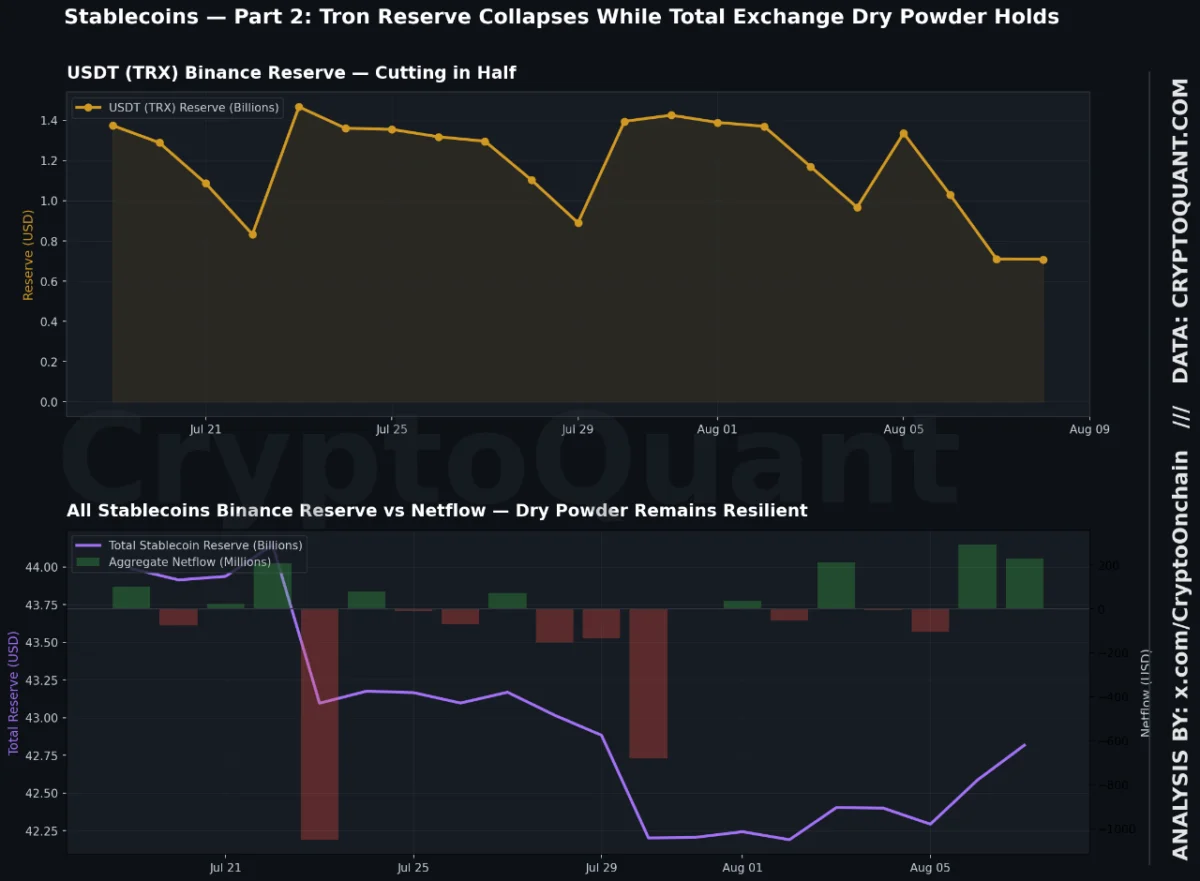
Binance, the world’s largest cryptocurrency exchange by trading volume, is currently experiencing a substantial internal reallocation of stablecoin liquidity, with a pronounced shift occurring from the Tron blockchain network to Ethereum. While the exchange’s aggregate stablecoin reserves have maintained a deceptive outward stability, averaging daily net inflows of approximately $87 million over the past two weeks, a deeper analysis reveals a significant underlying movement of capital. This strategic repositioning is reshaping the fundamental distribution of stablecoin liquidity across Binance’s extensive infrastructure, indicating evolving preferences among large holders and market makers.
Understanding the Crucial Role of Stablecoins in Crypto Ecosystems
Stablecoins are digital assets designed to maintain a stable value relative to a fiat currency, typically the US dollar, or another stable asset. They serve as a critical bridge between traditional finance and the volatile cryptocurrency markets, offering a stable medium of exchange, a safe haven during market downturns, and a primary source of liquidity for trading pairs. For major exchanges like Binance, a robust and accessible supply of stablecoins is paramount, facilitating efficient trading, arbitrage, and overall market functionality. The choice of blockchain network for stablecoin deployment is not trivial; it impacts transaction speeds, costs (gas fees), security profiles, and access to decentralized finance (DeFi) ecosystems. Ethereum and Tron, both prominent smart contract platforms, host vast amounts of stablecoin supply, particularly Tether (USDT), the largest stablecoin by market capitalization.
The Tron Exodus: A Deep Dive into Deteriorating Liquidity
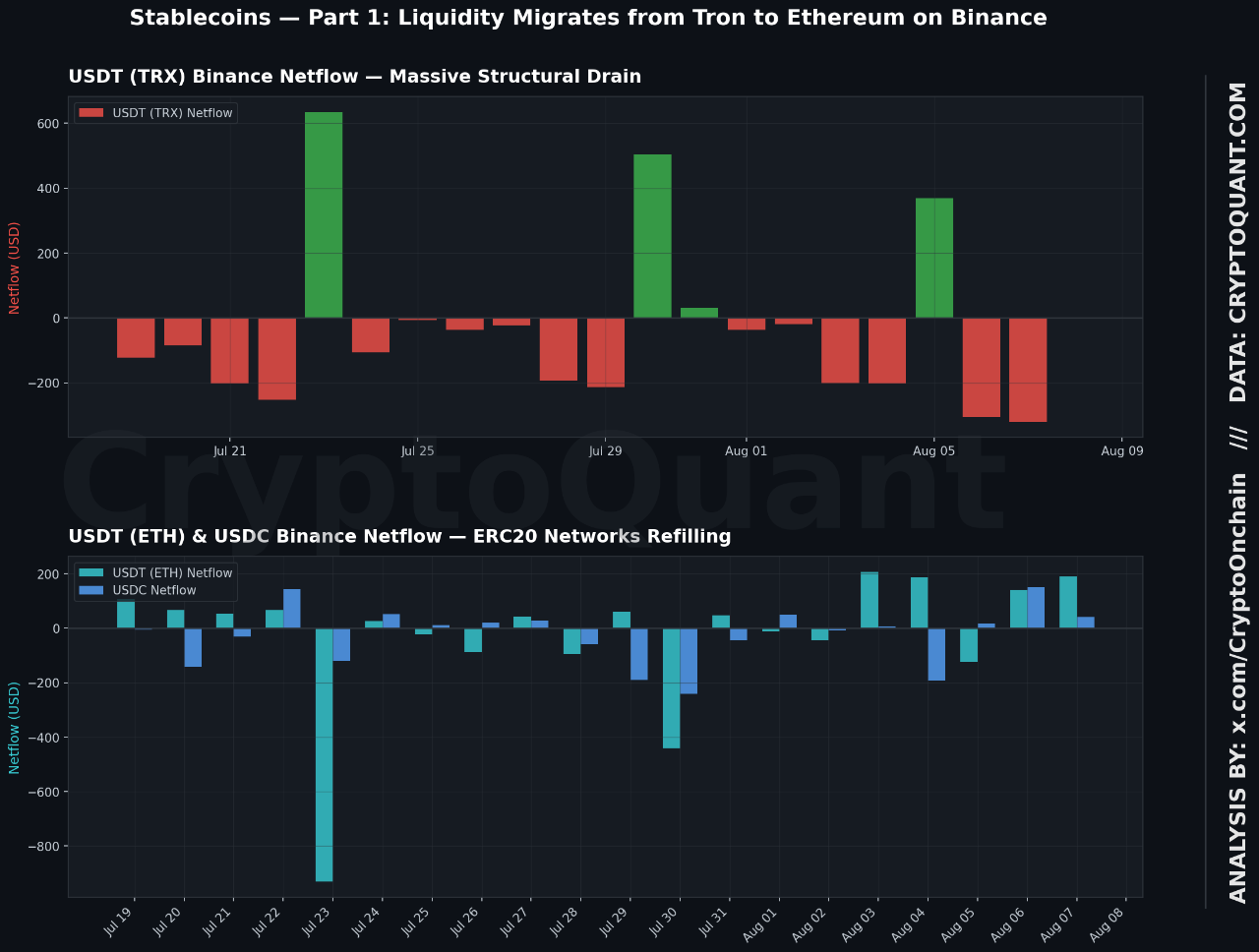
Over the specified 14-day period, the Tron network has witnessed a sharp and persistent drain of USDT from Binance. This trend is not merely a minor fluctuation but represents a significant contraction in available liquidity. Weekly net flow figures for USDT on Tron have deteriorated by an alarming rate, exceeding a 1,200% decline compared to the preceding period. The intensity of this outflow was particularly evident on August 7, when daily outflows peaked near $320 million. This figure marks one of the steepest declines recorded in recent memory for a single stablecoin on a specific network on Binance, signaling a concentrated effort by market participants.
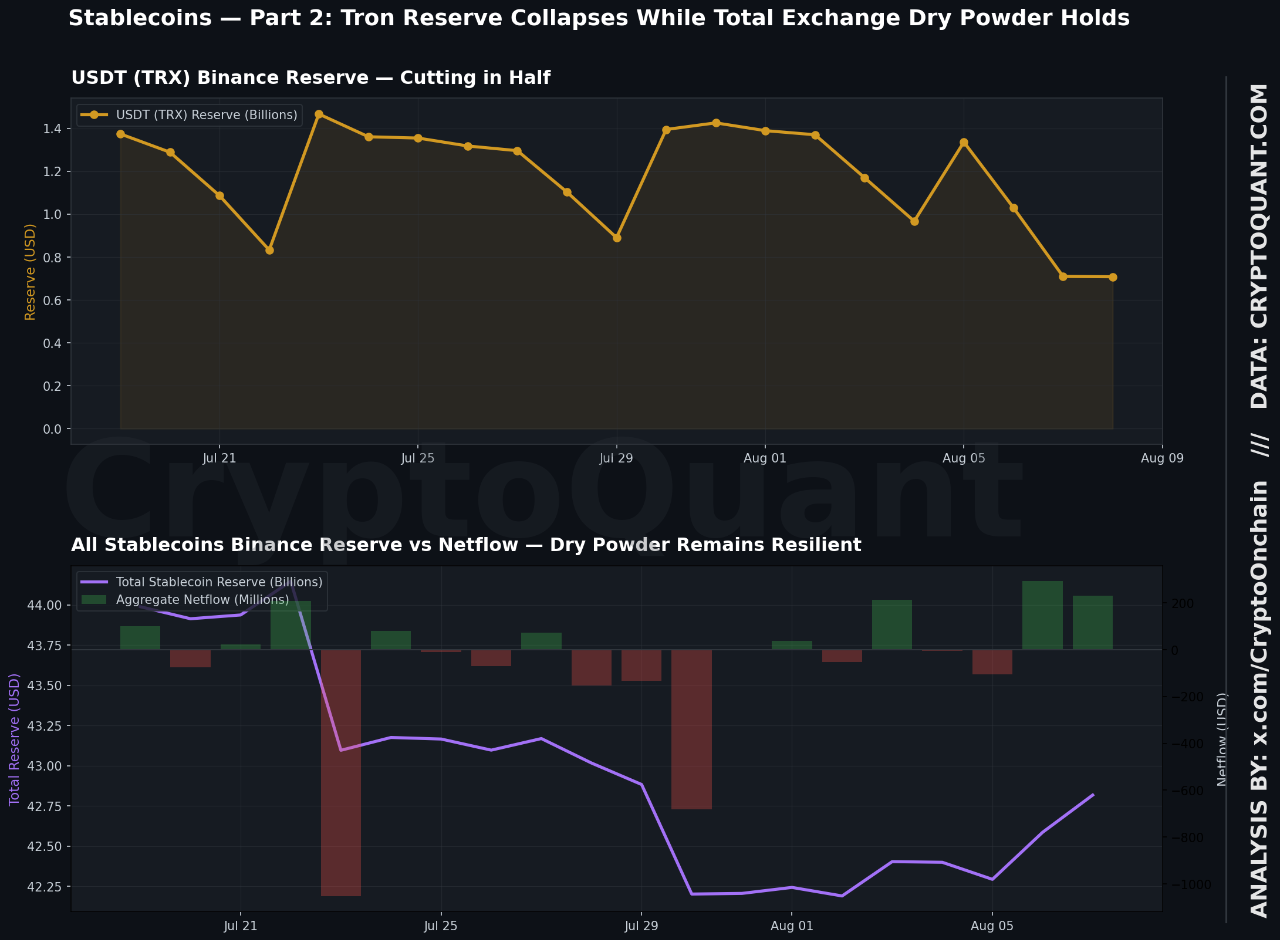
The immediate consequence of this sustained drain has been a dramatic reduction in Binance’s USDT reserves held on the Tron network. Holdings plummeted from approximately $1.4 billion to roughly $709 million within a mere two weeks. This represents a halving of Tron-based USDT reserves, a pace of contraction that stands in stark contrast to the otherwise stable aggregate stablecoin figures reported by the exchange. Such a rapid and substantial movement strongly suggests a coordinated repositioning of capital by sophisticated market participants, rather than routine, organic trading activity or individual retail withdrawals. Large holders, including institutional investors and professional market makers, appear to be actively withdrawing collateral specifically from the Tron network. This pattern indicates a strategic reallocation of assets within the stablecoin ecosystem rather than a complete exit from stablecoins altogether.
Chronology and Context of the Liquidity Shift

The observed liquidity shift, primarily occurring over the past fortnight and intensifying around early August, unfolds against a backdrop of evolving market dynamics. While specific triggers are often multi-faceted, this period has been characterized by renewed discussions around regulatory clarity for stablecoins in various jurisdictions, ongoing developments in decentralized finance, and a general recalibration of risk appetite within the broader crypto market. The August 7 peak outflow from Tron-based USDT coincided with a period where some market participants were reassessing the long-term viability and security profiles of various blockchain networks, especially concerning their suitability for large-scale institutional stablecoin operations. Analysts noted increased scrutiny on network resilience, decentralization metrics, and the transparency of stablecoin issuers and their underlying reserves. This environment likely contributed to the strategic decisions being made by major players regarding where to domicile their substantial stablecoin holdings on exchanges.
Ethereum’s Ascendance: Absorbing the Reallocated Capital
In a direct counterpoint to Tron’s declining figures, Ethereum-based stablecoins have become the primary beneficiaries of this capital reallocation. On-chain analytics consistently flagged this rotation as a defining characteristic of the current market cycle. USDT on Ethereum has experienced a significant surge in net flows, climbing an impressive 210% week-over-week. During the same 14-day window, daily inflows of Ethereum-based USDT frequently exceeded $180 million, demonstrating a robust absorption capacity.
Similarly, USD Coin (USDC), another major stablecoin, has displayed a comparable trajectory. Binance inflows for USDC climbed by 114% over the same comparative period, further solidifying Ethereum’s position as the preferred destination for incoming stablecoin liquidity. These converging figures unequivocally indicate that stablecoin liquidity is not departing the exchange entirely; instead, it is consolidating and concentrating more heavily within Ethereum-based tokens and its underlying infrastructure. Consequently, Binance’s overall purchasing power and its capacity to facilitate large-scale trading remain intact, despite the significant network-level turbulence and redistribution.
Driving Factors: Why the Preference for Ethereum?
Several interconnected factors are likely contributing to this pronounced preference for Ethereum as the destination for reallocated stablecoin capital:
-
Deeper Decentralized Finance (DeFi) Liquidity: Ethereum remains the undisputed king of DeFi, boasting the deepest and most diverse ecosystem of decentralized applications, lending protocols, and automated market makers. For large holders and institutional players, this unparalleled depth offers greater flexibility, more sophisticated yield-generating opportunities, and enhanced capital efficiency. The ability to seamlessly move stablecoins between trading on Binance and participating in Ethereum’s vast DeFi landscape without incurring significant bridging costs or delays is a compelling advantage.
-
Broader Market Infrastructure and Settlement Options: Ethereum’s mature and widely adopted infrastructure provides a more robust and familiar environment for a wide array of market participants. Its extensive network of wallets, custodians, analytics tools, and integration with traditional financial systems makes it a more comfortable choice for institutions. Furthermore, Ethereum offers a broader range of settlement options and a more established regulatory narrative (in some regions) compared to newer or less decentralized blockchains, which can be a significant factor for compliance-conscious entities.
-
Perceived Security and Network Effect: Despite its higher gas fees, Ethereum’s battle-tested security, vast developer community, and dominant network effect often instill greater confidence among large capital holders. While Tron offers lower transaction costs, concerns around its centralization relative to Ethereum, and past incidents within its ecosystem, might influence risk assessments for significant stablecoin deployments.
-
Strategic Positioning Ahead of Volatility: Historically, similar rotations and concentrations of liquidity onto specific networks have often preceded localized increases in trading activity and market volatility. The current shift could be interpreted as strategic positioning by market makers and institutional traders who anticipate heightened activity or significant price movements related to Ethereum-centric assets or broader market events. Concentrating liquidity on Ethereum allows for faster execution and more efficient risk management in such scenarios.
Implications for Binance, Network Ecosystems, and the Broader Market
This significant stablecoin reallocation carries several profound implications:
-
Binance’s Resilience: The fact that aggregate stablecoin reserves on Binance remain stable underscores the exchange’s overall robustness. It demonstrates Binance’s capacity to manage substantial internal liquidity shifts without compromising its operational integrity or its ability to serve its user base. The exchange effectively acts as a dynamic hub, adapting to changing preferences in underlying blockchain networks.
-
Challenges for Tron: For the Tron network, this sustained drain of USDT from a major exchange like Binance presents a significant challenge. Stablecoin liquidity is a vital component for any blockchain ecosystem, supporting dApps, trading pairs, and overall economic activity. A reduction in readily available stablecoins could potentially impact Tron’s DeFi landscape, developer interest, and its perceived utility as a cost-effective alternative for stablecoin transactions. It may prompt Tron to redouble efforts in attracting and retaining institutional-grade liquidity.
-
Reinforcement for Ethereum: The influx of stablecoin capital further solidifies Ethereum’s position as the premier blockchain for high-value transactions and institutional activity. Despite ongoing scalability debates and the transition to Ethereum 2.0 (now the Merge), its gravitational pull for liquidity remains immense. This strengthens its ecosystem, benefiting DeFi protocols, layer-2 solutions, and the overall developer community.
-
Evolution of Multi-Chain Strategies: This event highlights the dynamic nature of multi-chain strategies for stablecoins. While the vision of a truly interoperable and chain-agnostic crypto landscape persists, real-world capital flows demonstrate that preferences can shift rapidly based on perceived advantages in security, infrastructure, regulatory clarity, and access to deep liquidity pools. It suggests a potential trend towards consolidation of institutional-grade stablecoin liquidity on a few dominant, well-established networks.
-
Future Market Dynamics: The observed repositioning suggests a period of preparation rather than withdrawal from the crypto market. Market observers widely concur that such strategic movements of capital often precede the next phase of market activity, which could include increased volatility, new product launches, or significant shifts in asset prices. The network that continues to attract and retain significant stablecoin liquidity is likely to experience the sharpest near-term activity and play a pivotal role in shaping future market trends.
Expert Commentary and Outlook
Industry analysts, observing these shifts through on-chain data, suggest that the move is indicative of a broader trend towards institutionalization within crypto. "Large players prioritize security, deep liquidity for complex strategies, and an established ecosystem that integrates well with their existing operational frameworks," commented one blockchain analytics firm spokesperson, speaking on background. "While cost efficiency is always a factor, for substantial capital, the peace of mind offered by a more robust and battle-tested network like Ethereum often outweighs marginal savings on transaction fees, especially when anticipating significant market moves."
Furthermore, the evolving regulatory landscape for stablecoins globally might also play a role. Jurisdictions are increasingly scrutinizing the backing and operational transparency of stablecoins, as well as the underlying networks they reside on. Networks perceived to have stronger governance, clearer development roadmaps, and a more decentralized structure may become more attractive to entities seeking to minimize regulatory risk.
In conclusion, the ongoing stablecoin liquidity reallocation on Binance—a significant migration from Tron to Ethereum—underscores a strategic recalibration of capital by sophisticated market participants. While Binance maintains overall stablecoin reserves, the internal shift reflects evolving preferences driven by factors such as DeFi depth, institutional infrastructure, perceived security, and strategic positioning for future market activity. This dynamic movement not only reinforces Ethereum’s role as a dominant liquidity hub but also presents new challenges and opportunities for other blockchain networks vying for stablecoin adoption, ultimately shaping the future landscape of cryptocurrency liquidity and trading.