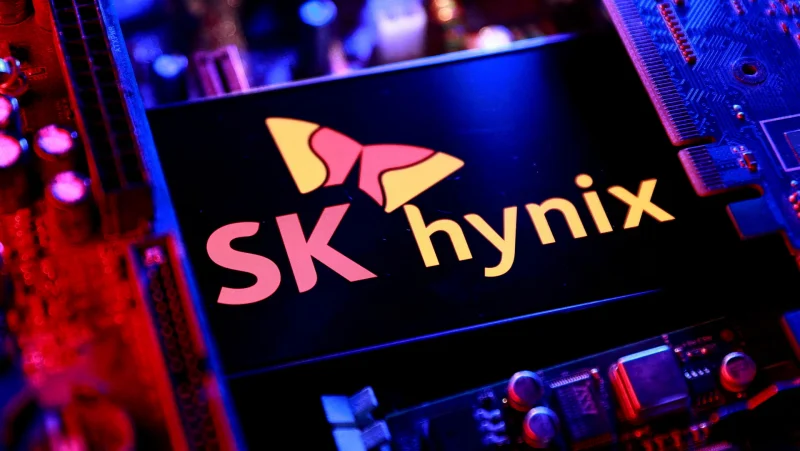
South Korean semiconductor giant SK Hynix has officially initiated the process for a secondary listing on the Nasdaq Global Select Market, filing a comprehensive registration statement with the U.S. Securities and Exchange Commission that outlines an ambitious capital-raising target of up to $29.4 billion. This move represents one of the most significant financial maneuvers by a foreign technology firm in recent years, signaling a strategic shift to tap into the deep liquidity of American capital markets to fund its aggressive expansion in the artificial intelligence (AI) sector. The company, which is already a cornerstone of the Korea Exchange, plans to offer American Depositary Shares (ADS) under the ticker symbol SKHY, with each common share represented by ten ADSs.
The proposed offering includes up to 17.79 million newly issued common shares, a figure that represents approximately 2.5% of the company’s current outstanding share count. Based on current market projections and the maximum size of the offering, the capital infusion could reach 45.45 trillion Korean won. While the final pricing will be contingent upon the results of the bookbuilding process and negotiations with a syndicate of elite global underwriters, the initial valuation implies a price point of approximately $166 per ADS. This massive liquidity event is designed to provide SK Hynix with the "war chest" necessary to maintain its leadership position in the increasingly competitive high-bandwidth memory (HBM) market, where it currently serves as a primary supplier to industry titans like Nvidia and Google.
Strategic Objectives and the AI Infrastructure Boom
The decision to seek a Nasdaq listing comes at a pivotal moment for the global semiconductor industry. SK Hynix has emerged as a primary beneficiary of the generative AI explosion, which has created an insatiable demand for the advanced memory chips required to process massive datasets. Unlike traditional DRAM used in personal computers or mobile devices, High Bandwidth Memory (HBM) utilizes vertically stacked memory chips to provide the rapid data transfer speeds essential for AI accelerators and graphics processing units (GPUs).
SK Hynix’s shares have experienced a meteoric rise, quadrupling in value over the past year as the company successfully outpaced rivals in the race to mass-produce HBM3 and HBM3e chips. By establishing a direct presence on the Nasdaq, the company aims to broaden its investor base beyond the South Korean domestic market, attracting institutional investors in the United States who have traditionally focused on domestic peers like Micron Technology or Nvidia itself. This move is expected to enhance the stock’s liquidity and provide a more stable valuation platform that reflects its status as a global technology leader rather than a regional player.
Detailed Timeline and Underwriting Syndicate
The roadmap for the Nasdaq listing is set to move at an accelerated pace. SK Hynix has scheduled the commencement of the bookbuilding process for July 6, during which time institutional investors will submit bids to determine the final appetite for the ADS offering. Following this period of price discovery, the final offer price is expected to be announced on July 9. If the schedule proceeds without regulatory or market-driven delays, trading of SKHY shares on the Nasdaq Global Select Market is slated to begin on July 10.
To manage a transaction of this magnitude and complexity, SK Hynix has engaged a consortium of the world’s leading investment banks. BofA Securities, Citigroup, Goldman Sachs, and JPMorgan are serving as the joint book-running managers for the offering. The involvement of these "Bulge Bracket" firms underscores the global significance of the listing and ensures that the company has the necessary expertise to navigate the regulatory requirements of the U.S. Securities and Exchange Commission (SEC) while maximizing reach among global asset managers.
Capital Allocation: Building the Future of Memory
SK Hynix has been transparent regarding the intended use of the proceeds, earmarking the billions of dollars in new capital for general corporate purposes and, more importantly, massive capital expenditures (CAPEX). A significant portion of the funds will be directed toward the "Yongin Semiconductor Cluster," a monumental project in South Korea that aims to create the world’s largest chipmaking hub. The company plans to construct four separate fabrication plants (fabs) within this cluster to dramatically increase its production capacity for next-generation memory.
Beyond physical infrastructure, the capital will be used to procure the industry’s most advanced manufacturing tools. Specifically, SK Hynix is prioritizing the acquisition of Extreme Ultraviolet (EUV) lithography machines produced by the Dutch firm ASML. These machines, which cost upwards of $200 million each, are essential for printing the microscopic circuits required for the latest generations of HBM and DDR5 memory. By securing these tools now, SK Hynix intends to widen its technological lead over competitors and ensure it can meet the rigorous specifications of its tier-one customers.
Bridging the Valuation Gap and the "Korea Discount"
A primary motivation for the Nasdaq listing is the desire to narrow the valuation gap between SK Hynix and its U.S.-based competitors. For years, South Korean firms have traded at a lower price-to-book (P/B) ratio compared to their global counterparts—a phenomenon often referred to by analysts as the "Korea Discount." This discount is typically attributed to factors such as geopolitical tensions with North Korea, corporate governance structures, and limited accessibility for foreign retail and institutional investors.
Market analysts at HSBC have suggested that the Nasdaq listing could serve as a powerful catalyst for a "valuation re-rating." Current estimates indicate that improved access for global investors could lift SK Hynix’s price-to-book ratio from its current level of 2.8 to approximately 3.4. Such an increase would represent a 20% rise in the company’s market capitalization, potentially adding tens of billions of dollars in shareholder value. By aligning its listing with the markets where its primary customers and competitors are traded, SK Hynix is effectively positioning itself to be judged by the same metrics as Silicon Valley’s elite.
The Broader National and Competitive Context
The SK Hynix filing does not exist in a vacuum; it is part of a broader, state-backed push to cement South Korea’s dominance in the global semiconductor supply chain. The South Korean government recently unveiled an 800 trillion won (approximately $580 billion) manufacturing project designed to double the country’s memory production capacity over the next five years. This "Mega Cluster" initiative involves collaboration between the government, SK Hynix, and Samsung Electronics to ensure the nation remains the "silicon heart" of the global economy.
In the competitive landscape, the stakes have never been higher. While SK Hynix currently holds a significant lead in the HBM3e market, Samsung Electronics is aggressively investing to catch up, and Micron Technology has recently announced the start of mass production for its own HBM3e solutions. The capital raised through the Nasdaq listing will allow SK Hynix to maintain an aggressive R&D schedule, particularly as the industry moves toward HBM4, which will require even more complex integration of logic and memory layers.
Market Analysis and Long-term Implications
Industry observers view this listing as a transformative event that could redefine how large-scale international technology firms approach capital raising. By opting for a secondary listing in the U.S. rather than a traditional IPO, SK Hynix avoids the complexities of a full de-listing from the Seoul exchange while gaining the benefits of a global platform. This hybrid approach allows the company to maintain its national identity and domestic support while participating in the world’s most influential financial ecosystem.
The implications for the AI sector are also profound. As AI models grow in complexity, the "memory wall"—the bottleneck caused by the inability of memory to keep pace with processor speeds—becomes a critical challenge. SK Hynix’s ability to fund and execute its expansion plans will directly impact the speed at which companies like Nvidia can deliver more powerful AI hardware. In this sense, the success of the Nasdaq listing is not just a financial milestone for one company, but a critical pulse check for the entire AI infrastructure supply chain.
As the bookbuilding process nears, the global financial community will be watching closely. The success of this offering will likely serve as a bellwether for other high-growth international firms considering similar moves to capitalize on the U.S. market’s appetite for AI-related investments. For SK Hynix, the move represents a bold bet on the permanence of the AI revolution and a clear statement of intent to remain the indispensable architect of the digital age’s most essential hardware.