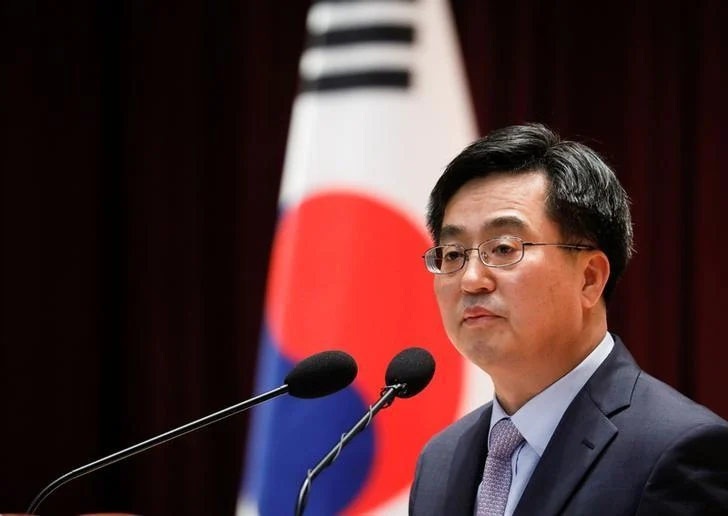
The South Korean government is reportedly preparing to reverse its blanket ban on Initial Coin Offerings (ICOs), signaling a monumental pivot in the nation’s regulatory approach to the digital asset industry. According to reports from The Korea Times, financial authorities have entered high-level discussions to allow domestic ICOs under a strictly regulated framework. This move marks a significant departure from the hardline stance adopted in late 2017, when the country’s regulators moved to suppress the burgeoning cryptocurrency market amid fears of speculative bubbles and financial crime. The shift suggests that South Korea, one of the world’s most influential markets for digital currencies, is attempting to strike a balance between investor protection and the promotion of blockchain-driven technological innovation.
The Evolution of South Korea’s Regulatory Landscape
To understand the weight of this potential policy reversal, one must look back at the tumultuous events of 2017. During that year, South Korea emerged as a global epicenter for cryptocurrency trading, with the Korean Won (KRW) frequently ranking as the second or third most-traded fiat currency for Bitcoin and Ethereum. This "crypto-frenzy" led to the emergence of the "Kimchi Premium," a phenomenon where digital assets traded at significantly higher prices on South Korean exchanges compared to international platforms due to high demand and capital controls.
Alarmed by the volatility and the potential for money laundering, the South Korean Financial Services Commission (FSC) issued a total ban on all forms of ICOs in September 2017. At the time, the FSC argued that the practice of raising capital through new token issuance was "increasing the risks of financial scams" and required a complete halt to protect the public. This was followed by aggressive rhetoric from the Ministry of Justice, including suggestions that cryptocurrency exchanges might be shut down entirely. These statements, combined with high-profile security breaches at exchanges like Youbit and Bithumb, contributed to a massive correction in global cryptocurrency prices in early 2018.
However, the dawn of 2018 brought a softening of this stance. The government faced immense pressure from the public; a petition filed on the Blue House website, calling for the cessation of "unreasonable" regulations, garnered more than 220,000 signatures. Under South Korean law, any petition exceeding 200,000 signatures requires an official response from the government. This democratic pressure, combined with the realization that local blockchain startups were fleeing to crypto-friendly jurisdictions like Singapore and Switzerland, appears to have prompted a re-evaluation of the 2017 ban.
Inside the Deliberations: Conditions for the New ICO Framework
The current reports indicate that the FSC is no longer viewing a total ban as a sustainable long-term solution. A source familiar with the matter, speaking on condition of anonymity, revealed that financial authorities are currently coordinating with the national tax agency, the Ministry of Justice, and other relevant departments to draft a plan that would permit ICOs when specific conditions are met.
"The financial authorities have been talking to the country’s tax agency, justice ministry and other relevant government offices about a plan to allow ICOs in Korea when certain conditions are met," the source stated. These conditions are expected to focus heavily on transparency, institutional oversight, and the prevention of illicit financial flows.
Kang Young-soo, the official overseeing cryptocurrency trading policies at the FSC, recently addressed the speculation during an industry forum at the National Assembly. While he maintained a cautious public stance, his comments suggested that the door is open for a more nuanced regulatory environment. Kang noted that while there is currently no finalized official government policy that explicitly permits all ICOs, the authorities are acknowledging "third-party views" regarding the necessity of a legal pathway for token offerings. He emphasized that tokens not explicitly identified as illegal or fraudulent under existing financial laws could potentially find a place within the South Korean economy.
Supporting Data and the Economic Impact of the "Kimchi Market"
The significance of South Korea’s policy shift cannot be overstated given the country’s market share. Data from 2017 and early 2018 showed that South Korea accounted for approximately 10% to 15% of the global Bitcoin trading volume on any given day. For certain altcoins, such as Ripple (XRP) and EOS, Korean exchanges often accounted for over 30% of global activity.
The 2017 ban on ICOs did not stop Korean entrepreneurs; instead, it led to a "capital flight" of innovation. Major South Korean tech conglomerates and startups began establishing foundations abroad to launch their blockchain projects. For instance, Kakao, the company behind South Korea’s dominant messaging app, launched its blockchain subsidiary, Ground X, in Singapore. By lifting the ban, the South Korean government aims to bring this economic activity back to Seoul and Sejong, ensuring that the country remains a leader in the Fourth Industrial Revolution.
Despite the potential lifting of the ICO ban, the government remains steadfast in its commitment to Anti-Money Laundering (AML) and Know Your Customer (KYC) protocols. The policy that prevents foreigners from trading on South Korean exchanges remains in effect. This measure is designed to curb the use of the South Korean market as a conduit for international money laundering and to stabilize the domestic financial system against the volatility caused by offshore arbitrageurs.
The Separation of Blockchain Technology and Speculative Trading
A key theme in the government’s recent communications is the distinction between "blockchain technology" and "cryptocurrency speculation." While the FSC and the Ministry of Finance remain wary of the speculative nature of coin trading, they have expressed a high degree of interest in the underlying ledger technology.
Kang Young-soo articulated this distinction clearly, stating, "Yes, we have to have plans on how to advance blockchain-related technologies and effectively regulate crypto-trading. This is a separate issue."
The South Korean government has already pledged significant investment into blockchain research and development, viewing it as a critical infrastructure for future industries, including logistics, healthcare, and public administration. By allowing regulated ICOs, the government provides a mechanism for these technological projects to secure funding domestically, rather than relying on foreign venture capital or offshore token sales.
Official Responses and Industry Reaction
The reaction from the South Korean blockchain industry has been one of cautious optimism. Industry leaders have long argued that the 2017 ban was a "knee-jerk reaction" that stifled legitimate business growth. Legal experts in Seoul suggest that the new framework will likely categorize tokens into different tiers, with "utility tokens" being treated more leniently than "security tokens," which would fall under the strict purview of the Capital Markets Act.
The Korea Blockchain Association, a self-regulatory body representing major exchanges, has welcomed the discussions. A spokesperson for the association noted that a clear legal framework for ICOs would provide much-needed "regulatory certainty," allowing businesses to operate without the constant fear of retroactive legal action. However, they also cautioned that the "certain conditions" mentioned by the FSC could be stringent, potentially requiring high levels of capital reserves and frequent audits.
Broader Implications and Global Market Sentiment
The potential reopening of the South Korean ICO market is expected to have a ripple effect across the global cryptocurrency ecosystem. As one of the most technologically advanced nations with a high rate of digital literacy, South Korea’s regulatory model often serves as a blueprint for other Asian economies.
If South Korea successfully implements a "conditional ICO" model, it could provide a middle-ground approach for other nations that are currently struggling to regulate digital assets. It moves away from the binary choice of a "total ban" (as seen in China) or a "laissez-faire" approach.
For investors, the move signals a maturation of the market. The integration of tax agencies and justice ministries into the ICO framework suggests that cryptocurrencies are moving toward becoming a recognized asset class within the traditional financial system. While this may mean the end of the "wild west" era of unregulated 2,000% gains, it also reduces the risk of total loss due to fraud or government intervention.
Chronology of South Korea’s Crypto Journey
- May 2017: Bitcoin prices in South Korea hit a record "Kimchi Premium" of 20% over global averages.
- September 2017: The FSC officially bans all domestic ICOs, citing investor protection concerns.
- December 2017: The Ministry of Justice proposes a bill to close all cryptocurrency exchanges, causing a localized market crash.
- January 2018: Over 200,000 citizens sign a petition against the ban. The government clarifies it will not ban trading but will implement "real-name" trading systems.
- February 2018: The FSC announces it will support "normal" cryptocurrency transactions and focus on transparency.
- March 2018: Reports emerge that the government is discussing a plan to allow ICOs under specific regulatory conditions.
Conclusion
The South Korean government’s move toward a more tolerant ICO policy represents a strategic pivot aimed at reclaiming its position as a global hub for financial technology. While the 2017 ban was a defensive measure against market instability, the 2018 approach appears to be an offensive strategy to foster innovation. By bringing ICOs into the light of regulation, South Korea is attempting to purge the market of bad actors while providing a fertile ground for the next generation of blockchain developers. The global crypto community will be watching closely as the FSC formalizes these "conditions," as the outcome will likely define the trajectory of the Asian digital asset market for years to come.