


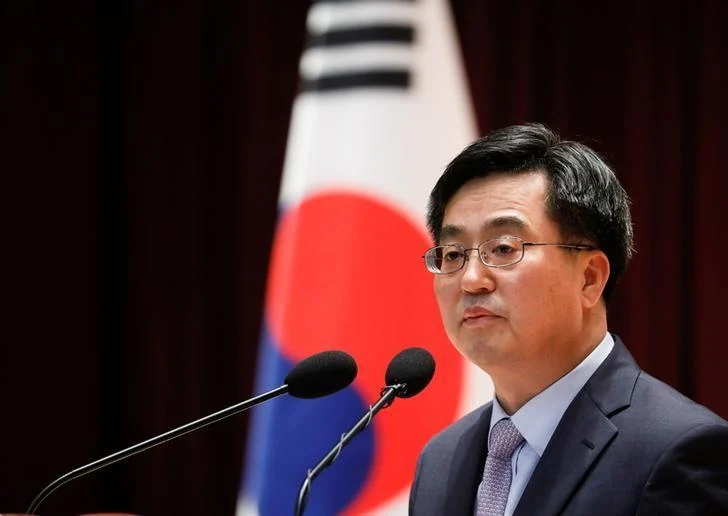
The South Korean government is reportedly preparing to transition away from its blanket prohibition on Initial Coin Offerings (ICOs), signaling a significant pivot in the regulatory landscape of one of the world’s most active cryptocurrency markets. According to reports emerging from the region, most notably through The Korea Times, financial authorities have initiated high-level discussions regarding the legalization of ICOs under a framework of strict institutional oversight. This move represents a marked departure from the hardline stance adopted by Seoul in late 2017, suggesting that the administration is seeking a middle ground that fosters technological innovation while maintaining rigorous investor protections.
The shift comes at a critical juncture for the global digital asset industry. For much of the past year, South Korea has been characterized by its volatile regulatory climate, where aggressive rhetoric from high-ranking officials frequently sent shockwaves through international markets. However, the current discourse suggests that the Financial Services Commission (FSC), in coordination with the Ministry of Strategy and Finance and the Ministry of Justice, is exploring "certain conditions" under which blockchain-based fundraising could be permitted. While no official timeline has been set, the softening of the government’s tone has been interpreted by industry analysts as a strategic move to prevent domestic capital flight and to support the growth of the "Fourth Industrial Revolution."
Historical Context: The 2017 Crackdown and Market Volatility
To understand the magnitude of this potential policy shift, one must look back at the tumultuous events of 2017. During that year, South Korea emerged as a global epicenter for cryptocurrency trading, at times accounting for a disproportionately large share of the global Bitcoin and Ethereum volume. This fervor led to the phenomenon known as the "Kimchi Premium," where digital assets traded at significantly higher prices on South Korean exchanges compared to international platforms like Binance or Coinbase.
Alarmed by the speculative frenzy and the potential for money laundering, South Korean regulators took a series of drastic measures. In September 2017, the FSC announced a total ban on all forms of ICOs, regardless of the project’s merit or technical backing. The commission argued at the time that ICOs increased the risk of financial scams and were being used to circumvent traditional securities laws. This was followed by a period of extreme uncertainty in early 2018, when the Ministry of Justice suggested the possibility of a total ban on cryptocurrency trading and the potential shutdown of domestic exchanges.
These statements, coupled with high-profile security breaches at exchanges such as Youbit—which filed for bankruptcy after a major hack—and international incidents like the Coincheck heist in Japan, contributed to a massive correction in the crypto markets. Bitcoin prices plummeted from their December 2017 highs, and the South Korean public’s sentiment began to sour toward the government’s heavy-handed approach.
The Turning Point: Public Pressure and Institutional Realism
The tide began to turn when more than 220,000 South Korean citizens signed a petition to the Blue House (the presidential office), demanding that the government stop its "unjust regulation" of virtual currencies. Under South Korean law, any petition that garners over 200,000 signatures requires an official response from the government. This forced the administration to refine its message, moving away from talk of "shutdowns" and toward "transparent regulation."
By the first quarter of 2018, a new narrative began to emerge within the Sejong government complex. Officials started to distinguish between "speculative trading" and the "underlying blockchain technology." While the government remained committed to stamping out illicit activity, there was a growing realization that a total ban on ICOs was driving South Korean startups to Singapore, Switzerland, and Hong Kong to raise capital. This "brain drain" and capital flight were viewed as counterproductive to the nation’s goal of becoming a leader in high-tech innovation.
Official Statements and the Current Regulatory Climate
Recent developments indicate that the FSC is now engaging in cross-departmental talks to establish a legal framework for token sales. Kang Young-soo, the official overseeing cryptocurrency trading policies at the FSC, recently addressed these rumors during an industry forum at the National Assembly. While he maintained a cautious tone, his comments provided the clearest indication yet that the ban is no longer viewed as permanent.
"The financial authorities have been talking to the country’s tax agency, justice ministry, and other relevant government offices about a plan to allow ICOs in Korea when certain conditions are met," a source familiar with the matter told local press under the condition of anonymity.
Kang Young-soo himself noted that while there is no official government policy change to announce yet, the FSC is aware of the industry’s needs. "There are many speculating about the possibility of allowing ICOs," Kang stated. "The FSC has acknowledged a third-party view regarding the issue, but there’s nothing that we can say officially at the moment." Crucially, Kang pointed out that projects not expressly identified as illegal under existing fraud or securities statutes might find a path forward, provided they adhere to upcoming guidelines.
The Framework of "Certain Conditions"
While the ban may be lifted, it is clear that the "Wild West" era of 2017 will not return. The South Korean government’s proposed "conditions" for allowing ICOs are expected to be among the strictest in the world. Based on current Anti-Money Laundering (AML) and Know Your Customer (KYC) trends in the country, the new framework is likely to include:
- Real-Name Verification: Since January 2018, South Korea has mandated a real-name account system for cryptocurrency trading. Any future ICO framework would almost certainly require participants to use verified bank accounts linked to their real identities, eliminating the anonymity that characterized early token sales.
- Institutional Safeguards: Regulators are considering a system where only "qualified investors" or those with a certain level of capital can participate in high-risk ICOs, similar to the accredited investor rules in the United States.
- Strict Disclosure Requirements: Startups wishing to launch an ICO would likely be required to provide detailed whitepapers, audited financial statements, and clear roadmaps, with legal penalties for misrepresentation.
- Taxation Oversight: The National Tax Service (NTS) is heavily involved in the current discussions. Any legalization of ICOs will be tied to a clear taxation framework for both the issuing companies and the individual investors.
The Separation of Blockchain and Cryptocurrency
A recurring theme in the South Korean government’s rhetoric is the separation of blockchain technology from the speculative nature of cryptocurrency trading. The administration sees blockchain as a pillar of the Fourth Industrial Revolution, with applications ranging from logistics and voting to healthcare and intellectual property.
"Yes, we have to have plans on how to advance blockchain-related technologies and effectively regulate crypto-trading. This is a separate issue," Kang Young-soo told the National Assembly. This dual-track approach aims to provide government subsidies and research grants for blockchain development while keeping a tight leash on the secondary markets where tokens are traded.
However, industry experts argue that the two are inextricably linked. Public blockchains typically require a native token to incentivize network participants and secure the protocol. By allowing ICOs, the South Korean government would finally be acknowledging that the "fuel" (the token) is necessary for the "engine" (the blockchain) to function.
Global Implications and Market Reaction
South Korea’s potential policy reversal is being watched closely by the international community. As the third-largest market for cryptocurrency trading at various points in recent years, a "pro-crypto" South Korea could provide a significant boost to market liquidity and investor confidence.
Comparatively, South Korea’s move would place it in a similar camp to Japan, which has opted for a regulated exchange licensing system, and in contrast to China, which maintains a strict ban on both ICOs and domestic trading. If Seoul successfully implements a regulated ICO market, it could serve as a blueprint for other G20 nations struggling to balance innovation with financial stability.
Furthermore, the impact on "Altcoins" could be substantial. Many South Korean projects, such as ICON (ICX), had to navigate complex legal hurdles to launch during the ban. A domestic pathway for such projects would likely lead to a surge in local development and venture capital activity within the Seoul tech corridor.
Conclusion: A Measured Path Forward
The potential lifting of the ICO ban in South Korea is not a sign of the government "giving up" on regulation, but rather an evolution of its strategy. The focus has shifted from prohibition to protection. By bringing ICOs into the light of the formal economy, the government can monitor capital flows, collect taxes, and protect retail investors from the exit scams that plagued the 2017 market.
While the ban on foreigners trading on South Korean exchanges remains in place—largely to prevent the country from becoming a conduit for global money laundering—the internal market remains robust. As the FSC, the Ministry of Justice, and the tax authorities finalize their collaborative framework, the global cryptocurrency community remains cautiously optimistic. The transition from a "no-go zone" to a regulated hub marks a significant milestone in the maturation of the digital asset industry in Asia. For South Korea, the challenge will be to foster an environment where the next generation of tech giants can thrive without repeating the speculative excesses of the past.














