


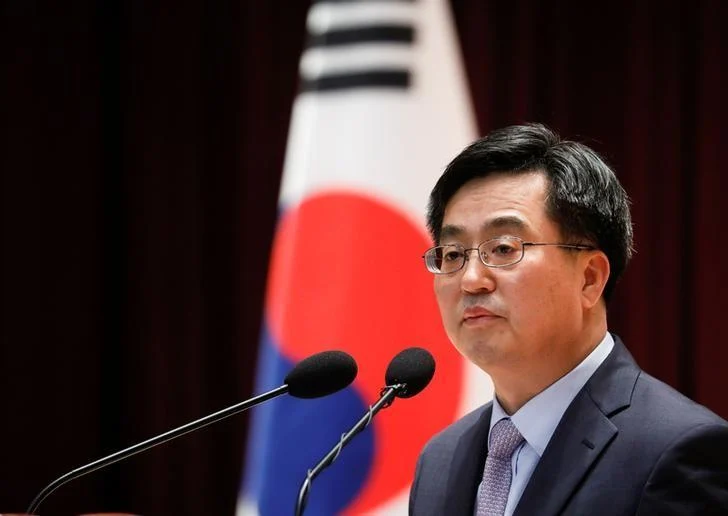
The South Korean government is reportedly moving toward a significant recalibration of its stance on digital assets, with internal discussions indicating a potential reversal of the blanket ban on Initial Coin Offerings (ICOs). This development, first highlighted by reports from the Korea Times, suggests that financial authorities are seeking a middle ground that allows for the regulated issuance of new tokens while maintaining strict oversight to prevent market manipulation and financial crimes. The shift marks a notable departure from the hardline approach adopted in late 2017, which saw the country emerge as one of the most restrictive jurisdictions for cryptocurrency enthusiasts and blockchain startups.
The proposed policy change involves a collaborative effort between the Financial Services Commission (FSC), the national tax agency, the Ministry of Justice, and several other relevant government bodies. According to sources familiar with the matter, the administration is drafting a framework that would permit ICOs to operate within the country, provided they adhere to a stringent set of conditions. This move is seen as an attempt to harmonize the government’s desire to foster technological innovation with its obligation to protect retail investors from the high-risk nature of the nascent crypto-asset market.
The Evolution of South Korea’s Regulatory Climate
To understand the significance of this potential policy reversal, it is essential to examine the volatile regulatory landscape of 2017. During that period, South Korea became a global epicenter for cryptocurrency trading, at one point accounting for a disproportionately large share of the global trade volume for Bitcoin and Ethereum. This surge in interest led to the phenomenon known as the "Kimchi Premium," where digital assets traded at significantly higher prices on South Korean exchanges compared to the rest of the world.
However, the rapid growth brought significant challenges. Concerns regarding money laundering, tax evasion, and speculative bubbles prompted South Korean officials to issue a series of increasingly stern warnings. In September 2017, the FSC announced a total ban on all forms of ICOs, regardless of the project’s merit or technical foundation. The regulator argued at the time that ICOs increased the risk of financial fraud and that the practice of "raising funds through the issuance of stock-like tokens" violated the Capital Markets Act.
The climate grew even more tense in early 2018 when the Ministry of Justice suggested the possibility of shutting down domestic cryptocurrency exchanges entirely. These statements, combined with high-profile security breaches at major exchanges and global market corrections, contributed to a sharp decline in asset valuations. The "FUD" (fear, uncertainty, and doubt) emanating from Seoul was a primary driver of market sentiment during the first quarter of 2018.
Assessing the Proposed Conditional Framework
The current discussions within the South Korean government suggest that the total ban was perhaps a blunt instrument that stifled legitimate blockchain development. Kang Young-soo, the official overseeing cryptocurrency trading policies at the FSC, recently addressed the growing speculation regarding the legalization of ICOs. Speaking at an industry forum at the National Assembly, Kang clarified that while there is no official government policy explicitly targeting "legal" ICOs, the authorities are looking at ways to distinguish between fraudulent schemes and legitimate technological ventures.
The "certain conditions" mentioned by government sources likely include rigorous disclosure requirements, the auditing of smart contracts, and the mandatory implementation of Anti-Money Laundering (AML) and Know Your Customer (KYC) protocols. By moving from a total ban to a conditional allowance, South Korea would join other major economies, such as Switzerland and Singapore, which have established clear guidelines for token sales to provide legal certainty for developers and protection for participants.
One of the critical components of the existing regulatory regime that is expected to remain in place is the real-name verification system. Introduced in early 2018, this system requires cryptocurrency traders to link their exchange accounts to verified bank accounts. Furthermore, the restriction preventing foreigners and minors from trading on South Korean exchanges is likely to persist for the foreseeable future. These measures are designed to curb the flow of illicit capital and ensure that the domestic market does not become a haven for international money laundering.
The Strategic Importance of Blockchain Technology
A key factor driving the government’s reconsidered stance is the broader strategic importance of blockchain technology. The South Korean administration, led by President Moon Jae-in, has frequently emphasized the importance of the "Fourth Industrial Revolution" as a driver for future economic growth. There is a growing consensus among policymakers that while "crypto-currency" and "blockchain" are distinct entities, a complete ban on the former could inadvertently hamper the development of the latter.
Kang Young-soo’s comments at the National Assembly highlighted this distinction. He noted that the government is actively developing plans to advance blockchain-related technologies while effectively regulating crypto-trading. By allowing ICOs under a regulated framework, the government could enable domestic startups to raise capital without fleeing to more permissive jurisdictions like Singapore or Hong Kong. This "brain drain" has been a significant concern for the South Korean tech sector, as some of the country’s most promising developers have established offshore entities to circumvent the 2017 ban.
The government is also exploring the application of blockchain in non-economic sectors, including logistics, voting systems, and public administration. For these initiatives to succeed, a vibrant domestic ecosystem is required, which many industry experts argue is impossible without a clear and fair regulatory path for tokenization.
Market Reactions and Economic Implications
The prospect of a more crypto-friendly South Korea has been met with cautious optimism by the global investment community. South Korea remains one of the most technologically literate nations in the world, with a high rate of internet penetration and a culture that is quick to adopt digital innovations. The reintegration of the South Korean market into the global ICO landscape could provide a significant liquidity boost and foster a new wave of technological competition.
However, the path forward is not without hurdles. The South Korean tax agency is concurrently working on a framework for the taxation of cryptocurrency gains, a move that is seen as another step toward legitimizing the asset class. If the government proceeds with lifting the ICO ban, it will likely be coupled with new tax obligations for both issuers and investors.
Industry stakeholders have also called for more transparency in how the FSC and other agencies define "illegal" versus "permissible" activities. The current ambiguity has left many companies in a state of regulatory limbo. A clear set of codified laws, rather than ad-hoc administrative guidelines, is what the industry is currently lobbying for at the National Assembly.
Chronology of Key Regulatory Events
To contextualize the current shift, it is helpful to look at the timeline of South Korean crypto-regulation:
- September 2017: The FSC announces a blanket ban on all ICOs, citing concerns over "speculative mania" and fraud.
- December 2017: The government announces emergency measures to curb speculation, including a ban on opening anonymous cryptocurrency accounts.
- January 2018: The Minister of Justice, Park Sang-ki, triggers a market sell-off by suggesting a bill to shut down all cryptocurrency exchanges. The Blue House later clarifies that this is only one of many options being considered.
- January 30, 2018: The "Real-Name Account System" is officially implemented, ending anonymous trading.
- February 2018: The FSC Chairman, Choi Jong-ku, states that the government will support "normal" cryptocurrency trading and focus on transparency.
- March 2018: Reports emerge that the government is consulting with the tax agency and Justice Ministry to allow ICOs under specific conditions.
Conclusion and Future Outlook
The potential lifting of the ICO ban represents a maturing of the South Korean regulatory approach. Rather than attempting to insulate the domestic economy from the global digital asset trend through prohibition, the government appears to be shifting toward a strategy of containment and oversight. This evolution reflects a pragmatic realization: cryptocurrency is a global phenomenon that cannot be easily suppressed by national borders.
For the international community, South Korea’s move serves as a bellwether for how other major economies might handle the tension between innovation and regulation. If South Korea successfully implements a conditional ICO framework that prevents fraud while allowing for technological growth, it could serve as a model for other G20 nations.
As the FSC and other agencies finalize their recommendations, the focus will remain on the specific "conditions" that will govern the new era of South Korean ICOs. Whether these requirements will be light-touch or prohibitively expensive remains to be seen. However, the mere fact that the conversation has shifted from "abolition" to "regulation" is a significant victory for the blockchain industry in East Asia. The coming months will be critical as the National Assembly deliberates on the legislative changes necessary to bring these proposals to fruition, potentially positioning South Korea once again as a leading hub for the digital economy.














