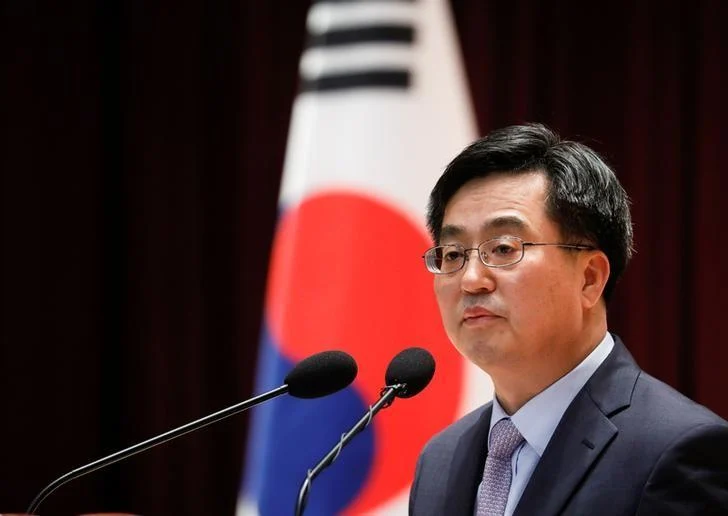
The South Korean government is reportedly preparing to reverse its blanket prohibition on Initial Coin Offerings (ICOs), signaling a significant pivot in the nation’s regulatory stance toward the digital asset industry. According to reports from The Korea Times, financial authorities have entered high-level discussions with the country’s tax agency, the Ministry of Justice, and other relevant governmental bodies to establish a framework that would allow ICOs to operate under specific, regulated conditions. This development marks a potential end to the strict ban imposed in late 2017 and suggests a transition toward a more nuanced, "crypto-friendly" ecosystem that seeks to balance innovation with investor protection.
The Genesis of the 2017 Regulatory Crackdown
To understand the magnitude of this policy shift, one must look back at the volatile climate of 2017. During that year, South Korea emerged as one of the world’s most active hubs for cryptocurrency trading, at one point accounting for nearly 20% of global Bitcoin transaction volume despite having only a fraction of the world’s population. This "crypto-fever" led to the phenomenon known as the "Kimchi Premium," where digital assets traded at significantly higher prices on South Korean exchanges compared to international markets.
Concerns regarding money laundering, tax evasion, and the potential for retail investors to fall victim to fraudulent schemes prompted the Moon Jae-in administration to take a hardline approach. In September 2017, the Financial Services Commission (FSC) issued a total ban on all forms of ICOs, regardless of the project’s technical merit or underlying business model. The regulator argued at the time that ICOs increased the risk of financial scams and "irrational" speculation.
This aggressive regulatory posture, characterized by frequent threats to shut down domestic exchanges and police raids on trading platforms, contributed to significant market instability. The uncertainty in Seoul was often cited by analysts as a primary driver for the sharp corrections in Bitcoin and altcoin prices throughout late 2017 and early 2018. Furthermore, high-profile security breaches at exchanges such as Youbit and Bithumb, as well as the massive hack of the Japanese exchange Coincheck, which had ripple effects across Asia, reinforced the government’s cautious stance.
Signs of a Regulatory Thaw in 2018
As 2018 progressed, the tone from Sejong and Seoul began to soften. While the government remained committed to curbing illegal activities, a new consensus began to emerge regarding the necessity of fostering blockchain technology as a pillar of the Fourth Industrial Revolution. The current discussions involving the FSC and the Ministry of Justice indicate that the government is moving away from a strategy of total prohibition toward one of conditional legalization.
A source familiar with the ongoing deliberations, speaking on the condition of anonymity, noted that the financial authorities are seeking a middle ground. "The financial authorities have been talking to the country’s tax agency, justice ministry and other relevant government offices about a plan to allow ICOs in Korea when certain conditions are met," the source stated. These conditions are expected to include rigorous disclosure requirements, mandatory audits, and strict adherence to Anti-Money Laundering (AML) and Know Your Customer (KYC) protocols.
Kang Young-soo, the official overseeing cryptocurrency trading policies at the FSC, recently addressed the industry’s speculation. While he maintained that there is no "official" change in policy yet, his remarks suggested a degree of flexibility that was absent six months prior. Kang noted that ICOs not expressly identified as illegal under current statutes might find a path toward legitimacy, provided they do not violate existing financial laws. "The FSC has acknowledged a third-party view regarding the issue, but there’s nothing that we can say officially at the moment," Kang remarked during a recent industry forum.
Chronology of South Korea’s Crypto Regulatory Journey
The evolution of South Korea’s digital asset policy can be traced through several key milestones:
- September 2017: The FSC announces a total ban on ICOs, citing concerns over financial fraud and the speculative nature of the market.
- December 2017: The government introduces emergency measures, including a ban on opening anonymous cryptocurrency accounts and a prohibition on minors and foreigners trading on domestic exchanges.
- January 2018: Justice Minister Park Sang-ki causes a global market crash by suggesting a bill to shut down all cryptocurrency exchanges. This was later walked back by the Blue House following a public outcry and a petition signed by over 200,000 citizens.
- January 30, 2018: The "Real-Name Account System" is officially implemented. Traders are required to link their exchange accounts to verified bank accounts, effectively ending anonymous trading in the country.
- March 2018: Reports emerge of inter-agency talks to lift the ICO ban. The government signals a distinction between "speculative trading" and the "promotion of blockchain technology."
The Distinction Between Blockchain and Cryptocurrency
A central theme in the government’s new approach is the decoupling of blockchain technology from the speculative aspects of cryptocurrency trading. South Korean officials have expressed a keen interest in utilizing blockchain for public administration, logistics, and voting systems. At a recent National Assembly forum, Kang Young-soo emphasized this dual-track strategy: "Yes, we have to have plans on how to advance blockchain-related technologies and effectively regulate crypto-trading. This is a separate issue."
This distinction is crucial for the domestic tech industry. Many South Korean startups had been forced to register their ICOs in "crypto-friendly" jurisdictions like Singapore or Switzerland to avoid legal repercussions at home. By lifting the domestic ban, the government aims to bring these companies back to South Korea, fostering local innovation and retaining tax revenue that is currently being offshored.
Strengthening AML and Investor Protection
Despite the potential lifting of the ICO ban, the South Korean government has no intention of relaxing its oversight of the broader market. AML laws remain a cornerstone of the regulatory framework. The prohibition on foreigners and minors participating in the domestic market is expected to remain in place for the foreseeable future to prevent the country from becoming a conduit for international money laundering.
The government is also focused on the "travel rule" and other international standards set by the Financial Action Task Force (FATF). By ensuring that every transaction can be traced to a verified identity, South Korea hopes to legitimize the industry in the eyes of traditional financial institutions. This move toward transparency is seen as a necessary precursor to allowing institutional investors into the space.
Market Implications and Global Sentiment
The potential legalization of ICOs in South Korea has profound implications for the global cryptocurrency market. As a major liquidity provider, South Korea’s regulatory environment often dictates the momentum of the entire sector. A shift from prohibition to regulation is generally viewed as a "bullish" signal by market participants, as it provides a clearer legal roadmap for developers and investors alike.
Industry analysts suggest that if South Korea successfully implements a conditional ICO framework, it could serve as a model for other Asian nations grappling with similar issues. Countries like Thailand and the Philippines have already begun exploring regulated ICO environments, and a successful rollout in South Korea would likely accelerate this trend.
Furthermore, the re-entry of South Korean capital into the ICO market could provide a significant boost to altcoin valuations. During the 2017 boom, Korean retail investors were known for their high risk-tolerance and preference for new, innovative projects. A regulated path for these projects to raise capital domestically would likely see a surge in local blockchain development.
Conclusion: A Measured Path Forward
The South Korean government’s current trajectory suggests a maturing view of the digital asset economy. Rather than attempting to suppress a global technological shift, Seoul appears ready to embrace the potential of blockchain while rigorously policing its risks. The transition from a blanket ban to a "regulated allowance" of ICOs reflects a pragmatic realization: the industry is too significant to ignore, but too volatile to leave unchecked.
While the FSC continues to urge caution and maintains that no official policy change has been finalized, the direction of the current inter-agency talks is clear. For the South Korean crypto community, these developments represent a hard-won victory for legitimacy. For the global market, it serves as a reminder that even the most restrictive regulatory environments can evolve as the underlying technology proves its permanence and utility. As the government prepares its official plan, the eyes of the global financial world remain fixed on Seoul, waiting for the final confirmation of a new era for South Korean blockchain innovation.