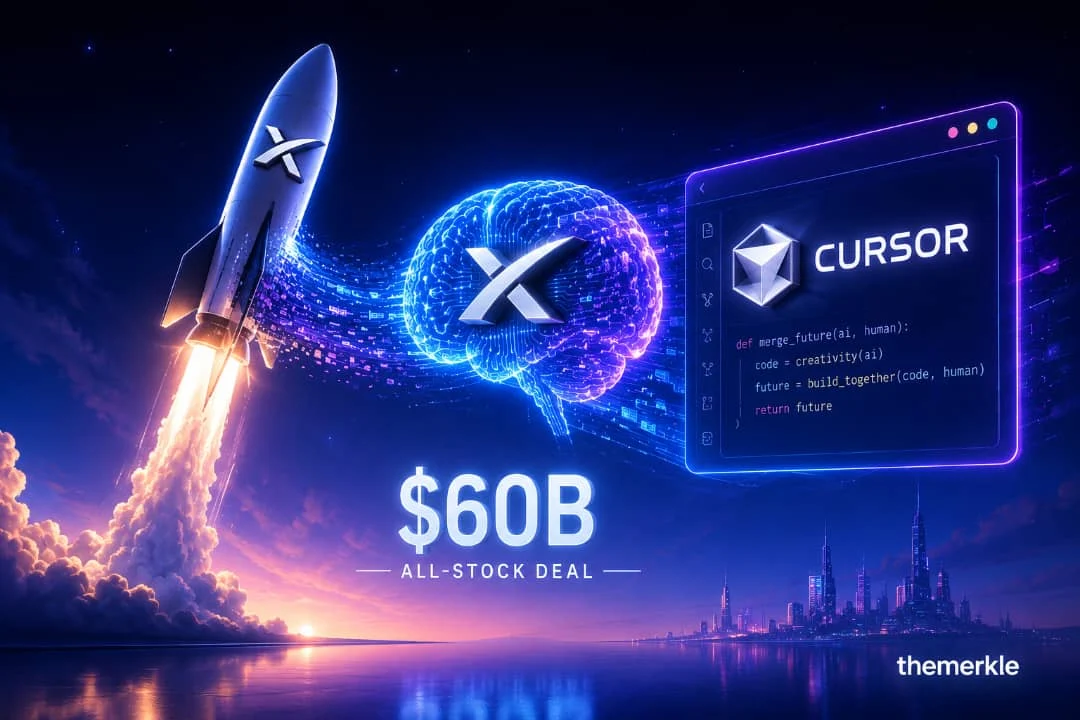
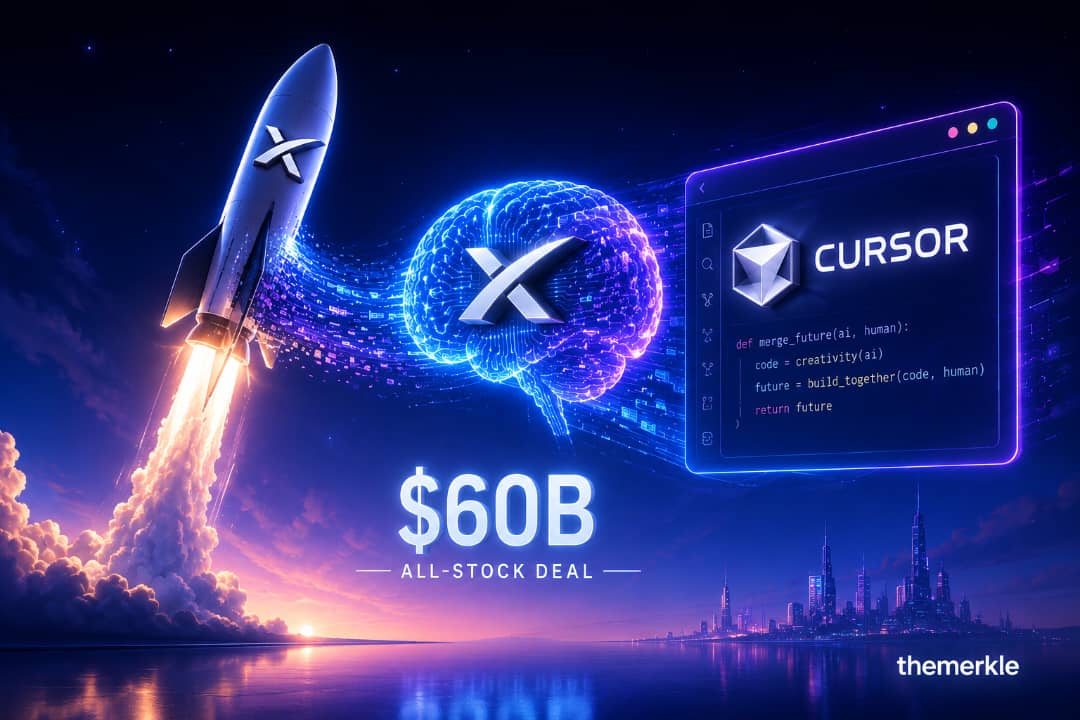
In a stunning move that sent ripples through the global technology and financial markets, SpaceX, the aerospace and satellite communications giant, has announced its acquisition of Cursor, the rapidly ascending AI coding tool, in an all-stock transaction valued at an estimated $60 billion. This monumental deal, confirmed on June 16, 2026, just days after SpaceX’s historic initial public offering (IPO), shatters previous records for software acquisitions, underscoring the company’s aggressive expansion into artificial intelligence and its ambition to dominate interconnected technological ecosystems. The transaction is poised to reshape the landscape of AI development tools and further solidify SpaceX’s vertical integration strategy across its diverse ventures.
A Record-Shattering Valuation in the Software Sector
The $60 billion price tag for Cursor marks an unprecedented milestone in the software industry, far surpassing any prior acquisition in this category. For context, while other significant tech mergers have occurred, such as Microsoft’s acquisition of Activision Blizzard for nearly $69 billion (primarily gaming, a subset of software) or IBM’s acquisition of Red Hat for approximately $34 billion, the sheer scale of the Cursor deal specifically for an AI coding utility is unparalleled. This valuation is particularly remarkable given that it emanates not from a long-established tech conglomerate with decades of accumulated capital, but from SpaceX, a company that only recently transitioned to public ownership. The deal’s magnitude highlights the extraordinary value and strategic importance SpaceX places on advanced AI capabilities and developer-centric tools.
The all-stock nature of the transaction means that Cursor’s existing shareholders will convert their holdings into SpaceX Class A common stock upon closing. This structure effectively aligns the interests of Cursor’s founders, employees, and investors with the long-term performance and growth trajectory of SpaceX in the public market. The conversion will be based on the volume-weighted average closing price of SPCX shares at the time of closing. While this represents a significant commitment, the acquisition results in an estimated 3.4% dilution at SpaceX’s IPO valuation. However, given that SpaceX successfully raised $75 billion during its IPO and has seen its stock trade robustly above its initial public offering price, market analysts generally view this dilution as manageable and a strategic investment rather than a financial strain.
SpaceX’s Meteoric Rise and Strategic Expansion
This acquisition is the latest in a series of bold moves by Elon Musk’s aerospace venture, which has been consistently pushing boundaries across multiple industries. SpaceX’s recent IPO, widely lauded as the largest in history, provided the company with substantial capital, fueling its capacity for such large-scale strategic investments. The public offering was met with overwhelming investor enthusiasm, reflecting confidence in SpaceX’s diverse portfolio, including its Starlink satellite internet constellation, its ambitious rocket development programs, and its burgeoning AI endeavors.
The acquisition of Cursor follows another pivotal internal restructuring earlier in 2026, when xAI, the artificial intelligence company also founded by Elon Musk, was formally merged into SpaceX in February. This merger brought the sophisticated Grok AI business and the massive Colossus supercomputing infrastructure in Memphis under the SpaceX umbrella. The integration of xAI signaled SpaceX’s serious intent to become a dominant player in the AI domain, moving beyond its traditional aerospace and satellite communications strongholds. The addition of Cursor now completes a crucial piece of this evolving AI strategy, providing a direct, developer-facing product layer that complements Grok’s foundational AI models.
Cursor: A Phenomenon in AI-Powered Software Development
Cursor, developed by Anysphere, has rapidly ascended to prominence since its founding in 2022, quickly becoming recognized as the world’s fastest-growing AI coding tool. Its innovative approach to software development has garnered immense traction within the developer community, pioneering a new paradigm often referred to as "vibe coding." This concept represents a significant shift in how developers interact with AI, enabling more intuitive, collaborative, and efficient code generation and refinement processes.
The company’s growth metrics are nothing short of astounding. Within a mere four years of its inception, Cursor boasts over one million paying customers, a testament to its widespread adoption and perceived value among professional developers. This robust user base has translated into impressive financial performance, with Cursor reporting more than $2 billion in annualized revenue. Projections for the end of 2026 indicate an anticipated surge to $6 billion in revenue, highlighting a steep and accelerating growth trajectory. The $60 billion valuation, therefore, is not merely a reflection of Cursor’s current financial standing but rather a strong endorsement of its projected future growth and its potential to revolutionize software development on a global scale. This forward-looking valuation, at 20 to 30 times Cursor’s current revenue, aligns with the high-growth, high-potential investments often seen in rapidly evolving tech sectors, particularly AI.
Strategic Rationale: Why Cursor, Why Now?
The timing and target of this acquisition are deeply rooted in SpaceX’s overarching strategic vision for AI dominance. For SpaceX, the acquisition of Cursor represents a direct and potent move to bolster its artificial intelligence capabilities and intensify its competition with other leading AI firms such as OpenAI and Anthropic, both of which have their own AI coding products or initiatives. While xAI brought powerful foundational models and vast computing resources to SpaceX, Cursor provides the critical application layer that directly interfaces with developers, a segment where Grok had previously lacked a direct, widely adopted product.
A key indicator of the profound strategic fit between the two entities is the revelation that SpaceXAI and the Cursor team have been engaged in joint model training for several months leading up to the acquisition announcement. This pre-deal collaboration, which saw the two teams working together to build shared AI models, suggests that the acquisition is not merely a financial play but a deeply rooted operational conviction. These jointly developed models are expected to be integrated and shipped simultaneously within both Cursor’s existing platform and SpaceX’s Grok Build environment in the near future, promising enhanced capabilities for both user bases. This early integration signifies a seamless strategic alignment and a commitment to shared technological advancement.
Moreover, for Cursor, joining forces with SpaceX resolves its most pressing operational constraint: access to computing resources. Cursor had previously indicated that its ambitious plans for training proprietary AI models were being hampered by a shortage of high-performance computing infrastructure. Through its integration with xAI and access to the Colossus supercomputing facility in Memphis, Cursor instantly gains access to one of the largest and most advanced AI supercomputing clusters in existence. This synergy promises to accelerate Cursor’s development roadmap, enabling it to push the boundaries of AI-powered coding further and faster than previously imagined.
Regulatory Scrutiny and Financial Commitments
The acquisition, while announced, remains subject to regulatory approval, a standard procedure for transactions of this magnitude. The deal is anticipated to close in the third quarter of 2026. Given the significant market concentration implications and the strategic importance of AI technologies, regulatory bodies across various jurisdictions are expected to scrutinize the transaction carefully. Potential areas of review could include antitrust concerns regarding market dominance in AI development tools and broader implications for competition in the rapidly evolving AI landscape.
In a move reflecting the seriousness and commitment of SpaceX to this acquisition, the deal includes a notable termination fee structure. Should the acquisition fail to close for any reason, SpaceX has agreed to compensate Cursor with a substantial package totaling $10 billion. This package comprises $1.5 billion in cash and an additional $8.5 billion in computing resources. This exceptionally high walk-away cost not only underscores SpaceX’s profound interest in Cursor but also highlights the critical importance of access to SpaceX’s formidable computing infrastructure for Cursor’s ongoing and future development. It is a clear signal that the value of computational power is almost as significant as direct financial compensation in this strategic alliance.
The Vertically Integrated Future of SpaceX
Stepping back, the Cursor acquisition provides a clearer picture of SpaceX’s ambitious, vertically integrated ecosystem. With this deal, pending regulatory approval, SpaceX’s dominion would span:
- Space Launch and Reusability: Through its foundational rocket technology.
- Global Connectivity: Via its Starlink satellite internet constellation.
- Advanced AI Models: Through xAI and the Grok platform.
- Massive Computing Infrastructure: Via the Colossus supercomputing facility.
- Developer Tooling: Now, potentially, the leading AI coding tool, Cursor.
This comprehensive vertical integration across space, global connectivity, artificial intelligence, and software development tools creates an unparalleled technological conglomerate. Unlike traditional diversified companies that build portfolios of distinct, often unrelated businesses, SpaceX appears to be meticulously constructing interconnected infrastructure layers, each designed to feed and enhance the others. For instance, AI models developed with Cursor and trained on Colossus could optimize rocket designs, manage Starlink constellations, or even power more sophisticated AI applications accessible through Grok. The synergies across these divisions promise a self-reinforcing cycle of innovation and efficiency.
Market Reactions and Future Outlook
The announcement has elicited strong reactions across the technology sector. Industry analysts are largely viewing this acquisition as a bold and strategically astute move by SpaceX, solidifying its position not just in aerospace but as a formidable force in the AI arena. While the valuation is high, many believe it is justified by Cursor’s explosive growth and critical role in the future of software development, especially when integrated into SpaceX’s broader AI ecosystem.
Competitors in the AI and developer tools space are likely re-evaluating their strategies in light of this formidable new entrant. The combined might of SpaceX’s resources and Cursor’s innovative platform could accelerate the pace of development in AI-powered coding, potentially setting new industry standards. For the developer community, the acquisition could bring enhanced features, improved performance, and deeper integration with other AI services, though some might express concerns about potential monopolization or changes to Cursor’s independent development trajectory.
As the deal moves towards its anticipated Q3 2026 closing, the tech world will be watching closely. This acquisition is not merely a transaction; it is a profound statement about the future direction of technology, signaling an era where core infrastructure, advanced AI, and the tools used to build software are increasingly consolidated under singular, ambitious visions. SpaceX, already a disruptor in space, is now poised to become a transformative force in the digital realm, challenging established paradigms and redefining the boundaries of what a single company can achieve.