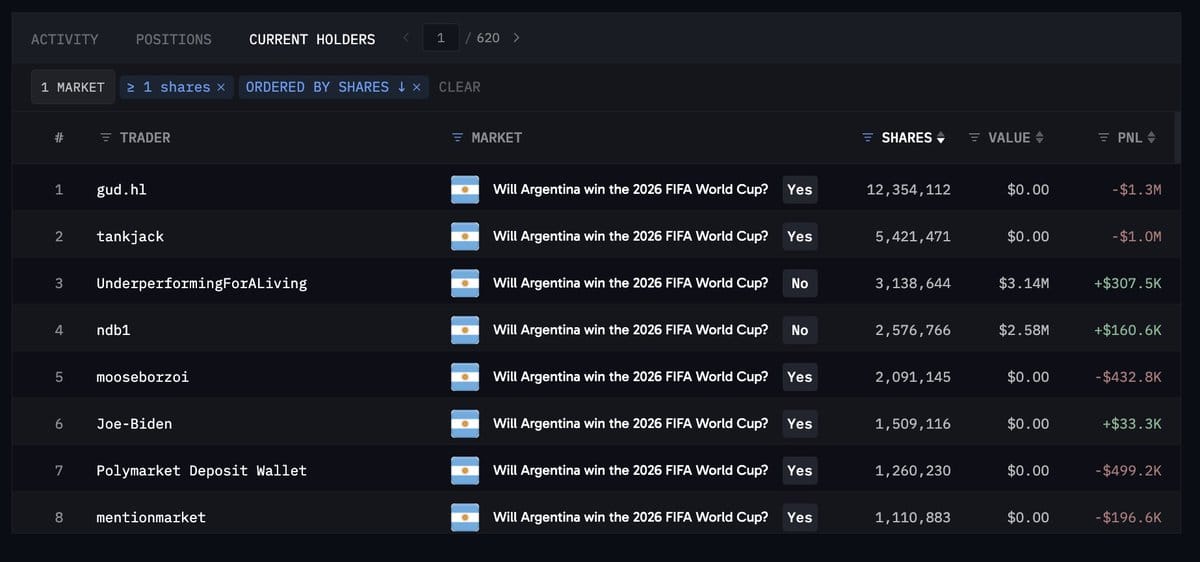
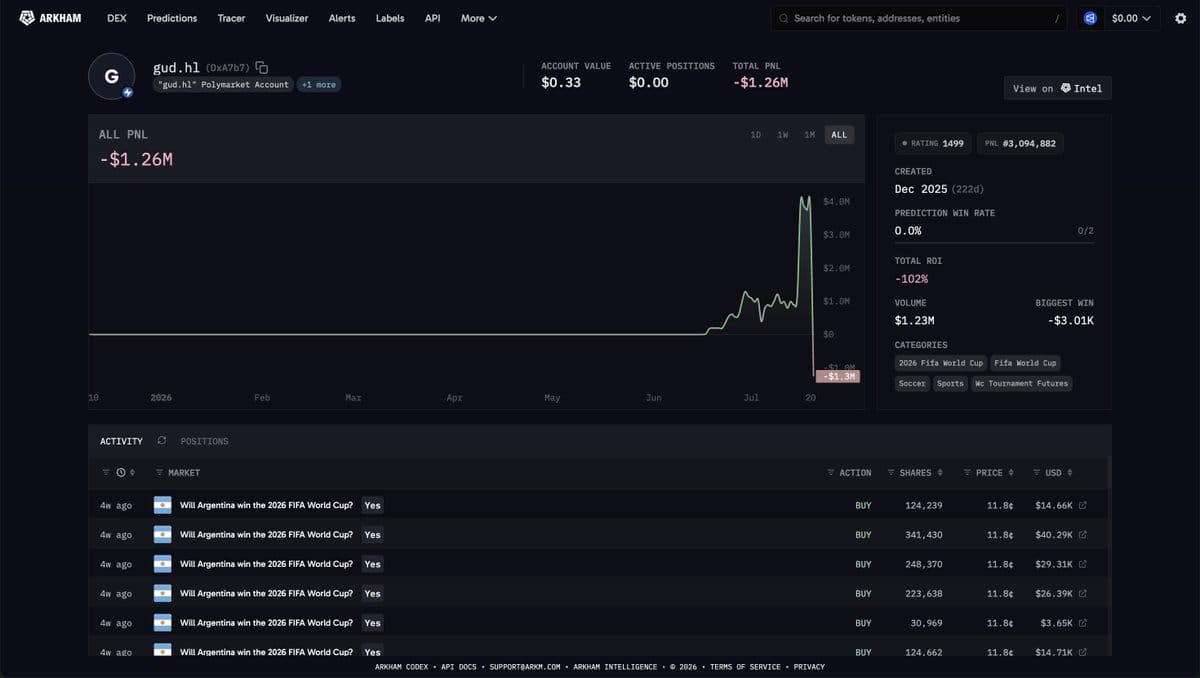
The final whistle, blown after a tense extra-time period, extinguished gud.hl’s substantial investment, which had been meticulously tracked by blockchain analytics firm Arkham. While the crypto sector is no stranger to the rapid evaporation of funds due to highly leveraged positions and incorrect market predictions, the scale and public nature of this particular loss, tied to a single, globally televised football match, have captured widespread attention. The stark finality of the event, where a multi-million dollar portfolio vanished in moments, serves as a potent reminder of the inherent risks in such concentrated wagers.
The Anatomy of a High-Stakes Wager
Gud.hl’s ill-fated bet was not merely a speculative side venture funded by disposable income. Reports indicate that the trader had committed nearly their entire Hyperliquid PnL (Profit and Loss) to the prediction market, betting on Argentina to clinch the World Cup title. Hyperliquid is a decentralized perpetual exchange platform known for its high-leverage trading options. PnL, in this context, represents the accumulated profits from prior trading activities, meaning gud.hl converted substantial, hard-earned trading gains into a single, binary outcome bet. This strategy transformed a diversified trading portfolio into an all-or-nothing proposition, a move that, in hindsight, carried catastrophic consequences. The decision to risk such a significant portion of their wealth on a singular sporting event, rather than maintaining a more balanced investment approach, highlights the intoxicating allure and extreme peril of prediction markets. Whether gud.hl possesses the capacity or capital to recover from this devastating setback remains an open and pressing question within the crypto community.
A Tournament That Rewrote Betting History

The 2026 World Cup transcended its traditional role as merely a sporting spectacle; it evolved into an unprecedented financial phenomenon, particularly within the nascent prediction market ecosystem. FIFA itself reported earnings exceeding $9 billion from the tournament, solidifying its status as the most lucrative sporting event in history. However, the financial narrative extends far beyond FIFA’s coffers, delving deep into the staggering volumes transacted across crypto-native prediction platforms over the five-week duration of the competition.
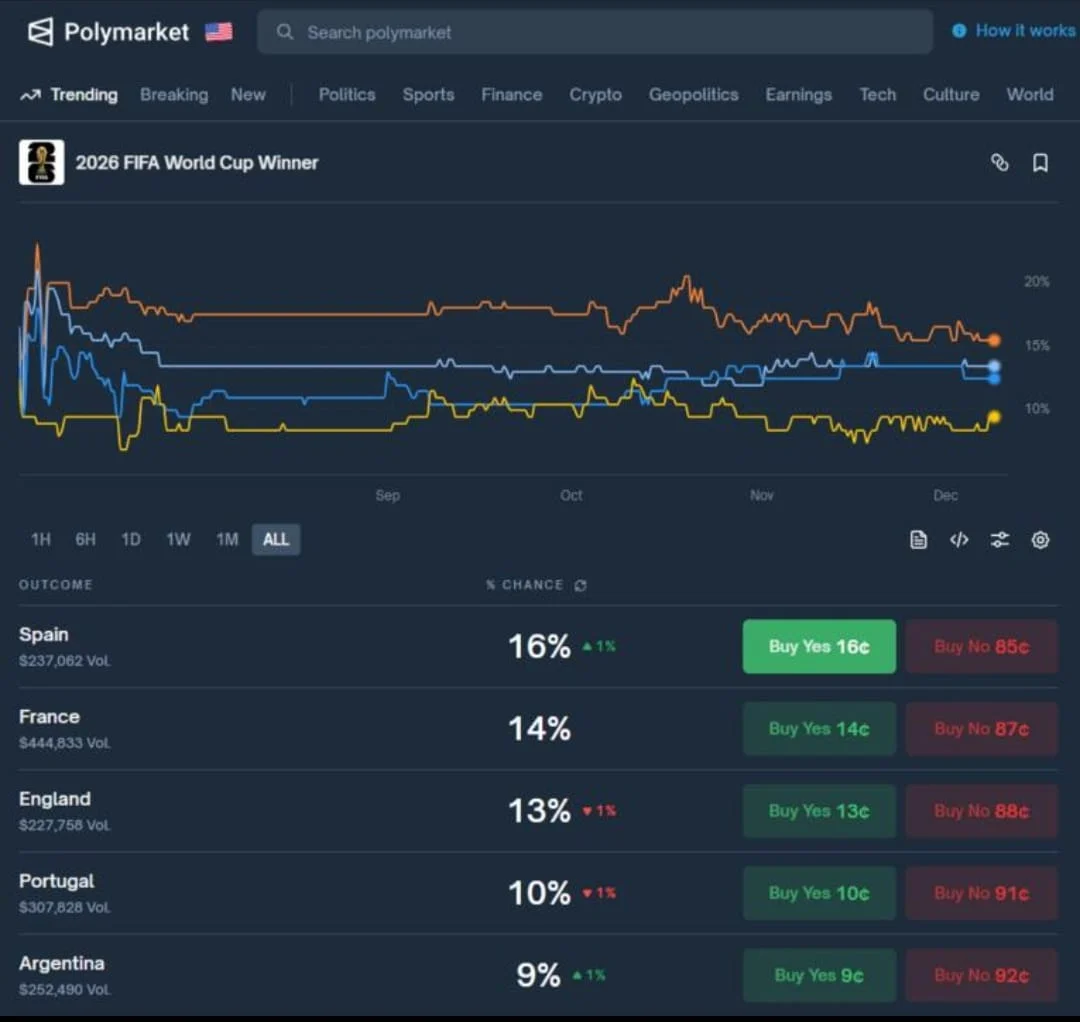
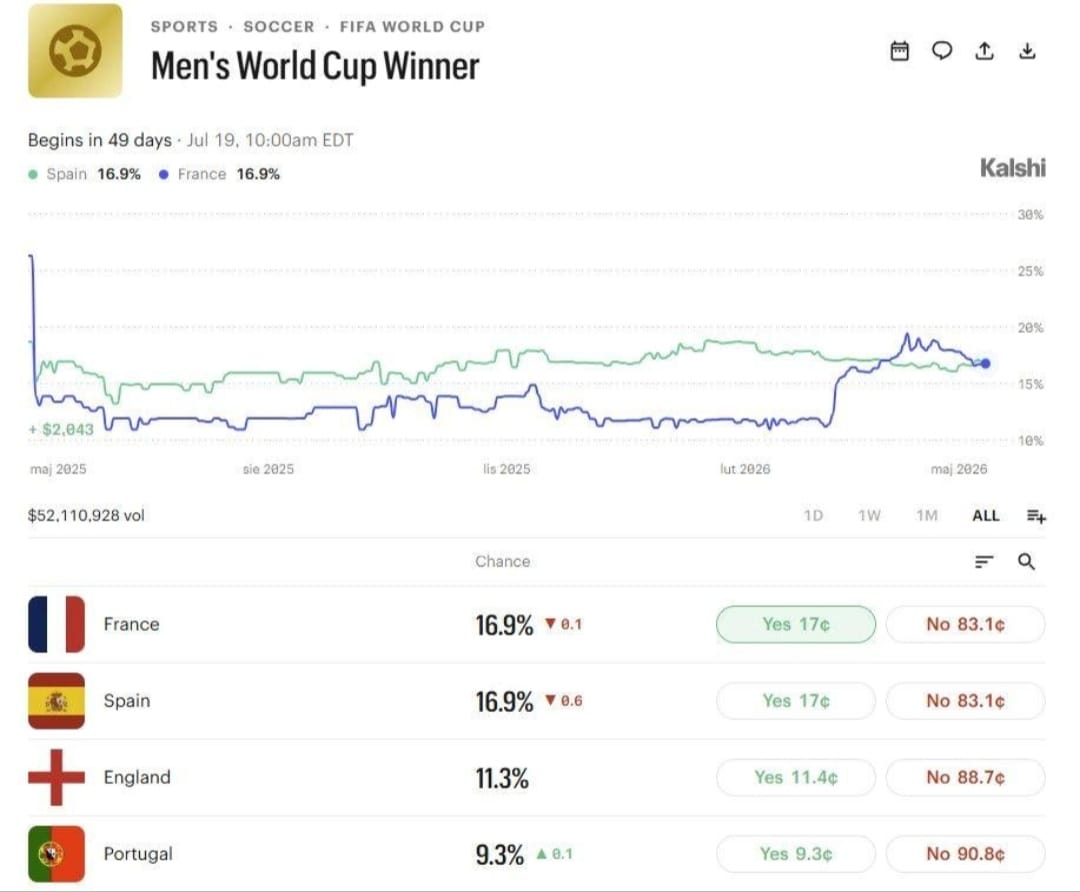
Decentralized prediction markets, built on blockchain technology, offer a novel way for participants to wager on future events, from political elections to sports outcomes. These platforms typically use smart contracts to automate payouts, ensuring transparency and immutability. During the 2026 World Cup, the sheer volume of activity on these platforms reached historic highs, dwarfing previous records. Polymarket, a leading decentralized prediction market, recorded over $4 billion in trading volume solely within its World Cup winner market. This figure represents an unparalleled surge in activity, eclipsing any previous market on the platform. Concurrently, Kalshi, another prominent prediction market, saw its World Cup winner market cross $1.2 billion, also setting a new record for the platform.
The cumulative effect of this heightened activity was a sector-wide explosion in volume. At its peak, monthly prediction market volume across various platforms soared past $50 billion. To put this figure into perspective, traditional sportsbooks, backed by decades of infrastructure development, brand building, and user acquisition, have taken generations to achieve comparable transaction volumes. The fact that decentralized prediction markets managed to attract and process such an immense flow of capital within the condensed timeframe of a five-week tournament underscores their disruptive potential and growing mainstream appeal. This rapid scaling suggests a significant shift in how a global audience engages with high-stakes forecasting.
Millions of New Users: A Paradigm Shift in Adoption
Beyond the astronomical trading volumes, the 2026 World Cup served as an unprecedented catalyst for user acquisition within the prediction market space. Kalshi, for instance, reported adding three million new users during the tournament window alone. This metric is particularly striking when juxtaposed against the broader crypto adoption landscape. A single global football event onboarded more new users onto a prediction platform than many entire blockchain networks have managed to attract throughout their entire existence.
This phenomenon is not a reflection of shortcomings in general crypto adoption efforts but rather a testament to the immense gravitational pull of a truly global sporting event. The combination of clear, verifiable binary outcomes (win/lose), widespread public interest, and the tangible incentive of financial reward created a potent environment for rapid user growth. For many, these prediction markets offered a more accessible and intuitive entry point into decentralized finance compared to complex DeFi protocols or cryptocurrency trading. The simplicity of betting on a well-understood event like a football match, albeit with crypto, resonated with a vast new demographic.
The Landscape of Fortunes: Winners and Losers Alike
While gud.hl’s $5.2 million loss serves as a stark cautionary tale, the 2026 World Cup prediction markets were, by their very nature, a theater of both dramatic losses and spectacular gains. For every significant liquidation, there was a corresponding windfall. For example, reports detailed another trader who astutely placed a $4 million position against Spain winning the tournament. This contrarian bet, correctly "fading" the eventual champion at a critical juncture, yielded an astonishing $9 million payout. Such an outcome highlights the potential for immense profits for those who make accurate predictions, especially when going against popular sentiment.
Conversely, the tournament also saw other substantial losses. One documented case involved a trader who reportedly lost $11.6 million over a mere ten-day period, consistently betting on the wrong outcomes as the competition progressed. These figures, when considered collectively, paint a more nuanced and honest picture of the prediction market ecosystem than any single headline event. They illustrate the inherent zero-sum nature of such markets: for every dollar lost by one participant, a dollar is gained by another. The World Cup final, with its high emotional stakes and global viewership, amplified these financial dramas, making the outcomes feel more visceral and immediate than a typical, purely financial crypto trading scenario. The intense public scrutiny and the clear, unambiguous nature of a football match outcome lend a unique gravity to these financial plays.
Why This Tournament Became a Crypto Story
The transformation of a global football tournament into one of the year’s most significant crypto liquidity events was not accidental. Several factors converged to create a perfect storm for decentralized prediction markets. Firstly, prediction markets thrive on clear, verifiable, and binary outcomes. A World Cup final, with its definitive winner and loser, presents an almost ideal scenario. There is no ambiguity about the result, a fixed date for the event, and unparalleled global attention. Every ingredient necessary for a prediction market to function efficiently and attract massive participation was present at a scale that most other events simply cannot replicate.
Secondly, the existing infrastructure of these prediction platforms demonstrated remarkable resilience and scalability. Processing $50 billion in monthly volume at peak activity is a testament to the robustness of systems like Polymarket and Kalshi. These platforms were not necessarily built from day one to handle such unprecedented demand, yet they largely processed record-breaking volumes without the visible platform failures or congestion issues that have historically plagued smaller markets during high-traffic periods. This operational stability, combined with the transparency and immutability offered by blockchain technology, instilled confidence among a new wave of users. The successful handling of such massive demand signals a significant maturation of the underlying decentralized infrastructure, proving its capacity to absorb and manage large-scale financial activity in real-time.
Broader Implications and the Road Ahead
The true narrative emerging from the 2026 World Cup extends beyond gud.hl’s personal financial calamity, however dramatic it may be. The more profound implication lies in the undeniable proof that prediction markets can now absorb the kind of volume and user growth that was once the exclusive domain of established, centralized sportsbooks and major financial exchanges. Three million new users and $50 billion in monthly volume generated by a single tournament are not a fluke; they represent a powerful signal. This performance suggests that future major global sporting events will likely attract even greater capital flows through these decentralized platforms, further cementing their role in the global betting and financial landscape.
This rapid expansion also brings into focus potential regulatory challenges. As prediction markets grow in popularity and financial scale, they are increasingly likely to attract scrutiny from financial regulators worldwide, who may seek to categorize and govern them more formally. The intersection of sports betting, decentralized finance, and international capital flows presents a complex jurisdictional puzzle that will undoubtedly shape the future trajectory of these platforms. Clarity on consumer protection, anti-money laundering measures, and licensing requirements will be critical for their sustained growth and integration into the broader financial ecosystem.
For individual crypto traders, the World Cup saga serves as a potent illustration of both opportunity and extreme risk. It underscores the critical importance of prudent risk management, even for experienced traders. The temptation to parlay significant profits into a single, high-stakes bet can be overwhelming, yet the consequences, as demonstrated by gud.hl’s loss, can be devastating. Markets like these offer the potential for rapid accumulation or depletion of wealth, turning fortunes around in either direction with alarming speed.
The personal aftermath for gud.hl remains a poignant question. The Hyperliquid PnL, which presumably took considerable time, skill, and strategic execution to build, was wiped out in a matter of moments. Whether this highly public loss becomes a career-defining cautionary tale or a catalyst for a remarkable comeback story will unfold in the months and years to come. The incident stands as a stark testament to the high-stakes, unforgiving nature of decentralized prediction markets when combined with the unpredictable drama of global sports.
Disclosure: This is not trading or investment advice. Always do your research before buying any cryptocurrency or investing in any services.