Standard Chartered analyst Geoffrey Kendrick has officially declared an end to the prolonged "crypto winter," asserting that the recent downturn in the digital asset market has likely marked the cycle’s bottom. In a notable note published on Friday, Kendrick reiterated his optimistic year-end price targets, projecting Bitcoin to reach $100,000 and Ethereum to hit $4,000. This bold prediction is underpinned by his analysis of key market drivers and their subsequent reversal, suggesting a transition into a "crypto spring."
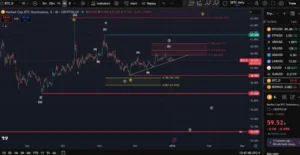
Kendrick’s assessment stems from Bitcoin’s recent slide to approximately $59,000, a level he identifies as the cycle’s nadir. This price point represents a significant 53% decline from Bitcoin’s all-time high of $126,000, which was established on October 6th. The analyst’s pronouncement, "Winter is over. Welcome back to crypto Spring," signals a shift in sentiment and an expectation of renewed bullish momentum in the cryptocurrency market.
Decoding the Recent Sell-Off and the Reversal Factors
Kendrick meticulously identified two principal factors that contributed to the recent market pressure and are now facilitating its recovery. The first significant driver was the substantial outflow from U.S. spot Bitcoin Exchange-Traded Funds (ETFs). Since the second week of May, total outflows from these popular investment vehicles have surpassed $5.72 billion. Anecdotal evidence suggests that a portion of these redemptions was linked to investors liquidating their cryptocurrency holdings to secure capital for the highly anticipated Initial Public Offering (IPO) of SpaceX, Elon Musk’s aerospace company.
The SpaceX IPO, which commenced trading on the Nasdaq on Friday with an opening price around $150, has since seen its valuation surge by approximately 26%. This event was preceded by considerable speculative interest, with SpaceX crypto contracts on the Hyperliquid platform reportedly trading at valuations reaching as high as $2.4 trillion in the lead-up to the listing. Kendrick’s analysis posits that with this demand now largely satisfied by the IPO’s execution, the specific selling pressure it generated is expected to abate, thereby easing a key constraint on the cryptocurrency market.
The second crucial factor influencing the recent market dynamics was geopolitical in nature. A potential G7-related peace deal between the United States and Iran, if confirmed, could have a significant impact on global oil prices. A de-escalation of tensions and the prevention of further oil price surges would, in turn, lead to a cooling of U.S. Treasury yields. Lower Treasury yields generally reduce the macro pressure on risk assets like cryptocurrencies, as they diminish the attractiveness of safer, fixed-income investments.
In the immediate aftermath of President Trump signaling a likely agreement, Brent crude oil prices dipped to around $87 a barrel, and West Texas Intermediate (WTI) fell to $85. However, this optimism was later tempered when President Trump, via his Truth Social platform, issued a warning to Tehran to "get their act together," creating a degree of uncertainty around the definitive outcome of the peace talks. Nevertheless, the mere prospect of such a deal has provided a temporary reprieve from geopolitical anxieties that have often weighed on broader financial markets, including digital assets.
Indicators for Sustained Recovery
To validate his assertion that the market has indeed bottomed, Kendrick outlined specific indicators he is closely monitoring. He stated that a crucial confirmation would be an announcement of a "Strategy bitcoin purchase" on Monday. While the specifics of this "Strategy" remain to be fully elucidated, such a strategic acquisition by a significant entity could signal renewed institutional confidence and capital inflow.
Furthermore, Kendrick is looking for a sustained return to net-positive inflows into U.S. spot Bitcoin ETFs by Friday of the current week. A consistent trend of inflows, rather than outflows, would indicate growing investor demand and a reversal of the recent liquidation sentiment. These two developments, if realized, would provide robust evidence supporting the notion of a market recovery and the end of the bearish cycle.
Market Performance and Future Outlook
As of the latest reporting, Bitcoin was trading at $62,923, reflecting a 1.15% increase on the day. The cryptocurrency’s seven-day correlation with the S&P 500 stood at a robust 80.4%, suggesting that Bitcoin’s recent upward movement is participating in a broader macroeconomic relief rally, where traditional equity markets are also experiencing positive momentum.
Ethereum, meanwhile, demonstrated even stronger performance, climbing 1.08% to trade at $1,698. This outperformance is attributed to a capital rotation into altcoins, a phenomenon consistent with Kendrick’s view that Ethereum might lead Bitcoin in the near term. This trend could indicate a growing appetite for riskier altcoin assets as confidence returns to the broader crypto market, a typical characteristic of the early stages of a bull market.
Broader Context: The Cycle of Crypto Winters and Springs
The concept of "crypto winters" and "crypto springs" refers to recurring cycles of significant price declines and subsequent recoveries observed in the cryptocurrency market. These cycles are often driven by a confluence of factors, including technological advancements, regulatory developments, macroeconomic conditions, and investor sentiment.

Historically, Bitcoin has been the primary driver of these cycles. Major bull runs, such as those seen in 2017 and 2021, have often been followed by protracted periods of price stagnation or decline, commonly referred to as crypto winters. These winters are characterized by reduced trading volumes, declining interest from retail investors, and a general sense of pessimism. However, they also serve as periods of consolidation, development, and accumulation for long-term investors and developers.
The current cycle’s characteristics, as highlighted by Kendrick, align with patterns observed in previous market phases. The significant price appreciation leading up to Bitcoin’s all-time high, followed by a substantial correction, is a familiar narrative. The subsequent recovery, driven by institutional interest (via ETFs) and shifts in macroeconomic sentiment, is also a recurring theme.
Implications of Institutional Adoption and Regulatory Clarity
The advent of U.S. spot Bitcoin ETFs has been a watershed moment for the cryptocurrency industry. These financial products have opened the doors for a broader range of investors, including institutional players, to gain exposure to Bitcoin through traditional brokerage accounts. While initial inflows were strong, the subsequent outflows, as detailed by Kendrick, underscore the sensitivity of these products to broader market conditions and investor sentiment.
The expectation of renewed ETF inflows is a critical signal. It suggests that the temporary headwinds faced by these products are subsiding, and that sustained institutional demand is a key pillar for the next phase of market growth. The impact of institutional adoption extends beyond mere price appreciation; it lends legitimacy to the asset class and can foster further innovation and development within the crypto ecosystem.
Concurrently, the evolving regulatory landscape continues to play a pivotal role. While the article does not delve deeply into regulatory specifics, the increasing clarity and establishment of frameworks for digital assets in various jurisdictions are crucial for long-term market stability and growth. Regulatory certainty can attract more sophisticated investors and businesses, further integrating cryptocurrencies into the global financial system.
The Role of Geopolitics and Macroeconomic Factors
Kendrick’s emphasis on geopolitical developments and their impact on oil prices and Treasury yields highlights the increasing interconnectedness of the cryptocurrency market with traditional finance and global events. The correlation between Bitcoin and the S&P 500, noted at 80.4%, underscores this link. This suggests that macro-driven rallies or downturns in traditional markets are likely to have a significant influence on cryptocurrency prices, at least in the near term.
The potential for a U.S.-Iran peace deal, while uncertain, serves as a prime example of how geopolitical risk can be a significant determinant of asset prices. A de-escalation of global tensions can lead to a "risk-on" environment, benefiting assets perceived as higher risk, such as cryptocurrencies. Conversely, heightened geopolitical instability can trigger a "flight to safety," often benefiting traditional safe-haven assets like gold and government bonds, while negatively impacting riskier assets.
The interplay between inflation, interest rates, and cryptocurrency prices remains a key area of focus for market participants. As central banks navigate inflationary pressures, their monetary policy decisions—particularly regarding interest rates—will continue to shape the investment landscape for digital assets. A more favorable macroeconomic environment, characterized by stable inflation and predictable interest rate policies, is generally conducive to a bullish crypto market.
Expert Reactions and Future Scenarios
While Kendrick’s pronouncements are significant, it is important to consider the broader spectrum of expert opinions within the cryptocurrency space. Some analysts may remain cautious, emphasizing the inherent volatility and speculative nature of digital assets. Others might focus on different technical indicators or on-chain data to form their conclusions.
The implications of Kendrick’s "crypto spring" scenario are far-reaching. If his predictions hold true, we could witness a period of sustained price appreciation for Bitcoin and Ethereum, potentially setting new all-time highs. This would likely be accompanied by increased mainstream adoption, further development of decentralized applications (dApps), and the maturation of the broader Web3 ecosystem.
However, the path to this optimistic future is unlikely to be without its challenges. The cryptocurrency market is susceptible to unforeseen events, regulatory crackdowns, and technological vulnerabilities. Therefore, while Kendrick’s analysis provides a compelling case for a bullish outlook, investors are advised to maintain a degree of prudence and conduct their own thorough research before making investment decisions. The journey from "crypto winter" to a thriving "crypto spring" is often a dynamic and unpredictable one, shaped by a multitude of evolving factors. The coming weeks and months will be crucial in determining whether Kendrick’s optimistic forecast will indeed materialize, ushering in a new era of growth for the digital asset market.