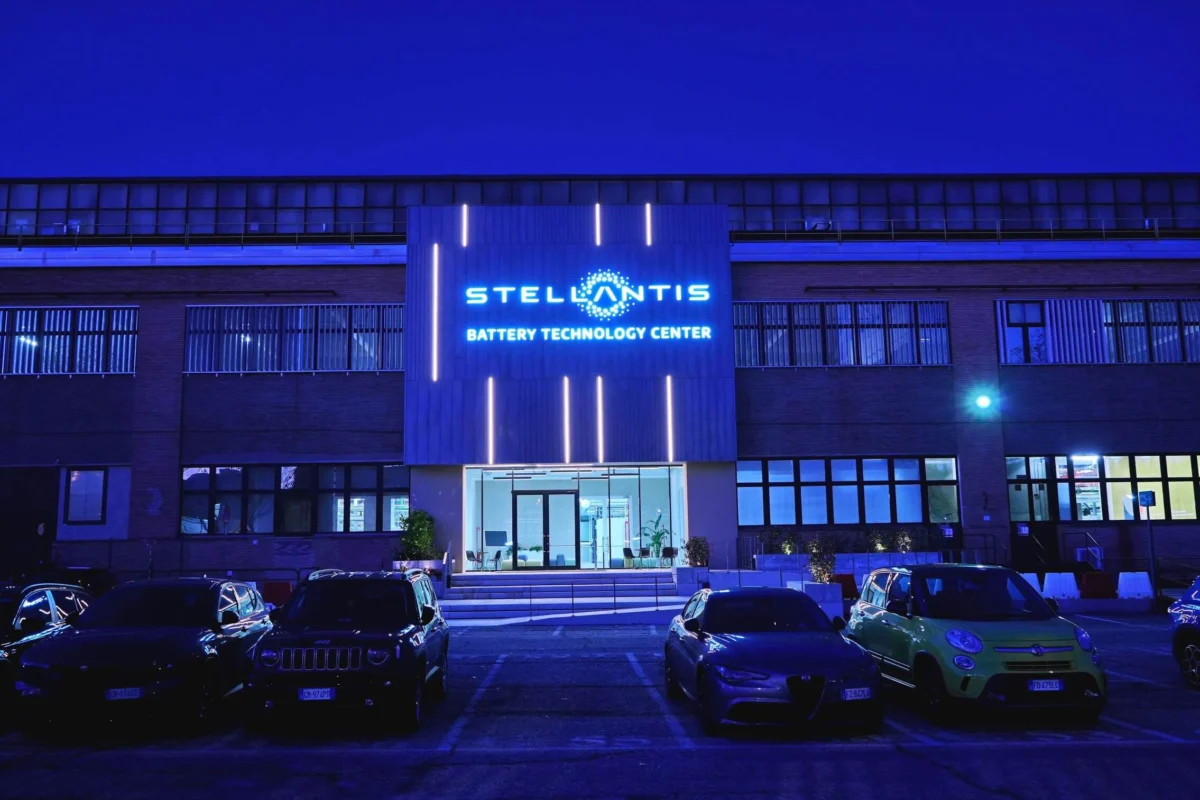
An official disclosure filed with the U.S. Securities and Exchange Commission (SEC) on June 19, 2026, has formally revealed that Stellantis N.V. maintains a substantial 9.5% ownership stake in Factorial Energy, a Massachusetts-based innovator specializing in solid-state battery technology. This significant equity position is currently valued at approximately $126 million, reflecting the company’s present market valuations, and is distributed across both Stellantis Europe and Stellantis Ventures entities, underscoring a diversified strategic commitment. The investment marks a critical step in Stellantis’s ambitious electrification strategy, positioning the global automaker at the forefront of advanced battery development.
A Strategic Investment with Deep Roots
The genesis of Stellantis’s involvement with Factorial Energy dates back to 2021, when the automotive conglomerate made its initial capital commitment. At that time, Stellantis injected €75 million, equivalent to approximately $86 million, into Factorial. This early financial backing has since matured into the notable equity stake now publicly disclosed, transforming a purely monetary commitment into a strategic operational partnership. The long-term vision behind this investment is further evidenced by the appointment of Jon Nelson, the Chief Executive Officer of Stellantis Financial Services, to Factorial’s board of directors. This board seat is not merely a formality but signifies a deeper integration and a collaborative approach to steering Factorial’s technological and commercial development, moving beyond a simple financial transaction to a more engaged strategic alliance.
The regulatory filing also indicated Stellantis’s proactive stance regarding its future engagement with Factorial. The automaker explicitly characterized Factorial as representing a "compelling investment opportunity," a statement that suggests an openness and potential willingness to expand its investment in the battery technology firm. This signals continued confidence in Factorial’s trajectory and the potential for solid-state batteries to revolutionize the electric vehicle (EV) landscape.
Factorial Energy’s Technological Breakthroughs and Road Testing
Factorial Energy has recently achieved a significant milestone in the arduous journey of bringing cutting-edge battery technology from the laboratory to the road. The company has commenced road testing of its proprietary solid-state battery technology integrated into a development version of the iconic Dodge Charger Daytona. This deployment marks a crucial transition, representing the technology’s inaugural real-world application beyond meticulously controlled laboratory environments and simulated scenarios. The successful integration into a high-performance vehicle like the Charger Daytona offers invaluable data on durability, performance under varying conditions, and overall system integration, which are critical steps toward commercial viability.
Earlier laboratory evaluations of Factorial’s battery cells demonstrated highly promising performance metrics. The cells achieved an impressive energy density measurement of 375 Wh/kg. To put this into perspective, many of the leading lithium-ion batteries currently in mass production for EVs typically range from 250-300 Wh/kg. This higher energy density translates directly into lighter battery packs and, consequently, greater driving range for electric vehicles, addressing one of the primary concerns for potential EV buyers. Furthermore, the lab tests revealed the cells’ capability to charge from 15% to 80% capacity in approximately 18 minutes. If this rapid charging performance can be replicated and sustained at a commercial scale, it would represent a transformative advancement over existing lithium-ion battery technology, drastically reducing charging times and making EVs more convenient for long-distance travel.
The Transformative Potential of Solid-State Battery Technology
Solid-state battery technology is widely regarded by industry experts as the "holy grail" of energy storage for electric vehicles, promising a paradigm shift in performance, safety, and cost. Unlike conventional lithium-ion batteries that utilize liquid or gel electrolytes, solid-state batteries employ a solid electrolyte. This fundamental difference confers several distinct advantages.
Firstly, solid-state batteries offer a significantly reduced weight compared to traditional lithium-ion battery packs. The solid electrolyte allows for simpler packaging and often eliminates the need for bulky cooling systems associated with liquid electrolytes. This weight reduction directly contributes to enhanced vehicle efficiency, improved handling dynamics, and potentially longer driving ranges without increasing battery size.
Secondly, the technology promises substantially enhanced driving range. The higher energy density, as demonstrated by Factorial’s 375 Wh/kg, means more energy can be stored in a given volume or weight, directly translating to more miles per charge. For consumers, this alleviates range anxiety, a significant barrier to broader EV adoption.
Thirdly, accelerated charging capabilities are a hallmark of solid-state designs. The rapid ion transfer through solid electrolytes, coupled with their inherent stability, allows for faster charging rates, as seen in Factorial’s 18-minute 15-80% charge time. This rapid replenishment of energy is crucial for making EVs competitive with the refueling times of internal combustion engine vehicles.
Fourthly, superior safety characteristics are a major advantage. Liquid electrolytes in traditional lithium-ion batteries are flammable, posing a risk of thermal runaway and fire if damaged or improperly manufactured. Solid electrolytes are non-flammable and more stable, significantly reducing the risk of fire or explosion, thereby enhancing vehicle safety.
Finally, solid-state batteries hold the potential for reduced lifecycle costs. While initial manufacturing costs may be higher, the longer lifespan, improved durability, and reduced need for complex thermal management systems could lead to lower total cost of ownership over the vehicle’s lifetime.
Despite these compelling advantages, the primary obstacle remains manufacturing scalability. Transitioning solid-state battery technology from laboratory prototypes and small-scale production to mass commercial production for millions of vehicles presents immense engineering and economic challenges. Issues such as maintaining consistent quality across vast production volumes, achieving cost parity with established lithium-ion technologies, and developing robust supply chains for new materials are hurdles the automotive sector has yet to fully overcome. However, the ongoing advancements by companies like Factorial suggest that these challenges are being systematically addressed.
Stellantis’s Strategic Rationale and Broader EV Ambitions
For Stellantis, the strategic partnership with Factorial Energy represents a foundational component of its comprehensive strategy to maintain and enhance its competitive positioning in the rapidly evolving electric vehicle technology landscape. Industry experts universally regard solid-state batteries as the next transformative advancement in energy storage, making early strategic alliances and investments potentially critical for securing a leading position when the technology achieves commercial viability.
This investment aligns perfectly with Stellantis’s "Dare Forward 2030" strategic plan, which outlines ambitious targets for electrification. Under this plan, Stellantis aims for 100% of its passenger car sales in Europe and 50% of its passenger car and light-duty truck sales in the United States to be battery electric vehicles (BEVs) by 2030. Achieving these aggressive targets necessitates access to the most advanced and efficient battery technologies. By investing in Factorial, Stellantis is securing potential access to a technology that could provide a distinct competitive edge in terms of range, performance, and safety, differentiating its future EV offerings from rivals.
The automaker’s approach prioritizes strategic involvement with a promising technology developer rather than attempting full ownership or entirely in-house development of solid-state batteries. This strategy allows Stellantis to leverage Factorial’s specialized expertise and proven laboratory achievements while sharing the significant research and development costs and risks inherent in pioneering new technologies. Given Factorial’s progression toward practical validation through road testing, this alliance-based model appears particularly prudent, allowing Stellantis to focus its internal resources on vehicle design, manufacturing, and software integration while ensuring access to cutting-edge battery innovation. This mirrors a broader trend in the automotive industry, where major players are forging partnerships with specialized battery startups to accelerate their EV roadmaps.
Chronology of a Pivotal Partnership
The journey of Stellantis’s engagement with Factorial Energy highlights a deliberate and progressive strategy:
- 2021: Stellantis makes its initial capital commitment of €75 million (approximately $86 million) to Factorial Energy, signaling its early belief in solid-state battery technology and Factorial’s potential. This early-stage investment provided crucial funding for Factorial’s continued research and development efforts.
- Ongoing (2021-2026): Over these years, Stellantis and Factorial likely engaged in close technical collaboration, knowledge sharing, and strategic discussions, culminating in the appointment of Jon Nelson to Factorial’s board. This period would also have seen the maturation of Factorial’s technology from lab prototypes to vehicle-ready samples.
- Recent Past (Leading up to 2026): Factorial Energy successfully transitions its solid-state battery technology from lab evaluations to practical deployment, commencing road testing in a development version of the Dodge Charger Daytona. This critical phase demonstrates the technology’s readiness for real-world validation.
- June 19, 2026: Stellantis formally discloses its 9.5% ownership stake in Factorial Energy through an SEC filing. This public announcement solidifies the strategic nature and financial value of the partnership, providing transparency to investors and the market.
Industry Context and the Race for Solid-State Supremacy
The investment by Stellantis into Factorial Energy underscores the intense global race among automakers and battery manufacturers to commercialize solid-state battery technology. Companies worldwide recognize that this innovation could redefine electric mobility.
Toyota, for instance, has long been a frontrunner in solid-state battery research, frequently announcing breakthroughs and aiming for commercialization within the decade. Nissan has also announced plans for a pilot solid-state battery plant by 2024, with mass production targeted for 2028. Mercedes-Benz has partnered with ProLogium Technology, a Taiwanese solid-state battery developer, while Volkswagen has a significant stake in QuantumScape, a prominent U.S. solid-state battery startup. Ford and General Motors are also heavily investing in various next-generation battery technologies, including solid-state, through internal R&D and external partnerships.
This flurry of activity highlights that while Factorial Energy’s advancements are significant, the competitive landscape is crowded and highly dynamic. The successful scaling of manufacturing remains the ultimate differentiator, and whichever company or consortium achieves this first could gain a formidable advantage in the trillion-dollar EV market. The implications for the entire supply chain, from raw material extraction to battery recycling, are immense, as new chemistries and production processes will necessitate significant retooling and investment.
Market Reaction and Stellantis’s Share Performance
While the Factorial development offers a positive technological prospect for investors to consider, Stellantis shares (STLA) have experienced significant headwinds throughout 2026. The stock has seen a notable decline, dropping nearly 43% since the beginning of January. This performance contrasts sharply with the long-term strategic optimism surrounding its battery investments.
The latest downturn occurred this week, with shares dropping an additional 3.7%. This decline coincided directly with a profit warning issued by German luxury automaker BMW, which triggered broader sell-offs across European automotive stocks. BMW’s warning, largely attributed to softening demand in key markets like China and increased competition in the EV segment, exacerbated existing sector-wide pressures. Stellantis continues to navigate challenging conditions across its primary geographic markets, including Europe and North America, where economic uncertainties, inflationary pressures, and intense competition are impacting vehicle sales and profit margins. The broader market sentiment toward the automotive sector remains cautious, overshadowing individual company-specific positive news like the Factorial investment in the short term. Investors are currently prioritizing immediate financial performance and macro-economic indicators over long-term technological bets, even those with significant potential.
Broader Impact and Implications
The formal disclosure of Stellantis’s substantial stake in Factorial Energy carries significant implications for both companies and the broader automotive industry. For Stellantis, it solidifies its position as a serious contender in the next generation of EV technology, potentially securing a future competitive advantage in range, charging speed, and safety. This strategic alliance could accelerate its transition to an all-electric future and help meet its aggressive Dare Forward 2030 targets.
For Factorial Energy, the continued backing and active strategic involvement of a global automotive giant like Stellantis provides not only crucial financial resources but also invaluable expertise in automotive-grade manufacturing, supply chain management, and vehicle integration. This partnership lends significant credibility to Factorial’s technology, potentially attracting further investment and talent.
For the automotive sector at large, this development reinforces the accelerating trend towards solid-state batteries as the inevitable successor to current lithium-ion technology. It signals that major players are not merely researching but actively investing and integrating these advanced batteries into their future product pipelines. As more automakers commit to solid-state, the pressure on the entire industry to overcome manufacturing challenges and bring these batteries to market at scale will intensify, promising a truly transformative era for electric vehicles. The race is no longer just about developing the technology but about mastering its production and integration into the mass market.