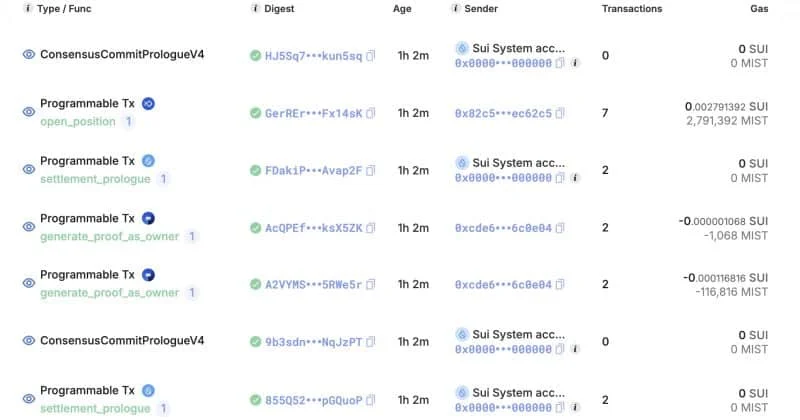
The Sui mainnet has successfully returned to full operational status following a significant outage that lasted approximately 5 hours and 55 minutes. The disruption, which brought the high-performance Layer 1 blockchain to a standstill, was attributed to a critical bug discovered in the gas charging logic within the network’s latest software release, version 1.72. This flaw prevented the calculation of transaction fees, effectively halting the creation of new blocks and rendering the network inoperable. Validators, working collaboratively, implemented a fix and upgraded to a patched version of the software, restoring normal checkpoint production and transaction finality on May 29.
The Genesis of the Outage: A Flaw in Transaction Fee Calculation
The incident commenced on May 28, when validators who had adopted the 1.72 software update encountered the critical bug. This flaw in the gas charging mechanism meant that the network could no longer accurately determine the cost of processing transactions. Without this fundamental operational component, the Sui blockchain ceased to produce new checkpoints, which are essential for finalizing transactions and maintaining the integrity of the distributed ledger. Consequently, no new transactions could be finalized, leading to a de facto freeze of the entire network.
The recovery process was far from instantaneous. Sui’s robust consensus mechanism, designed for security and decentralization, mandates that a supermajority of validators – specifically, those holding more than two-thirds of all staked tokens – must upgrade to the patched software before the blockchain can resume normal operations. This requirement, while a cornerstone of the network’s security, necessitates a coordinated effort among a distributed group of network participants, which can extend the time required for a full restoration. The swiftness with which this coordination was achieved, despite the complexity, underscores the dedication of the Sui validator community.
Network Resilience and Unaffected User Assets
Crucially, Sui’s inherent safety guarantees proved effective throughout the disruption. The network’s architecture prevented any loss of user funds during the roughly six-hour downtime. Furthermore, the design of the blockchain ensured that no data inconsistencies or corruptions occurred while the chain was stalled. This is a testament to the immutability and fault-tolerance built into the Sui protocol, designed to safeguard user assets and network integrity even under adverse conditions.
However, the outage did have a tangible impact on the decentralized finance (DeFi) ecosystem operating on Sui. All DeFi protocols built on the network were effectively frozen. Users were unable to adjust their existing positions, execute new trades, or trigger liquidations. This paralysis highlights the interconnectedness of the blockchain ecosystem and how a core network failure can cascade through its applications, impacting user activity and market dynamics.
A Recurring Pattern: Examining Sui’s Uptime History
This recent incident is not the first time the Sui network has experienced extended downtime in 2024. A similar multi-hour stall occurred on January 14, lasting approximately six hours, which was then attributed to a consensus commit bug. The recurrence of such significant outages within a relatively short period – roughly five months apart – presents a discernible pattern that warrants careful examination by the Sui development team, validators, and the broader community.
Both incidents share a striking similarity in their root cause: a bug introduced through a software update, followed by a challenging and time-consuming process of coordinating validator upgrades across the globally distributed network. This recurring theme raises important questions about the robustness of the software development and deployment lifecycle for Sui’s core infrastructure.
Market Reaction: The SUI Token’s Volatility
The SUI token, the native cryptocurrency of the Sui network, reacted predictably to the news of the outage, reflecting investor sentiment in real-time. During the period of network downtime, the price of SUI experienced a decline, dropping to approximately $0.89. This represented a loss in the range of 6-8% from its pre-outage valuation. Following the resumption of normal network operations, the SUI token saw a partial recovery, indicating that market participants viewed the resolution as a positive development. This price action provides a clear indicator of the market’s sensitivity to network stability and its potential impact on asset valuation.
Implications for Investors and the Sui Ecosystem
Sui has strategically positioned itself as a high-throughput Layer 1 blockchain, aiming to provide the foundational infrastructure necessary to support demanding DeFi applications and, eventually, to attract significant institutional capital. Since its mainnet launch, the total value locked (TVL) across the Sui ecosystem has grown considerably, reaching hundreds of millions of dollars. This growth underscores the potential of the network and the confidence developers and users have placed in its capabilities.
However, the recurring outages present a significant challenge to this narrative of high performance and reliability. For traders and investors, the pattern of a price dip during an outage followed by a partial recovery suggests a potential playbook that the market might continue to follow should a third incident of similar magnitude occur. Such volatility can deter new investment and create uncertainty within the ecosystem.
From an investor’s perspective, a blockchain’s uptime is a critical metric, directly influencing trust and the perceived reliability of the underlying technology. While Sui’s safety guarantees held firm, preventing asset loss, the repeated disruptions to network operations can erode confidence. Institutional investors, in particular, often prioritize stability and predictable performance when allocating capital to blockchain infrastructure.
Addressing the Challenge: A Path Forward
The Sui Foundation and its development team, Mysten Labs, face the immediate challenge of thoroughly investigating the root causes of these recurring bugs. This investigation should not only focus on the technical aspects of the code but also on the processes surrounding code review, testing, and staged rollouts of new software versions. Enhanced quality assurance measures, potentially including more rigorous simulation environments and bug bounty programs specifically targeting critical infrastructure components, could be instrumental in preventing future occurrences.
Furthermore, the communication strategy during and after such incidents will be crucial. While the recovery was executed by validators, clear and timely communication from the development team to the broader community, including detailed explanations of the issues and the steps being taken to prevent their recurrence, can help manage market sentiment and rebuild trust.
The Sui ecosystem, with its growing TVL and ambitious roadmap, has significant potential. However, to fully realize this potential and attract the sustained capital and user adoption it seeks, demonstrating unwavering network stability will be paramount. The recent outage serves as a critical learning experience, highlighting areas where further strengthening of the development and operational framework is necessary. The ability of the Sui team to effectively address these challenges will be a key determinant of its long-term success in the competitive Layer 1 blockchain landscape.
Broader Context: The Importance of Blockchain Uptime
The incident on Sui is a stark reminder of the inherent complexities and challenges in building and maintaining decentralized blockchain networks. While the promise of decentralization offers resilience against single points of failure, the coordination required among a distributed network of validators for essential upgrades and bug fixes can itself become a point of vulnerability.
The cryptocurrency market has witnessed similar, albeit often different in nature, disruptions across various blockchains. These events underscore the critical importance of robust testing, secure development practices, and effective incident response mechanisms for all blockchain projects. For investors, understanding these risks and the mitigation strategies employed by different networks is vital for informed decision-making.
The Sui team’s commitment to transparency and its proactive approach to addressing the issue post-outage will be closely watched. The long-term success of Sui, like any blockchain platform, will hinge not only on its technological innovation but also on its ability to deliver consistent and reliable network performance. The recent near-six-hour pause serves as a crucial test of this commitment, and the lessons learned will undoubtedly shape the future trajectory of the Sui network.