


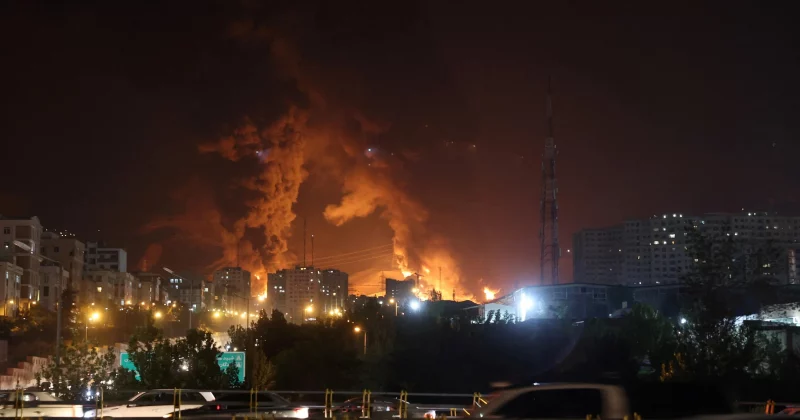
Tabriz International Airport, a critical aviation hub serving northwestern Iran and a gateway to regional trade with Turkey and the Caucasus, is officially scheduled to resume full operations on May 28, 2026. This announcement, confirmed by the Civil Aviation Organisation (CAO) of Iran through state-affiliated media channels, marks a significant milestone in the country’s post-conflict reconstruction efforts. The facility had been rendered inoperable following a series of direct military strikes executed by US and Israeli forces in early March 2026, which targeted strategic infrastructure across the Islamic Republic. The restoration of the airport is the result of an intensive, two-month repair campaign spearheaded by Iranian engineering specialists, signaling a push toward normalcy even as the broader geopolitical and financial landscape remains fraught with tension.
The reopening of the Tabriz facility is not an isolated event but part of a broader national strategy to restore transportation links. According to the CAO, Tabriz is among approximately 20 domestic and international airports that have been phased back into service over the last several weeks. These facilities were shuttered in late February 2026, at the onset of a high-intensity military escalation that saw significant damage to Iranian logistics, energy, and communication networks. While the physical reconstruction of runways and terminals proceeds, the conflict has shifted into a complex economic phase, characterized by unprecedented interventions in the digital asset space and a volatile period for global financial markets.
Chronology of the Conflict and Infrastructure Impact
The timeline of the current crisis began in the final weeks of February 2026, when long-standing regional tensions boiled over into a direct military confrontation. On approximately March 1, 2026, Tabriz International Airport was hit by precision strikes that targeted its radar systems, fuel depots, and primary runways. The strategic importance of Tabriz—situated in East Azerbaijan Province—cannot be overstated, as it serves as a primary civilian and commercial artery for the northwestern quadrant of the country.
For nearly 90 days, the airport remained closed to all traffic, forcing a redirection of essential supplies and commercial travel to alternative, often over-burdened land routes. The Iranian government prioritized the restoration of this hub to alleviate the logistical bottlenecks that have hampered the delivery of medical supplies and industrial equipment. The completion of repairs by May 28 indicates a rapid mobilization of domestic technical resources, though international observers remain cautious about the long-term resilience of the site should hostilities resume.
The phased reopening of the 20 other airports across Iran suggests a coordinated effort to signal stability to both the domestic population and the international community. Major hubs in Tehran, Isfahan, and Shiraz have similarly undergone rapid assessments and repairs, though Tabriz faced some of the most concentrated kinetic damage among the civilian aviation infrastructure.
The Digital Front: $344 Million in Crypto Assets Frozen
While physical infrastructure was being repaired, a parallel conflict unfolded in the digital realm. In late April 2026, the United States Department of the Treasury moved to aggressively target Iran’s financial lifelines, focusing specifically on the burgeoning cryptocurrency sector. In a coordinated regulatory strike, federal authorities announced the freezing of approximately $344 million in digital assets.
These assets were allegedly linked to a sophisticated network of wallets and decentralized finance (DeFi) protocols associated with the Islamic Revolutionary Guard Corps (IRGC) and the Central Bank of Iran. This move represents one of the largest seizures of state-linked digital assets in history. Treasury officials stated that the freeze was necessary to prevent the circumvention of traditional banking sanctions, which have been tightened since the start of the February conflict.
The focus of this enforcement action centered on Nobitex, Iran’s largest cryptocurrency exchange. Reports indicate that Nobitex has processed substantial transaction volumes for state-linked entities, acting as a bridge between the rial and globally traded assets like Bitcoin and Tether. By targeting these flows, the US Treasury aims to restrict Iran’s ability to fund reconstruction efforts or procure sensitive technology through non-traditional financial channels.
Bitcoin and Market Volatility: A Record of Escalation
The military strikes in late February 2026 sent immediate shockwaves through the global financial markets, with Bitcoin serving as a primary barometer for investor sentiment. As the first reports of the strikes on Iranian soil emerged, Bitcoin’s price experienced a sharp correction, dropping toward the $63,000 mark. This downward pressure was attributed to a "risk-off" sentiment, where investors liquidated volatile assets in favor of traditional safe havens like gold and US Treasuries amid fears of a wider regional war.
However, the market’s reaction in the subsequent months demonstrated a complex evolution. As the conflict transitioned from active, large-scale military operations toward a state of "fragile stabilization," Bitcoin began to recover and eventually surpassed its pre-conflict levels. By May 2026, as news of the airport reopenings and the Treasury’s asset freezes circulated, Bitcoin fluctuated around $77,000.
Market analysts suggest this rally was driven by two primary factors. First, the conflict highlighted the utility of borderless digital assets in regions facing currency instability and infrastructure collapse. Second, the aggressive enforcement by the US Treasury paradoxically reinforced the perceived value of the Bitcoin network’s transparency. While centralized exchanges like Nobitex were vulnerable to freezes, the underlying blockchain remained operational, leading some investors to view the asset as a resilient store of value despite geopolitical turmoil.
Implications for Global Investors and Crypto Infrastructure
The events of early 2026 have provided a case study for the intersection of geopolitics and decentralized finance. For global investors, the $344 million asset freeze serves as a stark reminder of the "jurisdictional reach" of Western regulators. The ability of the US Treasury to identify and isolate assets within supposedly anonymous networks underscores the reality that most digital asset activity eventually touches centralized infrastructure—such as exchanges or stablecoin issuers—that must comply with international law.
Key takeaways for the investment community include:
- The Vulnerability of Centralized Exchanges: The targeting of Nobitex proves that centralized platforms operating within or for sanctioned jurisdictions are high-priority targets for regulatory intervention. Investors are increasingly looking toward non-custodial solutions to mitigate the risk of government-ordered asset freezes.
- Blockchain Transparency as a Tool for Law Enforcement: The successful freezing of $344 million validates the argument that blockchain technology is not a "black box." The public nature of the ledger allows authorities to trace the flow of funds with a level of precision that is often impossible with physical bulk cash smuggling.
- Geopolitical Risk Premium: The jump from $63,000 to $77,000 indicates that Bitcoin is increasingly being priced with a "geopolitical risk premium." As traditional systems face stress from war and sanctions, digital assets are being integrated into the broader strategy of both state actors and private wealth managers.
Official Responses and Strategic Outlook
In Tehran, officials have condemned the US Treasury’s actions, describing the asset freezes as "economic terrorism." A spokesperson for the Central Bank of Iran stated that the country would continue to utilize "all available technological avenues" to maintain its commercial viability. The reopening of Tabriz International Airport is being framed by state media as a victory of Iranian resilience over external aggression.
Conversely, the US State Department has maintained that the sanctions and military strikes were calibrated to degrade Iran’s strategic capabilities while minimizing civilian long-term hardship. The decision to allow certain communication and medical channels to remain open suggests a strategy of "controlled pressure."
As May 28 approaches, the eyes of the region will be on Tabriz. The successful resumption of international flights will serve as a litmus test for the durability of the current stabilization. If the airport can maintain operations without further interference, it may signal a period of de-escalation. However, with $344 million in assets still locked in digital limbo and the IRGC looking for alternative financial routes, the "crypto dimension" of this conflict is likely only in its opening chapters.
The broader impact on the aviation industry is also being monitored. International carriers that once used Iranian airspace as a primary corridor between Europe and Asia are currently re-evaluating their flight paths. The reopening of 20 airports is a start, but insurance premiums for flights into the region remain at historic highs, reflecting the "fragile" nature of the current peace. For now, the restoration of Tabriz stands as a physical manifestation of a nation attempting to rebuild while caught in the crosshairs of a modern, multi-dimensional war.














