


In a landmark legal action that underscores the growing geopolitical friction surrounding high-technology supply chains, the Keelung District Prosecutors Office in Taiwan has formally charged three individuals in connection with a sophisticated scheme to smuggle restricted AI hardware to mainland China. This case represents Taiwan’s first major criminal prosecution specifically targeting the circumvention of United States-led export controls on advanced semiconductors. The operation, which investigators described as a "logistics thriller," involved the use of forged documentation, multi-country transshipment routes, and high-value hardware equipped with Nvidia’s most powerful processing units.
The crackdown, which reached a critical phase during a series of raids conducted on May 21 and 22, 2026, signals a significant shift in Taiwan’s enforcement posture. While the island nation has long been the world’s primary foundry for advanced logic chips, it is now taking an active role in policing the downstream movement of those products. The three suspects, identified by their surnames You, Wang, and Chen, are accused of orchestrating a clandestine pipeline designed to bypass the stringent trade barriers erected by Washington to prevent China from acquiring cutting-edge artificial intelligence capabilities.
The Mechanics of the Smuggling Operation
The core of the investigation centers on the shipment of approximately 50 high-end AI servers manufactured by Super Micro Computer, Inc. (Supermicro). These units are not consumer-grade hardware; they are enterprise-level machines designed for massive data processing and the training of large language models. According to the Keelung prosecutors, each server carried a market value of approximately NT$10 million (roughly $312,500), bringing the total value of the seized or tracked shipments to an estimated $15.6 million.
The suspects allegedly utilized a classic "gray market" tactic known as transshipment to mask the final destination of the goods. On official customs declarations and export permits, the destination was listed as a third-party country in Northeast Asia, often perceived as a low-risk trading partner. By creating a paper trail that appeared legitimate to initial customs inspectors, the suspects managed to move several units out of Taiwanese ports without immediate detection.
The actual logistics route, however, was far more circuitous. Prosecutors allege the servers were first shipped to Japan, a major regional logistics hub. Once the goods arrived in Japan, they were re-labeled and re-routed to Hong Kong and Macau. Historically, these two Special Administrative Regions of China have served as the primary gateways for restricted technology entering the mainland. Once a shipment reaches Hong Kong, the logistical barriers to moving hardware across the border into Shenzhen or other mainland tech hubs are virtually non-existent, often involving simple truck transport that avoids the more rigorous scrutiny applied to direct international shipments.
Chronology of Enforcement and the Global Context
The 2026 prosecution in Taiwan is the culmination of years of escalating tension between the United States and China over the future of AI and semiconductor sovereignty. To understand the gravity of this case, one must look at the timeline of events that led to this enforcement action:
- October 2022: The US Department of Commerce’s Bureau of Industry and Security (BIS) implements sweeping export controls on advanced computing and semiconductor manufacturing items to China. This included restrictions on chips meeting certain performance thresholds, such as Nvidia’s A100 and H100 GPUs.
- October 2023: The US updates these rules to close loopholes, specifically targeting the "gray market" and preventing the sale of slightly de-tuned chips (like the A800 or H800) that were originally designed to comply with the 2022 regulations.
- 2024-2025: Reports emerge of a thriving underground market in Shenzhen’s Huaqiangbei district, where smuggled AI chips are sold at significant markups to Chinese research institutes and private firms.
- Early 2026: Taiwanese authorities, under pressure from international partners and seeking to protect their standing in the "Chip 4" alliance (the US, Taiwan, South Korea, and Japan), begin a specialized task force to monitor high-value AI hardware exports.
- May 2026: The Keelung District Prosecutors Office executes search warrants and arrests You, Wang, and Chen, uncovering the forged documents that linked the Supermicro servers to the Japanese transshipment route.
Supporting Data and Technical Specifications
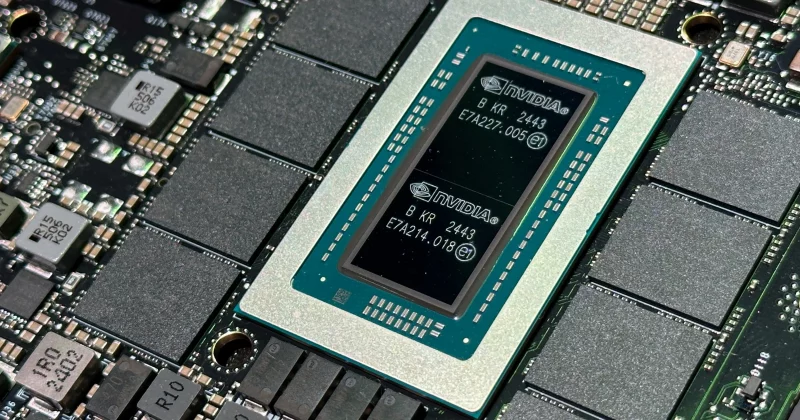
The hardware at the center of this case—Supermicro AI servers—is highly sought after because of its integration with Nvidia’s Blackwell and Hopper architectures. While the specific chip models in the seized servers were not publicly named in the indictment, industry experts suggest they likely contained H100 or B200 Tensor Core GPUs. These components are the gold standard for AI development; a single cluster of such servers can provide the computational power necessary to train generative AI models that are otherwise unattainable with older, unrestricted hardware.
The financial incentives for such smuggling operations are immense. In mainland China, the scarcity of these chips has driven black-market prices to two or three times their original MSRP. For a $15.6 million shipment, the potential profit margin on the mainland could exceed $30 million, providing a powerful motivator for criminal syndicates and rogue logistics firms to take the risk of document forgery.
Official Responses and Legal Framework
The Keelung District Prosecutors Office has framed the charges primarily around document forgery under Taiwan’s Criminal Code. Specifically, the suspects are accused of "making false entries in public documents," a charge that carries significant prison time but does not explicitly invoke national security or trade-specific statutes.
This legal strategy is notable. By focusing on forgery, prosecutors can secure a more straightforward conviction based on the physical discrepancy between the destination listed on the paperwork and the actual movement of the goods. However, the case has sparked a debate within the Legislative Yuan (Taiwan’s parliament) regarding the need for more robust "Economic Spyware" or "Strategic Trade Control" laws that would specifically penalize the unauthorized export of dual-use technologies to restricted entities.
While Supermicro has not been accused of any wrongdoing, the company issued a brief statement reiterating its commitment to compliance: "Supermicro adheres to all international trade laws and export regulations. We work closely with our distributors and partners to ensure that our products are sold and used in accordance with the law. We are cooperating fully with authorities in this ongoing investigation."
Similarly, Nvidia has maintained a policy of strict adherence to US export controls, even as it continues to develop "China-specific" chips that fall just below the performance thresholds set by the Department of Commerce. The existence of a black market, Nvidia representatives have previously noted, is a challenge that requires multilateral governmental cooperation to solve.
Broader Implications for the Global Tech Industry
This case carries profound implications for the global semiconductor industry and the future of "technological decoupling."
First, it demonstrates that Taiwan is no longer willing to be a passive observer in the US-China tech war. By prosecuting its own citizens for facilitating the flow of chips to China, Taipei is signaling to Washington that it is a reliable partner in the enforcement of strategic trade controls. This is essential for Taiwan to maintain its privileged access to American chip-making equipment and software.
Second, the case highlights the extreme difficulty of policing "finished goods" versus "components." It is relatively easy to track a single high-end wafer from a TSMC facility. It is much harder to track a finished server that contains thousands of components, including restricted chips, once it enters the global logistics stream. The use of Japan as a transshipment point shows that even highly regulated economies can be used as "blind spots" in the global supply chain.
For investors, the situation presents a mixed bag. On one hand, the persistent demand in China ensures that companies like Nvidia and Supermicro will always have a robust—if unofficial—market for their products. On the other hand, the risk of "regulatory contagion" is real. If more smuggling cases come to light, the US may impose even stricter "know your customer" (KYC) requirements on hardware manufacturers, potentially increasing operational costs and slowing down the global sales cycle.
Conclusion
The prosecution of You, Wang, and Chen marks a pivotal moment in the enforcement of the digital iron curtain. As AI continues to be viewed not just as a commercial asset but as a critical tool for national security and military dominance, the "logistics thrillers" of today are likely to become the standard battlegrounds of tomorrow. Taiwan’s move to interdict these shipments at the source suggests that the era of looking the other way is over. For the global tech industry, the message is clear: the paperwork must be as solid as the silicon, or the legal consequences will be severe.














