


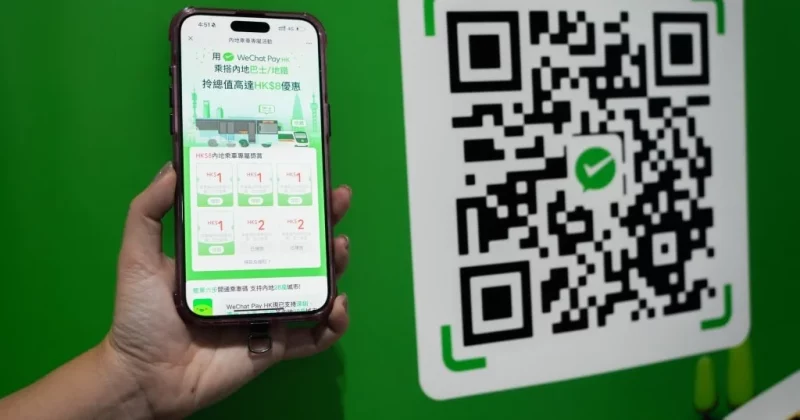
The long-standing barrier between international financial systems and China’s domestic digital economy has seen its most significant reduction to date following a landmark integration between Tencent Financial Technology and PayPal. Through the newly launched TenPay Global platform, United States-based PayPal users can now seamlessly link their accounts to the Weixin Pay (commonly known as WeChat Pay) network, allowing them to conduct transactions at millions of merchant locations across mainland China by scanning ubiquitous QR codes. This integration, which officially went live on May 27, 2026, marks a pivotal shift in cross-border fintech cooperation and addresses a primary pain point for international travelers and expatriates operating within the Chinese economy.
The Evolution of the Digital Payment Landscape in China
To understand the significance of the Tencent-PayPal partnership, one must first look at the unique trajectory of China’s financial ecosystem. Over the past decade, China has effectively bypassed the credit card era that defined Western consumerism, moving directly from a cash-based society to a mobile-first digital economy. This transition was led by two giants: Tencent’s Weixin Pay and Alibaba’s Alipay. Together, these platforms process over 90% of the country’s digital payments, creating a "walled garden" that, while highly efficient for domestic users, proved notoriously difficult for foreigners to navigate.
For years, the experience of a foreign visitor in cities like Shanghai, Beijing, or Shenzhen was defined by "payment friction." While major international hotels and high-end luxury retailers might accept Visa or Mastercard, the vast majority of China’s daily commerce—ranging from street food vendors and taxis to convenience stores and medical clinics—operates exclusively via QR codes linked to domestic bank accounts. This disparity often left travelers unable to perform basic transactions, despite having ample funds in their home country accounts. The TenPay Global initiative is designed specifically to dismantle this wall, integrating the world’s most recognized digital wallet, PayPal, into China’s most used social and payment infrastructure.
Technical Mechanics and User Accessibility
The integration is designed with a focus on user experience, prioritizing a "plug-and-play" approach for US consumers. Under the new system, PayPal users do not need to open a Chinese bank account or navigate the complexities of local financial regulations individually. Instead, they can link their existing PayPal credentials directly within the Weixin Pay interface or use the TenPay Global gateway to facilitate the transaction.
When a user encounters a Weixin Pay QR code at a merchant, they simply scan it using their mobile device. The system recognizes the linked PayPal account, performs the necessary currency conversion in real-time, and settles the transaction. This process mirrors the daily habits of over one billion Chinese consumers, finally allowing foreign visitors to participate in the local economy with the same ease as a local resident.
To incentivize early adoption and soften the transition, Tencent has introduced a promotional fee structure. For the first 90 days following the May 27 launch, the company is waiving the standard 3% surcharge typically applied to international card transactions for daily expenditures up to RMB 1,000 (approximately $140 USD). Once this promotional window expires, or for transactions exceeding the threshold, standard cross-border fees will apply. Furthermore, the platform has established clear transaction ceilings to comply with international and domestic financial regulations, setting a limit of $5,000 per individual transaction and an annual cumulative limit of $50,000 for linked international accounts.
A Chronology of Regulatory Hurdles and Launch Delays
The path to the May 2026 rollout was not without significant challenges. The partnership first entered the public consciousness in mid-2025, with an initial launch target slated for the end of that year. However, the project encountered substantial headwinds from US regulators.
In September 2025, members of the United States Congress raised formal inquiries regarding the PayPal-TenPay Global partnership. Lawmakers expressed concerns over anti-money laundering (AML) compliance, data privacy for US citizens, and the potential for the integration to be used as a conduit for illicit capital flows. These concerns necessitated a rigorous period of "compliance calibration," during which both Tencent and PayPal worked to ensure that the data sharing and transaction monitoring protocols met the stringent requirements of both the US Department of the Treasury and the People’s Bank of China (PBOC).
The eight-month delay from the original late-2025 target to the May 2026 launch reflects the complexity of these negotiations. The resulting platform now includes enhanced Know Your Customer (KYC) protocols and real-time fraud detection systems that satisfy bilateral regulatory standards. Additionally, to cater to a global audience, the platform features in-app guidance and customer support in 16 different languages, ensuring that the "2026 Inbound Payment Service Upgrade" is accessible to more than just English speakers.
Strategic Implications for PayPal and Tencent
For PayPal, this partnership represents a strategic masterstroke in a market where it has historically struggled to gain a foothold. Despite acquiring a domestic payment license in China years ago through the purchase of GoPay, PayPal found it difficult to compete with the entrenched duopoly of WeChat Pay and Alipay. By positioning itself as the primary bridge for US consumers entering China, PayPal has found a way to remain relevant in the Chinese market without having to directly unseat the local incumbents. It leverages its massive US user base to provide a value-added service that Visa and Mastercard have been unable to replicate at the "micro-transaction" level.
For Tencent, the integration is a key component of its "TenPay Global" branding strategy. As the company looks toward 2026 and beyond, it aims to transition from being a domestic Chinese utility to a global financial infrastructure provider. By hosting PayPal on its network, Tencent demonstrates the scalability and openness of its ecosystem. This move is also timed to coincide with major international events, most notably the APEC 2026 summit. Tencent has explicitly stated that it intends for TenPay Global to be the "default gateway" for foreign spending during such high-profile international gatherings, positioning China as a leader in frictionless digital commerce.
Broader Economic Impact and Market Analysis
The implications of this integration extend far beyond the convenience of individual tourists. Economically, the move is expected to stimulate "silver economy" and "youth travel" sectors in China, which have seen fluctuating numbers in recent years. By removing the primary barrier to spending, China stands to capture a higher percentage of "incidental" spending—money spent at small businesses, local markets, and rural tourism sites that previously could not accept foreign credit cards.
Industry analysts suggest that this move will likely force a response from competitors. Alibaba’s Alipay has already made strides with its "Alipay+" solution, which integrates various Asian e-wallets (like KakaoPay and GCash) into the Chinese market. However, the integration of a major Western player like PayPal sets a new precedent. We may soon see a "fintech arms race" where domestic Chinese providers vie to partner with Western banks and digital wallets to capture the lucrative inbound tourism and business travel market.
From a macroeconomic perspective, the Tencent-PayPal deal is a rare example of successful US-China corporate cooperation amid a broader climate of geopolitical tension. It serves as a reminder that the world’s two largest economies remain deeply intertwined through consumer technology and financial services. The success of this rollout will be closely watched by other multinational firms as a barometer for the feasibility of cross-border digital integration in a highly regulated environment.
Future Outlook: The Phased Global Expansion
The May 27 launch in the US is only the first phase of a broader roadmap. Tencent has indicated that the "2026 Inbound Payment Service Upgrade" will eventually extend PayPal integration to other global markets where PayPal has a significant presence, including Europe and parts of Southeast Asia.
As the 90-day fee waiver period concludes in late August 2026, the industry will have its first real data on the sustainability of the model. Will US users be willing to pay the 3% surcharge for the convenience of scanning a QR code, or will they revert to searching for "card-friendly" merchants? Early indicators suggest that the sheer ubiquity of Weixin Pay makes the convenience factor worth the cost for most travelers.
In conclusion, the integration of PayPal into the Weixin Pay network via TenPay Global represents the end of an era of financial isolation for travelers in China. It replaces friction with fluidity, providing a standardized, secure, and regulated pathway for international capital to flow into the Chinese consumer market. As the world moves toward the APEC 2026 summit, this partnership stands as a significant milestone in the ongoing evolution of global digital finance, proving that even the most formidable "walled gardens" can be bridged through strategic cooperation and technological innovation.














