


Former Commodity Futures Trading Commission (CFTC) Commissioner Summer Mersinger has indicated that a decisive Senate vote on the CLARITY Act, a pivotal crypto market structure bill, could occur as early as the week of July 20. This anticipated legislative action positions the measure at a critical juncture just weeks before the Senate’s August recess, a period often marked by intensified legislative pushes and heightened political stakes. Senate leaders from both the Banking and Agriculture Committees are currently engaged in intensive negotiations, striving to reconcile their respective versions of the bill and resolve lingering policy disputes that threaten its advancement.
The remaining points of contention primarily revolve around stringent ethics language, the treatment of stablecoin rewards, and the intricate procedural hurdles required to secure sufficient votes for the bill’s progression. These challenges underscore the complexities inherent in regulating the nascent but rapidly expanding digital asset sector. Prediction markets, which offer real-time insights into perceived legislative outcomes, reflect a divided sentiment. While traders assign a relatively high probability to near-term Senate action, confidence significantly wanes regarding the bill’s ultimate enactment into law by the close of 2026, particularly concerning a presidential signature. The resolution of these debates and the eventual fate of the CLARITY Act are poised to exert a profound influence on the regulatory landscape governing major cryptocurrency markets in the United States.
Intensive Negotiations and the Ethics Conundrum
Mersinger, drawing on her extensive experience in financial regulation, revealed that lawmakers are actively working to consolidate the distinct proposals originating from the Senate Banking and Agriculture Committees into a unified legislative package. Simultaneously, negotiators are diligently addressing last-minute concerns raised by Democratic members, aiming to forge a broader bipartisan consensus. Among these, the ethics section has emerged as one of the most significant impediments to a comprehensive agreement. While the specific details of the ethics provisions under discussion remain confidential, such language typically addresses potential conflicts of interest for lawmakers, their staff, and regulatory officials who may hold or interact with digital assets. The intent is to ensure impartiality and prevent undue influence in a sector where personal holdings could significantly impact policy decisions.
The legislative journey of H.R. 3633, the House-originated bill serving as the vehicle for the CLARITY Act, saw a significant step forward on May 14 when the Senate Banking Committee advanced it with a robust 15-9 bipartisan vote. This committee action signaled the measure’s readiness to move towards a floor vote, with proponents emphasizing its framework for establishing clearer oversight for digital assets and implementing stronger consumer safeguards within the burgeoning crypto economy.
The 60-Vote Cloture Threshold and Looming Deadlines
Despite the committee’s approval, the path to a full Senate vote for the CLARITY Act remains fraught with procedural challenges, most notably the requirement to overcome a likely 60-vote cloture threshold. Cloture is a parliamentary procedure used to end a debate and bring a matter to an immediate vote, effectively bypassing potential filibusters. In the evenly divided Senate, securing 60 votes often necessitates significant bipartisan cooperation, making it a formidable hurdle for any contentious legislation. Mersinger’s assessment places the legislation "near the finish line," with an expectation for the first procedural vote during the week commencing July 20. However, as of the current reporting, no official floor vote has been formally added to the public Senate schedule, indicating that negotiations are still fluid and potentially ongoing.
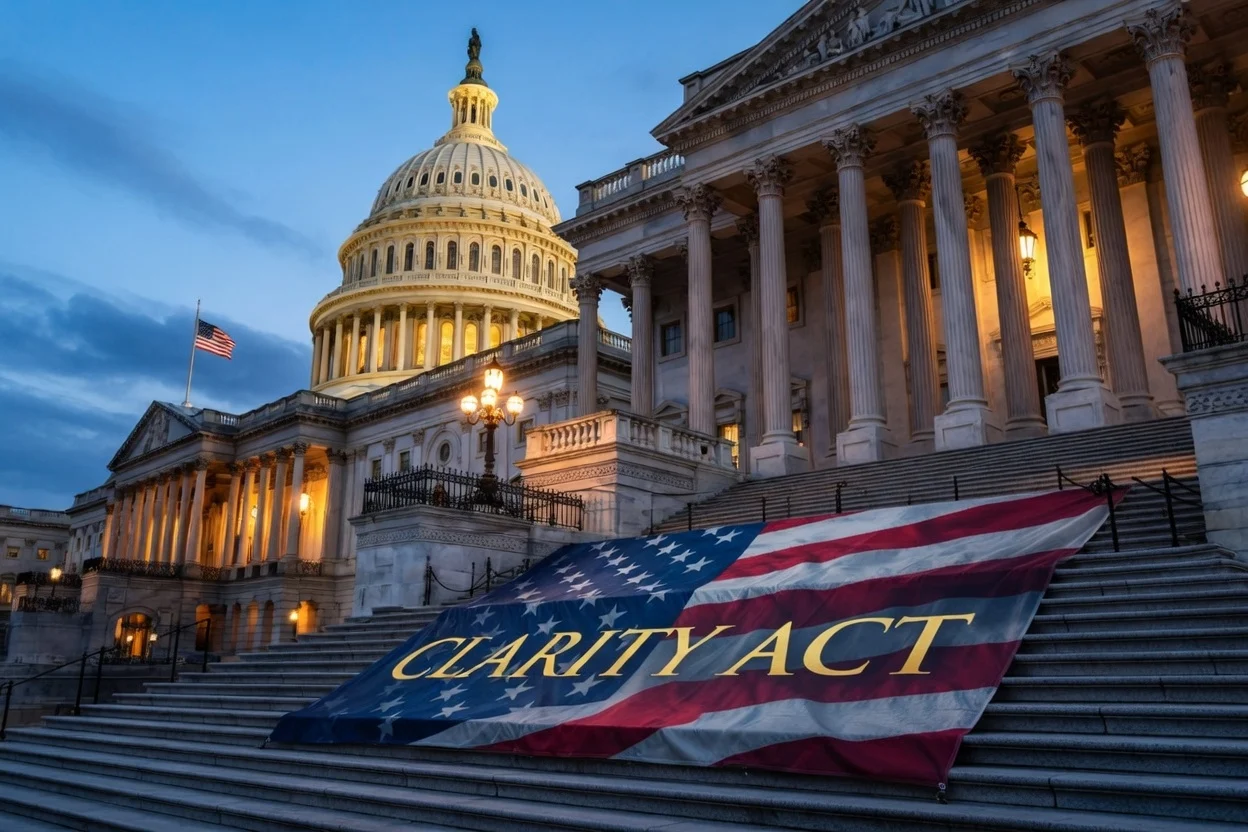
The timing of the CLARITY Act Senate vote is of paramount importance due to the impending legislative calendar. The Senate’s summer state work period, commonly referred to as the August recess, is slated to commence on August 10. Missing this crucial window could force negotiations and any subsequent votes into the thick of the election season. Such a delay would inevitably reduce available floor time, as lawmakers prioritize campaigning and constituency work, and introduce a myriad of competing political demands that could further complicate the bill’s passage. The urgency to act before the recess highlights the bipartisan commitment to addressing digital asset regulation, even amidst an increasingly polarized political environment.
The Contentious Issue of Stablecoin Rewards
Beyond ethics, the debate surrounding stablecoin rewards continues to be a central point of contention in the CLARITY Act negotiations. Stablecoins, which are cryptocurrencies designed to maintain a stable value relative to a fiat currency like the U.S. dollar, often offer yield-bearing products to holders. These rewards, similar to interest, have drawn scrutiny from traditional financial institutions. Banking groups have vociferously argued that such yield-bearing stablecoin products could potentially siphon deposits away from conventional lenders, thereby impacting the stability and liquidity of the traditional banking system. Their concerns stem from the idea that attractive crypto yields could incentivize individuals and institutions to move their funds out of regulated bank accounts and into the less regulated digital asset ecosystem.
Conversely, crypto industry groups have countered these arguments by asserting that prior negotiations have already resulted in significant concessions on their part. They contend that reopening this agreement would be a step backward and undermine the delicate balance achieved in earlier discussions. Mersinger’s observations suggest that a considerable number of lawmakers are reluctant to revisit and potentially unravel these previously settled agreements, signaling a desire to maintain the momentum and avoid derailing the entire legislative effort over this specific issue. The challenge lies in finding a compromise that addresses the legitimate concerns of traditional finance without stifling innovation or disadvantaging the growing stablecoin market.
Prediction Markets Reflect Divergent Confidence
The sentiment surrounding the CLARITY Act’s legislative prospects is sharply divided across various prediction markets, offering a unique, crowdsourced perspective on its potential fate. Kalshi, a regulated prediction market, indicates a relatively strong confidence in a Senate vote occurring before the August recess. Traders on Kalshi place approximately 68% odds on a recorded Senate vote, which includes cloture votes but explicitly excludes voice votes and other procedural rulings. This suggests that market participants believe the bill will at least reach the floor for a significant procedural or final vote.
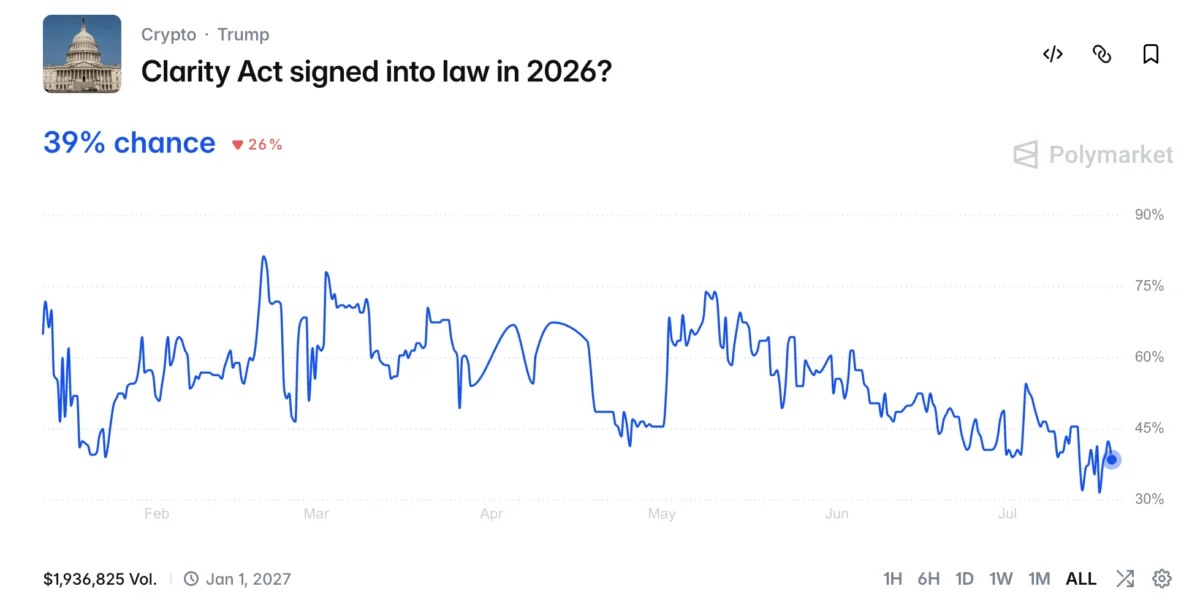
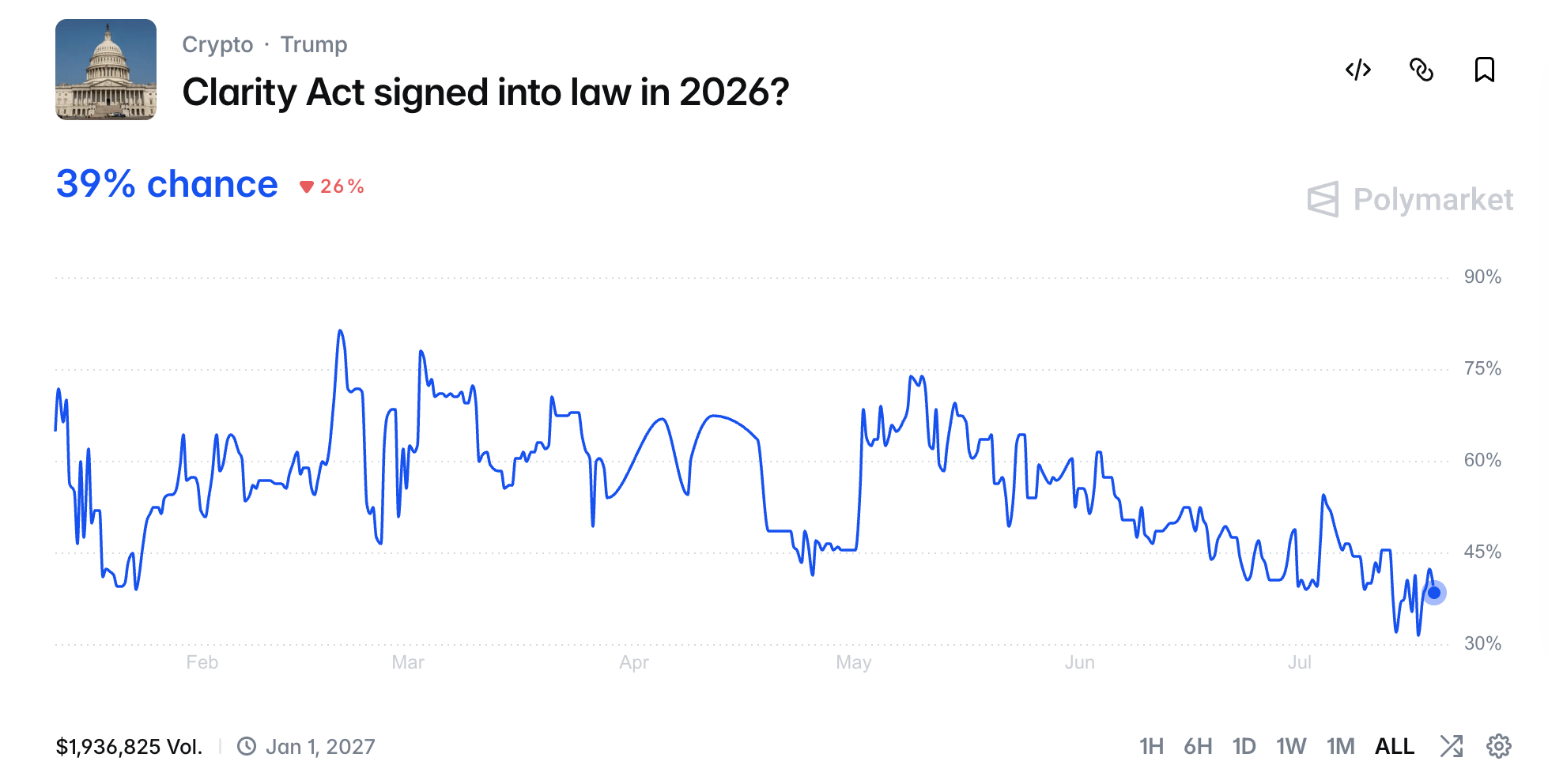
However, Polymarket, another prominent prediction market, reveals a more cautious outlook regarding the bill’s ultimate enactment. Traders on Polymarket assign the bill only a 38% to 39% chance of becoming law by December 31, 2026. This contract has seen substantial activity, with nearly $2 million moving through it, underscoring the high stakes and widespread interest in the bill’s outcome. The significant disparity between Kalshi’s and Polymarket’s probabilities highlights the distinct stages of the legislative process they are measuring: Kalshi focuses on a vote, while Polymarket considers full enactment, including presidential assent.
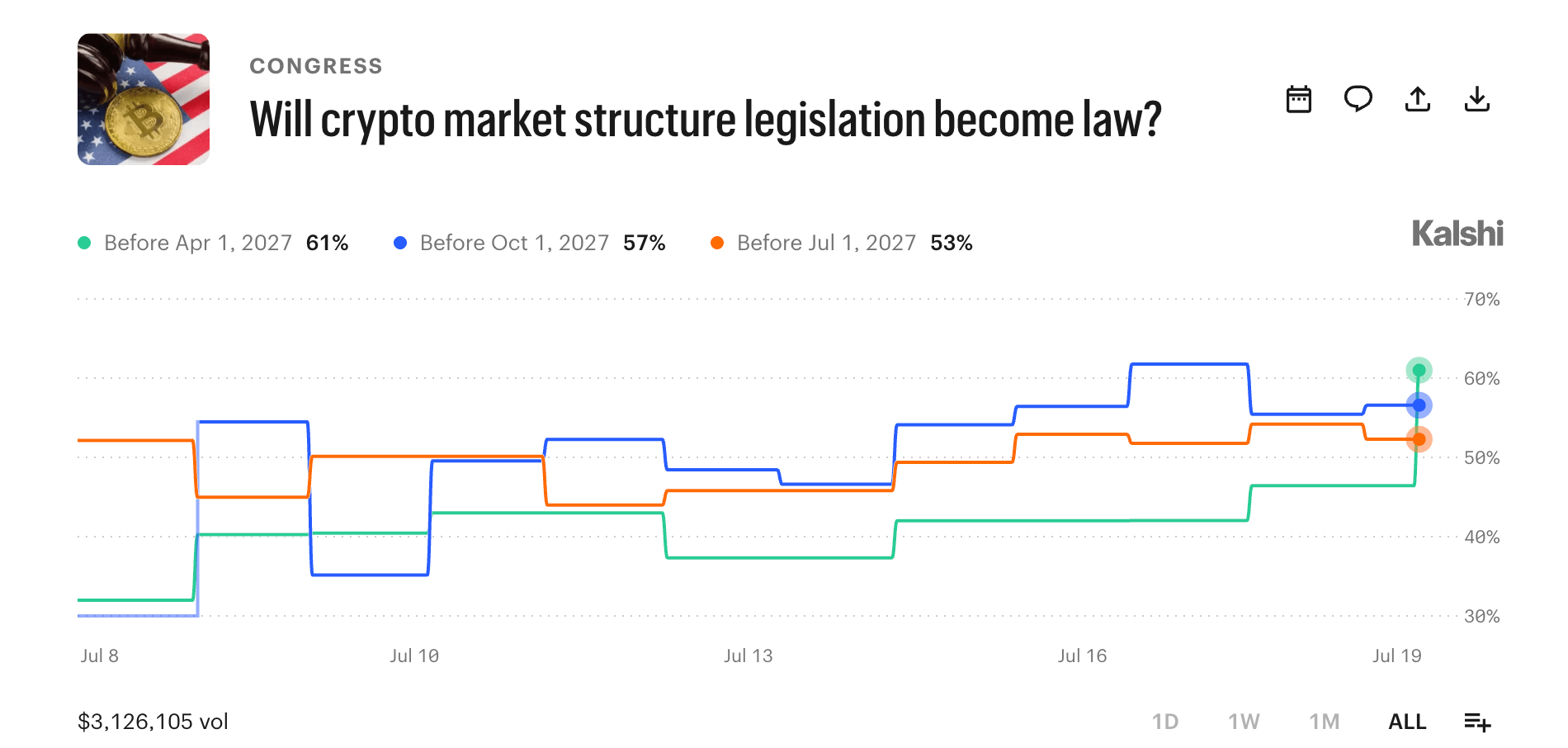
This gap between the likelihood of a vote and the probability of final passage reflects the inherent procedural risks that still confront the crypto market structure bill. A Senate vote, while a crucial step, does not guarantee passage. Furthermore, even if the Senate passes a version of the bill, there is no assurance that its text will perfectly align with any version previously approved by the House of Representatives. Any material discrepancies would necessitate either another House vote to approve the Senate’s changes or a formal conference committee process to reconcile the two versions. These additional steps introduce further opportunities for delay, amendment, or even failure, especially in a compressed legislative calendar leading up to an election. Broader Kalshi markets further illustrate this protracted legislative timeline, pricing a 61% chance of crypto market structure legislation becoming law before April 2027, with odds dipping to around 54% for passage before July 2027, and then rising slightly to roughly 58% before October 2027. These fluctuating probabilities underscore the long and winding road that complex legislation often travels in Congress.
A New Regulatory Framework for Digital Assets
At its core, the CLARITY Act aims to address the long-standing regulatory ambiguity that has plagued the digital asset space in the United States. Its primary objective is to clearly delineate oversight responsibilities between the two principal financial regulators: the Securities and Exchange Commission (SEC) and the Commodity Futures Trading Commission (CFTC). Currently, there is an ongoing "turf war" between these agencies, with each asserting jurisdiction over different aspects of digital assets, leading to confusion, enforcement actions, and a lack of clear guidelines for market participants.
The bill seeks to establish precise definitions for when digital tokens fall under securities rules, primarily regulated by the SEC, and when they are classified as commodities, under the purview of the CFTC. This definitional clarity is crucial for fostering innovation and providing legal certainty. Under the planned framework, various entities within the crypto ecosystem—including exchanges, custodians, brokers, and developers—would gain much-needed clarity regarding their federal compliance requirements. This structured approach is expected to reduce regulatory uncertainty, encourage institutional investment, and provide a more stable environment for businesses operating in the digital asset sector. It would move the industry away from regulation by enforcement and towards a more proactive, rules-based system, which is widely seen as beneficial for long-term growth and consumer protection.
Background and Historical Context of Crypto Regulation
The need for the CLARITY Act stems from a significant regulatory vacuum that has existed since the inception of cryptocurrencies. Existing financial laws, predominantly enacted decades ago, were not designed with decentralized digital assets in mind. This has left both innovators and consumers in a state of uncertainty, often operating without clear guidelines or adequate protections. The lack of a comprehensive framework has led to a fragmented regulatory approach, with various state and federal agencies attempting to apply existing rules to novel technologies, often inconsistently.
For years, policymakers have acknowledged the necessity of a tailored legislative solution. The CLARITY Act represents a culmination of these efforts, building on discussions and proposals from previous legislative cycles. Its bipartisan nature is particularly noteworthy, as finding common ground on emerging technologies can be challenging in a politically charged environment. The involvement of both the Senate Banking Committee, which typically oversees traditional financial markets, and the Senate Agriculture Committee, which has jurisdiction over commodity markets (including commodity derivatives regulated by the CFTC), underscores the cross-cutting nature of digital assets and the need for a unified approach. The journey of H.R. 3633 from the House to the Senate Banking Committee, and now its merger with Agriculture Committee proposals, illustrates the complex inter-chamber and inter-committee dynamics involved in legislating on such a novel and economically significant sector.
Broader Implications for the Digital Asset Ecosystem
The potential passage of the CLARITY Act carries profound implications for the entire digital asset ecosystem and the broader financial landscape.
For the Crypto Industry: Clearer rules would significantly de-risk operations for legitimate businesses, potentially unleashing a new wave of innovation and investment. Companies would no longer have to navigate a patchwork of regulations or fear arbitrary enforcement actions, making the U.S. a more attractive hub for crypto development and entrepreneurship. This clarity could encourage institutional adoption, bringing more traditional finance players into the digital asset space.
For Consumers: The bill’s emphasis on stronger consumer safeguards is paramount. Defined regulatory responsibilities would mean clearer recourse for consumers in cases of fraud, market manipulation, or platform failures. It would foster greater trust and confidence in digital asset services, potentially expanding mainstream adoption beyond early adopters.
For Regulatory Bodies: The SEC and CFTC would benefit from clear mandates, reducing inter-agency friction and allowing them to focus their resources more effectively on their defined areas of oversight. This would lead to more efficient and consistent enforcement, ultimately strengthening the integrity of U.S. financial markets.
For the U.S. Economy: By establishing a robust and predictable regulatory environment, the CLARITY Act could solidify the United States’ position as a global leader in financial innovation. It could attract capital, create high-paying jobs, and ensure that the country remains at the forefront of the evolving digital economy, rather than ceding ground to other jurisdictions with clearer regulatory frameworks.
Future Legislative Horizons: Tax Reform and Beyond
Looking beyond the immediate challenges of market structure, Mersinger also highlighted crypto tax reform as the industry’s next major legislative target. She articulated a vision where stablecoin rules, market structure, and tax changes are viewed as three interconnected policy goals, each vital for the comprehensive integration of digital assets into the mainstream financial system.
Current tax provisions, many of which predate the widespread adoption and significant market capitalization of digital assets, are often ill-suited to the unique characteristics of cryptocurrencies. Issues such as the tax treatment of staking rewards, mining income, DeFi transactions, and the definition of a "taxable event" for small transactions (the "de minimis" rule) create significant compliance burdens and uncertainties for both individuals and businesses. A modernized tax framework would provide much-needed clarity, simplify compliance, and ensure fair and consistent taxation for digital asset participants. Just as the CLARITY Act seeks to bring order to market oversight, future tax legislation aims to align the tax code with the realities of the 21st-century digital economy, solidifying the regulatory foundation for this transformative technology.
The CLARITY Act stands at a pivotal moment, with its future hanging in the balance of intense congressional negotiations and the looming August recess. Its passage would not only resolve critical regulatory ambiguities but also signal the United States’ commitment to embracing digital innovation responsibly. The debates over ethics, stablecoin rewards, and procedural votes underscore the complexity of legislating for a novel financial frontier. Regardless of the immediate outcome, the legislative effort represents a significant step towards a more defined and secure future for digital assets in the global economy, setting the stage for subsequent policy debates, including the crucial area of crypto tax reform.














