Wall Street is bracing for a pivotal moment as the Federal Reserve prepares to implement an action it hasn’t undertaken since 2023: raising interest rates. This move, widely anticipated by financial markets and economists alike, marks a significant shift in monetary policy, signaling the central bank’s intensified commitment to combating persistent inflationary pressures. The Federal Open Market Committee (FOMC) is scheduled to conclude its critical two-day meeting on Wednesday, with market indicators overwhelmingly pointing towards a quarter-point hike.
Market Consensus Solidifies for Rate Hike
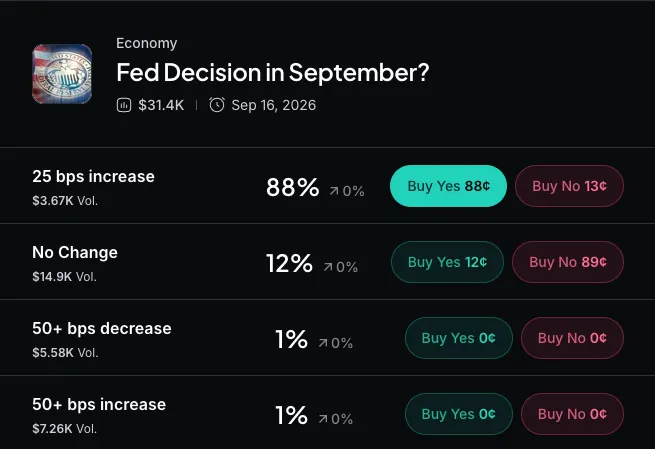
The dramatic shift in market sentiment over the past month underscores the urgency of the situation. Just a few weeks ago, the probability of a rate hike was below 50%; however, CME’s FedWatch tool now places the odds of a 25-basis-point increase at an overwhelming 94.5%. This rapid consensus reflects a confluence of economic data and evolving geopolitical factors that have compelled the Fed to reconsider its previous stance of holding rates steady. The financial community has been actively repricing assets in anticipation of this decision, reflecting the market’s innate aversion to uncertainty, particularly regarding the future trajectory of monetary policy.
A recent Wall Street Journal survey illuminated the near-unanimous expectation among major financial institutions. Virtually every prominent bank included in the survey, from investment giants to commercial lenders, now anticipates a hike on Wednesday. Many, including Barclays, Citigroup, JPMorgan, Morgan Stanley, and UBS, are forecasting a total of 50 basis points of tightening by year-end, indicating expectations for at least one more subsequent hike. A more hawkish cohort, comprising Bank of America, Deutsche Bank, and RBC, anticipates an even more aggressive 75 basis points of tightening this year, suggesting the possibility of three 25-basis-point increases. On the more dovish end of the spectrum among those expecting a hike, Goldman Sachs is penciling in only this week’s quarter-point increase, with no further tightening expected in the immediate future. Interestingly, a few outliers, namely Jefferies and Oxford Economics, stand apart by forecasting a rate cut in December and 2027, respectively, highlighting the lingering diversity of opinion regarding the long-term economic outlook and the Fed’s eventual policy path.
Historically, higher interest rates serve as a crucial tool for central banks to cool an overheating economy. By making borrowing more expensive, the Fed aims to dampen consumer spending and business investment, thereby reducing aggregate demand and ultimately reining in inflation. This tightening of financial conditions typically hurts assets that thrive on cheaper capital, such as equities and risk-on digital assets like Bitcoin. Conversely, it tends to make safer government bonds more attractive, as their yields rise, pulling investment capital out of riskier ventures. The current market dynamics suggest that the primary concern is not merely the impending hike itself, but rather the ambiguity surrounding the number and pace of subsequent hikes. This uncertainty creates a challenging environment for investors attempting to position their portfolios, leading to proactive repricing across various asset classes even before the official announcement.
The Economic Imperative: Why the Fed is Acting
The compelling case for a rate hike is firmly rooted in inflation data that has persistently defied the Fed’s 2% target. The latest figures from August showed headline Consumer Price Index (CPI) running at an annual rate of 3.4%, while core inflation, which excludes volatile food and energy prices, stood at 2.5%. Both metrics remain comfortably above the central bank’s desired level, indicating that inflationary pressures are more entrenched than previously hoped. The Fed’s dual mandate, to achieve maximum employment and price stability, currently places a greater emphasis on the latter, as inflation erodes purchasing power and economic stability.
Adding another layer of complexity to the inflationary landscape are elevated oil prices, largely propelled by the ongoing conflict with Iran. This geopolitical tension has driven up energy costs, which permeate through various sectors of the economy, from transportation to manufacturing, contributing significantly to the overall price pressure. Such supply-side shocks are particularly challenging for monetary policy to address, as they are not easily offset by conventional tools like tariffs or rate cuts, which primarily influence demand. The Fed’s decision to hike rates in this environment signals its determination to anchor inflation expectations and prevent a self-fulfilling cycle of rising prices.
The path to this decision was not without internal debate within the FOMC. The July meeting, where rates were held steady at 3.50% to 3.75%, revealed a significant split, with the decision passing by a narrow 9-3 vote. Three policymakers had already advocated for a hike at that time, signaling a growing hawkish contingent within the committee. This internal dissent, combined with a stronger-than-expected August jobs report that indicated robust labor market conditions, further tilted the committee towards tightening heading into this week’s meeting. A strong labor market, while positive for employment, can also contribute to wage-price spirals if not managed carefully, adding another dimension to the Fed’s inflation concerns.
Navigating Political Crosscurrents: The Fed’s Independence Under Scrutiny
The impending rate hike places Fed Chair Kevin Warsh in a particularly uncomfortable political position. President Donald Trump, who personally selected Warsh for the role in January, had, at his swearing-in ceremony in May, publicly urged the Fed Chair to be "totally independent" while simultaneously making it clear that he expected lower interest rates. This inherent contradiction has since blossomed into open friction between the executive branch and the central bank.
The administration has been vocal in its desire for accommodative monetary policy. President Trump, Vice President JD Vance, and Treasury Secretary Scott Bessent have all publicly advocated for rate cuts in the past two weeks, creating a chorus of political pressure. President Trump went as far as threatening to halt trade with countries running surpluses with the U.S. if interest rates do not come down, illustrating the depth of his frustration. Despite this intense political pressure, Chair Warsh has consistently maintained that the president’s directives have had no influence on the Fed’s independent decision-making process, a stance crucial for maintaining the central bank’s credibility and effectiveness.
The timing of this hike further complicates the political narrative, landing just two months before the crucial November midterm elections. Polls already indicate widespread voter frustration with high prices and escalating borrowing costs, issues that directly impact household budgets and economic sentiment. Ironically, the rate hike is arriving, in part, due to the inflationary pressures exacerbated by policies championed by President Trump himself, such as tariffs and the geopolitical tensions that have driven up oil prices. This convergence of economic necessity and political fallout creates a challenging environment for both the Fed and the administration, highlighting the delicate balance between monetary policy and political expediency.
Bond Market’s Preemptive Reaction: Yields Surge to Multi-Year Highs
The bond markets, ever forward-looking, have not waited for Wednesday’s official announcement. Traders have already aggressively priced in the anticipated rate hike and the prospect of a longer period of elevated interest rates, leading to a significant surge in Treasury yields. The benchmark 10-year Treasury yield, a key indicator for long-term borrowing costs, touched 5.04% this week, marking its highest level since July 2007, a period preceding the global financial crisis. This rise reflects not only the immediate hike but also expectations for a sustained period of higher rates as the Fed continues its fight against inflation.
More sensitive to immediate Fed policy, the two-year Treasury yield also climbed significantly, reaching its highest level since July 2024. The steepening of the yield curve in certain segments or the general upward shift across the curve indicates that investors are demanding higher compensation for holding government debt, reflecting both inflation expectations and the perceived risk of future rate increases.
Higher Treasury yields have several important implications for the broader financial landscape. Firstly, they make safe government bonds more attractive relative to risk assets like stocks and cryptocurrencies. As the "risk-free" rate increases, investors demand higher returns from riskier investments, potentially leading to capital outflows from these sectors. Secondly, rising U.S. bond yields tend to strengthen the U.S. dollar, as foreign investors seek to capitalize on the higher returns available in dollar-denominated assets. A stronger dollar acts as a headwind for assets like cryptocurrencies, which often benefit from periods of cheaper money and a weaker dollar environment. The bond market’s preemptive repricing underscores the market’s efficiency in anticipating monetary policy shifts and their broader economic consequences.
The Cryptocurrency Landscape: Bitcoin and Altcoins Under Pressure
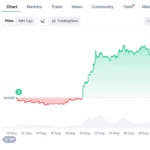
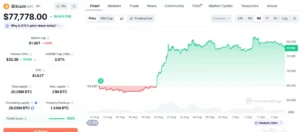
The cryptocurrency market is entering this pivotal Fed decision already under considerable duress. On Tuesday, Bitcoin (BTC) was trading hands at approximately $75,700, reflecting a decline of about 3.2% on the day. This downturn was exacerbated by the disappointing news that the Clarity Act, a long-awaited market structure bill crucial for providing regulatory certainty to the crypto industry, failed its Senate cloture vote. The setback in legislative progress added to existing market anxieties, contributing to Bitcoin’s slide from its September peak near $82,000.
Technical analysis suggests that a critical support level for Bitcoin currently stands at $73,200. A daily close below this "line in the sand" could trigger further downward momentum, potentially opening the door to price levels of $71,000, and even as low as $66,900 based on established technical indicators. Such a decline would effectively cancel the bullish momentum generated by Bitcoin’s recent "golden cross"—a technical pattern where a shorter-term moving average crosses above a longer-term moving average, often signaling a sustained uptrend. The failure of such a significant bullish signal would represent a substantial blow to market sentiment.
However, not all analysts interpret a rate hike as an unequivocally bearish event for cryptocurrencies. Some argue that a quarter-point move, if primarily aimed at anchoring long-term Treasury yields rather than aggressively tightening overall financial conditions, might leave the medium-term picture for crypto largely intact. In this view, the key factor is not merely the hike itself, but rather how the decision and Fed Chair Warsh’s subsequent comments in the press conference align with or deviate from what markets have already priced in. A hike that is entirely within expectations, without signaling a more aggressive tightening cycle than anticipated, could potentially mitigate severe negative reactions. Any unexpected hawkishness, however, could lead to further significant downside.
Higher-beta altcoins, characterized by thinner liquidity and heavier leverage compared to Bitcoin, are generally expected to experience sharper percentage swings in either direction following the Fed’s announcement. Their more volatile nature makes them particularly susceptible to shifts in market sentiment driven by macroeconomic events like interest rate decisions. The broader implications for the crypto market will depend heavily on the Fed’s forward guidance and the market’s interpretation of the central bank’s long-term commitment to its anti-inflationary stance.
Looking Ahead: Key Signals from the Fed
The financial world will be scrutinizing every detail emerging from the Federal Reserve on Wednesday. The FOMC’s official statement, accompanied by updated economic projections and the highly anticipated "dot plot"—a graphical representation of each FOMC member’s projection for the federal funds rate—is scheduled for release at 2 p.m. ET. This will provide crucial insights into the committee’s collective view on future rate adjustments and the broader economic outlook.
Following the statement, Fed Chair Kevin Warsh will hold a press conference at 2:30 p.m. ET. Traders and analysts will be meticulously analyzing his tone, choice of words, and responses to questions for any subtle cues regarding the Fed’s future policy path. A primary focus will be on whether officials continue to pencil in just one more rate hike this year, as some dovish forecasts suggest, or if the updated dot plot reflects a more aggressive stance, closer to the two additional moves currently called for by more hawkish institutions like Bank of America, Deutsche Bank, and RBC. The nuances of Warsh’s communication will be critical in shaping market expectations and influencing asset prices in the days and weeks that follow. The outcome of this meeting is poised to set the monetary policy tone for the foreseeable future, impacting everything from consumer loans to global investment flows.