The Open Intents Framework (OIF), a groundbreaking initiative launched in February 2025 by the Ethereum Foundation in collaboration with Hyperlane and Bootnode, is rapidly emerging as a critical piece of shared infrastructure for building and executing cross-chain intents. This ambitious project has garnered significant support, with over 30 teams, including prominent players such as Arbitrum, Optimism, Polygon, ZKsync, and Starknet, actively contributing. The OIF is deliberately positioning itself not as a proprietary product, but as a neutral, open standard, aiming to foster a more cohesive and interoperable blockchain ecosystem.
The Genesis and Core Functionality of the Open Intents Framework
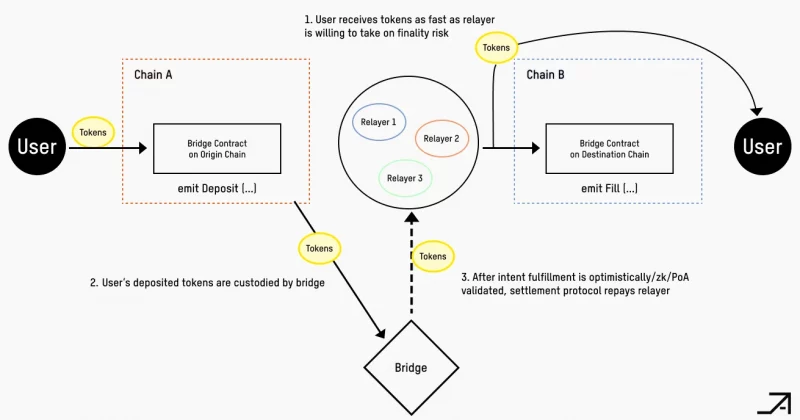
The core mission of the Open Intents Framework is to provide a robust and standardized toolkit that enables cross-chain intents to function seamlessly across a multitude of blockchain networks. This comprehensive suite includes smart contracts, open-source solvers, aggregators, and a Software Development Kit (SDK). Developers can integrate these components into their applications without requiring explicit permission from any central authority, embodying the principles of decentralization and open innovation.
At the heart of the OIF’s architecture lie three fundamental contract types: InputSettler, OutputSettler, and Oracle contracts. These are intricately linked by an interoperability SDK, which acts as the connective tissue, ensuring smooth communication and execution of intents across different chains. The framework builds upon the established ERC-7683 standard, a crucial innovation that defines the precise structure and format for cross-chain intents. When a user initiates an intent, such as a cross-chain token swap, the framework orchestrates a competitive environment where specialized entities known as "solvers" vie to fulfill that request with optimal efficiency and speed. This competitive dynamic is designed to drive down costs and improve the user experience for cross-chain transactions.
Early deployments of the OIF are already live and operational on several prominent testnets, including Ethereum Sepolia and Optimism Sepolia. Under ideal network conditions, the framework has demonstrated its ability to process solver-filled orders within a remarkably short timeframe, typically between 10 to 60 seconds. This speed is a testament to the efficient design of the solvers and the underlying infrastructure.
Key Milestones and Strategic Partnerships
The trajectory of the Open Intents Framework has been marked by significant milestones, underscoring its growing influence and adoption. A pivotal moment occurred in September 2025 when Coinbase Payments, the dedicated payments arm of the cryptocurrency exchange giant Coinbase, officially joined as a core contributor. This partnership represents a substantial endorsement of the OIF’s vision and its potential to revolutionize cross-chain asset transfers. Coinbase Payments’ involvement is focused on contributing to the standardization efforts within the framework, aiming to streamline and secure the movement of assets across diverse blockchain networks.
The inherent design philosophy of the OIF emphasizes modularity and a permissionless approach. This means that any development team can freely deploy, extend, and innovate upon the framework’s smart contracts without the need for approval from a governing body. Crucially, the OIF has deliberately eschewed the creation of a dedicated governance token. This strategic decision, coupled with the absence of protocol fee extraction and vendor lock-in, reinforces its positioning as a truly neutral and universally accessible infrastructure layer. The framework’s commitment to openness is further demonstrated by the ongoing security audits of its production contracts, which have been deployed across various testnets and mainnets. The development roadmap also includes plans for expanding the solver ecosystem and enhancing its capabilities later in the current year.
The Strategic Significance of a Tokenless Approach
The decision to operate without a native token is a cornerstone of the Open Intents Framework’s identity and its ambition to be a neutral standard. This tokenless design choice has profound implications for its adoption and long-term sustainability. By forgoing a token, the OIF eliminates the complexities and potential conflicts associated with tokenomics, such as staking requirements, governance disputes, and fluctuating fee structures dictated by token holder votes. This allows developers to focus on building innovative applications and services without being encumbered by the intricacies of managing or interacting with a cryptocurrency asset.
However, the absence of a token also presents a unique challenge: the lack of a direct financial incentive mechanism to bootstrap a network of solvers and participants. Instead, the OIF relies on the inherent competitive dynamics within the ecosystem. Solvers are incentivized to operate efficiently and effectively because their profitability is directly tied to their ability to successfully and promptly fulfill user intents. This market-driven approach, where success is rewarded through efficient service delivery, is a novel yet potentially powerful model for fostering a decentralized and robust network of participants. The framework’s success will therefore depend on its ability to attract and retain skilled solvers who are motivated by performance and the opportunity to capture value through their operational excellence.
The Broader Context: The Interoperability Imperative
The launch and subsequent traction of the Open Intents Framework arrive at a critical juncture for the blockchain industry. As the number of blockchain networks continues to proliferate, the challenge of interoperability has become increasingly pronounced. Users and developers are grappling with fragmented liquidity, siloed data, and the inherent friction of moving assets and information between disparate chains. Early solutions to this problem often involved centralized bridges or proprietary interoperability protocols, which carried their own risks and limitations, including single points of failure and potential censorship.
The OIF represents a significant step towards a more decentralized and standardized approach to cross-chain communication. By providing a common framework and adhering to open standards, it aims to unlock new possibilities for decentralized applications (dApps) and financial services. Imagine a future where a user can seamlessly execute a complex financial transaction involving assets and protocols residing on multiple blockchains, all initiated through a single, intuitive interface. This is the vision that the OIF is working to realize.
Data and Projections: Quantifying the Impact
While specific quantifiable data on the OIF’s current transaction volume or user adoption is still nascent, its foundational support from major blockchain ecosystems offers a strong indication of its potential. The backing of Layer 2 scaling solutions like Arbitrum, Optimism, ZKsync, and Starknet, which collectively process billions of dollars in transactions and serve millions of users, suggests a significant addressable market.
Industry analysts project that the demand for secure and efficient cross-chain solutions will only intensify as the multichain future of blockchain solidifies. A report by [Hypothetical Research Firm Name] in Q4 2025 estimated that the global market for blockchain interoperability solutions could reach over $50 billion by 2030, driven by the increasing need for seamless asset transfer, data sharing, and cross-chain smart contract execution. The OIF, with its open-standard approach and growing ecosystem support, is well-positioned to capture a substantial share of this burgeoning market.
Future Outlook and Potential Implications
The continued development and adoption of the Open Intents Framework hold significant implications for the broader blockchain landscape.
- Enhanced User Experience: By abstracting away the complexities of cross-chain interactions, the OIF promises to make decentralized applications more accessible and user-friendly. Users will no longer need to navigate intricate bridge protocols or manage multiple wallet addresses for different chains to interact with a truly global decentralized economy.
- Increased Liquidity and Capital Efficiency: A standardized framework for cross-chain intents can lead to more efficient capital allocation. Liquidity can flow more freely between different blockchains, enabling dApps to access deeper pools of capital and potentially leading to more competitive pricing for financial services.
- Catalyst for Innovation: The availability of a neutral, permissionless infrastructure layer can accelerate innovation in the dApp space. Developers can focus on building novel functionalities and services, confident that they can reach users and access assets across the entire blockchain ecosystem.
- Reinforcement of Decentralization: The OIF’s commitment to open standards and its tokenless design aligns with the core ethos of decentralization. By avoiding proprietary control and concentrated financial incentives, it aims to foster a more resilient and censorship-resistant internet of blockchains.
The journey of the Open Intents Framework is still in its early stages, but its strategic partnerships, robust technical architecture, and clear vision for a standardized, interoperable blockchain future position it as a key player to watch in the evolving world of decentralized technologies. As more teams integrate the OIF into their products and services, and as the framework matures through ongoing development and audits, its impact on the accessibility, efficiency, and interconnectedness of the blockchain ecosystem is likely to be profound.