


The global cryptocurrency mining landscape has entered a period of unprecedented volatility following the successful execution of the Ethereum Merge, which transitioned the world’s second-largest blockchain from a Proof-of-Work (PoW) to a Proof-of-Stake (PoS) consensus mechanism. This technical milestone, while celebrated for reducing Ethereum’s energy consumption by more than 99.9%, has simultaneously triggered a financial crisis for millions of miners who previously relied on graphics processing units (GPUs) to secure the network. As displaced miners have flooded into alternative PoW networks, the resulting explosion in network difficulty has driven mining profitability into negative territory across nearly all major altcoins, leaving the future of GPU-based mining in a state of existential peril.
The Great Migration and the Hashrate Overload
Before the Merge, Ethereum was the undisputed king of GPU mining, commanding a hashrate that dwarfed all other PoW altcoins combined. At its peak, the Ethereum network was supported by an estimated hashrate of approximately 1,000 terahashes per second (TH/s). When the transition to PoS occurred, this massive computational power was suddenly disconnected from its primary source of revenue. Miners were faced with three choices: shut down their operations, sell their hardware into a saturated secondary market, or redirect their rigs to other PoW blockchains such as Ethereum Classic (ETC), Ravencoin (RVN), Ergo (ERG), and Flux.
The majority of miners chose the latter, leading to what analysts have termed "The Great Migration." However, the economic infrastructure of these alternative coins was never designed to absorb such a massive influx of hardware. Unlike Bitcoin, which utilizes specialized ASIC (Application-Specific Integrated Circuit) hardware, these altcoins are mined using consumer-grade GPUs. When the Ethereum hashrate migrated, the total hashrate of networks like Ethereum Classic surged by over 400% in a matter of days.
The Mechanics of Mining Difficulty and Profitability
To understand why profits have cratered, it is necessary to examine the relationship between hashrate and mining difficulty. Most PoW blockchains utilize a difficulty adjustment algorithm designed to ensure that blocks are produced at a steady interval, regardless of how much computational power is securing the network. When a massive wave of new miners joins a network, the competition to find the next block increases. In response, the network automatically raises the difficulty of the mathematical puzzles required to mine a block.
The fundamental problem is that while the difficulty has skyrocketed, the block rewards—the amount of cryptocurrency paid out to miners—remain fixed. Furthermore, the market capitalization and daily trading volume of coins like Ethereum Classic or Ravencoin are a fraction of what Ethereum’s were. Consequently, the same amount of hardware that once earned significant profits on Ethereum is now competing for a much smaller pool of rewards against a vastly larger number of competitors.
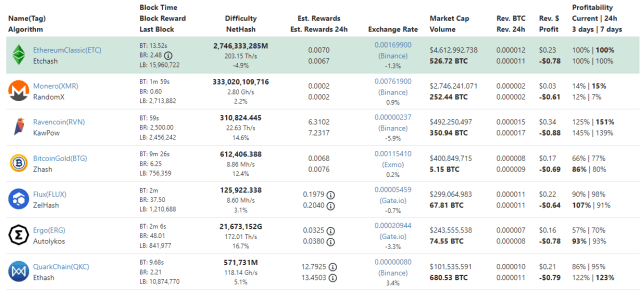
According to data from the mining profitability calculator WhatToMine, the economic reality for miners is currently grim. For a standard mining rig utilizing three AMD RX 480 graphics cards—a staple of the mid-range mining community—the net profit after electricity costs has fallen to approximately -$0.78 per hour. This calculation assumes an average industrial electricity rate of $0.10 per kilowatt-hour (kWh). Even for miners equipped with top-tier hardware, such as the NVIDIA GeForce RTX 3090 Ti, hourly profits remain in the negative at roughly -$0.50. In short, the cost of the electricity required to run the machines now exceeds the market value of the coins being produced.
A Chronology of the Transition
The path to this crisis was paved over several years of development and delays. To provide context for the current state of the market, it is essential to look at the timeline of events leading up to and following the Merge:

- December 2020: The Beacon Chain launches, marking the beginning of Ethereum’s multi-year transition to PoS. Miners begin to realize that their hardware has a "shelf life" on the Ethereum network.
- 2021 to Early 2022: Despite the looming Merge, high crypto prices and the DeFi boom make Ethereum mining more profitable than ever. GPU prices soar as miners compete with gamers for inventory.
- August 2022: The final "Goerli" testnet merge is completed successfully. The Ethereum Foundation confirms the official Merge date for mid-September.
- September 15, 2022: The Merge is executed at 06:42:42 UTC. Ethereum officially stops utilizing miners. Within minutes, the hashrate on Ethereum Classic and Ravencoin begins to spike.
- September 16–20, 2022: Difficulty adjustment algorithms on altcoins kick in. Profitability for almost every GPU-minable coin drops below the "break-even" point for the average user.
- Late September 2022: Secondary markets like eBay and StockX see a massive influx of used GPUs as miners attempt to recoup capital, leading to a precipitous drop in hardware resale value.
Market Reactions and Official Statements
The reaction from the mining community has been a mix of resignation and strategic pivoting. Major mining pools, which previously earned millions in fees from Ethereum, have been forced to adapt. Ethermine, the world’s largest Ethereum mining pool, announced it would not support any PoW forks of Ethereum and instead launched a staking service to align with the new PoS model.
In contrast, some segments of the community attempted to preserve the PoW model through the creation of "forks." One such project, EthereumPoW (ETHW), launched shortly after the Merge with the goal of maintaining a version of Ethereum that still required miners. However, ETHW has struggled with technical issues, a lack of ecosystem support, and a rapidly declining token price, rendering it unable to solve the profitability crisis.
Hardware manufacturers have also felt the impact. In recent quarterly earnings reports, NVIDIA executives acknowledged a significant decline in the demand for GPUs specifically marketed for mining. The "crypto-winter" combined with the Merge has led to an oversupply of chips, forcing manufacturers to lower prices and adjust revenue forecasts for the coming fiscal year.
The Electricity Factor and Regional Disparity
The current crisis is not felt equally by all miners. Profitability is a function of three variables: hardware efficiency, network difficulty, and electricity costs. While the "average" miner paying $0.10/kWh is currently losing money, those in regions with subsidized or ultra-low-cost energy—such as parts of the Middle East, Central Asia, or areas with abundant stranded hydroelectric power—may still be hovering at a razor-thin break-even point.
However, for the vast majority of hobbyist miners in North America and Europe, where energy prices have surged due to geopolitical tensions and inflation, the situation is unsustainable. This has led to a centralization of the remaining PoW hashrate, as only the most efficient, large-scale industrial operations can afford to stay online during periods of negative profitability.
Broader Implications and the Future of PoW
The current state of negative profitability raises significant questions about the long-term viability of GPU mining. If no single altcoin rises to achieve the market cap and institutional adoption that Ethereum once held, the era of "home mining" may be effectively over.
There are several potential scenarios for the future:
- The Shakeout Phase: A significant portion of the global GPU fleet may be permanently retired or repurposed for non-crypto tasks, such as Artificial Intelligence (AI) rendering, cloud computing, or video encoding. As miners drop off the network, the difficulty will eventually decrease, potentially allowing the remaining most efficient miners to return to profitability.
- The Emergence of a New "King": Historically, the crypto market has seen the rise of new dominant players. If a coin like Ergo or Flux gains significant developer traction and price appreciation, it could eventually provide enough "block space" value to support a larger mining community.
- The ASIC Dominance: As GPU mining becomes less viable, more networks may transition toward ASIC-resistant algorithms or, conversely, accept their fate as ASIC-dominated chains like Bitcoin. ASICs are significantly more efficient than GPUs but lack the flexibility to switch between different algorithms.
Conclusion
The Ethereum Merge was a triumph for blockchain scalability and environmental sustainability, but it has left a trail of economic destruction in the mining sector. The "yield" that once supported a multi-billion dollar industry has vanished, replaced by a hyper-competitive environment where the cost of production exceeds the value of the output. While the cryptocurrency market is known for its cyclical nature and ability to innovate out of crises, the current data suggests that the golden age of GPU mining has reached a definitive and perhaps permanent conclusion. For now, the "safe" play for miners is no longer in the hardware they run, but in the strategic management of their remaining assets as they navigate a post-Merge world.














