


The landscape of mainstream medicine has undergone a seismic shift over the past several years, driven primarily by a revolution in weight loss and physical enhancement technologies. At the center of this transformation are glucagon-like peptide-1 (GLP-1) receptor agonists, the active compounds found in blockbuster drugs such as Ozempic, Wegovy, and Mounjaro. While these medications have been hailed for their ability to radically alter body composition and treat metabolic disorders, their meteoric rise in popularity has created a significant secondary market. Prohibitive costs, the requirement for medical prescriptions, and chronic global supply shortages have pushed a growing segment of the population away from traditional pharmacies and toward a burgeoning "gray market" of unregulated peptides.

This shadow economy, once the domain of niche biohackers and professional bodybuilders, has mutated into a high-volume financial juggernaut. Facilitated by the anonymity and borderless nature of cryptocurrency, overseas chemical manufacturers are now bypasssing traditional gatekeepers to sell raw, unbranded peptides directly to retail consumers. Recent data indicates that this ecosystem is not only growing but is also being fueled by a concerning pivot: Chinese chemical laboratories, facing international pressure over the production of fentanyl and amphetamine precursors, are rebranding themselves as peptide suppliers to capture the massive demand for weight-loss and anti-aging compounds.

The Financial Backbone of the Peptide Trade
The gray-market peptide industry operates almost entirely outside the traditional financial system. Because mainstream banks and credit card processors categorize the sale of prescription-grade compounds and unregulated substances as high-risk or prohibited, vendors cannot utilize standard payment gateways. To scale their operations and reach a global audience, the industry adopted cryptocurrency as its primary financial infrastructure.

What began as an underground community of enthusiasts using Bitcoin to purchase experimental compounds has evolved into a professionalized market. According to recent blockchain analysis, the flow of capital into the peptide ecosystem remained relatively stable throughout 2024, averaging roughly $1 million per quarter. However, the market entered a phase of hyper-growth in early 2026. In the first quarter of 2026 alone, the ecosystem witnessed a 159% increase in volume, surging from $12 million to $32 million. Current projections suggest the market is on pace to process nearly $40 million in the second quarter of 2026, placing the industry on a clear trajectory toward a $100 million-plus annual run rate.

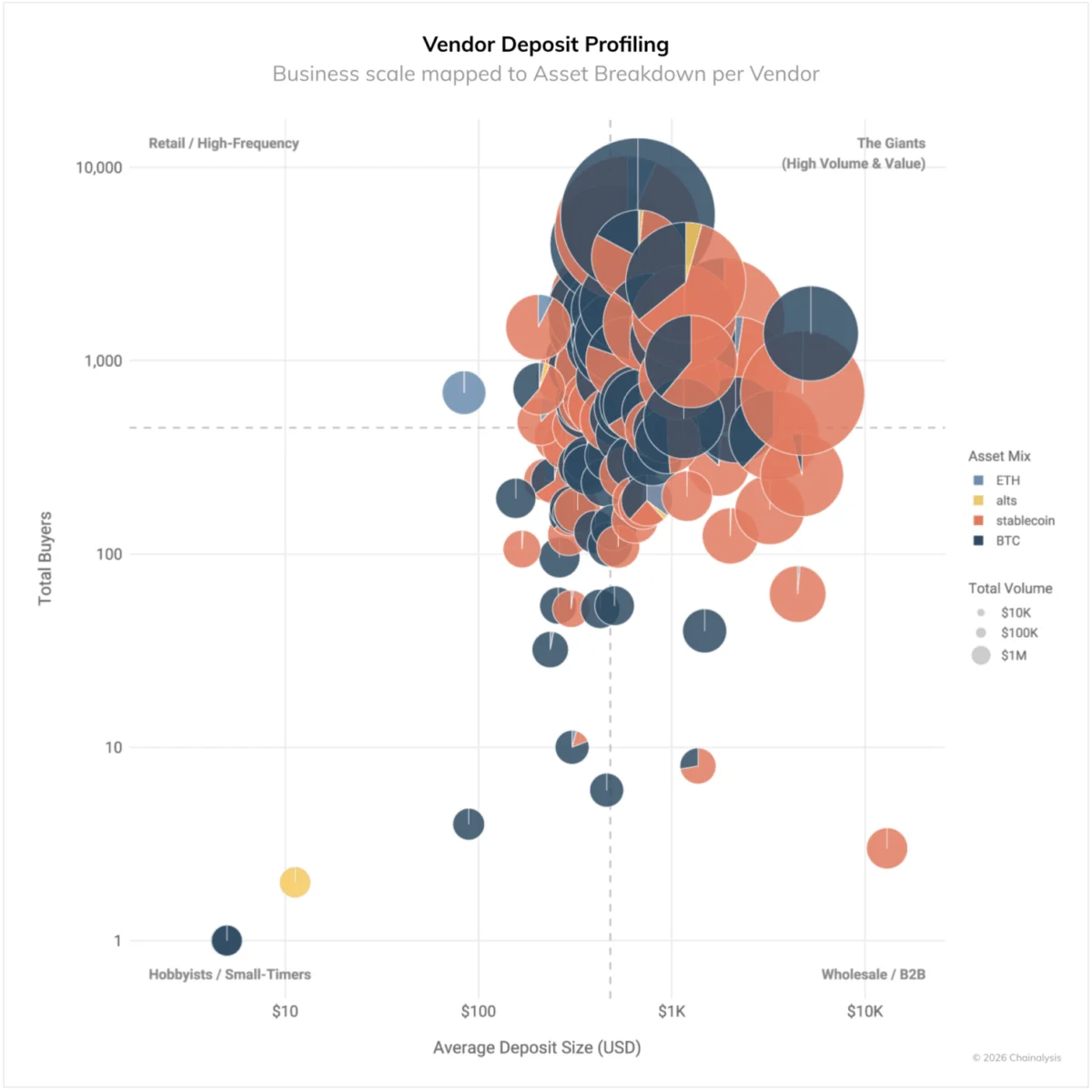
The maturity of the market is further evidenced by the shift in asset preference among high-volume distributors. While retail buyers often use a variety of volatile cryptocurrencies, the industry’s "whales"—wholesale distributors processing orders of $1,000 or more—have moved almost exclusively toward stablecoins. By utilizing assets pegged to the U.S. dollar, these suppliers insulate their supply chains from the price fluctuations of the broader crypto market, allowing for more predictable profit margins and more efficient international settlement.

Cultural Catalysts and the Rise of Looksmaxxing
The explosion of the peptide market can be attributed to a convergence of political legitimacy and viral internet subcultures. Analysts have divided the market’s evolution into three distinct eras:

- The Biohacker Era (Pre-2024): Characterized by a small, highly informed community of "research" enthusiasts who prioritized rigorous self-testing and harm reduction.
- The Political Legitimacy Era (2024–2025): Influenced by movements such as "Make America Healthy Again" (MAHA), which popularized the idea of taking personal control over health and promoted a skepticism of traditional pharmaceutical regulations.
- The Viral Looksmaxxing Era (2026–Present): Driven by the "looksmaxxing" subculture—a youth-oriented internet movement dedicated to maximizing physical attractiveness through extreme diet, fitness, and chemical intervention.
The "looksmaxxing" trend has been particularly impactful, moving peptides from medical forums to mainstream social media platforms like TikTok, Discord, and Telegram. Influencers in this space frequently secure brand deals with Chinese gray-market vendors, promoting "research chemicals" as a shortcut to achieving a specific aesthetic. This viral pipeline has introduced a vulnerable demographic to unregulated pharmaceuticals, with underground forums increasingly seeing underage users seeking ways to bypass Know Your Customer (KYC) regulations on crypto exchanges to fund their purchases.

The Collapse of Independent Safety Testing
As the peptide market has moved into the mainstream, the rigorous safety standards once championed by the biohacking community have largely collapsed. In the early stages of the market, a "harm reduction" ethos prevailed; buyers frequently sent samples of their purchases to independent laboratories to verify purity and concentration.

Janoshik, a laboratory based in Czechia, has long been considered the gold standard for independent chemical testing in the underground steroid and peptide communities. Since 2023, wallets associated with Janoshik have received over $12 million in cryptocurrency for testing services. However, blockchain data reveals a troubling trend: while Janoshik’s total revenue is increasing, the amount of testing per individual buyer has plummeted. In the current market era, the average testing spend has crashed by an estimated 88%, dropping to just $8 per buyer.

Today’s consumers are largely operating on "blind trust," relying on Certificates of Analysis (COAs) provided by the vendors themselves. While these suppliers often post reports showing high purity levels, veteran observers warn that these documents are frequently forged or, more dangerously, fail to account for sterility. A recent incident involving a batch of Retatrutide—a next-generation weight-loss peptide—highlighted this risk. While the vendor provided a COA showing 99% purity, an independent test conducted by a cautious consumer revealed the batch was non-sterile. Injecting non-sterile compounds directly into the bloodstream carries life-threatening risks, including sepsis and systemic infections, yet the viral nature of the market has largely drowned out these warnings.

The Pivot from Fentanyl Precursors
Perhaps the most significant revelation from recent on-chain investigations is the identity of the manufacturers behind the peptide boom. As international law enforcement agencies, particularly in the United States and China, have cracked down on the illicit drug precursor trade, some chemical manufacturers have pivoted to peptides to maintain their revenue streams.

In the illicit precursor trade, these laboratories act as wholesale suppliers to drug cartels, who then process the chemicals into finished products like fentanyl or methamphetamines. By transitioning to gray-market peptides, these laboratories have discovered a more lucrative direct-to-consumer model. This allows them to capture the full retail markup, eliminate the need for cartel middlemen, and operate in a legal gray area that carries significantly lower risk of criminal prosecution compared to the narcotics trade.

Case Study: Shanghai Sigma Audley
Shanghai Sigma Audley New Material Technology Co., Ltd. was identified in 2023 as a major supplier of fentanyl precursors. Blockchain analysis of their wallets revealed exposure to darknet drug vendors and cartel-related money laundering operations. However, as regulatory pressure on fentanyl increased throughout 2024, the company pivoted. By early 2025, using the same contact information previously associated with precursor sales, the company began advertising weight-loss peptides and human growth hormone on fitness and "looksmaxxing" forums. They effectively leveraged their existing chemical expertise and crypto-payment infrastructure to serve a new, less-scrutinized market.

Case Study: Bigreat Technology
Similarly, Bigreat Technology Co., Ltd., a supplier of precursors for synthetic amphetamines and cathinones targeting the Russian and Eurasian markets, has created a corporate alter-ego: Zhengzhou DEPU Technology Co., Ltd. Under this pseudonym, the laboratory sells cosmetic and weight-loss peptides to retail buyers in the West. On-chain data shows the company simultaneously funneling illicit precursors to Russian darknet markets while interacting directly with individual peptide consumers, many of whom are likely unaware that their "health supplements" are synthesized in the same facilities arming international drug traffickers.

Implications and the Future of Shadow Economies
The explosion of the gray-market peptide ecosystem serves as a case study in the adaptability of illicit supply chains. The transition from narcotics precursors to peptides demonstrates that overseas manufacturers are highly responsive to both market demand and law enforcement pressure. By rebranding their products and targeting a new demographic, these entities can continue to thrive using the same decentralized financial tools that powered their previous illegal activities.

For public health officials, the rise of this market presents a complex challenge. The sheer volume of transactions and the decentralized nature of the trade make it nearly impossible to regulate through traditional means. Furthermore, the legal ambiguity of "research chemicals" allows vendors to operate in the open, using social media influencers to reach millions of potential customers.

The role of cryptocurrency in this ecosystem is double-edged. While it provides the necessary infrastructure for the shadow economy to exist, the transparency of the blockchain also offers an early-warning system. By monitoring on-chain flows, investigators can detect shifts in the global chemical trade in real-time, identifying when known illicit entities rebrand and which new demographics are being targeted. As the peptide market continues its ascent toward a $100 million annual run rate, the intersection of viral culture, unregulated medicine, and digital finance will remain a critical area of concern for global health and security.














