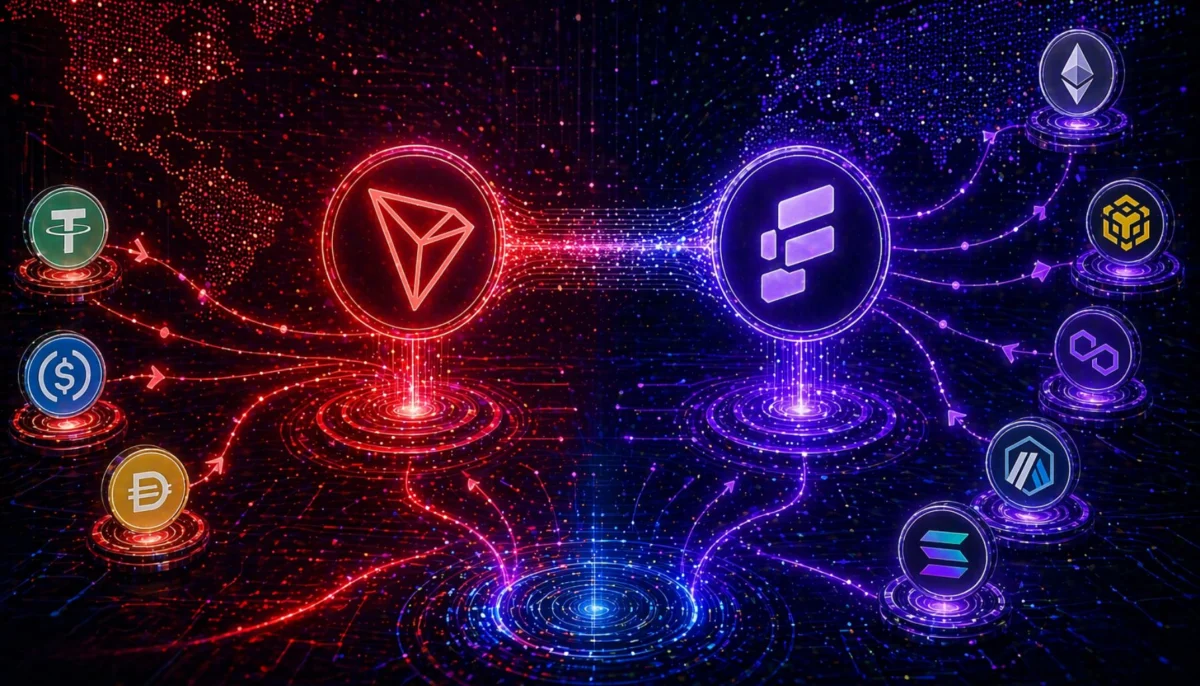
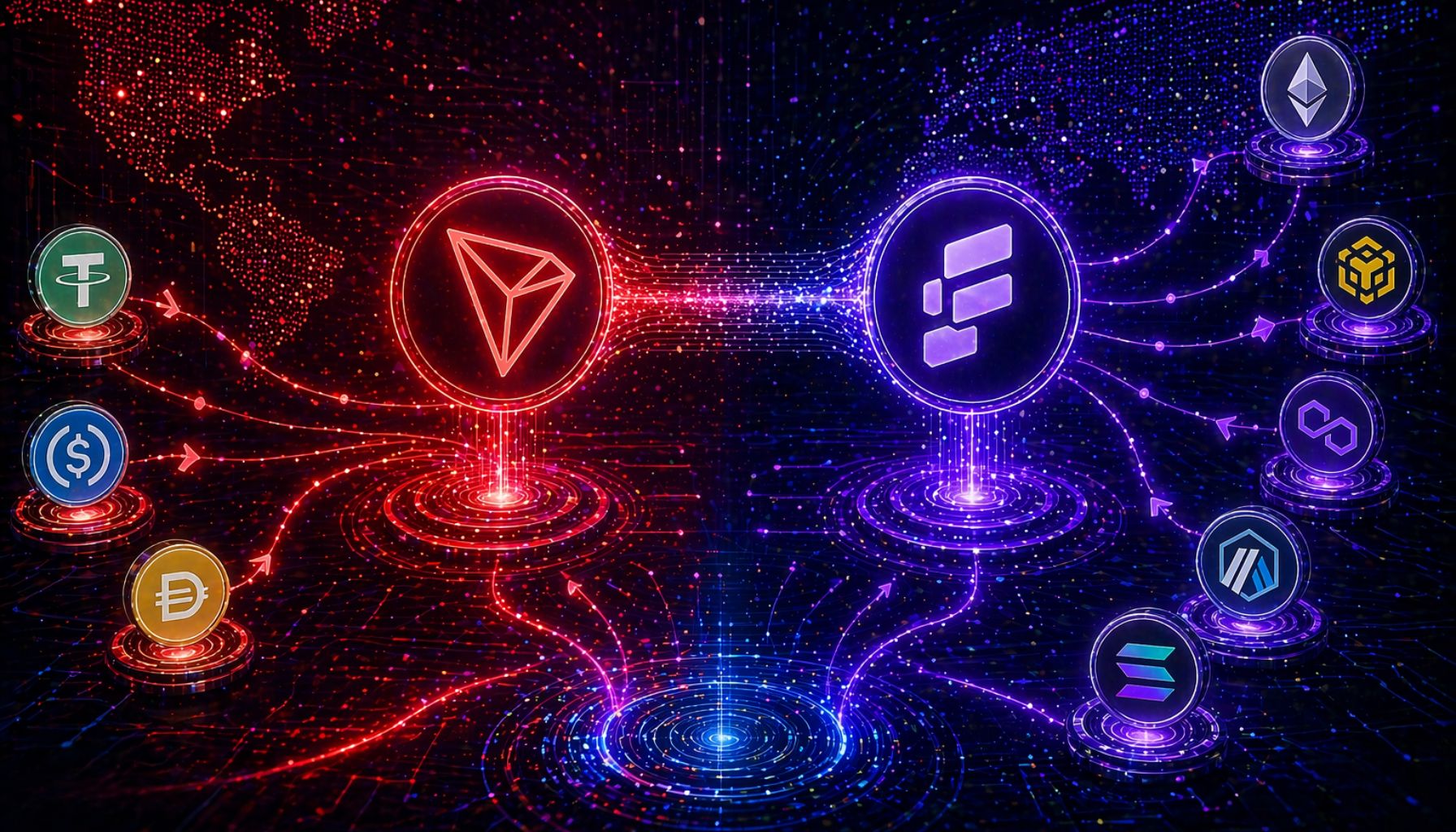
The landscape of decentralized finance (DeFi) has reached a pivotal turning point as LI.FI, a leading multichain liquidity aggregation protocol, officially integrated the TRON network into its orchestration layer, creating a high-capacity corridor between TRON’s massive stablecoin reserves and the broader blockchain ecosystem. For years, TRON has functioned as a primary settlement layer for global stablecoin transactions, yet it has largely operated in a silo, detached from the sophisticated DeFi protocols of the Ethereum Virtual Machine (EVM) and Layer-2 environments. This integration effectively dismantles that barrier, allowing the $85 billion in Tether (USDT) circulating on TRON to flow seamlessly into the wider decentralized economy through a unified routing system.
The Rise of TRON as a Global Settlement Layer
To understand the weight of this integration, one must look at the sheer scale of TRON’s current infrastructure. While Ethereum often captures the headlines for decentralized application (dApp) innovation, TRON has quietly dominated the "utility" sector of the crypto market. Currently, TRON hosts approximately $85 billion in circulating USDT—more than half of Tether’s total supply—and regularly processes over $21 billion in daily transfer volume.
This dominance is driven by a combination of high throughput and a fee structure that remains significantly lower than Ethereum’s Mainnet. In regions where remittances and cross-border payments are vital, such as Southeast Asia, Latin America, and parts of Africa, TRON has become the de facto network for value transfer. However, this liquidity has historically been "trapped" within the TRON ecosystem. Users wishing to move their USDT from TRON to an Ethereum Layer-2 like Arbitrum or Base often had to rely on centralized exchanges or complex, multi-step bridging processes that introduced significant friction and security risks.
The Mechanics of the LI.FI Integration
LI.FI serves as a middle-layer infrastructure that aggregates cross-chain bridges and decentralized exchanges (DEXs). By incorporating TRON into its orchestration layer, LI.FI allows developers to tap into TRON’s liquidity without having to build custom, one-off integrations for the TRON Virtual Machine (TVM).
For developers, the integration is a matter of technical efficiency. Previously, supporting TRON meant managing different wallet standards, consensus mechanisms, and bridge protocols. Now, any application utilizing the LI.FI API or SDK can automatically offer TRON as a source or destination for liquidity. This "abstracted" approach means a developer on a platform like Jumper.exchange or a multichain lending protocol can offer their users the ability to swap TRON-based USDT for Ethereum-based assets in a single transaction.
For the end user, the experience becomes "chain-agnostic." The integration ensures that the underlying complexity of moving assets across disparate networks is handled in the background. A user can interact with a DeFi interface, select their TRON wallet, and move funds to another chain without needing to understand the cryptographic hurdles or the specific bridging technology facilitating the move.
Chronology of TRON’s Ecosystem Evolution
The integration with LI.FI is the latest chapter in a multi-year effort to pivot TRON from a general-purpose smart contract platform into a specialized financial infrastructure layer.
- 2017–2018: TRON launches its Mainnet after migrating from Ethereum, positioning itself as a high-performance alternative for dApps and entertainment.
- 2019: Tether (USDT) officially launches on TRON, marking the beginning of the network’s transition into a stablecoin-centric blockchain.
- 2021–2022: As Ethereum gas fees spiked during the DeFi summer and subsequent bull run, TRON saw an explosion in USDT adoption for peer-to-peer transfers and payments.
- 2023: TRON surpassed Ethereum in terms of daily active addresses and USDT volume, solidifying its role as the "people’s network" for stablecoin utility.
- 2024–2025: The focus shifted toward interoperability. Recognizing that isolation limits growth, the TRON DAO and various third-party developers began seeking ways to link TRON’s deep liquidity pools with the burgeoning DeFi ecosystems on other chains.
- Current Milestone: The LI.FI integration provides the "missing link," allowing for programmatic, decentralized access to TRON’s liquidity from external DeFi applications.
Technical Analysis: TRX Sustains Bullish Structure Amid Resistance
While the fundamental news of the integration provides long-term utility, the market’s immediate reaction is reflected in the price action of TRX, the native token of the TRON network. TRX has demonstrated remarkable resilience and a consistent uptrend, even during periods of broader market volatility.
Currently, TRX is testing a critical multi-month resistance zone between $0.33 and $0.34. This level has historically been a point of supply where previous rallies in late 2025 faced exhaustion. However, the technical structure remains constructive. The weekly chart displays a series of higher lows, and the price remains comfortably above the 50-week and 100-week Simple Moving Averages (SMAs).
Market analysts note that the recent consolidation between $0.27 and $0.29 served as a healthy reset for momentum indicators like the Relative Strength Index (RSI). By establishing a firm base above $0.30, TRX has cleared the way for a potential breakout. However, the $0.34 level remains a "sell wall." For a clean break toward the $0.40 psychological target, the market requires an expansion in trading volume that has yet to materialize fully. If the price fails to breach $0.34 in the coming weeks, a period of sideways consolidation between $0.28 and $0.33 is the most likely scenario, preserving the long-term bullish bias while flushing out short-term speculators.
Broader Impact on the DeFi Ecosystem
The implications of connecting $85 billion in stablecoins to the LI.FI routing layer extend far beyond TRON itself. This move contributes to the growing trend of "Chain Abstraction," where the specific blockchain being used becomes irrelevant to the end user.
1. Enhanced Capital Efficiency:
By making TRON’s USDT more accessible, the overall capital efficiency of the DeFi market improves. Liquidity that was previously stagnant or limited to simple transfers can now be utilized in yield aggregators, lending markets, and perpetual DEXs across the multichain landscape.
2. Competitive Pressure on Other Chains:
TRON’s low fees and high liquidity pose a challenge to other stablecoin-heavy chains like Solana and various Ethereum Layer-2s. As bridging becomes easier, these networks must compete more aggressively on user experience and yield opportunities to retain capital.

3. Institutional and OTC Settlement:
The integration simplifies the workflow for Over-the-Counter (OTC) desks and institutional players who use TRON for settlement but need to deploy that capital into DeFi protocols for hedging or yield. The ability to route through LI.FI reduces the operational risk associated with manual bridging.
Industry Perspectives and Reactions
While official statements from the TRON DAO emphasize the network’s commitment to decentralization and accessibility, industry observers view the LI.FI partnership as a strategic necessity. "TRON has always had the numbers, but it lacked the connectivity," noted one DeFi researcher. "By integrating with an aggregator like LI.FI, TRON is essentially plugging its massive liquidity engine into the global DeFi grid."
LI.FI representatives have indicated that the TRON integration was one of the most requested features from their developer partners. The ability to offer "one-click" access to the world’s largest pool of USDT is a significant value proposition for any multichain application.
Looking Ahead: The Future of TRON Interoperability
The integration with LI.FI is likely the first of many steps toward full interoperability for TRON. As the industry moves toward a future where "the bridge is the application," TRON’s role as a liquidity provider will only grow in importance.
Future developments may include deeper integrations with cross-chain messaging protocols, allowing for more than just asset transfers. We could see cross-chain governance or complex multi-step smart contract executions that originate on Ethereum but utilize TRON’s liquidity for the final settlement.
In conclusion, the bridging of TRON via LI.FI represents a maturation of the cryptocurrency market. It acknowledges that the future is not a single "winner-take-all" blockchain, but a web of interconnected networks where liquidity flows to where it is most needed. For TRON, this marks the end of its era as a "parallel" ecosystem and the beginning of its role as a core pillar of the unified multichain DeFi landscape. As TRX continues to test key resistance levels, the fundamental strengthening of the network through such integrations provides a robust foundation for its next phase of growth.