


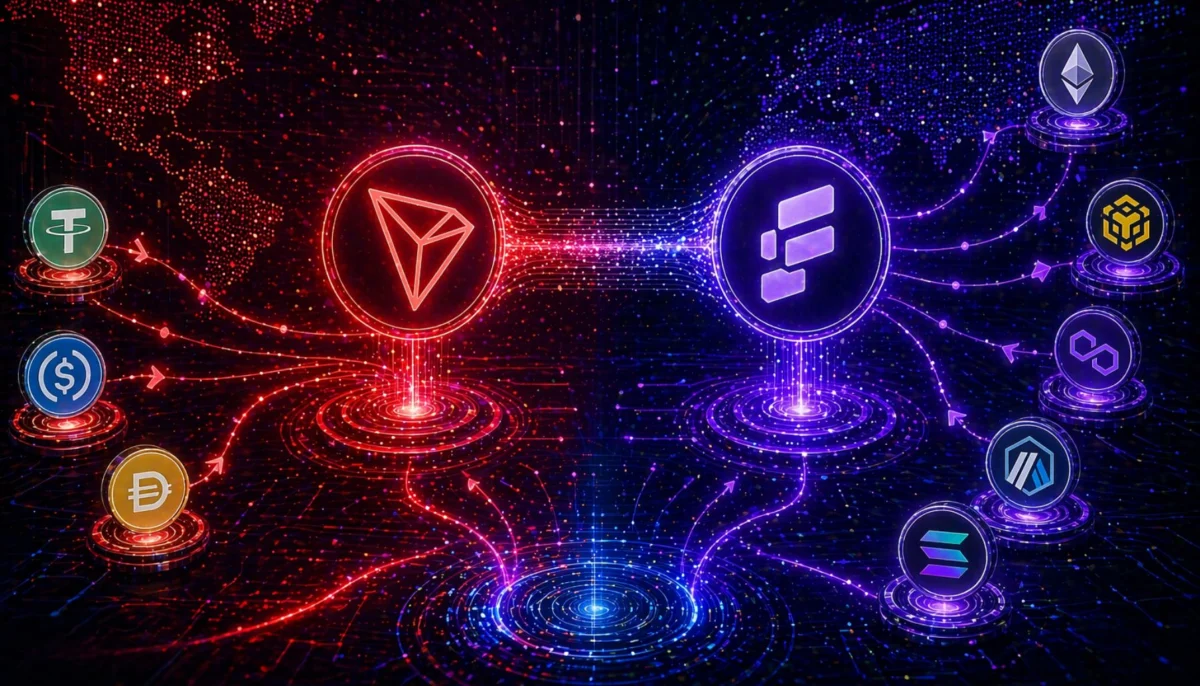
The TRON network, long recognized as the primary settlement layer for the global stablecoin market, has finalized a strategic integration with LI.FI, a leading multichain liquidity aggregation protocol. This move marks a significant shift in the decentralized finance (DeFi) landscape, effectively bridging one of the industry’s most liquid but historically isolated ecosystems with the broader web3 infrastructure. With over $85 billion in circulating USDT and a consistent daily transfer volume exceeding $21 billion, TRON’s integration into the LI.FI orchestration layer provides a streamlined gateway for developers and users to access deep liquidity without the technical friction that previously characterized cross-chain interactions with the network.
The Evolution of TRON as a Global Settlement Powerhouse
Since its inception, TRON has carved out a unique niche within the blockchain industry. While Ethereum and its various Layer 2 solutions became the primary hub for complex DeFi primitives and NFT ecosystems, TRON focused on high-throughput, low-cost transactions. This specialization made it the preferred network for Tether (USDT), the world’s largest stablecoin by market capitalization.
As of early 2025, TRON hosts approximately 50% of all circulating USDT. The network’s dominance is particularly pronounced in emerging markets, including parts of Asia, Latin America, and Africa, where it serves as the backbone for remittances, cross-border payments, and over-the-counter (OTC) settlements. Despite this massive economic activity, TRON’s ecosystem has often operated in a parallel silo. The technical standards of the TRON Virtual Machine (TVM), while similar to Ethereum’s EVM, required distinct integration efforts for cross-chain bridges and decentralized exchanges (DEXs). This "liquidity island" effect meant that while TRON moved tens of billions of dollars daily, that capital was not easily accessible to users on Arbitrum, Optimism, or Ethereum-based protocols.
Technical Mechanics of the LI.FI Integration
LI.FI operates as a middle-layer protocol that aggregates bridges and decentralized exchanges to provide "bridge-and-swap" functionality through a single API or SDK. By integrating TRON into its orchestration layer, LI.FI has effectively "abstracted" the complexity of the TRON network for the hundreds of applications that use its technology.
For developers, this means that any application powered by LI.FI can now offer TRON-based assets as a source or destination for cross-chain swaps. Previously, a developer wanting to support TRON would need to manage separate smart contract audits, maintain distinct wallet connection logic, and integrate specific TRON-compatible bridges. Now, the integration is handled at the protocol level.
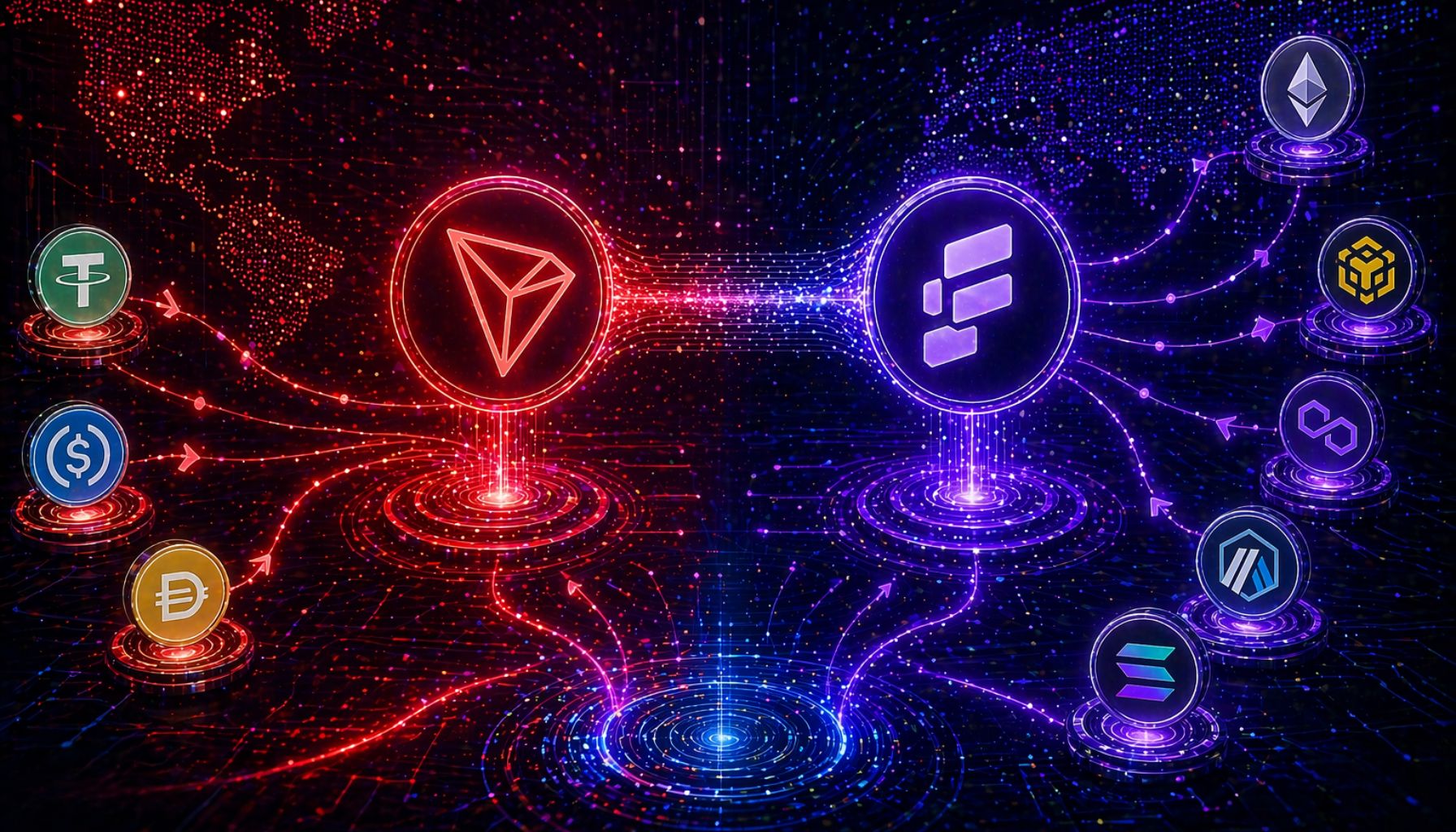
For the end user, the experience becomes chain-agnostic. A user holding USDT on TRON can now swap directly into an asset on an EVM-compatible chain—such as ETH on Base or USDC on Solana—within a single interface. The LI.FI backend handles the routing, finding the most efficient path through various liquidity pools and bridges to ensure minimal slippage and the lowest possible fees.
Chronology of TRON’s Integration and Expansion
The path to this integration follows a multi-year effort by the TRON DAO to increase the network’s utility beyond simple value transfers.
- 2019-2021: The Stablecoin Foundation. TRON established its dominance by offering near-instant USDT transfers with fees often under $1, contrasting sharply with Ethereum’s gas spikes during the DeFi Summer.
- 2022-2023: Institutional Adoption. Major exchanges and institutional OTC desks began treating TRON as the default rail for stablecoin settlement. During this period, TRON’s circulating USDT surpassed that of Ethereum.
- 2024: The Push for Interoperability. Recognizing the trend toward "chain abstraction," TRON began seeking partnerships with cross-chain messaging protocols and aggregators to prevent liquidity fragmentation.
- Q1 2025: LI.FI Integration. The formal rollout of the LI.FI orchestration layer integration, allowing the $85 billion USDT pool to interact seamlessly with the wider DeFi world.
Supporting Data: The Magnitude of TRON’s Liquidity
The scale of the liquidity being unlocked by this integration is difficult to overstate. According to on-chain data, TRON’s stablecoin ecosystem is defined by the following metrics:
- Total USDT Supply: Approximately $85 billion, representing a significant portion of the total $140B+ USDT market cap.
- Daily Transfer Volume: Regularly fluctuates between $15 billion and $25 billion, often rivaling or exceeding the daily volume of the Visa network in specific regional corridors.
- Active Addresses: TRON consistently maintains one of the highest counts of daily active addresses in the industry, frequently exceeding 2 million unique interacting wallets.
- Transaction Costs: Average transaction fees remain below $2, making it economically viable for small-scale remittances that would be priced out of other high-security layers.
By connecting this volume to LI.FI, the "velocity" of money on TRON is expected to increase. Capital that was previously "stagnant" in settlement wallets can now flow into yield-bearing protocols, lending markets, and liquidity pools across the entire EVM and non-EVM landscape.
Implications for Developers and the DeFi Ecosystem
The primary beneficiaries of this integration are decentralized application (dApp) builders. In the current multi-chain environment, liquidity fragmentation is a major hurdle. A developer building a cross-chain lending protocol, for instance, wants to tap into the largest possible pool of collateral. By using LI.FI’s updated API, that developer can now allow users to deposit USDT from TRON to use as collateral for a loan on an entirely different blockchain.
This integration also signals a move toward "Chain Abstraction," a concept where the underlying blockchain becomes invisible to the user. As LI.FI routes through TRON’s deep liquidity, users may be utilizing TRON’s infrastructure for a swap without ever needing to download a TRON-specific wallet or manually interact with a TRON explorer. This reduces the cognitive load on the user and lowers the barrier to entry for decentralized finance.

TRX Market Analysis: Technical Structure and Resistance Levels
The fundamental news of the LI.FI integration comes at a time when the network’s native token, TRX, is exhibiting a robust technical uptrend. Market analysts have noted that TRX has remained one of the most resilient assets throughout various market cycles, often decoupling from the volatility seen in more speculative altcoins.
Currently, TRX is testing a critical resistance zone between $0.33 and $0.34. This price level has historical significance, acting as a "ceiling" for multiple rallies over the past several months. The weekly chart indicates a constructive "higher-low" sequence, with the price maintaining a healthy distance above the 50-week and 100-week moving averages. These moving averages are currently sloping upward, suggesting that the long-term momentum remains firmly in favor of the bulls.
However, technical indicators suggest a period of consolidation may be necessary before a definitive breakout. While the price is pressing against resistance, trading volume has not yet shown the explosive surge typically associated with a "breakout move." If TRX can successfully flip the $0.34 level into support, analysts point toward the $0.38 to $0.40 range as the next logical target. Conversely, a rejection at this level would likely see TRX rotate back toward its primary support zone between $0.27 and $0.29, which would allow for further base-building.
Broader Impact and Future Outlook
The integration of TRON into the LI.FI orchestration layer is more than a technical update; it is a validation of TRON’s role as a foundational piece of global financial infrastructure. For years, critics argued that TRON’s liquidity was "trapped" within a closed system. This partnership effectively ends that narrative.
As the industry moves toward a more interconnected future, the distinction between "TRON users" and "Ethereum users" will likely continue to blur. The focus is shifting toward liquidity and utility. With $85 billion in stablecoins now more accessible than ever, the DeFi ecosystem has gained a massive injection of "real-world" capital that is already used for commerce and payments daily.
In the coming months, the success of this integration will be measured by the volume of cross-chain swaps originating from or destined for the TRON network. If the integration performs as expected, it could set a precedent for other "siloed" high-liquidity chains to seek similar aggregation-based solutions, further unifying the fragmented landscape of decentralized finance. For now, TRON has solidified its position not just as a settlement layer, but as a core pillar of the interoperable web3 economy.














